CHI ALTRI HA MANDATO A WUHAN VIRUS ASSOLUTAMENTE MORTALI, MAGARI FACENDO QUALCHE "ERRORE UMANO"? PERCHE' TUTTO E' UMANO, ANCHE UCCIDERE PER ACQUISIRE O PER MANTENERE IL POTERE E' UMANO ... E NON ACCADE DI RADO ...

 Manitoba

Canadian scientist sent deadly viruses to Wuhan lab months before RCMP asked to investigate

Documents show concerns about Ebola shipment from National Microbiology Lab, no relation to COVID-19

Xiangguo Qiu, her biologist husband and her students have not returned to work at the National Microbiology Lab in Winnipeg, after being escorted out in July 2019. The RCMP is still investigating a possible 'policy breach' reported by the Public Health Agency of Canada. (CBC)

Newly-released access-to-information documents reveal details about a shipment of deadly pathogens last year from Canada's National Microbiology Lab to China — confirming for the first time who sent them, what exactly was shipped, and where it went.

CBC News had already reported about the shipment of Ebola and Henipah viruses but there's now confirmation one of the scientists escorted from the lab in Winnipeg amid an RCMP investigation last July was responsible for exporting the pathogens to the Wuhan Institute of Virology four months earlier.

Dr. Xiangguo Qiu, her husband Keding Cheng and her students from China were removed from Canada's only level-4 lab over what's described as a possible "policy breach." The Public Health Agency of Canada had asked the RCMP to get involved several months earlier. 

The virus shipments are not related to the outbreak of COVID-19 or research into the pandemic, Canadian officials said. 

PHAC said the shipment and Qiu's eviction from the lab are not connected.

"The administrative investigation is not related to the shipment of virus samples to China," Eric Morrissette, chief of media relations for Health Canada and the Public Health Agency of Canada wrote in an email.

"In response to a request from the Wuhan Institute of Virology for viral samples of Ebola and Henipah viruses, the Public Health Agency of Canada (PHAC) sent samples for the purpose of scientific research in 2019."

'It is alarming'

However, experts are concerned.

"It is suspicious. It is alarming. It is potentially life-threatening," said Amir Attaran, a law professor and epidemiologist at the University of Ottawa.

WATCH | Deadly viruses were sent from Canada to China, documents show:

Deadly viruses were sent from Canada to China, according to access documents

7 months agoVideo
2:38
One of the scientists escorted from the National Microbiology Lab last year amidst an RCMP investigation was responsible for a shipment of Ebola and Henipah virus to the Wuhan Institute of Virology four months earlier - although the Public Health Agency of Canada still maintains the two are not connected. 2:38

"We have a researcher who was removed by the RCMP from the highest security laboratory that Canada has for reasons that government is unwilling to disclose. The intelligence remains secret. But what we know is that before she was removed, she sent one of the deadliest viruses on Earth, and multiple varieties of it to maximize the genetic diversity and maximize what experimenters in China could do with it, to a laboratory in China that does dangerous gain of function experiments. And that has links to the Chinese military."

Gain of function experiments are when a natural pathogen is taken into the lab, made to mutate, and then assessed to see if it has become more deadly or infectious.

In Canada, gain of function experiments to create more dangerous pathogens in humans are not prohibited, but are not done because they're considered too dangerous, Attaran said.

"The Wuhan lab does them and we have now supplied them with Ebola and Nipah viruses. It does not take a genius to understand that this is an unwise decision," he said.

"I am extremely unhappy to see that the Canadian government shared that genetic material."

Dr. Xiangguo Qiu, right, accepts an award at the Governor General's Innovation Awards from Gov. Gen. Julie Payette at a ceremony at Rideau Hall in 2018. Qiu is a prominent virologist who helped develop ZMapp, a treatment for the deadly Ebola virus which killed more than 11,000 people in West Africa between 2014-2016. (CBC)

Attaran pointed to an Ebola study first published in December 2018, three months after Qiu began the process of exporting the viruses to China. The study involved researchers from the NML and University of Manitoba.

The lead author, Hualei Wang, is involved with the Academy of Military Medical Sciences, a Chinese military medical research institute in Beijing. 

All of this has led to conspiracy theories linking the novel coronavirus responsible for COVID-19, Canada's microbiology lab, and the lab in Wuhan. 

The RCMP and PHAC have consistently denied any connections between the pandemic and the virus shipments. There is no evidence linking this shipment to the spread of the coronavirus. Ebola is a filovirus and Henipa is a paramyxovirus; no coronavirus samples were sent.

Amir Attaran, professor in the Faculty of Law and the School of Epidemiology and Public Health at the University of Ottawa, is concerned about the shipment of dangerous viruses sent from Canada's only level-4 lab to China. (CBC)

The ATIP documents identify for the first time exactly what was shipped to China.

The list includes two vials each of 15 strains of virus:  

  • Ebola Makona (three different varieties)
  • Mayinga.
  • Kikwit.
  • Ivory Coast.
  • Bundibugyo.
  • Sudan Boniface.
  • Sudan Gulu.
  • MA-Ebov.
  • GP-Ebov.
  • GP-Sudan.
  • Hendra.
  • Nipah Malaysia.
  • Nipah Bangladesh.

PHAC said the National Microbiology Lab routinely shares samples with other public health labs.

The transfers follow strict protocols, including requirements under the Human Pathogens and Toxins Act (HPTA), the Transportation of Dangerous Goods Act, the Canadian Biosafety Standard, and standard operating procedures of the NML.

CBC News has not been provided with some of the paperwork involved with the transfer, as information was redacted under sections of the Access to Information Act dealing with international affairs, national security and other issues.

Confusion, concern over shipment

The ATIP documents provide details about the months leading up to the shipment — including confusion over how to package the deadly viruses — the lack of decontamination of the package before it was sent, and concerns expressed by the NML's director-general Matthew Gilmour in Winnipeg, and his superiors in Ottawa. 

They wanted to know where the package was going, what was in it, and whether it had the proper paperwork.

In one email, Gilmour said Material Transfer Agreements would be required, "not generic 'guarantees' on the storage and usage."

He also asked David Safronetz, chief of special pathogens: "Good to know that you trust this group. How did we get connected with them?"

Safronetz replied: "They are requesting material from us due to collaboration with Dr. Qiu."

CBC News received hundreds of pages of documents through an Access to Information request, detailing a shipment of Ebola and Henipah viruses sent from the National Microbiology Lab in Winnipeg, to the Wuhan virology lab in China. (Karen Pauls/CBC News)

Meanwhile, it appears the NML's shipper initially planned to send the viruses in inappropriate packaging and only changed it when the clients in China flagged the problem.

"The only reason the correct packaging was used is because the Chinese wrote to them and said, 'Aren't you making a mistake here?' If that had not happened, the scientists would have placed on an Air Canada flight, several of them actually, a deadly virus incorrectly packaged. That nearly happened," Attaran said.

The package was routed from Winnipeg to Toronto and then to Beijing on a commercial Air Canada flight on Mar. 31, 2019. 

The next day, the recipients replied that the package had arrived safely. 

"We would like to express our sincere gratitude to you all for your continuous support, especially Dr. Qiu and Anders! Thanks a lot!! Looking forward to our further cooperation in the future," said the heavily redacted email, which does not provide the name of the sender.

Access to information documents show a flurry of emails dealing with the shipment of viruses from the National Microbiology Lab in Winnipeg to China. (John Woods/Canadian Press)

Nearly one year after the expulsion of Qiu, Cheng, and her students from the NML, there are still no updates on the case from the RCMP or PHAC.

At the time, Public Health Agency spokesperson Morrissette said the department was taking steps to resolve this case as quickly as possible. 

On Thursday, he said the investigation has not yet concluded.

"Administrative investigations are impartial, thorough and in-depth. They are also procedurally fair and respect the rights of individuals," he said.

Gordon Houlden, director of the China Institute at the University of Alberta, said he welcomes scientific collaboration and exchanges with China, "but there has to be a framework of rules in place" and Canada's intellectual property must be protected.

Houlden, a former diplomat, has many unanswered questions about this particular shipment.

Gordon Houlden, the director of the China Institute at the University of Alberta, says there are many good reasons to share biological samples between labs, but any transfers must follow proper protocols. (Terry Reith/CBC)

A vacuum of information is always a problem, especially in a situation of heightened tension with China over the arrest of a Huawei executive in Canada, the seemingly retaliatory arrest of two Canadian men in China and questions over the origins of the coronavirus, he said. 

"There's also a danger if you don't provide information that people will jump always to the worst conclusion," Houlden said. 

Current NML head Matthew Gilmour was not made available for an interview. He is leaving as of July to work for the U.K.-based Quadram Institute Bioscience. His medical adviser, Dr. Guillaume Poliquin, will take over until a permanent replacement can be found.

Qiu could also not be reached for a comment.

STATEVENE TUTTI CHIUSI IN CASA, ANDATE ANCHE A DORMIRE CON LE MASCHERINE E NON AZZARDATEVI AD APRIRE BOCCA, DISSE BEPPE GRILLO ... E L'ARPA DEL PIEMONTE INVECE ...


Attualità | 08 gennaio 2021, 16:19

Studio di Arpa Piemonte: «Covid nell'aria: all'aperto il virus non è rilevabile»

Condividi Facebook Twitter Print WhatsApp

La concentrazione più alta è stata trovata all'interno delle abitazioni in cui ci sono persone positive; decisamente meglio va negli ospedali, dove il ricambio costante favorisce rende la presenza virale molto contenuta

Studio di Arpa Piemonte: «Covid nell'aria: all'aperto il virus non è rilevabile»
Arpa Piemonte ha messo a puto un metodo di campionamento in grado di determinare la concentrazione di SARS-CoV-2 nell'aria. E i dati finora raccolti dicono che, all'aperto, il virus non è stato rilevato, mentre, al contrario la concentrazione è maggiore all'interno delle case e negli ambienti chiusi.

Dopo mesi impiegati nella messa a punto dei metodi di campionamento e delle tecniche di pretrattamento e analisi dei campioni, l’Agenzia dispone di un metodo riproducibile e validabile per determinare la presenza del virus in aria, sia essa indoor che outdoor.

«A fronte della caranza di standardizzazione - sottolinea il direttore generale di Arpa Piemonte Angelo Robotto - quello della validazione di un metodo nuovo di campionamento e di analisi delle matrici ambientali coinvolte nella diffusione del virus è un lavoro complesso. Complesso ma allo stesso tempo assolutamente indispensabile per fornire dati affidabili e sicuri agli organi competenti nella gestione del rischio sanitario della popolazione. È un lavoro che può essere portato a compimento con successo solo attraverso un approccio multidisciplinare che va dalla chimica alla biologia, alla fisica, con l’impiego di tecnologie diversificate a seconda della matrice ambientale e della finalità della ricerca. Una multidisciplinarietà propria delle Agenzie Ambientali, grazie alle professionalità diverse, studi diversi, ambiti diversi che collaborano per ottenere traguardi comuni».

Le tecniche di campionamento sviluppate prevedono l’utilizzo dei seguenti sistemi: un impattatore centrifugo in grado di accelerare il flusso d’aria aspirato alla velocità del suono, minimizzare le perdite per evaporazione, mantenere l’infettività e l’integrità delle particelle virali trasferendole direttamente in una soluzione di trasporto adeguata; un campionatore a basso volume per la filtrazione dell’aria su filtri in PTFE, materiale che garantisce la massima capacità di cattura delle particelle virali di dimensioni comprese tra 10 e 900 nanometri; un campionatore ad alto volume per la filtrazione dell’aria su filtri in fibra di vetro o quarzo, in grado di aspirare l’intero volume di una stanza in meno di un’ora.

Per ognuna di queste tecniche, la stretta collaborazione tra Arpa Piemonte ed il Laboratorio di Virologia Molecolare e Ricerca Antivirale del Polo Universitario San Luigi Gonzaga di Orbassano ha permesso lo sviluppo di protocolli di desorbimento, di concentrazione per ultracentrifugazione e di trasporto di particelle virali specifici per questa tipologia di campionamento ambientale.

Il Centro regionale di Biologia molecolare di Arpa Piemonte in La Loggia, la cui principale attività è focalizzata sull’analisi di tamponi molecolari per la diagnosi di Covid-19, ha inoltre sviluppato un metodo analitico che possa essere applicato all’analisi dei campioni ambientali ottimizzando la fase di recupero e di estrazione dell’acido nucleico virale  e la fase di amplificazione molecolare di frammenti genomi virali mediante la tecnica RT-PCR.

Le prove in campo delle tecniche sviluppate hanno interessato reparti ospedalieri specializzati nella cura dei pazienti Covid, gli interni delle abitazioni di nuclei famigliari contagiati, l’aria esterna ai reparti Covid degli ospedali così come l’aria respirabile in una qualunque via del centro del capoluogo regionale.


I risultati ottenuti con un grado di certezza quantificabile supportano le seguenti considerazioni: in ambiente esterno, il virus non è finora risultato rilevabile nell’aria.

Negli ambiti ospedalieri, e in particolare all’interno dei reparti con presenza di malati anche caratterizzati da elevati carichi virali, le concentrazioni rilevabili del SARS-CoV-2 sono risultate generalmente molto contenute, anche in virtù dell’elevato tasso di ricambio dell’aria realizzato in tali aree (6-8 ricambi d’aria ogni ora).

In ambito domestico, al contrario, le concentrazioni di virus si sono rilevate più consistenti, fino a 40÷50 copie genomiche del virus al metro cubo di aria. Tali valori risultano fortemente influenzabili dalle frequenze di ricambio d’aria e dal numero di soggetti positivi presenti nelle abitazioni, oltreché dallo sviluppo dei sintomi più comuni della malattia (ad esempio la tosse secca).

I risultati confermano quelli riportati da alcuni studi pubblicati su rivista scientifica nella primavera del 2020, ancorché tali esiti non fossero allora supportati dall’impiego di metodi analitici validati come quelli in fase di perfezionamento presso l’Agenzia.

«La capacità di effettuare campionamenti di aeriformi - spiegano da Arpa Piemonte - si dimostra essenziale per lo sviluppo, durante la pandemia, di una gestione coerente dei luoghi, in particolare quelli affollati quali i mezzi di trasposto, le stazioni, le palestre, i teatri, i cinema. A questo proposito, gli studi qui descritti forniscono una solida base per sviluppare metodiche affidabili per la quantificazione della carica virale nell’aria consentendo, in prospettiva, di valutare il grado di rischio di contagio in uno specifico ambiente. Rappresentano inoltre un’importante acquisizione di conoscenza tecnica che in futuro potrà essere prontamente applicata in caso di comparsa di nuove epidemie o pandemie».

I KNOW WHO "MAILED" THE SARS-COV-2


Ivins: 'I Know Who Mailed The Anthrax!'

POSTED: 05:01 PM ET, 09/24/2008 by Derek Kravitz

UPDATE (5:39 p.m.): Bruce E. Ivins, the Army scientist suspected of mailing the anthrax letters that killed five people in 2001, wrote several e-mails claiming he knew the identity of the senders, according to documents unsealed today by the FBI.

In the e-mails, which he signed "Bruce" and wrote from an America Online e-mail account with a user name of "KingBadger7," Ivins said he was planning to give information about two government scientists to his attorneys.

One of the e-mails (PDF), dated Sept. 7, 2007, contained the subject line: "Finally! I know Who mailed the anthrax!" In the e-mail, Ivins wrote:

Yes! Yes! Yes!!!!!!! I finally know who mailed the anthrax letters in the fall of 2001. I've pieced it together! Now we can finally get all of this over and done with. I have to check a couple of things to make sure...absolutely sure...and then I can turn over info. I'll probably turn it over to my lawyer, and then he'll turn the info over to the authorities. I'm not looking forward to everybody getting dragged through the mud, but at least it will all be over. Finally! I should have it TOTALLY nailed down within the month. I should have been a private eye!!!! -bruce

E-mails detailed in FBI documents after the jump...

Ivins apparently wrote the e-mail to himself, although the name of the recipient on the e-mail was redacted by the authorities. Other revelations from the newly released documents:

  • Before his death, Ivins went to an anthrax investigation Web site using a computer at a Frederick public library.
  • A hand-written list found in Ivins's trash two days after his death included e-mail addresses for The Baltimore Sun, The Washington Post, Sen. Barbara Mikuski (D-Md.), Sen. Benjamin L. Cardin (D-Md.) and Rep. Roscoe Bartlett (R-Md.).
  • Ivins was apparently fascinated with the reality TV show "The Mole" and, specifically, Kathryn Price, a Chicago law school lecturer and contestant on the show's first season.


Download this document | More FBI documents


Bruce E. Ivins, the Army scientist the FBI says is the sole culprit behind the 2001 anthrax-by-mail attacks that killed five people, apparently was barred from all government labs in March after spilling anthrax on himself and going home to wash his clothes before telling his bosses.

Ivins died in an apparent suicide July 29 as the FBI tried to finish its investigation into the "Amerithrax" case. Four months earlier, he spilled on his pants several milliliters of a vaccine strain of anthrax used on animals. He was preparing samples in a biological safety cabinet in a government lab at Fort Detrick, Md., according to a report (PDF) obtained by The Frederick News-Post through the Freedom of Information Act.

The News-Post reported that Ivins cleaned up the anthrax, walked across the street to his home, washed his pants with hot water and bleach and dried them. He then told a supervisor about what happened: "While cleaning the biosafety cabinet in B504 a few drops of diluted Sterne spores got on my pants."

Ivins was banned from lab work and given administrative duties for the "indefinite future," according to the report. In one part of the report, under a section titled, "Suggested procedure to prevent an injury or to by-pass hazard," Ivins wrote: "Don't clean up technicians' messes."

Ivins had previously complained to Army investigators about "sloppy" lab technicians, saying he hid incidents where he swabbed and bleached more than 20 areas between December 2001 and late April 2002.

The disclosure comes on the heels of a renewed push for an independent review of the FBI's case against Ivins, which has come under criticism from some lawmakers. A national commission on the anthrax attacks, a congressional investigation and hearings have all been proposed to review the bureau's 7-year investigation. FBI Director Robert S. Mueller III has asked the National Academy of Sciences to review the government's findings.

By Derek Kravitz |  September 24, 2008; 5:01 PM ET Hot Documents
Previous: Army Probes Possible Toxic Exposure in Iraq | Next: Lobbyists Camp Out on Hill, McCain Aide's Freddie Ties, Rangel's Ethics Investigation

Comments

Please email us to report offensive comments.


Sounds likes a defense motion, or excuse.

Posted by: Antrax sends thrills up pants! | September 24, 2008 5:55 PM

Sterne strain is attenuated and represents no health hazard when spilled on pants. Dr. Ivins knew this, and his reaction as a microbiologist is easy to understand. American farmers handle Sterne as a livestock vaccine every day, but don't have to report any spill or accident. Why should Dr. Ivins be barred from the lab based on this? Of course, he was sloppy, and the purpose of the biosafety cabinet is to keep microbes far away from the pants.

Posted by: Scientist | September 24, 2008 5:58 PM

library in fredericksburg? sure that wasn't frederick?

Posted by: novakind | September 24, 2008 7:04 PM

Novakind: Frederick it is, and we've fixed it. Thanks.

Posted by: The Editors | September 24, 2008 7:18 PM

Whats additionally scary is that Ivins mentions stabbing Kathryn Price in the eye with a pen. As it turns out Dr. Ivins brought a pen to one of his group sessions with a counsler and asked her to feel how sharp the pen was after telling the group that he wanted to walk the projects of Frederick and stab the first person who gave him a bad stare in the eyes with a pen! Also people forget that the counsler stated that he was going out in a blaze of glory...killing his co-workers. Later guns, stashed ammo, bullet proof vest and homemade body armor was found. How can his co-workers support him and not the counsler for probably saving their lives?

Posted by: mako | September 24, 2008 10:19 PM

Ivins wrote a second email to himself that detailed the reasoning behind his view on who emailed the anthrax letters. SO WHERE IS THIS EMAIL? Why isn't the FBI allowing us to see who Ivins thought did it? Because it is plainly obvious that he may have been right, and he was killed to cover up the crime. HELLO?

Posted by: Eric | September 24, 2008 10:32 PM

I cant believe anyone would believe this drivel from the F.B.I

Bruce Ivins is a scapegoat, used to close the door on an investigation that is going no where.

This silly charade illuminates the incompetance of these morons. They would rather slime an innocent man, drag his name through the mud, and close the book then face the true fact they have no clue as to who and where.

Pathetic. Hoover would demand blood.

Posted by: Homunculis | September 25, 2008 7:58 AM

BRUCE IVINS FORT DETRICK SECURITY ACCESS RECORDS REVELAED

READ ERSNEWS.COM FOR THE EXCLUSIVE STORY

http://www.ersnews.com/permas_stories_updates/anthrax.htm

Posted by: NEWSUCANUSE | September 25, 2008 11:46 PM

Post a Comment

We encourage users to analyze, comment on and even challenge washingtonpost.com's articles, blogs, reviews and multimedia features.

User reviews and comments that include profanity or personal attacks or other inappropriate comments or material will be removed from the site. Additionally, entries that are unsigned or contain "signatures" by someone other than the actual author will be removed. Finally, we will take steps to block users who violate any of our posting standards, terms of use or privacy policies or any other policies governing this site. Please review the full rules governing commentaries and discussions.

TRUMPINI PSICOPATICI COME IL MAESTRO??? O PIU' DEI MAESTRI???


The anthrax killings: A troubled mind

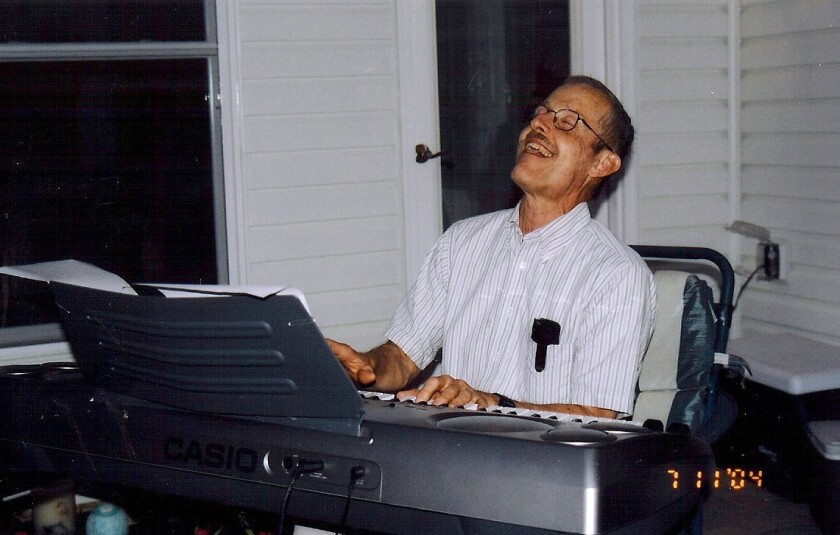
Bruce Ivins plays the keyboard at a party in 2004. A woman on whom he was fixated -- a Kappa Kappa Gamma sister -- said she found him "cloyingly nice."

Bruce Ivins plays the keyboard at a party in 2004. A woman on whom he was fixated -- a Kappa Kappa Gamma sister -- said she found him “cloyingly nice.”

(U.S. Army Medical Institute / MCT)

He roamed the University of Cincinnati campus with a loaded gun. When his rage overflowed, the brainy microbiology major would open fire inside empty buildings, visualizing a wall clock or other object as a person who had done him wrong.

By the mid-1970s, Bruce Ivins had earned his doctorate and was a promising researcher at the University of North Carolina. By outward appearances, he was a charming eccentric, odd but disarming. Inside, he still smoldered with resentment, and he saw a new outlet for it.

Several years earlier, a Cincinnati student had turned him down for a date. He had projected his anger onto the young woman’s sorority, Kappa Kappa Gamma. There was a Kappa house in Chapel Hill, N.C., and Ivins cased the building. One night when it was empty, he slipped in through a bathroom window and roamed the darkened floors with a penlight.

Upstairs, he found something that fascinated him: a glass-enclosed sheaf of documents, called a cipher, necessary for decoding the sorority’s secrets. The cipher would help him wage a personal war against Kappa Kappa Gamma into the sixth decade of his life.

This was the side of himself that Ivins kept carefully hidden. He devised sneaky ways to strike anonymously at people or institutions he imagined had offended him. He harbored murderous fantasies about women who did not reciprocate his overtures. He bought bomb-making ingredients and kept firearms, ammunition and body armor in his basement.

Yet Ivins managed to work his way into the heart of the American biodefense establishment, becoming a respected Army scientist and an authority on the laboratory use of anthrax. When a series of anonymous, anthrax-laced letters killed five people, disrupted mail delivery and briefly paralyzed parts of the federal government in fall 2001, the FBI sought him out for advice.

The anthrax attacks, coming on the heels of Sept. 11, had enduring effects. They deepened fears of terrorism and helped advocates of a U.S. invasion of Iraq make their case to Congress and the public. They prompted an expensive and risky expansion of federally funded biodefense laboratories.

In the anxious weeks and months after the mailings, the nation’s defense and law enforcement establishments were consumed with finding out who was responsible. Was it Al Qaeda? Domestic terrorists? Some senior government officials suggested Iraqi dictator Saddam Hussein might be to blame.

Investigators believed the poisoned envelopes were deposited in a curbside mailbox in downtown Princeton, N.J. Only years later would the significance of that location become clear.

The mailbox stood beneath the fourth-floor office of a college sorority, Kappa Kappa Gamma.

::

Ivins grew up in Lebanon, Ohio, a small town 30 miles northeast of Cincinnati. His parents had planned the arrivals of their first two children, both sons, but by late 1945 the couple had no desire to add to the family. In conversations with a sister-in-law, Mary Ivins described how she tried to abort the unwanted third pregnancy:

Over and over, she descended a series of steps by bouncing with a thud on her buttocks.

Bruce Ivins, born April 22, 1946, would eventually hear the story himself.

His parents were a study in opposites. Randall, a pharmacist, was unfailingly generous, chatty and averse to confrontation. Mary’s prim facade hid a penchant for violence.

“Mom could explode,” recalled C.W. Ivins, Bruce’s middle brother. “She inflicted terror on all of us.”

Randall, the amiable proprietor of Ivins Drugs, would sometimes arrive at work bearing the evidence of her latest eruption.

“One day he came in and he had a black eye,” said a former employee, pharmacist Don Hawke. “Of course, she hit him with a broom. He said, ‘She missed me the first time.’ He was scared to death of her.”

On other occasions Mary took a skillet to Randall’s head and a fork to his hand.

One night, the phone rang at 2 a.m. at the home of Dr. Ralph Young, a neighbor.

It was Mary: “Ralph, come down here. I’ve killed Randall.”

To Young’s surprise, the door was answered by Randall — alive but pressing a garment to his blood-spattered head.

The Ivins’ youngest son seemed particularly affected by the family dysfunction.

As a first-grader, Bruce put blindfolds on his teddy bear and other stuffed animals (a precursor, he would say later, to his adult fixation with bondage).

When a 14-year-old classmate, Lana Neeley, arrived at the Ivins house on an errand for her mother, Bruce beckoned her to the basement to “see the gunpowder he’d just made.” She vowed never to set foot in the house again.

“He was very intelligent and made sure that everyone around him knew it,” said Bob Edens, who passed by the Ivins house regularly, delivering the Dayton Daily News. “He had an inability to become part of the group in a natural way. So he would act out to get attention in weird ways.... He had no sense of normalcy.”

::

As a young adult, Ivins struck others as painfully strait-laced. “Sort of a Mr. Goody-Two-Shoes,” recalled microbiologist Priscilla Wyrick, who hired him in 1975 as a lab researcher at Chapel Hill. Occasionally, colleagues glimpsed a scarier side of him.

After he discovered that a doctoral student working across the hall, Lori Babcock, had been active in Kappa Kappa Gamma, Ivins startled her one night with a spot-on recitation of the group’s secret initiation rituals. Then he pressed her for further details about the sorority.

“The hair on the back of my neck went right up,” Babcock recalled.

By late 1978, Ivins, then 32, and his wife, Diane, had moved to suburban Maryland. But he remained fixated on Nancy Haigwood, a married UNC student studying for her doctorate in microbiology.

Haigwood mentored younger members of Kappa Kappa Gamma at Chapel Hill, and Ivins resented that she had spurned his attempts to forge a friendship. She found him “cloyingly nice,” an oddball who craved constant attention.

In the spring of 1979, Haigwood suffered a career-threatening misfortune.

Everything that she had strived so hard for hinged on converting the data in her lab notebook into her doctoral dissertation. She kept the notebook, filled with hand-recorded hypotheses, results of experiments and other records of her scientific work, in a locked room in a lab building.

Suddenly, it was gone.

After a couple of days of agony, Haigwood received an anonymous note, saying the prized notebook could be found at a certain street mailbox in Chapel Hill. Police found it there and returned it to Haigwood. Many years later, Ivins would admit to the FBI what Haigwood had long suspected — that he was the thief.

Near his new place of work, the Defense Department’s Uniformed Services University of the Health Sciences in Bethesda, Md., Ivins spilled out his feelings about Haigwood to a psychiatrist, Dr. Naomi Heller. He said he experienced Haigwood’s brush-off as a replay of his mother’s mockery of him during childhood.

Ivins confided that he had thought through plans to kill Haigwood.

::

In December 1980, Ivins, then 34, was hired as a civilian microbiologist at the U.S. Army Medical Research Institute of Infectious Diseases at Ft. Detrick, Md. Amid fresh suspicion that Soviet scientists were creating biological weapons, Ivins would be assigned to grow and purify anthrax and test whether the Army’s vaccine would protect military personnel and the public.

Without any evaluation of Ivins’ psychiatric fitness, he was granted a “secret” level security clearance.

The Army knew very little about this man it had entrusted with one of the world’s most dangerous microorganisms. One night not long after he was hired, he drove about three hours to West Virginia University, where Kappa Kappa Gamma had a chapter.

Ivins entered the house through a ground-floor window, forced open a locked cabinet and found Kappa’s Book of Ritual, the complete compendium of its passwords and secrets. Since he already had the cipher, he would be able to decode all of the sorority’s rituals.

At work, Ivins was thriving. He led research to develop an anthrax vaccine envisioned as superior to the existing one. Patent documents would list him as a co-inventor of this genetically engineered vaccine, putting him in line for career-crowning recognition if the product was a success — not to mention lucrative royalties if circumstances ever created a surge in demand.

He resented that the Pentagon did not spend more to develop the product — and he grew angry when troubles surrounding the old vaccine threatened the entire program.

Away from the lab, he continued to pursue bizarre vendettas.

On May 9, 1983, the Frederick News-Post in Maryland published a letter Ivins had written and signed “Nancy L. Haigwood.”

“As a member of Kappa Kappa Gamma,” Ivins wrote, “I am continually dismayed by attempts of the media and other outsiders to disparage the Greek system. I am especially incensed at vitriolic attacks on our practices of ‘hazing,’ which non-Greeks fail to realize serve numerous valuable functions.... No matter what the press may say about us, I’m still proud to be in a sorority.”

Ivins took the ruse a perverse step further. He mailed a copy of the published letter to a woman whose 20-year-old son had died in a fraternity hazing incident. Eileen Stevens of Sayville, N.Y., had come to his attention through her efforts to raise awareness about hazing abuses.

Ivins also enclosed a personal missive in his own name in which he disparaged Haigwood and pressed Stevens to send him any information she might have about abuses within Kappa Kappa Gamma.

In another letter to Stevens, Ivins feigned renewed outrage about Haigwood’s supposed comments. “I have personally gotten into several arguments about hazing with fraternity and sorority members, who have privately said that since I was not ‘Greek’ I had no right to criticize hazing,” Ivins wrote Stevens on May 26, 1986, adding: “I wonder if only murderers have the right to criticize murderers, only Communists have the right to criticize Communists, only terrorists have the right to criticize terrorists.”

His public self gave no hint of his private turmoil. Ivins appeared to lead a harmonious life: a successful scientist, married with two children and a home in a nice neighborhood. Yet over the years, he sought help from psychiatrists and counselors and was prescribed a battery of antidepressant and antipsychotic drugs.

A psychiatrist who treated him in the late 1990s, Dr. David Irwin, confided to a therapist that Ivins was the “scariest” patient he had ever known.

Army officials seemed oblivious to his instability — even if he was not. In emails to his current and former lab technicians, Ivins described disturbing thoughts and impulses and said he was struggling to control his behavior.

On July 18, 2000, Ivins told a mental health counselor that he had recently planned to poison his former assistant, Mara Linscott. In addition to having cyanide, he said that he had once obtained ammonium nitrate, to make a bomb.

He saw himself, Ivins said, as an “avenging angel of death.”

::

After the anthrax letters were mailed in September and October of 2001, the FBI for nearly five years pursued a former Army virologist, Steven Hatfill, as the prime suspect.

Hatfill had filled several prescriptions in 2001 for Cipro, an antibiotic effective against anthrax, among other infections. He had also boasted of his expertise in biological warfare.

Based on this and other information, inspector Richard Lambert, handpicked by FBI Director Robert S. Mueller III to lead the investigation, was convinced that Hatfill was the perpetrator. With Mueller’s backing, he drove his agents to find evidence to support an indictment against Hatfill. It never came.

On June 5, 2006, a visiting team of FBI employees arrived at the bureau’s Washington Field Office for a long-scheduled audit of its general efficiency and effectiveness. A growing number of investigators were frustrated by Lambert’s emphasis on Hatfill. They had felt powerless to do anything about it. Until now.

In a confidential report, the inspection team said more than 90% of the investigators on the anthrax case believed Lambert was concentrating on Hatfill to the exclusion of all other potential suspects. Lambert said the focus was never on one individual, exclusively.

In September 2006, Mueller replaced Lambert with two agents who had extensive backgrounds in criminal investigation, Edward Montooth and Vincent Lisi. A case that had foundered for years was reoriented: Investigators were told to focus on people who had verifiable access to a research batch of anthrax that geneticists had matched to the material used in the letter attacks.

On the Friday before Christmas 2006, Montooth and Lisi went to FBI headquarters for a briefing with the director.

“You’ve been there three months,” Mueller reminded Montooth. “What’s going on?”

Trying his best to keep expectations modest, Montooth let Mueller in on some news: “There’s a guy that we can’t wash out, no matter what we’re doing. It makes us more suspicious.”

The object of suspicion was an Army microbiologist who had created the batch of anthrax that matched the material in the letters. He had unrestricted access to this batch, and he had put in unusually long, solitary hours at the biocontainment lab, or “hot suite,” at USAMRIID during the nights leading up to the mailings.

His name, Montooth said, was Bruce Ivins.

::

On the evening of Wednesday, July 9, 2008, Ivins arrived at Comprehensive Counseling Associates in Frederick, Md., for his weekly group therapy session. He was noticeably agitated. FBI agents had by now questioned him at length, and his lawyers expected he could soon be charged with murder in connection with the anthrax mailings.

When it was his turn to speak, Ivins, 62, said he was angry at the investigators and at the system that had dealt him this hand. He had a bulletproof vest and was going to obtain a new Glock handgun, he said. He had a list of people he was planning to kill.

“I’m not going to go down for five capital murders,” he said. “I’m going to get them all.”

The next day, police escorted Ivins out of Ft. Detrick, and he spent about two weeks at a psychiatric hospital near Baltimore before returning to his home in Frederick.

At 1:47 a.m. on Sunday, July 27, an ambulance rushed Ivins from his home to the emergency room at Frederick Memorial Hospital. He was comatose. Blood tests indicated a massive overdose of Tylenol. A few hours after he was admitted, Ivins showed responsiveness to those around him.

An intensive care nurse, Megan Shinabery, asked him: “Did you intentionally try to commit suicide?” Her handwritten notes reflect Ivins’ response: “pt nodded yes.”

Two days later, Ivins was dead.

::

On Aug. 6, 2008, eight days after his death, federal investigators announced that Ivins, acting alone, had perpetrated the anthrax mailings. Two days later, a prosecutor signed a letter to Steven Hatfill’s lawyer, exonerating his client of any wrongdoing. The government paid Hatfill a $5.82-million legal settlement.


IL C.D. VIRUS CINESE IN VERITA' E' UN VIRUS AMERICANO ... COME ANCHE QUELLO ITALIANO ...


Local News |

Three Dead, Others Hospitalized In Virus Outbreak At Fairfax Retirement Community

Robert Geiger / Flickr

This story was updated at 6 p.m. on July 16.

The Fairfax County Health Department is now reporting that three people have died following a respiratory virus outbreak at the Greenspring retirement community in Springfield, Va., and at least 63 people have become ill.

The health department says it doesn’t know how much the outbreak contributed to the three deaths.

Twenty-three of the 263 residents were hospitalized and 19 employees now say they are experiencing symptoms of upper respiratory illness, the health department says.

Residents in the continuing care neighborhood that have become ill are showing respiratory symptoms ranging from coughing and shortness of breath to pneumonia, according to officials.

“We do not know the specific viral or bacterial cause for the illness,” says Dr. Benjamin Schwartz, director of epidemiology at the Fairfax County Department of Health, which has been conducting tests to find the cause. Initial tests for common viruses and bacteria have been negative. The county has sent samples to the state health department and the CDC for further testing. The results should be available by midweek next week. 

Respiratory outbreaks at assisted living facilities are not uncommon.

“The reason is that older individuals are more susceptible to diseases,” Schwartz said. “They may have other medical conditions that reduce their immunity, and people in these facilities often come in close contact with each other.”

Schwartz says what makes the illnesses unusual is the time of year: Such outbreaks typically take place during the winter and flu season.

In an emailed statement, Greenspring spokesperson Courtney Benhoff said, “Greenspring’s highest priority is the welfare of those who live and work on campus. In keeping with this commitment the community has acted with an abundance of caution, and in partnership with the Fairfax County Department of Health, has taken all necessary measures to fully implement proven infection prevention and control strategies.”

She said the deaths have not been conclusively linked to the respiratory illness.

“It is important to understand that these individuals were of an advanced age, with complex prior medical issues,” Benhoff wrote. “At this time, we can not speculate on the role of respiratory illness in those deaths.”

The facility has taken several steps to reduce the spread of the virus including keeping sick residents in their rooms, increasing cleaning, canceling group activities and closing the facility to new admissions. The continuing care neighborhood is part of the larger Greenspring neighborhood that houses more than 2,000 residents.

This story was updated to reflect the new total of deaths, the number of sick, and include new information about the number of residents at Greenspring.

L'OMS DEVE ANDARE A FORT DETRICK, NON SOLO A WUHAN


Secret fort in US must come clean on its work

(Chinadaily.com.cn)    16:57, June 01, 2020

Fort Detrick Biological Base is situated in the US state of Maryland. It was little known to the residents of the state let alone the general public. At least that was the case before many Americans started suffering from an unknown respiratory infectious disease before the outbreak of COVID-19.

Since the outbreak, Fort Detrick has been mentioned more and more frequently.

The reason why the base had come under the spotlight was the unexplained outbreak of a deadly respiratory disease near it several months prior to the epidemic in China. This was covered by the US media. More importantly, last July, Fort Detrick was mysteriously closed, and the US government has so far been unwilling to explain the sudden closure.

Questions have been asked in the United States, and calls for clarification on a possible link between the closure of Fort Detrick and an outbreak of "large-scale influenza" and COVID-19 are getting louder.

A screenshot of the White House petition website.

On March 10, a netizen named B.Z. launched a petition on the White House petition website. The petitioner listed the timeline related to the COVID-19 outbreak and the Fort Detrick, hoping that the US government would give a reasonable explanation:

7/2019: The top secret US army's medical research institute of infectious diseases at Fort Detrick was closed;

8/2019: A large-scale outbreak of "influenza" killed more than 10,000 people;

10/2019: The United States organized Event 201 — A Global Pandemic Exercise with the participation of the Deputy Director of CIA;

11/2019: An outbreak of pneumonia of undetermined origin was found in China;

2/2020: The epidemic became global;

3/2020: A large number of English-language news reports about the closure of Fort Detrick were deleted from online access.

What makes things even more puzzling is the Event 201, a Global Pandemic Exercise, mentioned in the timeline above. This exercise, organized in October, 2019, has attracted continued international attention for the similarities between its scenario and the development of today's pandemic.

According to the official website of "Event 201", the exercise was to simulate an outbreak of a novel zoonotic transmitted from bats to pigs to people that eventually becomes efficiently transmissible from person to person, leading to a severe pandemic. The pathogen and the disease it causes are modeled largely on SARS, but it is more transmissible.

What's so "fishy" after all

The US media bluntly described Fort Detrick as a cutting-edge lab. In the 1950s and 1960s, it was the center of the US government's darkest experiments.

Allen Dulles, who ran the CIA's covert-operations directorate and would soon be promoted to direct the agency, envisioned and established a mind-control project.

This is said to be the prototype of what would later become the CIA's infamous "mind control" (MK-ULTRA) program. In 1951, Dulles hired chemist Sydney Gottlieb to design and oversee a systematic search for the key to mind control.

MK-ULTRA ended in failure in the early 1960s. Nonetheless Fort Detrick, as it was renamed in 1956, remained Gottlieb's chemical base. After the end of MK-ULTRA, he used it to develop and store the CIA's arsenal of poisons. In his freezers, he kept biological agents that could cause disease, including smallpox, tuberculosis and anthrax as well as a number of organic toxins, including snake venom and paralytic shellfish poison.

In 1970, US President Richard Nixon ordered all government agencies to destroy their supplies of biological toxins. Army scientists complied. But saxitoxin — enough to kill 55,000 people was discovered and only destroyed in 1975.

More than 100 residents near the base developed cancer

Just when everyone thought that this dark history was a thing of the past, in 2011, an ABC report sparked renewed attention.

More than 100 residents suffered from fatal cancer near the fort, according to US media reports.

A term not often used in everyday life — deadly cancer cluster, appeared in the ABC report.

Such an important base is suddenly closed

Eight years later, the base was in the news again.

In July 2019, Fort Detrick was suddenly closed, but the US Centers for Disease Control (CDC) refused to release critical information for "national security reasons".

According to the The New York Times, the government suspended military research at the frontier biological defense center due to the handling of hazardous materials. It is reported that the suspended study involved a total of 67 "selective agents" and toxins, such as microorganisms that cause Ebola, smallpox, anthrax and plague, as well as organisms that cause ricin.

According to RT TV, the CDC highlighted problems in the wastewater system.

Data from CDC

Bio-base and "vaping illness"

Shortly after the Fort Detrick base was closed in July 2019, an inexplicable "vaping illness" broke out in the surrounding area in August 2019. Vaping illness is a lung ailment more commonly associated with the e-cigarette or vaping products.

Maryland Secretary of Health Robert R. Neall issued a new mandate on Oct 3 for doctors after 23 lung-related illnesses were linked to vaping in the state. The number should only include voluntarily-made reports.

The symptoms and prevalence of e-cigarette patients have sparked a heated debate in the US. A doctor even went so far as to say that something was very wrong.

Patients, mostly otherwise healthy and in their late teens and 20s, are showing up with severe shortness of breath, often after suffering for several days with vomiting, fever and fatigue. Some have wound up in the intensive care unit or on a ventilator for weeks.

On Oct 2, 2019, the New York Times detailed cases of vaping illness in a separate story.

Doctors at the Mayo Clinic examined samples of lung tissue from 17 patients, all of which looked as if the people had been exposed to toxic chemicals, the researchers said.

Local unexplained influenza

According to an ABC report on July 12, 2019, a deadly disease broke out at the Greenspring, retirement community in Springfield, Virginia.

The community is only an hour's drive from Fort Detrick base. Some people suspected that the outbreak in the community last year was actually the novel coronavirus, but the reporter who reported the news denied this claim, saying that the local health department's test conclusion was caused by Haemophilus influenzae. However, many netizens recommend testing the community members to see if they had the novel coronavirus antibody.

According to the Fairfax County Health Bureau, on June 30, 2019, the community discovered the case of this unexplained respiratory disease for the first time. As of July 15, 2019, the number of deaths related to the disease in the community rose to 3, a total of 63 community residents were sick, and 19 staff members also showed symptoms.

It was reported that the patient's symptoms include "fever, cough, body pain, wheezing, hoarse voice, and general weakness", and some patients also have symptoms of pneumonia.

To this day, the origin of COVID-19 remains unidentified. But experts and scientists around the world agree that the place where the earliest cases were reported is not necessarily the origin of the virus.

CHI HA "PERSO" PER STRADA IL SARS-COV-2, HA USATO COME MODELLO LA DISPERSIONE DELL'ANTHRAX DEL 2001 ... COME E PERCHE? C'ENTRANO PER CASO LE PSICOPATOLOGIE DI TRUMP, DEI TRUMPISTI E DEI TRUMPINI?

IL C.D. VIRUS CINESE IN VERITA' E' UN VIRUS AMERICANO ... COME ANCHE QUELLO ITALIANO ...


Origin of anthrax spores that killed 5, including Oxford woman, explained

FREDERICK, Md. -- A retired researcher at the Army lab believed to be the source of anthrax spores used in deadly 2001 mailings gave his views recently on how they may have been made.

John W. Ezzell, who retired in 2006 from the U.S. Army Medical Institute of Infectious Diseases at Fort Detrick in Frederick, was in the audience at a conference last week in Washington.

Ezzell stood up and spoke for about 15 minutes when a technical question arose.

Ezzell said he believes the spores were removed from wet anthrax samples in a centrifuge while being dried with a speed vacuum. That would have created a brown pellet with a white cap consisting almost entirely of spores.

Investigators believe fellow researcher Bruce Ivins mailed the spores and later killed himself as investigators closed in.

Five people died as a result of the mailings including an elderly Connecticut widow living in Oxford who contracted inhalation anthrax. Ottilie Lundgren, 94, was the fifth anthrax fatality in the nation. She died one day before Thanksgiving 2001.

IL C.D. VIRUS CINESE IN VERITA' E' UN VIRUS AMERICANO ... COME ANCHE QUELLO ITALIANO ...


Coronavirus was a ‘creation of CIA biological weapon lab of the US’?

Reports say that Israel is developing a vaccine for COVID-19 and that vaccine will be provided only to those states that recognize Israel.

Coronavirus


On March 10, 2020, a petition for information for Fort Detrick posted on the White House website.

The petition listed on a series of conspicuous events which lead to a conclusion that the Covid-19 was a ‘creation of CIA biological weapon Fort Detrick’s lab of the United States’.

And in March, 2020, a large number of English news reporters report about the close of Fort Detrick and delete of the petition “displaying 404 not found”.

Let’s go through conspicuous events:

In July 2019, Centers for Disease Control and Prevention (CDC) closed the top-secret US Army’s medical research institute of infectious disease at Fort Detrick after its alleged failure to comply with the safety inspection.

Meanwhile, in January 2020, a doctor in Washington DC was also ‘stopped’ from testing for Coronavirus in US. Dr Helen Y. Chu, an infectious disease expert in Seattle, tried to conduct early tests for the new Coronavirus but ran into red tape before circumventing federal officials and confirming a case.

Read more: Can Coronavirus spread through breathing & speaking? Can face mask help?

The developments suggest that CDC was aware of the coronavirus leak as earlier as in June and July 2019.

In August, 2019, a large-scale “influenza” killed more than 10,000 people. The CDC management blamed E-cigarettes and initiated investigation into 193 infectious cases. Soon, the infectious disease broke out in over 22 states.

In September, 2019, National Institute of Allergy and Infectious Diseases gave Greffex Inc, a $18,900,000 contract to develop Coronavirus vaccine. The contract was given to a Texas-based genetic engineering company. On February 20, 2020, New York Post headlines “Texas-based Company has reportedly created a Coronavirus vaccine”.

“Now the vaccine will move to animal testing by the necessary government agencies- the FDA in the US and similar regulatory bodies in China and other heavily affected countries,” the news report further adds.

In October 19, the United States organized event 201- A Global Pandemic Exercise with the participation of the Deputy Director of CIA.

The event 201 simulates an outbreak of a novel Coronavirus transmitted from bats to pigs to people that eventually becomes efficiently transmissible from person to person, leading to a severe pandemic.

What is more, in October, 2019, US military games team visited China’s Wuhan city and stayed there for 10 days, but no solider was able to play the game because of the so-called flue.

There are reports as well that vaccine to cure the Coronavirus is being produced in Israel and the controversial state claims its patent

In November 2019, pneumonia of undermined origin was found in China when Covid-19 broke out at South China Seafood Market. And in February, 2020, the epidemic in the world broke out.

After contacting hundreds of thousands of people and taking thousands of lives worldwide, the deadly virus has entered in the palace of UK. British Prime Minister Boris Johnson has also been diagnosed corona positive and the spread of the virus continues in around 200 countries in the world.

After deleting of the petition, local as well as international media asked from the Washington administration to publish the reason for the close of Fort Detrick, to clarify whether the laboratory is the research unit for the new Coronavirus and whether there is a virus leak.

Here is not the end of this conspiracy, scientists and experts with facts and figures have claimed that Covid-19 is not a nature-born infectious disease but laboratory-generated virus to create panic and fear among the people as well as to achieve global political and economic agenda.

Read more: Bill Gates reveals multi-billion dollar plan to fight coronavirus

There are reports as well that vaccine to cure the Coronavirus is being produced in Israel and the controversial state claims its patent and has made it clear to the world that the cure vaccine will only be provided to the states who recognize the existence of Israel as an independent state.

IL C.D. VIRUS CINESE IN VERITA' E' UN VIRUS AMERICANO ... COME ANCHE QUELLO ITALIANO ...


Chinese blame pandemic on U.S. Army lab that closed 50 years ago

Yuichiro Kakutani of the Washington Free Beacon details a recent piece of Chinese propaganda about COVID-19.

Chinese propagandists are casting blame for the coronavirus pandemic on a U.S. military research lab that shuttered its biowarfare division more than 50 years ago.

Chinese diplomats and state-run media outlets have repeatedly spread the conspiracy that the coronavirus originated in Maryland’s Fort Detrick research lab, often in response to criticism about the country’s response to the pandemic.

“Speaking of the truth, we would like the U.S. government to tell the truth about the U.S. Army Medical Research Institute of Infectious Diseases at Fort Detrick, Maryland, to U.S. and the international community,” Wang Wenbin, Chinese foreign ministry spokesman, said on July 22.

But President Richard Nixon closed down Fort Detrick’s offensive biowarfare division in 1969—50 years before the first coronavirus cases were reported in Wuhan, China. Fort Detrick now focuses on defensive biological research as well as cancer research. U.S. officials have frequently criticized the Chinese government for using the Fort Detrick conspiracy theory—and other unproven allegations—to blame the outbreak on the United States.

“To have somebody … from the Chinese government come out and make a statement like that [is] completely ridiculous and it’s irresponsible, and it doesn’t get us to where we need to be,” said Secretary of Defense Mark Esper in March.

Chinese propaganda organs have floated other countries as possible origins of the coronavirus, with a similar lack of evidence. Global Times, a leading mouthpiece for the regime, once insinuated that the virus could have originated in Spain, citing one research article that has not been peer-reviewed. The same outlet also claimed that the coronavirus was detected in Brazilian sewage back in November 2019.

Chinese social media accounts and U.S. conspiracy theorists have also smeared American military personnel as part of their Fort Detrick conspiracy. …

Mitch Kokai / Senior Political Analyst

Mitch Kokai is senior political analyst for the John Locke Foundation. He joined JLF in December 2005 as director of communications. That followed more than four years as chie...

IL C.D. VIRUS CINESE IN VERITA' E' UN VIRUS AMERICANO ... COME ANCHE QUELLO ITALIANO ...


COVID-19: Trump contradicts US spies on coronavirus origin; insists it came from 'Chinese laboratory'

Since emerging in the Chinese city of Wuhan at the end of last year, the coronavirus is confirmed to have infected 3.2 million people and killed more than 230,000.

Published: 01st May 2020 12:13 PM  |   Last Updated: 01st May 2020 12:13 PM   |  A+A-

President Donald Trump speaks about the coronavirus in the Rose Garden of the White House. (Photo | AP)

By IANS

WASHINGTON: US President Donald Trump has appeared to undercut his own intelligence agencies by suggesting that he has seen evidence the novel coronavirus originated in a Chinese laboratory.

Earlier, the US national intelligence director's office said it was still investigating the virus' origins. But the office said it had determined COVID-19 "was not manmade or genetically modified", the BBC reported.

China has rejected the lab theory and criticised the US response to COVID-19.

Since emerging in the Chinese city of Wuhan at the end of last year, the coronavirus is confirmed to have infected 3.2 million people and killed more than 230,000.

ALSO READ | US can never declare 'total victory' over coronavirus, says Trump as death toll crosses 63,000

At the White House on Thursday, Trump was asked by a reporter: "Have you seen anything at this point that gives you a high degree of confidence that the Wuhan Institute of Virology was the origin of this virus?"

"Yes, I have. Yes, I have," said the president, without specifying. "And I think the World Health Organization should be ashamed of themselves because they're like the public relations agency for China."

Asked later to clarify his comment, he said: "I can't tell you that. I'm not allowed to tell you that."

He also told reporters: "Whether they (China) made a mistake, or whether it started off as a mistake and then they made another one, or did somebody do something on purpose?

"I don't understand how traffic, how people weren't allowed into the rest of China, but they were allowed into the rest of the world. That's a bad, that's a hard question for them to answer."

ALSO READ | China doesn't want to see me elected: Trump after hinting at COVID-19 compensation tariffs

A leading US media outlet reported on Thursday that senior White House officials have asked the US intelligence community to investigate whether the virus came from a Wuhan research laboratory.

Intelligence agencies have also been tasked with determining if China and the WHO withheld information about the virus early on, unnamed officials told an American news channel on Wednesday, the BBC reported.

In a rare public statement, the Office of the Director of National Intelligence, which oversees US spy agencies, said on Thursday it concurs with the "wide scientific consensus" regarding COVID-19's natural origins.

"The (intelligence community) will continue to rigorously examine emerging information and intelligence to determine whether the outbreak began through contact with infected animals or if it was the result of an accident at a laboratory in Wuhan."

It was the first clear response from American intelligence debunking conspiracy theories - both from the US and China - that the virus is a bio-weapon.

But the possibility that the coronavirus could have inadvertently leaked from a research facility has not yet been disproven.

IL C.D. VIRUS CINESE IN REALTA' E' AMERICANO ... COME ANCHE QUELLO ITALIANO ... TROPPE STRANE COINCIDENZE ...


Study Suggests Covid-19 Was In The U.S. Weeks Earlier Than Thought, Before First Public Cases In China

Robert Hart

Topline

Researchers, including scientists from the Centers for Disease Control and Prevention (CDC) and the American Red Cross, have found evidence that Covid-19 was present in the U.S. in December 2019, weeks earlier than previously thought and before even the first cases in Wuhan, China, had been publicly identified. 

Key Facts

Findings from the study, which tested stored blood samples from between December 2019 and January 2020 for Covid-19 antibodies and were published in the journal Clinical Infectious Diseases, indicated the presence of Covid-19 in several U.S. states “earlier than previously recognized.”

Researchers found positive test results, indicating prior exposure to the virus responsible for Covid-19, in samples from California, Oregon and Washington in mid-December, much earlier than the first official U.S. case on Jan. 19.   

Samples from Connecticut, Iowa, Massachusetts, Michigan, Rhode Island, and Wisconsin were also found to test positive for Covid-19 in January, before Covid-19 was believed to be present. 

The study’s authors say they will continue to work with the U.S. government and non-government partners to use blood samples to analyze the pandemic, adding that an understanding of how the pandemic progressed from its early stages to the global crisis seen today will help public health officials better allocate resources to prevent illness and death.

Key Background

While the presence of antibodies in a person's blood means they have been exposed to the pathogen in the past — in this instance the virus that causes Covid-19 —  the kinds of tests used in this study are broader and less specific than would be needed to confirm that without any doubt. It is possible, as the authors themselves acknowledge, that the tests are picking up another kind of antibody that, while similar, is distinct; coronaviruses are a large and relatively common family of virus, including some that can cause the common cold, leaving open the possibility that infection by a non-Covid-19 virus induced the positive test results. The researchers did take steps to minimize these risks, but they are not zero. 

Chief Critic

Scientists have been quick to question the study’s conclusions on social media, citing these uncertainties. Trevor Bedford, a scientist at Fred Hutch, said, for example, that the study does not necessarily mean the virus was in the U.S. in December, and that the positive results could possibly be explained by the blood donor having recently recovered from a seasonal coronavirus infection, not Covid-19.


What We Don’t Know

The origins of Covid-19 are still largely a mystery, with the virus believed to have crossed over from animals into humans in the later months of 2019. Today, Dec.1 2020, is believed to be the first anniversary of the first identified case from a novel coronavirus that had been circulating in the city of Wuhan, in China. It goes without saying that the search for the virus’ origins is political — some, including U.S. President Donald Trump, are even calling for China to pay reparations for its apparent role in the virus’ emergence — something the World Health Organization is having to grapple with as it tries to get boots on the ground in China. In recent weeks, the Guardian reports that China has been embarking on a blame-shifting propaganda campaign, trying to relocate the virus’ origin outside of China.    

Further Reading


  • Lettori fissi