The Legitimacy of the WHO as a Gold Standard of Health is Dubious. Analysis and Review


All Global Research articles can be read in 51 languages by activating the “Translate Website” drop down menu on the top banner of our home page (Desktop version).
***
The ultimate international authority for infectious diseases is the World Health Organization (WHO). Due to its widespread acceptance by the world’s national governments, it has been extremely successful in assuming the helm to monitor regional and global infectious diseases and dictate medical intervention policies to international health agencies. The organization has become the final word to rule whether the spread of a serious pathogen is a pandemic or not. For the majority of the medical community, the media and the average person, the WHO is the front line command post for medical prevention (i.e., vaccination) and treatment. Consequently its rulings are often regarded as the gold standard. On matters of global health, the WHO holds dominance.
For approximately a year the WHO has propagated the belief that the first line of defense for curtailing the COVID-19 pandemic is self-isolation, distancing, masks and, ultimately, vaccination. Although it approved Ivermectin as a cost-effective treatment against SARS-CoV-2 infections, it disapproved hydroxychloroquine in favor of Gilead Bioscience’s and the National Institute of Allergy and Infectious Disease’s (NIAID) Anthony Fauci’s novel and costly drug Remdesivir. Much of it’s funding efforts have been reserved for mass-vaccination with the new generation of experimental vaccines. Throughout these efforts, the WHO has allied itself with the US’s and UK’s national health systems, and the Bill and Melinda Gates Foundation and his Global Alliance for Vaccines and Immunization (GAVI) initiative.
Most people wrongly assume the WHO acts independently from private commercial and national government interests for the welfare of the world’s population. The legitimacy of the WHO as a gold standard of health is dubious. The organization has frequently been accused of conflicts of interests with private pharmaceutical companies and mega-philanthropic organizations such as the Gates’ Foundation, as well as being riddled with political alliances, ideologies, and profiteering motives. Despite it’s mega-pharmaceutical interests and consultants representing private vaccine interests, in the past the WHO has had the audacity to ridicule the pharmaceutical industry of corruption.
“Corruption in the pharmaceutical sector occurs throughout all stages of the medicine chain, from research and development to dispensing and promotion…. A lack of transparency and accountability within the medicines chain can also contribute to unethical practices and corruption.”
These are similar charges that have been leveled against the WHO. An article in the National Review called the WHO “scandal plagued” with “wasteful spending, utter disregard for transparency, pervasive incompetence, and failure to adhere to even basic democratic standards.” In his book, Immunization: How Vaccines Became Controversial, University of Amsterdam professor emeritus Dr. Stuart Blume raises the serious problem of the WHO’s most influential advisors on emergency health conditions, such as the current Covid-19 pandemic and earlier the 2009 H1N1 swine flu scare that never was, serve as consultants for the vaccine industry. During times of global emergencies and crises, the WHO confers with a separate group of advisors outside its formal sitting Strategic Advisory Group of Experts or SAGE; the names of this group’s members are not made public.
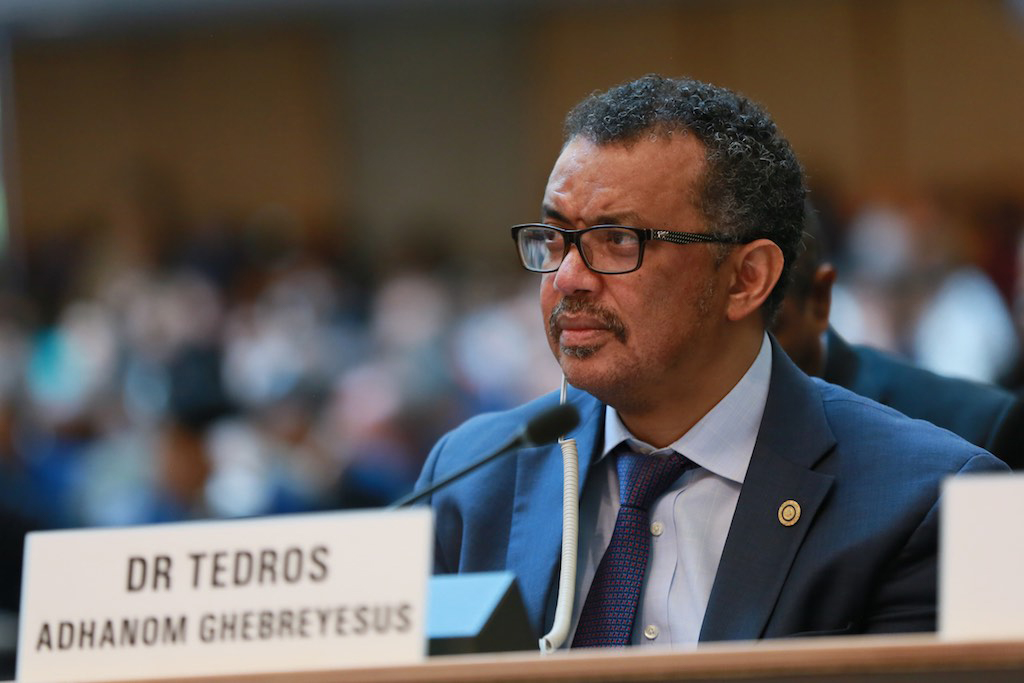
We would add that the WHO’s level of incompetence has resulted in serious misinformation about pandemics, medical risks of vaccines and other health-threatening chemicals. For example, during the early stage of the COVID-19 outbreak in Wuhan, the organization reported it could not find any evidence of human transmission. However, the WHO has repeatedly kowtowed to China’s demands and unscrupulously accepts whatever statistics and statements the Chinese Communist Party (CCP) provides. Responding to a petition signed by over 700,000 signatories demanding the resignation of the current WHO Director General Tedros Adhanom, Japan’s Deputy Prime Minister Taro Aso told the Japanese parliament that the organization “should be renamed the Chinese Health Organization” for favoring China’s policy to stall and obstruct international investigations and for lauding unsubstantiated praise on the country’s transparency and handling of the pandemic. Back on December 31, 2019, Taiwan – which has been barred from WHO membership due to China’s political maneuvering – had been warning of a possible human-to-human transmission contrary to the wet-market narrative, but this was largely ignored in order to avoid upsetting the CCP.
The UK’s Sunday Times reported that Chinese scientists were forced to destroy their proof of the virus shortly after its discovery. In the province of Hubei, authorities ordered the cessation of further testing and the destruction of existing samples. Other researchers who made efforts to warn the public were punished. Writing for The Hill, University of Texas at San Antonio professor Bradley Thayer wrote, “Tedros apparently turned a blind eye to what happened in Wuhan and the rest of China and… has helped play down the severity, prevalence and scope of the Covid-19 outbreak.” Thayer concludes, “Tedros is not fit to lead the WHO.” He has no formal medical training as a physician or any international management experience in global health. Many others have voiced similar criticisms pointing out Tedro’s unsuitable background. Moreover, the Director General’s conflicts of interest with China abound. Immediately before and after his tenure as the Health Minister for Ethiopia’s ruling Communist party, the Tigray People’s Liberation Front, China had donated an estimated $60 million to the terrorist government and its social programs. Now heading the WHO, Tedros appears to continue lobbying on China’s behalf. In 2017, the Washington Post noted the fundamental problem:
“[China] worked tirelessly behind the scenes to help Tedros defeat the United Kingdom candidate for the WHO job, David Nabarro. Tedros’s victory was also a victory for Beijing, whose leader Xi Jinping has made public his goal of flexing China’s muscle in the world.”
Upon assuming his new position at the WHO, Tedros had left Ethiopia’s healthcare system in ruin. As one young healthcare worker reported, there was no “bare necessities of a health care office…. Sterile gloves, paper exam gowns and covers, cotton swabs, gauze, tongue depressors, alcohol prep pads, chemical test strips, suturing equipment, syringes, stethoscopes… were non-existent. This is a fact in most health care centers in Ethiopia.”
During the more recent re-investigation of SARS-CoV-2 origins, the Chinese authorities refused to provide raw case data and created repressive conditions to curtail reliable analysis and disclosure. The WHO’s final report concluded that the virus had an animal origin and did not escape Wuhan’s high security pathogen laboratory. But there are viable reasons to discredit the report as untrustworthy at best and perhaps intentionally deceptive.
First, the entire agenda of the investigation was staged theater rather than a deep investigation to uncover empirical evidence. The team simply inspected seafood and open-air markets. Consequently, the WHO team returned empty handed and without laboratory records for a proper forensic examination. To call the entire WHO effort gross incompetence would be an understatement. Based upon all the evidence that has emerged, a large number of professional medical voices are calling the entire investigation a farce.

Most problematic is the appointment of Peter Daszak on the WHO’s group to carry out the investigation. Daszak, the founding president of the shadowy non-profit organization EcoHealth Alliance, has headed many hunting adventures worldwide to identify the emergence of potential pathogens that could become pandemics. With the intention to divert attention away from an escaped laboratory virus, Daszak stated on a Going Viral podcast there was no evidential reason to visit and inspect the Wuhan laboratory. According to Independent Science News, despite Daszak’s denial of a lab origin, “EcoHealth Alliance funded bat coronavirus research, including virus collection, at the Wuhan Institute of Virology and thus could themselves be directly implicated in the outbreak.” The research at the Wuhan lab included ‘gain of function” efforts on coronaviruses, and received funds directly approved by Anthony Fauci. Newsweek reports the NIH had given a total of $7.4 million to the Chinese lab for the research. The organization has received over $100 million from a variety of sources, including the Department of Defense, Homeland Security, the NIH and undisclosed amounts from the Chinese government. Daszak himself has authored 25 studies funded by the Chinese Academy of Medical Sciences, think tanks, universities, military institutions, and ministries directly connected with the Chinese Communist Party.
Given the halls of power within the WHO, we are outlining some of the more salient reasons why the organization’s declarations about infectious diseases, pandemics and vaccination should not be trusted.
Vaccine Promotional Misconduct
For many years the WHO’s recommendations for certain vaccines were kept secret. Writing in a 2006 issue of the Journal of American Physicians and Surgeons, Dr. Marc Girard uncovered “scientific incompetence, misconduct or even criminal malfeasance” over the intentional inflation of vaccines’ benefits while undermining toxicity and adverse effects. Dr. Girard testified as a medical expert for a French court in a criminal trial against the WHO after French health officials obliged the organization to launch its universal Hepatitis B vaccine campaign. The campaign resulted in the deaths of French children. Girard gained access to confidential WHO documents. He noted that the WHO’s “French figures about chronic liver diseases were simply extrapolated from the U.S. reports.” He further accused the WHO serving “merely as a screen for commercial promotion, in particular via the Viral Hepatitis Prevention Board (VHPB), which was created, sponsored, and infiltrated by the manufacturers.”
Now during the Covid-19 pandemic, as early as last July, the WHO approved of China’s first vaccine for emergency use, long before it had undergone proper clinical trials and much earlier than Moderna’s and Pfizer’s mRNA vaccines’ approval.
Orchestration of Pandemic Panics
Before the current COVID-19 pandemic, there was the H1N1 swine flu scare in 2009. However, at the very start the WHO’s fear mongering of a global contagion that could exceed the death counts of the 1918 Spanish flu pandemic was solely based on false rhetoric rather than empirical evidence. The fabrications are believed to have originated from the WHO’s senior consultant on viral outbreaks who happens to carry the reputation of being one of the world’s leading pandemic alarmists: Dr. Albert Osterhaus, nicknamed “Dr. Flu.” At the time, Osterhaus was head of the Department of Virology at Erasmus University in the Netherlands. When the swine flu scare appeared, he was also the president of the European Scientific Working Group on Influenza (ESWI), an organization funded by the major vaccine manufacturers including Baxter, MedImmune, Glaxo, Sanofi Pasteur and others. It was also Osterhaus who transformed an otherwise potentially bad flu season into a global pandemic. The WHO has been criticized harshly in the media for changing the definition of a “pandemic” and in doing so has been charged with benefitting the pharmaceutical industry. The British Medical Journal reported that the WHO failed to report conflicts of interest in its H1N1 advisory group. The journal’s Editor-in-Chief Fiona Godlee wrote, “WHO must act now to restore its credibility, and Europe should legislate.” The former head of the prestigious Cochrane Database Collaboration’s vaccine studies, Dr. Tom Jefferson, told a Der Spiegel interviewer, “the WHO and public health officials, virologists and the pharmaceutical companies… built this machine around the impending [H1N1] pandemic. And there’s a lot of money involved, and influence and careers, and entire institutions.”
When the 2009 H1N1 influenza strain appeared, the WHO rushed forward to mangle its earlier criteria that would realistically define a pandemic. The organization intentionally removed reference to a pathogen’s “severity” as a necessary requirement. “Don’t you think there’s something noteworthy,” Dr. Jefferson continues, “about the fact that the WHO has changed its definition of a pandemic?…. that’s how swine flu has been categorized as a pandemic.” Moreover, the WHO’s decision to label the outbreak as a pandemic was not based upon its own permanent vaccine experts but on the recommendations of a non-disclosed group of outside consultants.
According to a financial forecast published by JP Morgan, the collaboration between the WHO and Osterhaus’s ESWI to orchestrate the pandemic would have profited the pharmaceutical industry up to $10 billion. Der Spiegel reported:
“The WHO and those in charge of public health, the virologists and the pharmaceutical laboratories…. created a whole system around the imminence of a pandemic. There is a lot of money at stake, as well as networks of influence, careers and whole institutions! And the minute one of the flu viruses mutates we’d see the whole machine roll into action.”
In 2010, the EU’s Parliamentary Assembly of the Council of Europe launched an investigation into the evidence that the WHO had created “a fake pandemic” in order to financially benefit the pharmaceutical giants’ vaccine market and to strengthen the influence private drug interests have over the health organization. The Assembly’s chairperson Dr. Wolfgang Wodarg charged the WHO’s fake pandemic as “one of the greatest medical scandals of the century that resulted in “millions being needlessly vaccinated.”
Epidemic of Conflict of Interests
According to former World Bank geopolitical analyst Peter Koenig, about half of the WHO’s budget is derived from private sources — primarily pharmaceutical companies but also other corporate sectors including the telecommunication and agro-chemical industries. It also receives large donations from large philanthropic organizations such as the Bill and Melinda Gates Foundation and GAVI. Eleven years ago, Gates had committed $10 billion to the WHO; after the US, his Foundation is its second largest donor providing 10 percent of its funding. His financial commitment aligned with his global ambition to “make this the decade of vaccines.” Koenig also believes that Tedros’s appointment was due to Gates’ influence. This may carry some truth because Tedros is a former Chair of GAVI’s Vaccine Alliance. Barbara Loe Fisher at the National Vaccine Information Center estimates that “only about 10 percent of total funding provided by GAVI ($862M) was used to strengthen health systems in developing countries, such as improving sanitation and nutrition, while nearly 80 percent was used to purchase, deliver and promote vaccines.”
There is also the deep personal and financial relationship between Gates and the Chinese Communist government that demands further investigation. Gates is a member of the Chinese Academy of Science. For the moment, the WHO has been advising against Covid-19 vaccine passports as a mandate to travel. Nevertheless, China has already launched encrypted digital certificates as proof of vaccination. Given Gates’ close relationship with Chinese officials, perhaps he is awaiting on China to establish a precedent for other nations to agree on a global mandate that will eventually be propagated by the Gate’s network and the World Economic Forum and its Great Reset. During a 2020 TED talk, Gates had already revealed that digital vaccine passports may be necessary; that part of his speech was edited from the original video, however, Robert Kennedy Jr. tracked down the original footage. Gates has also 1) commissioned MIT to develop injectable a quantum dot dye system for children, 2) funded MicroChips, a company developing implantable chip-based devices, and 3) purchased 3.7 million shares in Serco who is developing tracing technology to track pandemic infections and vaccine compliance.
Finally, Gates shares the Chinese Communist Party’s interests in collecting and ‘mining” citizens’ DNA. A 60 Minutes expose presented the covert activities of BGI Genomics, a CCP-linked firm that has exported Covid-19 tests to “collect, store and exploit biometric information” on American citizens. Independent investigations reveal that the Gates Foundation has collaborated with BGI and it was through Gates’ influence over Obama that the Chinese company entered the US market.
BGI’s RT-PCR kit was promoted by the WHO back in May 2020 for first line emergency diagnostic use. The rationale was that the test was highly sensitive, specific and user-friendly. Subsequently the EU, FDA, and the Australian, Canadian and Japanese health ministries rapidly purchased and deployed it. On its website, the Gates Foundation acknowledges its role in having the PCR tests supplied to the WHO.
“Nine Chinese PCR tests were approved by WHO during 2020 under its Emergency Use Listing (EUL) mechanism, with one of the foundation’s partners supplying tests to WHO”
Three months later, Sweden filed complaints after reports of a high percentage of false positives from the Chinese tests.
There is in our opinion little doubt that the WHO is another one of Gates’ bought off entities for furthering his personal agenda to promote vaccines, genetically modified seeds and chemical agriculture in the developing world.
Vaccine Adverse Effects Monitoring System Needs Overhaul
The WHO’s Global Advisory Committee on Vaccine Safety is the group responsible for administering vaccine programs in poorer, developing countries. It is also responsible for gathering data on incidents of vaccine injuries. Any deaths following vaccination campaigns are ignored and ruled as coincidental. This policy is based on the erroneous assumption that if no one died during a vaccine’s clinical trials, then the vaccine should be regarded as automatically safe and unrelated to any deaths that might occur later. Consequently, the WHO’s monitoring system is seriously flawed and requires a major overhaul.
One of the more controversial incidences was the WHO’s collaboration with the Bill Gates’ GAVI campaign to launch the Pentavalent vaccine (diphtheria, pertussis, tetanus, HIP and Hepatitis B) in Africa and later in South and Southeast Asia. In India, health officials recorded upwards to 8,190 additional infant deaths annually following Pentavalent campaign. The WHO’s response was to reclassify its adverse event reporting system to disregard “infant” deaths altogether. Dr. Jacob Puliyel, a member of the Indian government’s National Technical Advisory Group on Immunization concluded,
“deaths and other serious adverse events following vaccination in the third world, that use WHO-AEFI classification are not recorded in any database for pharmaco-vigilance. It is as if the deaths of children in low (and middle) income countries are of no consequence.”
WHO’s Double Standards of Vaccine Safety
A more recent scandal erupted during the WHO’s Global Vaccine Safety Summit convened in December 2019. Days before the summit, one of the WHO’s medical directors for vaccination, Dr. Soumya Swaminathan, appeared in a public advertisement touting the unquestionable safety of vaccines and ridiculing parents who speak out against vaccination. She assured viewers that the WHO was in control of matters and monitored any potential adverse risks carefully. However, during the Summit, the same Dr. Swaminathan acknowledged vaccine health risks and stated, “We really don’t have very good safety monitoring systems.” Another Summit participant, Dr. Heidi Larson stated,
“We have a very wobbly ‘health professional frontline’ that is starting to question vaccines and the safety of vaccines. When the frontline professionals are starting to question or they don’t feel like they have enough confidence about the safety to stand up to the person asking the questions. I mean most medical school curriculums, even nursing curriculums, I mean in medical school you are lucky if you have half a day on vaccines.”
And more noteworthy were the statements by Dr. Martin Howell Friede, Coordinator of the WHO’s Initiative for Vaccine Research,
“… I give courses every year on how do you develop vaccines, how do you make vaccines. And the first lesson is while you’re making your vaccine if you can avoid using an adjuvant please do so. Lesson two is if you’re going to use an adjuvant use one that has a history of safety. And lesson three is if you’re not going to do that, think very carefully.”
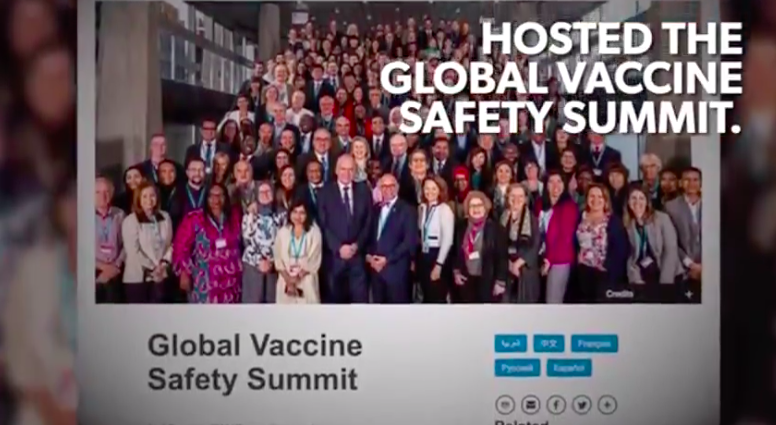
Click here to watch the video.
In other words, what the WHO presents to the public contradicts what is discussed behind closed doors, another example of the veil of secrecy the organization operates within.
Now we are witnessing more countries halting further administration of AstraZeneca’s Covid vaccine, a vaccine Trump had committed $1.2 billion towards its development. Subsequently the CDC paused Johnson & Johnson’s similar engineered adenovirus vaccine in order to investigate its association with an otherwise rare condition of fatal blood clotting. The WHO on the other hand has ignored these nations’ ethical responsibility to adhere to the precautionary principle. Its own review claimed there were no blood clot links to AstraZeneca’s vaccine; later the WHO changed its tune to “plausible” after EU regulators found a causal link and the New England Journal of Medicine published two studies providing specific details confirming these adverse reactions. Although acknowledging these risks, the WHO has continued to recommend that mass vaccination proceed as if there were no red alarms.
WHO’s Depopulation Efforts with Vaccines
Without doubt, the most nefarious activity conducted by the WHO is its alleged support and distribution of vaccines to poorer developing countries that may have been intentionally designed to decrease population rates. Back in 1989, the WHO sponsored a symposium at its Geneva headquarters on “Antifertility Vaccines and Contraceptive Vaccines.” The symposium presented proposals for vaccines that were later discovered to have been laced with the sterilizing hormones HCG and estradiol; the former prevents pregnancy and triggers spontaneous abortions and miscarriages, and the latter can turn men infertile.
In 2015, the Kenyan Conference of Catholic Bishops reported its discovery of a polio vaccine laced with estradiol that was manufactured in India and distributed by the WHO. A year earlier, Dr. Wahome Ngare from the Kenyan Catholic Doctors Association uncovered a tetanus vaccine specifically being administered to women, also distributed by the WHO, that contained the HCG hormone. All of the polio vaccine samples tested contained HCG, estrogen-related compounds, follicle stimulating and luteinizing hormones, which will damage sperm formation in the testes. Even more disturbing, this vaccine was going to be administered to children under five years of age.
However, this is not the first time the WHO appears to have made efforts to use vaccination campaigns for depopulation. A decade earlier, in 2004, the WHO, UNICIF and CDC launched a vaccination campaign to immunize 74 million African children during a polio outbreak. The initiative encountered a serious obstacle. In Nigeria, laboratory tests on the WHO’s vaccine samples resulted in the presence of estrogen and other female hormones. And in the mid-1990s, a tetanus vaccine being administered to Nicaraguan and Filipino girls and women in their child-bearing years was discovered to contain HCG, which accounted for a large number of spontaneous abortions that were reported by Catholic health workers.
Illegal Vaccine Experiments
In 2014, The Economic Times of India published a report that provided details of a joint venture between the WHO and the Gates Foundation to test an experimental HPV vaccine on approximately 16,000 tribal girls between the ages of 9 and 15 unwittingly. The experiment was conducted in 2008, and the vaccine is now what we commonly know as Gardasil. Many of the girls, the report states, became ill and some died.
The following year the WHO and Gates Foundation conducted a similar experiment on 14,000 girls with the HPV vaccine Cervarix. Again “scores of teenage girls were hospitalized.” Investigations led by Indian health officials uncovered gross violations in India’s laws regarding medical safety. In numerous cases there was no consent and the children had no idea what they were being vaccinated for. The Indian Supreme Court has taken up a case against the duo for criminal charges.
There are many other questionable activities that the WHO has been involved with over the years. However, the above provide sufficient evidence to argue the case that, at least within the upper echelons of the WHO, global health does not stand in high priority. The organization employs over 7,000 people around the world and most of these have deep concern for improving the lives of populations in poor and developing nations. On the other hand, the WHO’s leaders are there largely because the powers of Washington, London and the pharmaceutical industry benefit by the organization advancing its agendas.
Of course, the WHO is not the only health entity with a legacy of corruption. Corruption appears to be systemic throughout global health and national health agencies. This topic was featured last year in the prestigious medical journal The Lancet. Author Dr. Patricia Garcia writes,
“Corruption is embedded in health systems. Throughout my life—as a researcher, public health worker, and a Minister of Health—I have been able to see entrenched dishonesty and fraud. But despite being one of the most important barriers to implementing universal health coverage around the world, corruption is rarely openly discussed.”
Bear in mind, the WHO, along with Bill Gates and his Foundation, and Anthony Fauci at the National Institutes for Allergy and Infectious Disease, are leading the efforts to get the COVID-19 vaccine administered as quickly as possible. Already the Gates Foundation has given $1.75 billion for developing and distributing these vaccines. Do you believe we can trust their judgment and the intense public relations effort that will immediately follow after such a vaccine reaches the market?
*
Note to readers: please click the share buttons above or below. Forward this article to your email lists. Crosspost on your blog site, internet forums. etc.
Richard Gale is the Executive Producer of the Progressive Radio Network and a former Senior Research Analyst in the biotechnology and genomic industries.
Dr. Gary Null is the host of the nation’s longest running public radio program on alternative and nutritional health and a multi-award-winning documentary film director, including The War on Health, Poverty Inc and Plant Codes.
Featured image is from Children’s Health Defense






 Post
Post

