La missione russa nel Nord Italia ha avuto
senz'altro finalità di intelligence, ma non nei confronti dell'Italia. E
se la smoking gun contro Pechino si trovasse in una casa di riposo a
Bergamo? L'analisi di Igor Pellicciari, professore di Storia delle
Relazioni internazionali all'Università di Urbino e alla Luiss Guido
Carli
Abbiamo in un precedente articolo su Formiche.net per primi
tracciato i motivi degli aiuti russi in Italia, indicandone tre
predominanti, ovvero geopolitico, politico-interno e uno
strategico-sanitario.
Una serie di articoli de La Stampa ha mosso il sospetto
(adombrato anche da alti vertici Nato) che l’intervento russo sia stato
finalizzato a non specificate operazioni di intelligence militare in un
Paese dell’alleanza atlantica, con gli aiuti, accusati peraltro di
essere in larga parte inutili, a servire da mera copertura e scusa per
l’ingresso nel Paese. La Russia si è opposta duramente a questi
sospetti.
Senza volere dirimere qui questa accesa polemica, tuttavia rilanciare
e elaborare meglio oggi la chiave di lettura strategico-sanitaria da
noi proposta a suo tempo può servire a trovare una possibile sintesi tra
queste due posizioni opposte e forse farci giungere a nuove importanti
deduzioni.
Per prima cosa da chiedersi è perché Mosca abbia inviato un
contingente militare e non civile. Da sempre ossessionata dalla difesa
da attacchi esterni di un territorio talmente grande da non potere
essere presidiato, la Russia ha dagli anni della Guerra Fredda curato
una sua risposta a scenari da attacco chimico-batteriologico.
La ricerca russa nel relativo campo è fatta nel settore militare, non
per un preciso disegno bellico ma perché in Russia ricade nelle
competenze della Difesa, come accade per molti altri settori di cui in
Occidente si occupa la ricerca civile.
La seconda domanda da porsi è se è credibile che nel contingente
Russo vi siano stati degli operatori di intelligence, in particolare del
Gru ovvero del servizio segreto militare di Mosca.
Qui si può azzardare con certezza una affermazione positiva, anche se
di per sé è una conclusione quasi scontata per chi sa come funziona
l’esercito russo.
È infatti caratteristica comune di un certo modello organizzativo
dell’esercito (non solo russo) avere la presenza di membri
dell’intelligence a partire dalle proprie unità militari di base, tanto
più se si tratta di reparti specializzati in missione all’estero che
gestiscono dati sensibili come quelli in oggetto. Esserne sorpresi
equivale a meravigliarsi del collegamento all’intelligence di un attaché
militare di una qualsiasi ambasciata. Nulla di strano: avviene di
default.
Piuttosto, ad essere meno scontata è la risposta a una terza domanda,
forse la più importante, ovvero se questo personale di intelligence
abbia svolto attività investigativa e, se del caso, su cosa
esattamente. Qui obiettivamente le teorie che ipotizzano un intervento
di Mosca alla ricerca di non meglio specificati segreti strategici
italiani perdono credibilità logica e non offrono riscontri.
Ammesso che vi siano ancora aspetti militari dell’Italia sconosciuti
alla intelligence russa, il modo peggiore per raccoglierli sarebbe stato
con una missione “allo scoperto” della Difesa.
Dati i buoni rapporti tra i due Paesi, l’Italia è tutt’altro che
inaccessibile alla Russia e offre molteplici possibilità di ingresso
molto più discrete ed efficaci di un rumoroso arrivo con colonne di
camion militari.
Se intelligence vi è stata, è probabile che essa si sia concentrata
sullo studio di aspetti della pandemia che potevano essere reperiti solo nella zona del manifestarsi più virulento dei virus al mondo (dopo la Cina): ovvero Bergamo e Brescia.
Del primo aspetto abbiamo già scritto in anteprima mondiale su Formiche.net
(senza ricevere smentite) e avrebbe riguardato l’osservare da vicino
un’eventuale variazione della sequenza virale per comprenderne in
anticipo una possibile mutazione in peggio. Un’informazione di vitale
importanza per qualunque Paese, soprattutto se ricevuta con un certo
anticipo.
Ma, alla luce del dibattito che sta emergendo tra i virologi
sull’origine del virus, vi potrebbe essere un secondo probabile filone
di intelligence, di estrema importanza geopolitica, poiché potrebbe
ridisegnare gli equilibri mondiali a seconda dei dati che facesse
emergere e alle conclusioni di ultima istanza cui potrebbe portare.
Si tratterebbe della possibilità di tracciare l’esatta genesi di un
virus di cui nessuno, come di tutte le sciagure del pianeta, vuole
rivendicare la paternità. È infatti possibile che i reparti di élite
russi altamente specializzati abbiano scelto di andare nel bergamasco
per osservare da vicino la primissima versione del virus cinese sbarcato
in Europa con tutte le sue caratteristiche originarie, prima che
subisse mutazioni o perdesse forza – per trarne informazioni strutturali
(come ad esempio il vero tasso di mortalità e contagio) che finora sono
mancate in parte perché sconosciute, in parte perché nascoste alla sua
fonte, in Cina.
Sono informazioni che, una volta raccolte, potrebbero aiutare a
rispondere a una serie di dubbi ancora irrisolti. Primo fra tutti, se il
Covid-19 ha avuto una genesi naturale (passaggio spontaneo da animale
ad uomo) o artificiale (ed è il risultato – magari involontario – di un
esperimento da laboratorio).
È questo uno dei grandi punti interrogativi che ha accompagnato la
nascita di questa pandemia e che ha generato un giro vorticoso di
fantasiose teorie cospirazioniste che, come spesso accade in questi
casi, non si sa se vengano create per accreditare o discreditare delle
scomode verità.
Fatto sta che, qualunque sia l’esito della ricerca, essa rappresenta
per chi se ne occupa l’occasione di trovarsi tra le mani una “smoking-gun”
con un enorme potenziale di impatto negoziale geopolitico, soprattutto
nei confronti della Cina, sia nel rilasciarne che nel secretarne i
dettagli.
Una dimostrazione oggettiva di un’origine da laboratorio del Covid-19
potrebbe segnare per la Cina un ostacolo politico ed economico
insormontabile. Economico perché, scenario senza precedenti, Pechino,
pur non avendo perso nessuna guerra, potrebbe trovarsi a dovere pagare i
costi di riparazione in un importo impossibile da reggere per nessuna
economia al mondo.
Politico, perché si andrebbe a creare una consolidata situazione di
relazioni Cina vs Resto del Mondo, cui peraltro alcuni segnali di
riavvicinamento tra Mosca e Washington fanno già pensare.
Tutto dipenderà dal mistero se il Covid-19 sia nato in un mercato del
pesce o in un laboratorio di Wuhan. E la soluzione potrebbe trovarsi in
una casa di riposo di Bergamo.
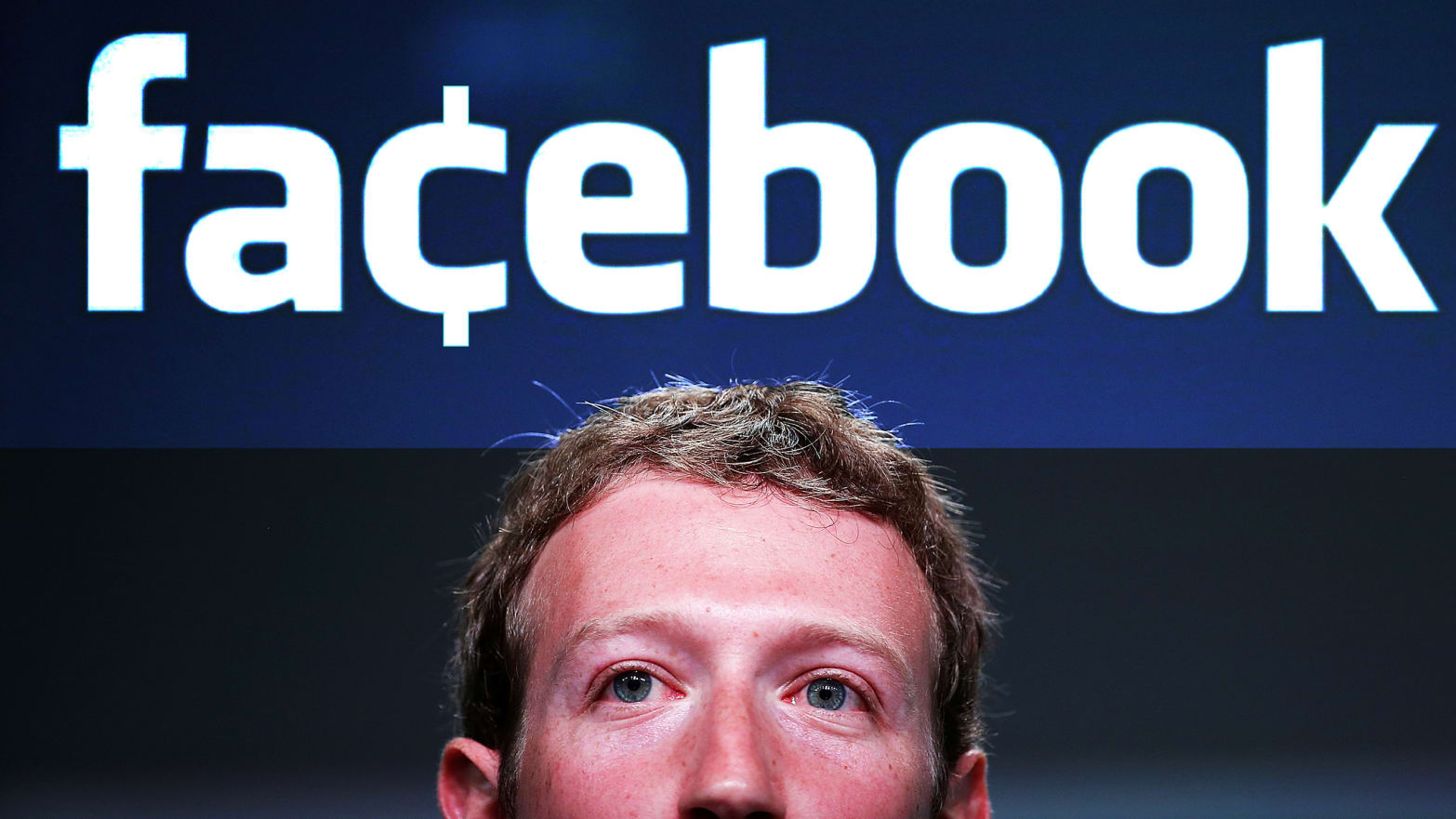
Mark Zuckerberg
and his wife donated at least $400 million to a group that has now been
accused of contributing to constitutional violations in key
battleground states.
What did they do with his money? And what does this mean for our republic?
The
Facebook CEO says it’s not his role to become an ‘arbiter of truth.’
Well, his enterprise is now a peddler of lies. What’s he going to do
about it?
Photo Illustration by Sarah Rogers/The Daily Beast
Facebook CEO Mark Zuckerberg got rich by accommodating America’s growing poverty of civility. Plainly put, he has monetized misinformation and fraud.
After
a devastating oil spill, the responsible company doesn’t donate
billions of dollars to public schools or immigration reform. It cleans
up the toxins. Zuckerberg fails to realize his company has facilitated a
societal crisis. While his personal philanthropy is admirable, no
unrelated charitable ventures will change this stark reality.
Advertisement
The revelations that Facebook not only sold ads to Russian troll farms seeking to influence voters, and allowed others to target “Jew haters,” clarify its betrayal of human values—turning Facebook into anti-social media in the process.
The
new media conglomerate—including Twitter—is the Wild West: unknown,
unregulated, unlawful. Users wielding sensationalist or fraudulent
stories and cowboys trying to solve terrorism investigations before
federal agents are rewarded with ad revenues, clicks, and popular
relevance. Many voting Americans are fooled in the process.
These
reports are unsurprising; in fact, they are products of how Zuckerberg,
and by extension Facebook, sees the world. His declaration in his Nov.
12, 2016 Facebook post, “In my experience, people are good,” is
incongruent with present reality. Perhaps he believes we should give ad
buyers the benefit of the doubt, since he waited almost a year after the
election to determine if they were Russian entities or were purchasing
ads targeting people who were interested in the “history of why Jews
ruin the world.”
In his Harvard commencement speech, he
challenged the next generation “to create a world where every single
person has a sense of purpose,” arguing that this was the “key to true
happiness.” His thinking is misguided. All humans inherently have
purpose, but many times it is the wrong purpose. Neo-Nazis marching
through Charlottesville, a sheriff harassing Latinos, a politician
stoking hatred, and a foreign adversary tirelessly tampering with free
elections—these people all have purpose.
There’s an ideological
pattern here. Facebook’s initial mission pledged to “make the world more
open,” which it has since revised. Neither purpose nor openness is a
virtue in and of itself. Should we be open to racism? Xenophobia?
Hate-mongering? Zuckerberg and Facebook both reflect libertarian
individualism paired with indifference to values and morality.
According
to Pew, 44 percent of adult Americans get their news from Facebook.
Zuckerberg has repeatedly dismissed criticism directed at the social
network, initially calling the claim that its bungling of fake news
tilted the election toward Trump “crazy.” His contentions that “more
than 99 percent of what people see [on Facebook] is authentic” and “only
a very small amount” is fake are infuriatingly bogus. All evidence
proves otherwise.
So far, Zuckerberg’s only allegiance has been to
Facebook’s bottom line. And politicians and their campaigns are
complicit in exploiting the masses for their own ends. The result is no
standard for the integrity of our communications apparatus. Zuckerberg’s
deflection is a cop-out. Silicon Valley is often accused of a liberal
bias, but recent revelations have provided further evidence that
Facebook, far from being an “arbiter of truth,” is happy to disregard
principles as long as its quarterly report shows strong ad growth.
Whether this is calculated or not is irrelevant—the problem is real all
the same, and something needs to change.
When BP or Exxon is
responsible for a massive oil spill, they may not want to pay. They file
appeals and litigate until they have reduced their culpability to the
minimum, but eventually they are forced to contribute to the clean-up.
With this latest news, Zuckerberg’s 2016 denialism is no longer
viable—Facebook’s culpability is significant and unquestionable.
Abstract claims that “people are good” are invalidated by Facebook’s
real-life failures.
Zuckerberg should start the clean-up on his
own. If he refuses, its users and Americans must demand action, if not
from Facebook, from the Federal Communications Commission, which has
long abandoned its vital regulatory function. It is high time that we
debate anew the scope of its mandate and how to preserve a literate
democracy against the treacherous forces of misinformation. We cannot
afford the continuous disaster Facebook has wrought.
Facebook has been in the news frequently in the last few years,
ranging from allegations that the platform does not do enough to protect
its users to being accused of biometrics violations, to CEO Mark Zuckerberg’s recent Congressional testimony
regarding the tech giant’s allegedly anticompetitive behavior. Several
of these events have resulted in litigation for the social media giant.
As Facebook has grown into a massive company, and questions continue to
be asked about the company’s responsibilities, a select set of law firms
have spearheaded Facebook’s representation in federal court.
The below analysis and accompanying visuals were created by Docket Alarm’s One-Click Analytics and reflect trends in Facebook’s appearances in federal court from January 2019 to September 2020.
The top 10 firms, measured by Docket Alarm’s count of the
number of federal civil cases handled from January 2019 to September 2020 are:
Keker & Van Nest; (personal injury, contract, civil rights, fraud)
Hunton Andrews Kurth; (contract and statutory action)
Cooley; (statutory actions, patent, contract)
Pincus Law; (contract, civil rights)
Gibson Dunn & Crutcher; (personal injury, property damage, federal violations)
Covington & Burling; (personal injury and contract)
Wilmer Cutler Pickering Hale & Dorr; (antitrust, fraud, civil rights)
Potter Minton; (patent, personal injury)
Tucker Ellis; (trademark)
Davis Wright Tremaine. (assault, defamation)
The firms represent a variety of practice areas, with some well-known
full-service law firms accompanied by more specialized firms, often
focusing on intellectual property. Predictably, the suits range from
intellectual property, contract, personal injury, civil rights,
antitrust, and other statutory actions. The types of suits range from
traditional business litigation to the emerging privacy and antitrust litigation.
In all of Facebook’s federal civil suits found on Docket Alarm, Facebook has been a defendant 85 percent of the time, in 141 suits out of 178.
According to an analysis of the PACER Nature of Suit case types, the
largest shares belong to the “Civil Rights-Other” and “Statutory
Actions-Other” categories. This is followed by personal injury,
contract, patent, and trademark. Lastly, case types such as prisoner
matters, copyright, assault and libel, fraud, antitrust, property, and
securities are less common. This illustrates the variety of litigation
that Facebook has faced since the beginning of 2019, but also shows
emerging trends in 2020 as the heightened influence of Facebook
is scrutinized. However, while one might expect the number of antitrust
suits to be higher in light of recent Congressional scrutiny, the tech
giant has only faced five antitrust suits from January 1, 2019, to
September 30, 2020. Three out of the five filings were related to each other.
Meanwhile, from 2019 to 2020, Potter Minton has increased the number
of cases where it represents Facebook, which is usually patent
litigation defense. Pincus Law is another firm that has increased its
business with Facebook from 2019 to 2020.
While most of the firms represent Facebook as the defendant,
Hunton Andrews Kurth solely represents Facebook as the plaintiff. Attorney Ann
Mortimer is listed as a representative for Facebook in all of these suits, the
majority of which are statutory actions, such as a suit
for extracting data and collecting likes and another
one that harvested user data.
Wilmer Cutler Pickering Hale and Dorr solely represented Facebook as
the defendant in antitrust, fraud, and civil rights suits. Most of these
suits were filed towards the end of 2019 and into 2020. A large ongoing
antitrust suit
that the firm has represented Facebook on was brought by Reveal Chat
Co. et al., who allege that Facebook used its developer API tools to
shut out the competition.
Davis Wright Tremaine solely represented defendant Facebook in cases
filed under “assault, libel and slander.” All of these defamation suits
were brought against Facebook by the same plaintiff, who claimed that
Facebook, Twitter, Apple, and Google were suppressing certain political
voices after they were banned from social media platforms.
Covington & Burling represented Facebook frequently in 2020,
with most of their suits being filed between March and May 2020. The
overwhelming majority of Covington & Burling’s Facebook suits are related
to Zoom Video Communications. As Zoom exploded in popularity due to the
COVID-19 pandemic, the company faced a large influx of litigation as a result
of its privacy and security practices, some of which implicated
Facebook.
In 2019, Tucker Ellis represented Facebook in four suits; three out
of the four suits were trademark-related and the last was for fraud.
Furthermore, Facebook was the plaintiff in all of these suits, which
were filed in the Northern District of California. While Tucker Ellis
plays a prominent role in Facebook’s 2019 litigation, the firm has yet
to represent Facebook in 2020, according to the data. This could be an
effect of the COVID-19 pandemic.
Facebook is the defendant in all the suits where it is represented by
Keker & Van Nest. These suits cover a wide range of case types,
from contract and personal injury to civil rights and statutory actions.
Approximately a quarter of the firm’s suits were filed within the past
three months.
Most of Facebook’s litigation occurred in the Northern District of
California, likely due to the company’s location in Silicon Valley. The
judge overseeing the most Facebook cases is Judge Alan Albright, who
oversaw almost double the number of suits as the remaining top 5 judges.
In particular, Judge Albright mostly oversaw patent suits for Facebook
in the Western District of Texas, where Facebook was often the
defendant. Judge James Donato of the Northern District of California
oversaw a variety of suits, including other personal injury and other
statutory actions. Judge Jon Tigar, presided over mostly trademark suits
in the Northern District of California. Judge William Orrick oversaw
copyright, civil rights, and statutory suits in the Northern District of
California, and Judge Cathy Seibel of the Southern District of New York
oversaw prisoner rights, civil rights, and trademark suits.
Despite the COVID-19 pandemic, Facebook’s legal work has remained
fairly consistent in comparison to recent years, at least when it comes
to federal civil suits. For the most part, filings were consistent
throughout the
time period. However, there were some noticeable trends. For example, in
2020, filings
dipped in February, but spiked in March and decreased again in April,
although
not to February’s level; these fluctuations can likely be attributed to
the
pandemic.
As may be expected from a tech giant at the forefront of the social
media revolution, Facebook faces litigation that reflects current
events. There was a large increase in civil rights suits in July 2020 in
comparison to any other month; meanwhile, an increase of personal
injury suits in April and May 2020 is tied to the aforementioned influx of lawsuits against Zoom.
The analytics in this article are powered by One-Click Analytics from Docket Alarm. To learn more, schedule a demo with the Docket Alarm team.
Facebook extends ban on political ads amid misinformation blitz
Facebook says the measure to combat misinformation will continue, even as US state Georgia prepares for Senate run-offs.
Facebook Chairman and CEO Mark Zuckerberg testifies at a House Financial Services Committee [File: Erin Scott/Reuters]
12 Nov 2020
Facebook
on Wednesday said its post-election ban on political advertisements
would likely last another month, raising concerns from campaigns and
groups eager to reach voters for key Georgia races in January that will
decide control of the Senate.
The ban, one of Facebook’s measures to combat misinformation and
other abuses on its site, was supposed to last about a week but could be
extended. Alphabet Inc’s Google also appeared to be sticking with its
post-election political ad ban.
Facebook confirmed
the extension in a blog post: “The temporary pause for ads about
politics and social issues in the US continues to be in place as part of
our ongoing efforts to protect the election. Advertisers can expect
this to last another month, though there may be an opportunity to resume
these ads sooner.”
Baseless claims about the election reverberated around social media this week as President Donald Trump challenged the validity of the outcome,
even as state officials reported no significant irregularities and
legal experts cautioned he had little chance to overturn Democratic
President-elect Joe Biden’s victory.
In one Facebook group created on Sunday, which rapidly grew to nearly
400,000 members by Wednesday, members calling for a nationwide recount
swapped unfounded accusations about alleged election fraud and state
vote counts every few seconds.
A
supporter of US President Donald Trump holds a sign during a ‘Stop the
Steal’ protest after the 2020 US presidential election was called by the
media for Democratic candidate Joe Biden, in front of the Arizona State
Capitol in Phoenix [Jim Urquhart/Reuters]Google declined to
answer news agency Reuters’ questions about the length of its ad pause,
although one advertiser said the company had floated the possibility of
extending it through or after December.
A Google spokeswoman previously said the company would lift
its ban based on factors such as the time needed for votes to be counted
and whether there was civil unrest.
The extensions mean the top two digital advertising behemoths, which
together control more than half the market, are not accepting election
ads ahead of two hotly contested US Senate runoff races in Georgia,
including ads aimed at increasing voter turnout.
The Democratic Senatorial Campaign Committee, along with the Senate
campaigns of Georgia Democrats Jon Ossoff and Raphael Warnock, called
for an exemption for the Georgia races so they could make voters aware
of upcoming deadlines.
“It is driving us absolutely bonkers,” Mark Jablonowski, managing
partner of DSPolitical, a digital firm that works with Democratic
causes, told Reuters.
Eric Wilson, a Republican digital strategist, told Reuters he thought
the companies’ concerns about ads on the election outcome did not
require a blanket ban. “This is something that deserves a scalpel and
they’re using a rusty ax,” he said.
Facebook
Director of Product Management Rob Leathern said the world’s biggest
social network lacked “the technical ability in the short term to enable
political ads by state or by advertiser”.
The companies declined to say when they would lift other
“break-glass” election measures introduced for unpaid posts, like
Facebook’s demotions of content that its systems predict may be
misinformation.
Facebook spokesman Andy Stone said those emergency measures would not be permanent, but that rollback was “not imminent.”
Google’s YouTube, which is labelling all election-related videos with
information about the outcome said it would stick with that approach
“as long as it’s necessary”.
The video-sharing company bans “demonstrably false” claims about the
election process but has used the tool sparingly, saying hyperbolic
statements about a political party “stealing” the election does not
violate the policy.
However, Twitter has stopped using its most restrictive
election-related warning labels, which hid and limited engagement on
violating tweets. Instead, the company is now using lighter-touch labels
that “provide additional context,” spokeswoman Katie Rosborough said.
Twitter placed a label reading “this claim about election fraud is
disputed” on two of Trump’s tweets Tuesday morning but each was
retweeted more than 80,000 times by that evening.
A
Biden campaign staffer condemned Facebook over its handling of the
election aftermath, claiming it is “shredding the fabric of our
democracy.”
The criticism could be an early indication of
President-elect Joe Biden’s approach to the social media platform and
even the tech industry at large.
Facebook Chairman and CEO Mark Zuckerberg.
Erin Scott | Reuters
A Biden campaign staffer publicly condemned Facebook over its handling of the election aftermath, claiming it is “shredding the fabric of our democracy.”
Bill
Russo, deputy communications director for the Biden campaign, sent out a
series of tweets on Monday criticizing Facebook’s handling of
misinformation and some users’ calls for violence related to the
election. Russo specifically called out Facebook’s handling of posts by
Steve Bannon, a former advisor to President Donald Trump, and the media
outlet Bannon previously ran, Breitbart.
The
criticism could be an early indication of President-elect Joe Biden’s
approach to the social media platform and even the tech industry
at-large. Biden has given few hints about how he would handle the long
list of concerns around the tech industry, which span from content
moderation to antitrust issues.
watch now
VIDEO01:00
Former Facebook CSO Alex Stamos on the war on misinformation
The sparse comments Biden has given so far do not bode well for the tech industry and specifically for Facebook.
“No, I’ve never been a fan of Facebook, as you probably know,” he told The New York Times editorial board, according to a transcript published in January. “I’ve never been a big Zuckerberg fan. I think he’s a real problem.”
Biden also told the Times he believed Section 230 of the Communications Decency Act,
which protects tech platforms from being held liable for their users’
posts, should be “revoked.” That’s a far bolder stance than most
lawmakers on ether side of the aisle have stated, given that the law
also allows platforms to take down objectionable posts, like those
promoting violence or harassment.
Facebook on Monday banned a network of pages linked to Bannon
for “artificially boost[ing]” the number of people who would get to see
their posts on the platform. A group originally called “Stop the
Steal,” which amplified Trump’s baseless claims about election fraud,
was among the pages Facebook found to have violated its policies and
removed. A Bannon spokesperson did not provide comment on the removals
Monday.
According
to Russo, the action was too little too late. The group had already
exposed thousands of users to the baseless theories, and several more
popped up after its removal, he said.
“In the lead-up to this
election, we announced new products and policies to reduce the spread of
misinformation and the potential for confusion or civil unrest,” a
Facebook spokesperson said in a statement. “We built the largest
third-party fact-checking network of any platform and they remain
actively focused on claims about the election, including conspiracy
theories. We changed our products to ensure fewer people see false
information and are made aware of it when they do, and highlighted
reliable election information where nearly everyone on Facebook and
Instagram saw that Vice President Biden was the projected winner of the
U.S. election.”
After Bannon released the episode, his lawyers defending him on charges that he defrauded donors to a nonprofit sought to be released from his case.
Russo
contrasted Facebook’s approach to election misinformation with
Twitter’s, which has more aggressive policies for labeling potentially
misleading information. He claimed that while Twitter prevented election
misinformation from Trump from being spread widely, “Facebook continued
to actively promote the posts in feeds.”
Russo
said in a tweet that the campaign had “pleaded with Facebook for over a
year to be serious about these problems. They have not.”
The
messages signal Facebook is likely to face continued scrutiny under the
Biden administration. The company has been under investigation by the
Federal Trade Commission and a coalition of states over antitrust
concerns for well over a year. The federal agency could bring charges
against Facebook as soon as this month, according to Politico.
Mark Zuckerberg and Priscilla Chan at the White House in 2015.
Molly Riley/AFP via Getty Images
Mark Zuckerberg and his wife, Priscilla Chan, are
donating $300 million to protect American elections. It is one of the
couple’s largest-ever single gifts, meant to bolster democracy during a pandemic.
But it’s also one that critics say is brimming with irony given
Facebook’s past failures in protecting the integrity of elections.
The Facebook chief said on Tuesday that he had sent the
money to two civic organizations which in turn will direct it to state
and local election officials so they can prepare for an unprecedented
Election Day. The coronavirus pandemic has caused many states to
radically shift — on short notice — how they will administer elections
to ensure safety. A majority of Americans say they are anticipating that they will vote early or by mail this year.
The majority of the gift, $250 million, will go to the
Center for Tech and Civic Life, a nonprofit popular with many tech
philanthropists, which will then regrant the money to local election
officials so they can recruit poll workers, supply them with personal
protective equipment, and set up drive-through voting. Another $50
million heads to the Center for Election Innovation & Research to be
distributed to Secretaries of State across the country.
The money does not come from the Chan Zuckerberg Initiative, their joint philanthropy, but is a personal donation.
“Election officials across the country are working hard
to ensure that everyone can vote and every vote can be counted,”
Zuckerberg said, “and we want to help make sure they have the resources
they need to do this.”
And while the money may be sorely needed, the
announcement of the gift on Tuesday emerged as an immediate flashpoint
in the simmering debate over billionaire philanthropy and whether
donations are the best way to enact change. That’s because, to many on
the left and to Facebook critics more broadly, it is Zuckerberg’s
company that has harmed democracy by tolerating hate speech, failing to
curtail disinformation, or allowing Russian operatives to mess with the
2016 election.
The fact that this criticism even exists is revealing. In
an earlier era, a huge donation from Zuckerberg might be greeted with
whoops and hollers, like his famous $100 million gift to Newark schools a decade ago. Even the creation of the Chan Zuckerberg Initiative, just dating back to 2015, was largely a PR win for the couple.
Here’s Raffi Krikorian, who has long worked at the intersection of tech and politics:
And here’s Tara McGowan, the head of one of the
Democratic Party’s largest outside groups that has raised big money from
Silicon Valley donors:
Facebook has stressed that it has learned the lessons
from 2016 and is arguing that it is much better prepared for this fall.
Alongside the announcement of the gift — and perhaps with an eye to this predictable criticism — Zuckerberg pointed out Facebook’s pledge to register 4 million voters and promote information on matters like vote-by-mail to its users.
Election officials were nevertheless ecstatic about the gift. Michigan’s secretary of state called it a “game changer.” Ohio’s said the money would “go a long way” to ensuring the public’s confidence in the vote.
But as always, two things can be true at once about
billionaire philanthropy: The money may indeed fill an urgent gap that
makes our lives better, but giving away these large sums represents a
relatively minor component in the total assessment of how each
billionaire is shaping our world.
Facebook CEO Mark Zuckerberg testifies at a joint
hearing of the Senate Judiciary and Commerce committees on Capitol Hill
on April 10, 2018.
Xinhua/Ting Shen/Getty Images
Editor’s note, May 5, 2021: On Wednesday, a Facebook oversight board ruled
that the social media service could retain its ban on former President
Donald Trump following the insurrection at the US Capitol on January 6.
The board also stated, however, that Facebook would need to either
justify a permanent ban or eventually restore Trump’s account. The
following conversation, which took place on April 20, addresses some of
the deeper issues raised by Facebook’s ban.
America’s commitment to free speech is uniquely radical.
The US Constitution treats freedom of expression as the
master freedom that makes every other possible. And our legal system
reflects this view, which is why it has always been incredibly difficult
to suppress or punish speech in this country.
But there has never been a consensus on how to implement
the First Amendment. Free speech law has evolved a ton over the years,
especially in the aftermath of revolutions in media technology. The
birth of radio and television, for example, altered the information
landscape, creating new platforms for speech and new regulatory hurdles.
Today, the big challenge is the internet and the many
ways it has transformed the public square. In fact, if a public square
exists at all anymore, it’s virtual. And that’s problematic because our
communication platforms are controlled by a handful of tech companies —
Twitter, Facebook, Google, and Amazon.
So what happens when companies like Facebook and Twitter decide, as they did in the aftermath of the insurrection on January 6,
to ban the president of the United States for “glorifying violence” and
spreading dangerous misinformation about the election? Is that a
violation of the First Amendment?
The conventional response is no: Facebook
and Twitter are private companies, free to do whatever they want with
their platforms. That’s not wrong, but it is oversimplified. If the
public square is controlled by a few private companies and they have the
power to collectively ban citizens whenever they want, then doesn’t
that give them the ability to effectively deny constitutionally
protected liberties?
There
are no simple answers to these questions, so I reached out to Genevieve
Lakier, a law professor at the University of Chicago and an expert on
the history of the First Amendment, to explore some of the tensions.
Lakier believes our current debate about deplatforming — and free speech
more generally — is too hollow.
We talk about why contemporary First Amendment law is
poorly equipped to handle threats to speech in the internet era, why we
don’t want tech CEOs arbitrarily policing speech, what it means to have
private control of the mass public sphere, and what, if anything, we can
do on the policy front to deal with all of these challenges.
A lightly edited transcript of our conversation follows.
Sean Illing
What does the law actually say about the right of private
companies like Twitter or Facebook to censor or ban users at will? Is
it legal?
Genevieve Lakier
It is definitely legal. The First Amendment imposes very
strict non-discrimination duties on government actors. So the government
isn’t allowed to ban speech just because it wants to ban speech.
There’s only going to be a limited set of cases in which it’s allowed to
do that.
But the First Amendment only limits government actors,
and no matter how powerful they are under current rules, Facebook,
Amazon, and Twitter are not going to be considered government actors. So
constitutionally they have total freedom to do whatever they want with
the speech on their platforms.
The only caveat here is that they can’t permit unlawful
speech on their platforms, like child pornography or speech that
violates copyright protections or speech that’s intended to communicate a
serious threat or incite violence. Bun in those cases, it’s not the
tech companies making the decision, it’s the courts.
Sean Illing
So why do you believe that our current legal framework is inadequate for dealing with free speech and tech platforms?
Genevieve Lakier
It’s inadequate because it rests on a false understanding
of the speech marketplace. The best explanation for why we have a
strict state action restriction on the scope of the First Amendment is
the government is a regulator of the speech marketplace, so we want to
limit its ability to kick anyone out of the marketplace of ideas.
Ideally, we want to give people who participate in the
marketplace of ideas a lot of freedom to discriminate when it comes to
speech because that’s how the marketplace of ideas separates good ideas
from bad ideas. You couldn’t have an effective marketplace of ideas if
people couldn’t decide which ideas they want to associate with and which
ideas they don’t.
And that makes sense at a certain level of abstraction.
But the world we live in is not the one where the government is the only
governor of the marketplace of ideas. The whole public-private
distinction doesn’t really map onto the world of today. If that was the
world we lived in, the current rules would work fantastically. But as
the platforms make clear, private actors very often are themselves
governors of the marketplace of ideas. They’re dictating who can speak
and how they may speak.
Facebook and Twitter are not government actors, they
don’t have an army, you can leave them much more easily than you can
leave the United States. But when it comes to the regulation of speech,
all the concerns that we have about government censorship — that it’s
going to limit diversity of expression, that it’s going to manipulate
public opinion, that it’s going to target dissident or heterodox voices —
also apply to these massive private actors, yet under the current First
Amendment rules there is no mechanism to protect against those harms.
Sean Illing
I absolutely don’t want Mark Zuckerberg or Jack Dorsey or
John Roberts deciding what kind of speech is permissible, but the
reality is that these tech platforms are guided by perverse incentives
and they do promote harmful speech and dangerous misinformation and that
does have real-world consequences.
But if we want a truly open and free society, are those just risks we have to live with?
Genevieve Lakier
To some degree, yes. People love to talk about free
speech as an unadulterated good, but the truth is that the commitment to
free speech has always meant a commitment to allowing harmful speech to
circulate. Free speech means little if it only means protection for
speech that we don’t think is objectionable or harmful. So yeah, a
society organized on the principle of free speech is going to have to
tolerate harmful speech.
But that doesn’t mean that we have to tolerate all
harmful speech, or that we can’t do anything to protect ourselves
against harassment or threats or violent speech. Right now we have
what’s widely seen as a crisis of speech moderation on these platforms.
The platforms themselves are responding through effective
self-regulation. But those efforts are always going to be guided by the
profit motive, so I’m skeptical about how far that’s going to get us
when it comes to sustainable speech moderation policies.
Sean Illing
Do you want the government telling Zuckerberg or Dorsey how to moderate content?
Genevieve Lakier
We might, as democratic citizens, think that our
democratic government should have something to say about the speech that
flows through the platforms. That doesn’t necessarily mean that we want
Congress telling Jack Dorsey or Mark Zuckerberg what speech they may or
may not allow. There’s a tremendous amount of disagreement about what’s
harmful speech, or where to draw the lines, and you might not think
Congress is in a good position to make those kinds of decisions.
Perhaps we want a diversity of approaches to content
moderation across the platforms, and the government establishing a
uniform speech code would undermine that. But at the same time the
platforms are governors of speech, they’re the regulators of incredibly
important forums of mass communication. And so I, as a democratic
citizen who thinks the free speech principle is intended to facilitate
democratic ends, want there to be more democratic oversight of what
happens on the speech platforms.
Sean Illing
That sounds perfectly reasonable in the abstract, but what would “democratic oversight” look like in practice?
Genevieve Lakier
One way is to mandate transparency. To require the
platforms to give more information to the public, to researchers, to the
government, about how they’re making content moderation decisions, so
ordinary citizens can assess if it’s good or bad, or what the effects of
the policies are. That’s tricky because you’d have to think about what
kind of information the platforms should be required to give and whether
or not it would offer us any real insight. But I do think there’s a
role for transparency here.
Alternatively, if we recognize that these private actors
are playing such a tremendously important role in our public life, we
could think about ways to make their decision-making more democratic or
more democratically legitimate. So there have been proposals to create a
kind of regulatory agency that would potentially collaborate with some
of the platforms on developing policies. That might create more
democratic structures of governance inside these platforms.
Sean Illing
What do you make of Justice Clarence Thomas’s
recent suggestion that we should consider treating tech platforms like
“common carriers” and regulate them like public utilities? Is that a
good idea?
Genevieve Lakier
This is an idea that people on both the left and the
right have suggested in recent years, but that had always been viewed as
very constitutionally problematic. So it’s interesting that Justice
Thomas thinks a common carrier platform law would be constitutional.
Practically, it’s hard to see how a common carrier regime
would work. Common carrier laws— which prevent private actors from
excluding almost any speech — work well when applied to companies whose
job primarily is moving speech from one place to another. But the social
media companies do a lot more than that: one of the primary benefits
they provide to their users is by moderating content, to facilitate
conversation, to flag news or videos as relevant, etc.
Common carrier obligations would make it difficult for
the companies to perform this service, so the common carrier analogy
doesn’t really work. Justice Thomas also suggested the possibility of
subjecting the platforms to public accommodations law.
Now, that seems more viable, because public accommodations law doesn’t
prevent private companies from denying service to customers altogether,
it merely limits the bases on which they could do so.
Sean Illing
Going back to your point about transparency, even if a
company like Twitter formulated what most people might consider
transparent and responsible speech policies (which I doubt, but let’s
just grant that possibility), I don’t see any way to enforce it
consistently over time. There is just too much ambiguity and the
boundaries between free and harmful speech are impossible to define,
much less police.
Genevieve Lakier
Regulation of speech is always tricky, and the scale of
the speech and the transnational scope of these platforms creates
enormous challenges. The best we can do is to try and develop
mechanisms, appeals, processes, reviews, and transparency obligations
where the platform’s disclosing what it’s doing and how it’s doing it. I
think that’s the best we can do. It won’t be perfect, but it would be
good to get to a system where we have some reason to believe that the
decision-making is not ad hoc and totally discretionary.
Sean Illing
Are there free speech models around the world that the US
could follow or replicate? A country like Germany, for example, isn’t
comfortable with private companies deplatforming citizens, so they passed a law in 2017 restricting online incitement and hate speech.
Is there any room for an approach like that in the US?
Genevieve Lakier
The First Amendment makes it extremely difficult for the
government to require platforms to take down speech that doesn’t fall
into some very narrow categories. Again, incitement is one of those
categories, but it is defined very narrowly in the cases to mean only
speech that is intended, and likely, to lead to violence or lawbreaking.
Hate speech is not one of those categories. That means that Congress
could make it a crime to engage in incitement on the platforms but that
would apply only to a very limited range of speech.
Sean Illing
I know you believe the platforms were justified in banning Trump after the assault on the Capitol in January, but do you also believe that we should punish or censor public officials for lying or perpetrating frauds on the public?
Genevieve Lakier
I think politicians should be able to be punished for
lies, but I also think it’s very dangerous because the distinction
between truth and lies is often difficult or subjective, and obviously
democratic politics involves a lot of exaggeration and hyperbole and
things that skirt the line between truth and lying. So we wouldn’t want a
rule that allows whoever’s in power to silence their enemies or
critics.
But on the other hand, we already prosecute all kinds of
lies. We prosecute fraud, for instance. When someone lies to you to get a
material benefit, they can go to jail. When prosecuted, the fact that
you used speech to effectuate that fraudulent end is not a defense. As a
subspecies of this, we criminalize election fraud. So if someone lies
to you about the location of a polling place or they give you
intentionally incorrect information about how to vote, they can go to
prison.
Political lies that constitute fraud or that contribute
to confusion about an election are in a narrow category of their own. So
for example, I think President Trump’s lies about the outcome of the
election are a species of election fraud. When used to achieve material
benefit or electoral benefit where he’s going to use those lies in order
to justify staying in power, that feels like the kind of lie that
perhaps we want to include in our election fraud category.
Sean Illing
I just can’t imagine political speech, which is very
different from commercial speech, ever being controlled that way. A
border case like Trump inciting violence might be as clear-cut as it
gets, but what about propaganda? Sophistry? And the innumerable forms of
bullshit that have always constituted democratic politics? Democracy is
a contest of persuasion and politicians and parties are always going to
deceive and manipulate in pursuit of power and money.
That’s just baked into the democratic cake, right?
Genevieve Lakier
So I agree that there’s a category we could call election
fraud that maybe we feel okay prosecuting and then there’s ordinary
political bullshit that maybe we don’t. But I’m going to throw a
question back at you, because I think that there are cases on the border
that are really difficult. For example, what about the lies that Trump told his supporters in order to keep contributing to his fund after the election?
To me, that looks like fraud. If it wasn’t a politician,
we would just call it classic fraud. But in the political domain, we
call it something else. I’m not entirely sure about to think about this,
but it’s an interesting case.
Sean Illing
Oh, no doubt it’s fraudulent, but I guess my point is
that a great deal of politics is fraudulent in the same way, though it’s
usually less overt than Trump’s hucksterism. Parties and politicians
and special interest groups lie and peddle half-truths all the time.
There’s so much bullshit in our political system that Trump appealed to a
lot of people precisely because he was so transparently full of shit,
which says quite a bit about where we’re at. The idea that we could ever
meaningfully punish lying strikes me as fantastical.
Genevieve Lakier
What’s so interesting is that when you look at commercial
speech cases, it’s not even controversial to prosecute false
advertising. There’s no debate that false advertising is outside the
scope of First Amendment protection.
The justification for that is often that the person who’s
selling you the commercial good has information about the good that the
consumer doesn’t have and cannot get, so if they tell you it will cure
bad breath or whatever, you have to trust them. When there’s a clear
imbalance in knowledge and access between the speaker and the listener,
the court says it’s okay to prosecute lying.
One approach I’ve thought about, though I’m not sure it
would work, is when a politician is lying about something that the
member of the public has no way of checking or verifying either on their
own or through public sources.
One of the reasons that the lies about the election were
so damaging is because the people who were listening to those lies, they
didn’t have any way of knowing whether this was or was not happening. I
suppose they did though, they could rely on other news sources. But it
was very difficult for them to verify what was happening in the black
box of the election machinery.
So yeah, I agree that lying is an intrinsic part of
democratic politics, but I also think that there are certain kinds of
lies that are very difficult to respond to just through the ordinary
marketplace of ideas. A huge challenge moving forward will be navigating
these kinds of questions in a rapidly changing landscape.





![Facebook Chairman and CEO Mark Zuckerberg testifies at a House Financial Services Committee [File: Erin Scott/Reuters]](https://www.aljazeera.com/wp-content/uploads/2020/07/a025ea63ff6c4a85a26f45ca3516f99b_18.jpeg?resize=770%2C513)
 A
supporter of US President Donald Trump holds a sign during a ‘Stop the
Steal’ protest after the 2020 US presidential election was called by the
media for Democratic candidate Joe Biden, in front of the Arizona State
Capitol in Phoenix [Jim Urquhart/Reuters]
A
supporter of US President Donald Trump holds a sign during a ‘Stop the
Steal’ protest after the 2020 US presidential election was called by the
media for Democratic candidate Joe Biden, in front of the Arizona State
Capitol in Phoenix [Jim Urquhart/Reuters]/cdn.vox-cdn.com/uploads/chorus_image/image/67338016/490038752.jpg.0.jpg)
/cdn.vox-cdn.com/uploads/chorus_image/image/69155156/947025224.jpg.0.jpg)


 Post
Post

