Only way out of Covid-19 will be economy that fights inequality: Macron
In conversation with the
WEF Founder and Executive Chairman Klaus Schwab, the French President
said, "We will get out of this pandemic only with an economy that fights
inequality."
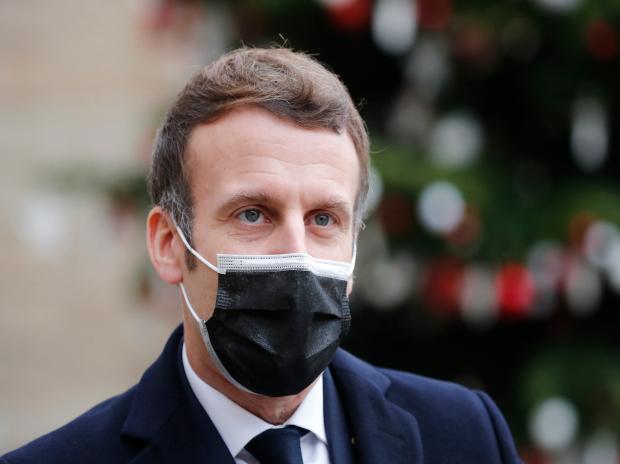
The world will get out of the COVID-19 pandemic only with an economy that fights inequality, French President Emmanuel Macron said on Tuesday while asserting that the economy of tomorrow has to be one that thinks about innovation and humanity.
Speaking at the online Davos Agenda Summit, Macron also said, "Let's
not forget that the target should always be to build the good life with
all its advantages and with the will of respecting the other."
In conversation with the WEF Founder and Executive Chairman Klaus
Schwab, the French President said, "We will get out of this pandemic
only with an economy that fights inequality."
He said societies are transforming as a result of the current health
crisis and emphasised the importance of saving lives during a pandemic.
More than 73,000 have died in France due to the COVID-19 pandemic.
While over a million people have been vaccinated in France so far, the
country is currently not in a national lockdown, unlike many of its
European neighbours. It has instead imposed tighter border controls and a
12-hour-a-day curfew.
"The economy of tomorrow needs to think of innovation and humanity and
has to build competitiveness alongside climate considerations," Macron
added.
Macron further said capitalism has resulted in stark inequalities and
urged companies to play an active role in fighting inequalities within
society and also take responsibility for mitigating the impact on
climate change.
"A lot more needs to be done to live up to the commitments made to protect our planet," he said.
Talking about the power of Artificial Intelligence technology and
quantum computing, he said these developments will completely change
industries and capacity to solve problems including the climate crisis.
But, at the same time, technology can have a negative impact on societies and democracy, he cautioned.
Macron said, "What is happening around us can change things deeply.
Having that said, it means that we cannot build anything in the
post-COVID world without reaping the benefits and learning the lessons
from what we have experienced."
He said societies are vulnerable and nature is reminding everyone of that fact.
"We are vulnerable to pandemics, climactic events, and so on. And so
the economy of tomorrow needs to be strengthened by these lessons,"
Macron told the Summit.
Only way out of pandemic will be economy that fights inequality: Emmanuel Macron
SECTIONS
Only way out of pandemic will be economy that fights inequality: Emmanuel Macron
GENEVA
(Reuters) - The world is going through a profound crisis and could be
on the brink of a time of war, French President Emmanuel Macron said in a
speech on Tuesday, calling for a global effort to address the dangers
of inequality, unchecked technology and climate change.
In
a speech to mark the centenary of the International Labour Organization
in Geneva, Macron called for universal social protection and
compensation for people whose livelihoods were threatened by
technological and environmental change.
Advertisement
“I
think that chaos is here. And I think it is our generation’s
responsibility not to wait for a new war but to look at the world as it
is,” Macron said.
“I
believe that today we are on the brink, if we don’t take care, of a
time of war. And that war is present in our democracies - it’s the
profound crisis we’re going through. We can choose to be sleepwalkers.
But if we want true progress we need to make some serious commitments,”
he said.
Rising
inequality was feeding “authoritarianism”, he said. Voters “say
democracy doesn’t protect us from inequality caused by capitalism gone
mad, so let’s close our borders, build walls and get out of
multilateralism,” he said in an apparent criticism of U.S. President
Donald Trump.
Macron
spoke for 44 minutes, far longer than other leaders who addressed the
event, including Russian Prime Minister Dmitry Medvedev and German
Chancellor Angela Merkel.
The
41-year-old centrist president has cast himself as leader of a liberal
movement countering the rise of the far right in Europe. His standing at
home has been damaged by months of “yellow vest” protests against
economic reforms, including a fuel tax.
Reporting by Tom Miles and Stephanie Nebehay; Editing by
The fact that Italy’s government has
resigned to make way for a new one may not come as a surprise at all as
this has happened often enough during the country’s history since the
end of World War II in 1945. The fact that the Italian government had to
resign because a small party (Matteo Renzi’s party, Italia Viva)
withdrew its support is also nothing new to Italy’s parliamentary
history.
What may seem surprising is that a political crisis was caused at a
time when Italy, like any other country, needs strong leadership to
tackle the impact of the coronavirus on the health of the public and on
the economy. The point at issue that caused the collapse of the
centre-left government was how to use the €185 billion that were offered
to Italy from the EU Recovery Fund. The sentence found in Italian
literature, “everything must change so that everything can stay the
same”, seems to be so apt in the circumstances.
The outgoing prime minister sought to garner support to remain in the
post following a cabinet reshuffle. However, this did not work out. As a
result, Mario Draghi, the former president of the European Central
Bank, was asked by President Sergio Mattarella to form a new government.
So far, only one party seems to be opposing such an appointment, the
right-wing party Fratelli d’Italia, but the situation is very fluid and
there may well be last-minute surprises. This is again nothing new in
the Italian political scene.
My
feeling is that if the government led by Draghi does not deliver the
required reforms and does not steer the economy in the right direction,
we will be heading into some turbulent times in the eurozone
There is no doubt that Draghi has impressive credentials and enjoys
the respect of most Italians. He is also regarded well in Europe and is
credited with having saved the euro at the time of the sovereign debt
crisis in 2012. His words, the ECB will do “whatever it takes” to save
the euro, will make it into the books of Europe’s economic history. No
wonder he is referred to as ‘Super Mario’.
From a political perspective, the appointment of Draghi may jar as he
was never elected to be prime minister. One may debate whether a
democracy is healthy when an unelected person is appointed prime
minister. Therefore, one would hope that his time as prime minister will
not last long.
On the other hand, from an economic perspective, one does hope that
his appointment lasts till the end of the legislature. This is because
the Italian economy does need a strong leader who can push forward a
strong programme of economic reforms, which are long overdue.
From what has emerged so far, he is in favour of a progressive tax
system (we need to remember that the centre right coalition is in favour
of a flat tax rate) and of the green economy. He also wants to ensure
that there is a plan of how to spend effectively the money of the EU
Recovery Fund. He is most certainly more pro-Europe than many who will
be supporting him in parliament. The Italian economy needs the same
commitment he showed in that famous ‘whatever it takes” moment.
The feedback from the financial markets has been positive as the
spread between the Italian and the German bonds had decreased. What one
certainly hopes for is that he delivers back to the Italians an economy
that is strong enough to be able to reject the populist proposals of
certain parties, such as exiting the euro, if not even exiting the EU.
My feeling is that if the government led by Draghi does not deliver
the required reforms and does not steer the economy in the right
direction, we will be heading into some turbulent times in the eurozone.
In the medium term, we may also be facing another exit from the EU.
Irrespective of one’s political beliefs, we should all be wishing that
Draghi succeeds in his task because the eurozone economy needs him to
succeed.
The
world these days is so blasè about the destruction of democracy that no
one even thinks it worthy of comment that an important free country
such as Italy has not had an elected prime minister since the last one,
Silvio Berlusconi, was forced to resign in 2011 during the Eurozone
crisis after a palace coup orchestrated by Brussels, Berlin and Paris.
That
is ten years without a prime minister chosen by the Italian people at
the ballot box in a general election. The electoral system, currently a
hybrid of first past the post and proportional representation, is partly
to blame. But the real reason is the Italians. They seem
anthropologically incapable of giving enough votes to form a government,
even to a coalition of parties — let alone one single party.
Since
the fall of fascism, the abolition of the monarchy and the foundation
of the republic in 1946, Italy has had 67 governments. These include the
seven governments since the demise of Berlusconi, which have been
presided over by six prime ministers — most of them not even elected
MPs.
And
they now include Mario Draghi, much praised president of the European
Central Bank between 2011 and 2019, whose new government of national
unity last week won confidence votes in the senate and chamber of
deputies by huge majorities.
Invariably,
in interviews with the press down the years, Draghi has denied that he
even wants to be a politician. Yet here he is, appointed Prime Minister
of Italy by its head of state — President Sergio Matterella — in the
midst of the coronavirus pandemic and the country's worst economic
crisis since the second world war.
And
here's the thing: according to opinion polls, more than 60 per cent of
Italians are happy that this un-elected ex central banker is their Prime
Minister. It is as if the Italians have given up on democracy.
Certainly,
many Italians feel contempt, if not for democracy then definitely for
their elected politicians who earn so much even without the corruption
for which they are so famous. And it is difficult to disagree with them.
The average gross annual salary of a doctor in Italy is €75,500 (€3,400
net a month) and of a shop worker €19,100 (€1,100 a month) but here is
what a parliamentarian gets: €126,000 per annum gross salary (€5,347 a
month); plus €42,000 annual allowance for board and lodging in Rome;
plus €44,280 annual allowance for expenses — only half requiring
receipts; and plus all sorts of other stuff such as free trains and
flights.
You
can maintain a tribe living the life of Riley on that kind of dosh —
probably a small town in the poverty-stricken south. But Italian
politicians are of course Italian people, so it is not very convincing
when Italian voters pretend to be as white as the driven snow and treat
their politicians as if they were a vile separate breed.
Nevertheless,
they do. An indication of this is last September's referendum which
proposed a dramatic cut in the number of deputies from 630 to 400, and
senators from 315 to 200. A convincing 69.9 per cent of Italians who
cast their vote, voted in favour. The changes will come in at the next
general election in May 2023.
The
referendum was a key policy commitment of the alt-left Five Star
Movement which won the most votes — 33 per cent — at the last general
election in March 2018. Five Star was the major partner in the two
failed coalition governments prior to this new Draghi national unity
government — whose prime minister was another un-elected,
non-politician: law professor Giuseppe Conte.
In
its wildest dreams, it would abolish parliament and replace it with
direct democracy on the internet. This drastic reduction in the number
of parliamentarians is a first step in that direction, and does attack
waste and greed. But it is also an attack not just on politicians, but
on democracy — of the parliamentary kind.
The
participation of Five Star in the Draghi government has caused a schism
within its ranks. After all, not so long ago its founder, the comedian
Beppe Grillo — Italy’s version of Billy Connolly — would deliver entire
shows in which he ranted on about how we are in the hands of criminal
organisations called banks.
Yet
here is Five Star with four ministers in a government led by one of the
biggest bankers of them all — Draghi — in which participates a party,
Forza Italia, led by an even bigger Five Star hate figure — Berlusconi,
the media tycoon — nicknamed by Grillo the psico-nano
(psycho-dwarf).
But
Five Star had already abandoned many of its founding principles long
ago and is these days a busted flush, languishing on 15 per cent in the
polls.
Despite
finding it difficult to even speak to each other without hurling
insults, Matteo Salvini's right-wing populist Lega party, the
second-largest in parliament, and its arch enemy and close rival the
post-communist Partito Democratico have both agreed to take part in the
Draghi government — each with three ministers.
So too have all other parties except the post-fascist Fratelli d'Italia which is third in the polls.
Fratelli
d’Italia, unlike its two partners in the coalition of the right — the
Lega and Forza Italia — wants immediate elections, which if the polls
are correct would see the coalition win with more than 50 per cent of
the vote. But there could have only been such elections if Draghi had
failed to form a government — and he probably could have formed one even
without their support. So Lega leader Salvini and Forza Italia leader
Berlusconi reasoned that it was better to be in government than
opposition.
His
speech to the senate was 73-year-old Draghi’s first since his
appointment. It revealed nothing of substance about his plans but made
one thing dead clear: to give confidence to his government means giving
confidence to ‘the irreversibility of the choice of the Euro’ and ‘the
prospect of an ever more integrated European Union’. It seemed like a
rebuke to Salvini who has been a loud euro-sceptic and only the other
day, when asked about whether the euro was irreversible, retorted: ‘The
only thing that is irreversible is death.’
It
is not, however, difficult to predict what Draghi will try to do as
Prime Minister. Regardless of Italy’s swingeing public debt, he will
borrow whatever it takes, if he can, to protect and stimulate the
Italian economy, just as he did at the ECB to save the euro. He has
appointed another non-elected central banker, Daniele Franco, the
director general of the Bank of Italy, as his finance minister. He will
also try to make huge public borrowing an EU wide programme.
A
year ago, Italy’s public debt was already 135 per cent of GDP, which
was the third-highest in the world when measured as a percentage of GDP
after Japan and Greece. Now, as a result of the pandemic, it has shot up
to 160 per cent. This compares with a public debt of 68 per cent of GDP
in Germany and 110 per cent in Britain (up from 60 per cent and 86 per
cent respectively on the pre-pandemic situation).
Naturally,
such a massive borrowing programme as the one Draghi wants cannot be
undertaken without the agreement of the EU — and is completely against
current Eurozone rules. It will be opposed by the Germans and the Dutch
but cheered by the Club Med countries. But as the EU desperately tries
to find an effective response to the twin economic and health crisis,
Draghi’s desire to take on even more debt in Italy — and in all Eurozone
countries as would have to be the case — could end up as a cause
celebre. It will be interesting to watch how French President Macron
reacts.
Orphaned
at the age of 15 with his younger brother and sister when their parents
died within a few months of each other, the three children went to live
with a sister of his father who had been a banker. Draghi, a devout
Catholic, attended a Jesuit college in Rome, the Istituto Massimiliano
Massimo, and then Rome's Sapienza University where he read economics
followed by Massachusetts Institute of Technology where he did his
doctorate. He worked as an economics professor, an economist at the
World Bank, for Goldman Sachs and at the Italian treasury, where he
oversaw a number of major privatisations before being appointed governor
of the Bank of Italy in 2005, where he remained until 2011. That year,
then-prime minister Berlusconi nominated him for the European Central
Bank’s top job, which he got with the backing of both the Economist and the Financial Times. His arrival at the ECB coincided with Berlusconi's resignation as prime minister and the Eurozone sovereign debt crisis.
He
was nicknamed ‘Super Mario’ after he told the world in July 2012 that
he was prepared to do 'whatever it takes’ to save the euro. This meant,
among other things, a vast, unprecedented programme of quantitative
easing to buy vulnerable Eurozone government bonds despite persistent
opposition from Germany. But while at the ECB he was also responsible
for the brutal austerity regime imposed, above all, on Greece in return
for bail-outs.
There can be no doubt that he is as committed to a United States of Europe as anyone. In an interview with the FT
just before his departure from the ECB in December 2019, he said that
his dream was fiscal unity in the Eurozone and, like President Macron,
he supports a Eurozone budget. ‘There are no lasting monetary unions
without fiscal risk sharing,’ he conceded, adding that fiscal union is
‘an existential part of the euro area that needs to be completed'.
‘Presently, even a roadmap may be too much, but a long-term political
commitment is essential,’ he explained.
Two
of the components of his government — the Lega and Five Star, who have
both been vociferously Eurosceptic — would hardly agree.
But
what all the coalition members would agree, given the emergency
confronting Italy, is that the only truly effective weapon in the
Italian government's armoury — at least in the short term, apart from
the promised €200 billion destined for Italy from the EU’s recovery fund
— is a huge increase in Italy’s already stratospheric public debt.
Less
than a year ago, in the middle of the first wave of the pandemic,
Draghi set out in remarkable detail in a signed article in the FT
on 25 March 2020 how huge, in his view, levels of public debt and
private debt write-offs would now become as a result of Covid-19 the
norm across the globe when he wrote:
“Much
higher public debt levels will become a permanent feature of our
economies and will be accompanied by private debt cancellation... The
priority must not only be providing basic income for those who lose
their jobs. We must protect people from losing their jobs in the first
place. But protecting employment and productive capacity at a time of
dramatic income loss requires immediate liquidity support. This is
essential for all businesses to cover their operating expenses during
the crisis, be they large corporations or even more so small and
medium-sized enterprises and self-employed entrepreneurs. The only
effective way to reach immediately into every crack of the economy is to
fully mobilise their entire financial systems: bond markets, mostly for
large corporates, banking systems and in some countries even the postal
system for everybody else. And it has to be done immediately, avoiding
bureaucratic delays.
Draghi seated in the Italian senate earlier this week (Photo by Andrew Medichinia/AFP Getty Images)
Such borrowing would allow something else Draghi is very keen on: significant tax cuts.
It
is impossible to see how else he can stimulate growth in an economy
that has grown only 9 per cent since the Euro was founded in 1999 —
compared to 35 per cent in France, 32 per cent in Germany and 45 per
cent in Britain.
That
there has been more or less permanent economic stagnation and often
slump in Italy since the arrival of the euro — and that no Italian
government has been able to do anything much to stimulate economic
growth — is perhaps the major cause for the growth of disenchantment
with democracy and of the rise of Euroscepticism in Italy. But the very
same euro that has caused Italian democracy to be so impotent has also
forced all but the most fervent sovranisti
to shy away from Italian secession from the EU. To leave the EU, as
Britain did, is hard enough; to leave the Eurozone, as Italy would have
to, is hard to even contemplate.
When
not at work, Draghi leads a very low key life with his wife Serena
Cappello, of Tuscan noble descent, who he married in 1973. The couple
have two children, a son who is a banker and a daughter who is a biotech
entrepreneur. Italy's new Prime Minister regards home as his country
house in Città della Pieve, a small town in the Umbrian Apennines, where
he keeps his pride and joy — a five-year-old Hungarian Vizsla — an
extremely elegant medium-sized hunting dog whose speciality is waterfowl
and whose energy and loyalty are unquenchable. They go jogging
together.
For now, Super Mario the euro-appassionato,
in tandem with the EU, must set out to prove that Italy in the Eurozone
can recover and thrive. It is a superhuman challenge and would be a
colossal achievement — and it would cause even less democracy in Italy.
Both
chambers of the Italian parliament have supported votes of confidence
in the new government of Mario Draghi by substantial majorities. It
received the backing of 262 votes to 40 opposed, while the Chamber of
Deputies voted by 535 to 56 votes in favour of the government.
The
73-year-old former head of the European Central Bank formed a
government last week including all major national parties, apart from
the fascist Fratelli d’Italia, from the far-right Lega to the social
democratic Democrats (PD). Some key ministries will be led by
non-aligned technocrats. The business lobby group Confindustria and the
trade unions promised the government their support.
Draghi
delivered a programmatic address to the Senate last Wednesday in which
he invoked “national unity” and “national responsibility.” He said that
no adjective was necessary to define his government. It is “simply the
country’s government,” he claimed. He appealed to the population’s
“spirit of sacrifice” and the “duty of citizenship,” and added, “Today,
unity is not an option, but an obligation.”
Handover of government from Giuseppe Conte to Mario Draghi (Image: governo.it/CC-BY-NC-SA 3.0 IT)
However,
his government does not embody the unity of the country, but rather the
closing of the ranks of a ruling elite in a country that is deeply
divided and heading towards a social explosion.
Draghi was not
being careless when he compared his government to the “governments of
the immediate post-war period,” when “political forces that were far
apart, if not contradictory” collaborated. At that time, the Communist
Party, led by Palmiro Togliatti, joined a right-wing bourgeois
government to suppress the socialist strivings of the working class and
save Italian capitalism.
Draghi made clear to the assembled
senators how deep the crisis facing Italian capitalism is and that they
would risk a social uprising if they failed to back his government.
According
to the prime minister, there had been 92,522 deaths and 2,725,106
infections since the beginning of the pandemic, although the official
figures are undercounts. Under health care workers alone, 120,000 were
infected and 259 have died. As a result of the pandemic, the life
expectancy for the entire population has fallen between one-and-a-half
and two years, while the decline is between four and five years in areas
hit especially hard by the virus. There has not been a comparable
decline since the Second World War, stated Draghi.
Draghi
cited figures from Caritas on the social consequences of the crisis,
which showed that between May and September last year, the percentage of
the “new poor” increased from 31 percent to 45 percent. “Almost every
second person who turns to the Caritas is doing so for the first time,”
he said. Among the “new poor,” the percentage of families with young
children, women, young people, and people of working age is increasing.
Last
year, the number of employees fell by 444,000. Mainly women and young
people have been impacted so far, but workers with permanent contracts
could soon be out of work.
The impact on social inequality is
grave and has few historical precedents, Draghi continued. Without any
interventions, the Gini coefficient, which was 34.8 percent in 2019,
would have increased by 4 percentage points in the first six months of
2020. The Gini coefficient is a measure of inequality in income
distribution. “This increase would have been larger than the cumulative
increase during the two last recessions,” he added.
The pandemic
has also had severe consequences for schools. Of the 1.7 million
students in secondary schools, only 61 percent were able to participate
in distance learning during the first week of February.
“This
unprecedented emergency situation demands of us a decisive and swift
course towards unity and engagement,” concluded Draghi. But apart from a
“vaccine plan” and a “comprehensive debate about the reform of our
health service,” he announced no measures to contain the pandemic.
Leading
experts, like the pandemic adviser to the health minister, Walter
Riccardi, and the well-known virologist Andrea Crisanti have called for a
lockdown of several weeks to stop the spread of the dangerous British
variant of the virus in Italy. The fact that some ministers had thus far
resisted such measures had caused tens of thousands of deaths, Riccardi
told the Italian media.
But Draghi rejects a lockdown and is
sticking firmly to the previous course, which prioritises profits over
human lives. He intends to use the pandemic and the misery it has
produced to fundamentally restructure Italy’s social and economic system
and implement measures that have previously failed due to working class
opposition.
Draghi is an expert at this. Already in the 1990s, he
privatised state-owned companies and cut social spending as general
director in Italy’s Finance Ministry so as to ensure Italy was “fit” for
the euro. After a lucrative spell at the investment bank Goldman Sachs,
as head of the European Central Bank he was jointly responsible for the
brutal austerity dictates that destroyed the living standards of the
population of Greece and other countries. At the same time, he flooded
the financial markets with trillions of euros.
While
Draghi devoted just a few sentences to the pandemic, he spent the
largest portion of his Senate speech explaining how he intends to boost
corporate profits. In this, he based himself directly on the European
Union.
“This government emerges on the basis of our country’s
membership in the European Union and the Atlantic alliance,” he informed
the senators. “Supporting this government means sharing the
irreversibility of the decision for the euro, it means sharing the view
of an increasingly integrated European Union.” In international
relations, his government would be “firmly pro-European and Atlantic”
and “better structure and strengthen the strategic and essential
relationships with France and Germany.”
Draghi intends to use the
European Union’s coronavirus bailout fund, from which Italy is entitled
to €210 billion in subsidies and loans, as a lever to “reform” the
country. The purpose for which the funds will be used must be approved
by the EU Commission in each case.
The EU fund has the cynical
name “Next Generation EU,” and Draghi also sought to justify his
austerity plans with references to the responsibility for the younger
generation. “All waste today is an injustice we impose on future
generations, robbing their rights,” he said.
Draghi repeatedly
stressed that the funds are not aimed at ameliorating social misery, but
to “modernise” the economy. “The government will have to protect the
workers,” he said. “But it would be a mistake to protect all economic
activities to the same degree. Some of them will have to change, even
radically. And the choice of which activities to protect and which to
accompany through transformation is the difficult task that economic
policy must face in the coming months.”
The economic policy answer
to the pandemic will “have to be a combination of structural policy
that facilitates innovation, finance policy that facilitates the access
of businesses with the capacity to grow to capital and loans, and
expansive monetary and budgetary policies that facilitate investments
and create demand,” he stated. A significant factor would also be “the
development of the ability to attract national and international private
investment”—in other words, low wages.
Draghi did not address the
issue of domestic policy. On refugee policy, he merely briefly noted
that “the building of a European policy of repatriation for people who
have no right to international protection” is decisive. But the very
fact that the right-wing extremist Lega, which advocates the
establishment of a police state, is sitting around the cabinet table
with Draghi underscores that his government is preparing for a
confrontation with the working class. There is no other way to impose
its right-wing programme.
You can take away Christmas, you can take away New Year’s Eve, but you
can’t deny Italians their right to a government crisis. Coming out of a
tough holiday lockdown in early January, understandably on edge, the
nation treated itself to a political psychodrama that beat anything I
have seen in my 40 years in the country. A little parliamentary context
is in order.
Imagine two legislative houses – the Senate, the Chamber of Deputies –
both with absolutely equal powers but differently elected and
constituted so that it is very likely one will cancel out the other.
Imagine also a bewilderingly complex electoral system, part
proportional representation, part first-past-the-post, that guarantees
maximum alienation between elected members and electorate; this together
with a tradition of political fragmentation that prevents any single
party from ever holding a majority in either house.
Now add to this recipe for ungovernability the enticement of very high
salaries for senators and deputies (around twice those of British MPs)
and the charming bribe of a pension should the parliament serve out its
full term. You can safely look forward to five years of directionless
muddle.
Elections in March 2018 returned a spectacularly hung parliament. The
anti-system Five Star Movement (M5S) stormed to a relative majority in
both houses, but had sworn it would never govern with any of the
traditional parties. Variously allied on the left and right, the
traditional parties returned the compliment. Only after three months of
wrangling was a bizarre coalition formed between M5S and the populist
League, which abandoned its election partners on the right – an outcome
no one would have wanted when they cast their votes.
With neither Movement nor League ready to concede the
prime-ministership to the other, a handsome, unelected nobody was called
in from outside: lawyer and professor Giuseppe Conte is a man of great
charm, greater vanity and a simply infinite capacity for fudge.
All well, then, until summer 2019, when Matteo Salvini, head of the
League, his popularity soaring thanks to his tough anti-immigration
stance, called a no-confidence vote on the government and demanded
elections. A mistake. He had reckoned without the lure of that pension.
Sworn enemies, but both languishing in the polls, the centre-left
Democrats (PD) and M5S chose to cling together to avoid an electoral
massacre. Conte was delighted to continue as prime minister and start
undoing for PD much of what he had just done for the League.
Still, this ramshackle brigade could hardly have survived for long had
it not been for Covid-19. All at once, as of March 2020, they had a
clear mission: to lock us all up so we didn’t fall ill. Having declared a
more or less permanent state of emergency they could then govern by
decree, largely ignoring parliament. Conte delivered dramatic late-night
announcements to the nation from his Facebook account. In very short
order he became the most popular man in the country.
This was only to be hoist with the petard of his greatest achievement:
the EU Recovery Fund. Conte had insisted and insisted that the EU must
help bail Italy out. In the end the country was granted €81bn in grants
and €127bn in cheap loans, on condition – here was the rub – that it
produce a credible plan for spending the money. With any number of
competing claims on the cash, Conte procrastinated, always seeking to
keep the project away from parliament.
Enter Renzi.
***
Matteo Renzi is the most hated man in Italy. When he became prime
minister as leader of PD in 2014, at only 39 years old, he was the most
loved. He is charismatic, self-assured, bitingly intelligent. This is
fine when you are on the rise, but not in power. In power one must
consult with everyone and appear humble. One must talk about change but
never really try to effect it. One must seem protective, avuncular. It
wasn’t Renzi’s style. The moment the mainstream press – notoriously
choral in Italy – started referring to him as “arrogant”, you knew he
would soon be reduced to the ranks.
Conte’s second government had barely been formed when Renzi split from
PD, taking 26 deputies and 14 senators with him to form Italia Viva –
Italy Alive. With this micro-party he would keep the executive on its
toes. Crucially, in the Senate he just about held the balance of power.
Conte, he said, must open his spending plans to parliamentary scrutiny.
Conte resisted, confident in his now astonishing popularity. On 13
January 2021 Renzi withdrew his party from the government, leaving it
without a majority.
Across the country, in every newspaper, and on radio and TV shows,
pundits declared themselves appalled. Twitter stormed. Where cafés were
open, the customers fumed over their cappuccini. A political crisis in a
pandemic! If elections were called, Renzi would be responsible for
thousands of deaths. He was a demon, Conte a saint.
In the Senate a frantic search began to find 20 or so “responsibles”
who would betray their parties and keep Conte in power and on our TV
screens. It was a cattle market. Renzi struggled to keep his troops
compact, amid invitations to defect and an avalanche of insults on
social media. Very occasionally, in the more serious papers, someone
might observe in passing that, whatever Renzi’s motives, it wasn’t
altogether unreasonable to demand parliamentary scrutiny for plans to
spend vast sums of money. This was rare.
In the crucial vote on 19 January a motley crew of turncoats was duly
found and, with Italia Viva shrewdly abstaining, Conte survived. Cue
nationwide rejoicing. Nevertheless, Renzi still held the balance of
power, if he chose to use it. Aware that this would make government
dangerously precarious, President Sergio Mattarella asked Conte to find a
more stable majority. He couldn’t, and resigned on 26 January.
At this point a public lynching of Renzi would hardly have raised an
eyebrow, though he insisted throughout that there was no danger of
elections: deputies would support some other PM rather than risk the
privileges that come with seeing out the parliament. So it was. After a
frenetic week attempting to bring Italia Viva back into the fold, on 3
February Mattarella invited Mario Draghi to form a government for the
two remaining years of this legislature.
***
In a blink of 60 million Italian eyes, Conte was eclipsed. Yes, he was a
saint, but Draghi is a god. As president of the European Central Bank
(ECB), Draghi single-handedly saved the euro. Speaking English! Whatever
it takes. Draghi is the greatest Italian on the international scene.
And a friend of Merkel’s! Who better to bring home the swag from
Brussels? Draghi will save us.
An ex-director of Goldman Sachs should have been anathema to M5S. The
saviour of the euro should have been an abomination to the Eurosceptic
League. Another unelected interloper should have scandalised any
believer in parliamentary democracy. But no. Astonishingly, all the
parties wanted to serve in Draghi’s government. PD, Italia Viva, the
League, M5S and even Silvio Berlusconi’s Forza Italia. Bitter enemies
were suddenly delighted to work together.
The whole nation was euphoric. Only the right-wing Fratelli d’Italia
party hung back. A parliament with no opposition, its leader Giorgia
Meloni observed, smacked of North Korea. And she alone – hardly a
politician one generally pays much attention to – pointed to the
spuriousness of the pro-European rhetoric providing the smokescreen for
this grand love-in.
For amid the general delirium another irony was emerging. Ever since
the Recovery Fund was announced, virtue in Italian politics has become
synonymous with a loudly declared, rigorously uncritical Europeanism.
Facing defeat, Conte pleaded his love of Europe. M5S insisted on its
conversion to the European ideal. Even Salvini had a change of heart,
blinded by the 12 yellow stars. Presenting his government, Draghi
trumped them all by claiming: “In our commitment to belong to the
destiny of Europe we are even more Italian.” This at exactly the time
when Ursula von der Leyen’s vaccine debacle was becoming hard to deny
and regional governors in Italy were begging for the freedom to purchase
vaccines outside the European scheme.
Will Draghi deliver? Certainly he will make sure the Recovery Fund
arrives. But the idea that the crazy coalition backing him might pass
the radical reforms he has announced (to the justice system, the tax
system, the health system and the public administration) is a pipe
dream. No sooner was he sworn into office than the third Covid wave
presented itself, courtesy of the “variante inglese”. So the
first thing Draghi was obliged to do was to send us back into lockdown,
resorting at once to Conte’s favourite legislative tool, the prime
ministerial decree. In Milan, soldiers with machine guns preside over an
empty Piazza Duomo. My pub owner tells me he is ruined. Vaccines are in
short supply.
Among so much that is depressingly familiar, we must be thankful for
one huge change. Draghi, the banker, doesn’t appear on talk shows,
doesn’t do social media and clearly has no appetite for addressing the
nation. The press, who adored the grandstanding Conte, is in rapture
over this manifestation of maturity, but continues to loathe Renzi, who
will never be forgiven for having been proved right. Conte, who was
never a member of M5S, promptly accepted the invitation to become its
leader, while the leader of PD resigned in a sulk. On 8 March, Giorno delle Donne, Italy’s Covid death toll passed 100,000.
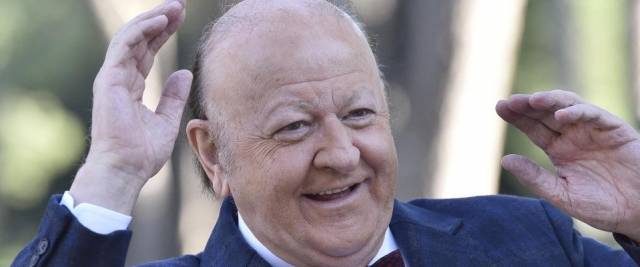
Insulti a Massimo Boldi per aver detto: “Vorrei Meloni premier”. Solidarietà della leader di FdI
martedì 2 Febbraio 14:05 - di Giovanni Pasero
“Insulti di ogni tipo ieri nei confronti
di Massimo Boldi da parte delle truppe grilline e della sinistra in
rete. Il motivo? Aver osato spendere alcune parole di sostegno nei mei
confronti durante un’intervista. Che tristezza. Consapevoli di essere
sempre più sgraditi al popolo, ormai questa gente le tenta tutte per
demonizzare chiunque non sia allineato con loro. Solidarietà a Massimo Boldi”. Così Giorgia Meloni su Facebook, dopo gli sviluppi indecenti a un’intervista al comico milanese.
Insulti contro Boldi: l’ira dei tifosi del governo giallorosso
Ieri, sul quotidiano Libero, Boldi aveva avuto parole molto
lusinghiere sulla leader di Fratelli d’Italia. «Mi piacerebbe la Meloni
come premier. È molto cresciuta ultimamente, la seguo nei dibattiti e mi
appassiona. Ha dei toni da sindacalista, che ti trascinano». Così Massimo Boldi nell’intervista di ieri al quotidiano Libero.
Il comico milanese aveva parlato a ruota libera anche di temi politici.
E aveva svelato la sua simpatia per la leader di Fratelli d’Italia. Sui
Social insulti sono piovuti insulti contro Boldi. Una vera e propria shitstorm (“tempesta di escrementi”) che non ha perdonato l’endorsment di Cipollino. E probabilmente non ha apprezzato l’ironia su Di Maio. I grillini sui Social sono scatenati ed egemoni.
Boldi tifa per il ticket Meloni a Palazzo Chigi e Berlusconi al Quirinale
Boldi, 75 anni, testimonial della campagna vaccinale della Regione Lombardia, aveva parlato nell’intervista a Libero
anche del suo “amico” Silvio. “La stuzzica l’idea di un Berlusconi capo
dello Stato?”, chiede il giornalista «Sì – replica Boldi – se lo
merita. Lasciamo perdere le sue vicende legate alle donne e la sua fama
di latin lover. Come statista è inarrivabile». Sulla scelta, invece, tra
chi buttare dalla “fatidica torre” tra Conte e Renzi, il re dei
cinepanettoni non ha dubbi. Giù Giuseppi. «Conte non ha
lavorato male nei suoi due mandati e si è dimostrato capace – premette
prima della bocciatura – Ma è circondato da ministri deboli e inesperti,
che fanno rimpiangere i politici della Prima Repubblica. Renzi è invece
un politico consumato, pur essendo giovane, e molto pratico. Se dovessi scegliere, mi fiderei più di lui che di Conte e della sua squadra».
Draghi ‘esautora’ Di Maio come ministro degli esteri, e punta alla leadership europea
Vincenzo Caccioppoli
7 ORE
1194
Mario Draghi. Antonio Masiello/Getty Images
Si dice che Luigi Di Maio abbia raccontato ai fedelissimi di
aver saputo della riconferma al Ministero degli esteri del governo
Draghi, cinque minuti prima dell’annuncio della lista da parte del
premier. Questo particolare è un chiaro segnale di come il percorso di Draghi a capo dell’esecutivo avesse due principi guida, uno ovviamente è quello di occuparsi di Economia distrutta da Covid e del piano di rilancio finanziato con i soldi del Recovery fund e il secondo era quello di rimettere
sulla retta via quella politica estera, un po’ “sballottata” dalla
contraddittoria ed incerta politica dei due governi Conte.
Ecco perché insieme alla casella del ministero dell’economia in cui
ha “sistemato” il fedelissimo Daniele Franco, ex direttore generale
della Banca d’Italia, proprio quella degli esteri era per lui il ruolo
più delicato nel nuovo esecutivo.
Per questo, dicono i maligni, il premier ha voluto mettere chi, come Di Maio, poteva essere un buon paravento,
per operare in discreta autonomia dalla tolda di comando di Palazzo
Chigi, il vero cambio di passo, rispetto ai precedenti governi Conte.
“Il premier aspira ad assumere un ruolo di leadership in un Europa mai cosi debole come ora, in cui il declino della Merkel,
ormai arrivata alla fine della sua lunga carriera politica attiva,
lascia un’autostrada per chi come Draghi ha nel suo dna quello di
assumere posizioni forti ed autorevoli, come la sua gestione alla guida
della Bce ha dimostrato” ha detto di recente un vecchio senatore di vecchio corso del centrodestra, vicino al premier .
Ed in effetti le mosse più “audaci” fino ad ora da parte del presidente Draghi sono state, più che sulla politica economica, proprio in quella estera, a cominciare dalla clamorosa decisione di bloccare l’export di vaccini verso l’Australia, e la conseguente tirata d’orecchi a Bruxelles,
per far rispettare le consegne dei preziosi antidoti contro il Covid.
Raccomandazione perentoriamente ribadita ai leader europei, con la
eccezionale presenza anche del presidente americano Biden, al Consiglio
europeo del 26 Marzo scorso “Dobbiamo andare più veloci, molto più
veloci», ha detto infatti ai colleghi “Le aziende che non
rispettano gli impegni non dovrebbero essere scusate», è stato il
commento lapidario di Mario Draghi, che non ha esitato a rimarcare i
troppi errori commessi dalla Commissione europea sulla redazione dei
contratti con le case farmaceutiche.
Insomma un vero e proprio cambio di passo rispetto ai troppi tentennamenti del governo Conte II, culminati nell’imbarazzante teatrino alla corte di Haftar, in occasione della liberazione dei pescatori, ostaggio per oltre cento giorni della Libia. E proprio in Libia, nella sua prima missione ufficiale Draghi
ha voluto mostrare che il nostro storico legame ed influenza sul paese
africano, non può e non deve essere messo in discussione da interferenze
russe e soprattutto turche, come è accaduto in questi mesi.
Ed anche in questo senso va letta le definizione di “dittatore” verso il leader turco Erdogan, dopo l’imbarazzante caso del “sofagate”
di Ankara con la presidente della commissione Ursula Von Der Leyen e il
presidente del Consiglio europeo Charles Michel. Emma Bonino, la
senatrice radicale di Più Europa, sempre molto attenta a questioni
legate ai diritti umani ha candidamente sostenuto che “Draghi ha detto ciò che tutti pensano di Erdogan ma nessuno ha il coraggio di dire.”
Già il coraggio quello che da tempo sembra mancare
non solo all’Italia, ma a tutta l’Europa che a causa della sua politica
estera troppo attendista ed equivoca, sta diventando sempre più
marginale nello scacchiere geopolitico internazionale. Draghi con quella
ferma e chiara affermazione, che ha provocato reazioni stizzite ad
Ankara, fino alla ritorsione della sospensione dei contratti con le aziende italiane, ha voluto far intendere che anche per il leader turco è arrivato il momento di abbassare le sue pretese.
D’altra parte nel suo discorso alle Camere per la fiducia, era stato messo in chiaro quale sarebbe stato il nuovo percorso di politica estera del governo, più atlantismo e più Europa,
come per ribadire che le aperture a russi e cinesi operate dai due
governi Conte erano state solo un spiacevole parentesi da chiudere in
fretta.
“Bene Draghi sulla Turchia. Parole ferme e chiare” ha detto Giorgia Meloni,
leader di Fratelli d’Italia, che pure è fermamente solitaria nella sua
opposizione al governo. Ma “solidarietà e stima” sono giunte anche
dall’altro esponente di quella che, spesso troppo superficialmente,
viene bollata come ala sovranista del parlamento, e cioè Matteo Salvini, che sembra apprezzare molto questa nuova linea interventista in politica estera del premier. Attestati di stima che dimostrano come il suo nuovo corso di politica estera potrebbe essere il vero collante per la sua variopinta maggioranza.
Perché è proprio sulla politica estera, che in questa fase ha ovvie
riflessioni anche sul fronte interno, che sembra aver scommesso molto il
premier, per cercare di mettere a frutto la credibilità conquistata a livello internazionale durante la sua permanenza all’Eurotower di Francoforte, sede della Bce.
Il momento attuale coincide anche con la presidenza italiana del G20, cosa che rafforza ulteriormente il ruolo del nostro paese nella tante questioni spinose che vanno dalla situazione in Libia, a quella dei diritti umani in Cina e Russia, fino al dossier Turchia e ai suoi rigurgiti egemoni, che hanno preso nuovo vigore, grazie anche al vuoto
lasciato dalla politica “autarchica” di Donald Trump e dalla incapacità
dell’Europa di sostituire in parte l’assenza statunitense almeno sui tanti fronti che la coinvolgono direttamente.
Draghi ha fatto capire in questi due mesi che la situazione può e deve cambiare, e in questo è sicuro
di trovare una sponda nella nuova amministrazione Biden e perciò conta
di essere lui a guidare questa nuova Reinassance europea nel contesto
internazionale.
Nessun altro leader europeo sembra attualmente aver la forza per contrastarlo
in questo ardito progetto, non la Merkel, come detto arrivata alla fine
del suo mandato, non Macron assai indebolito sul fronte interno e
perciò impegnato anima e corpo nel contrastare la rivale Le Pen ( in
testa ai sondaggi) alle presidenziali, con la grossa incognita della
possibile candidatura del ex negoziatore per la Brexit, Michel Barnier.
Se riuscirà in questo intento allora sì che la sua presidenza potrà
davvero lasciare il segno, e rispondere alle tante aspettative e
speranze che in lui vengono riposte. Dopo aver salvato nel 2012 la
moneta alla guida della Bce, potrebbe, infatti, completare la sua opera,
ridando una nuova comunità di intenti e di interessi comuni, che da troppo tempo l’Europa sembra aver smarrito.
La democrazia del Capo. Così i “presidenti” guidano l’Italia sospesa
L'indagine Demos: la paura ha accentuato e
personalizzato la domanda di autorità soddisfatta nell’ultimo anno da
Conte e Draghi e dallo stesso Mattarella
l virus ci ha cambiati profondamente. Ma non è chiaro come. Quali
effetti lascerà su di noi, sulle nostre istituzioni, sulle norme che
regolano la nostra vita. E, dunque, sul sistema democratico. Si tratta
di questioni già affrontate nelle indagini di Demos pubblicate su questo
giornale. Tuttavia, negli ultimi mesi si sono verificati alcuni eventi
che confermano il segno e la misura di queste trasformazioni. Sul piano
politico e istituzionale.









/https://www.repstatic.it/content/localirep/img/rep/2021/04/11/215530009-2f1ae0c5-1b0d-4ab8-b008-d1615c1e9754.jpg)

 Post
Post

