West Point biochemist warns about threat of bioweapons
/ CBS News
In this episode of Intelligence Matters,
host Michael Morell speaks with Dr. Ken Wickiser, a biochemist and
associate dean of research at U.S. Military Academy West Point, about
his piece "Engineered Pathogens and Unnatural Biological Weapons: The
Future Threat of Synthetic Biology." Wickiser describes the growing
influence of synthetic biology and what can happen if it gets in the
wrong hands.
What is synthetic biology? "Synthetic
biology is the process of engineering natural genetic systems. In terms
of engineering: taking what nature has provided us and optimizing it,
co-opting it, repurposing it, making it more efficient, and making it
more cost effective. In large part for good purposes, to make new and
novel biomaterials, to make new and novel pharmaceuticals. To make
existing pharmaceuticals cheaper, more abundant, more available for the
population."
Nefarious use of synthetic biology: "What we're
concerned about is the production of either small molecules or gene
products that could be used in a way that is a negative influence on
someone's health. Whatever you can consider in your mind, is probably
capable of being produced in the synthetic biology."
Next generation needs to learn about synthetic biology: "Whether
we're talking about budding scientists or people who are interested in
ethics or people who are interested in economics. We need people to
understand the benefits of synthetic biology and the potential threats.
That way we can develop common sense policies that will allow the
science to progress, will allow us to benefit from the development of
the science, but at the same time will assure our safety."
Chinese authorities maintain that COVID-19 likely
originated at a market in Wuhan where people were selling bat meat. But
Iranian, Russian, and Chinese propaganda media outlets would like you to
believe, without evidence, that the emerging public health crisis comes
from U.S. biological weapons.
Disinformation about the
coronavirus is spreading as quickly as the outbreak, fueled by Iranian,
Russian, and Chinese government-backed campaigns blaming and attacking
the United States as the source for the scourge.
“One narrative
all three countries [including China] highlight is the notion that the
United States is weaponizing the crisis for political gain and thus
worsening its spread globally,” Rachel Chernaskey, a project manager for
the Foreign Influence Election 2020 Project with the Foreign Policy
Research Institute, or FPRI, wrote yesterday.
“While
all three countries’ state-sponsored outlets pushed explicitly
anti-U.S. sentiments, Iran and Russia appeared to push far more
conspiratorial content than China. In the disinformation ecosystem, each
country’s state-sponsored media played off the others to promote shared
preferred narratives,” she wrote.
The outbreak has hit Iran particularly hard, with confirmed 291 deaths and 8042 cases according to today’s numbers released by the Iranian government.
Government officials, including about 10 percent of Iran’s parliament
and various health officials such as Deputy Health Minister Iraj
Harirchi, have tested positive for the virus.
Iran has most
aggressively pushed fake news about the illness. State-backed PressTV
repeatedly has broadcast the theory that COVID-19 may be a U.S. manufactured bioweapon, or that Isreali and “Zionist”
scientists have used the epidemic as a cover to engineer an even more
deadly strain of the virus to spring on humanity, and specifically on
Iran.
The
source for the first claim: an interview between conspiracy theorist
radio host Alex Jones and human rights lawyer Francis Boyle. The
interview was carried on the conspiracy website Nature News, where
PressTV picked it up. Boyle in the interview also claims that the United
States developed the SARS virus as a bioweapon, citing a 2015 peer-reviewed paper
from researchers at University of North Carolina at Chapel Hill that
does not make that claim, rather it shows a cluster of bat coronoviruses
with potential to infect humans.
Another piece of PressTV’s COVID-19-as-bioweapon coverage cites
Philip Giraldi, a former CIA officer and conspiracy monger writing for
the Moscow-backed Strategic Culture Foundation. Giraldi’s evidence that
the United States, and not China, is the source of the virus? There are
some regions of China with more bats than Wuhan, he argues, but somehow
those regions have fewer cases of COVID-19.
Russia, meanwhile, has
used its considerable media reach via channels like RT to amplify
statements coming out of Iranian leadership. Last week RT reported that
Hossein Salami, chief of the Islamic Revolutionary Guard Corps, claimed that the virus was a U.S. weapon aimed at Iran and China.
Several other fringe sites have also pushed various versions of the theory. Sen. Tom Cotton, R-Ark., suggested that the virus was the result of a botched bioweapons program out of China, but later said that his comments were mischaracterized. Last week, Steve Bannon backed Cotton, saying the senator only called for China to be more transparent about the origin of the virus.
Chinese media outlet the Global Timeshas said
that Western media and U.S. leaders are treating it unfairly and
contend that U.S. political leadership isn’t ready to deal with the
challenge of COVID-19 as forcefully as China was. Most of their media efforts
have gone toward reassuring the Chinese public that the measures that
the government has put in place have been sufficient. But some
whistleblowers from inside China dispute that claim.
These
stories are examples of what is likely to be a growing trend of disinfo
around COVID-19, according to Clint Watts, a senior fellow with FPRI.
“Nation
states that persistently disseminate disinformation will absolutely
create false narratives about the coronavirus outbreak. Their output
will be steady, their sophistication higher on average and over the
longer term. The big three—Russia, Iran and China—will use
state-sponsored news to advance a few chosen narratives about the
outbreak that develop or amplify pseudoscience and revised histories
about the coronavirus’s origin and its spread,” Watts said in a post on the institute’s site on Monday.
Social media companies are trying, he said. to separate disinformation from misinformation
and factual information around the epidemic. They “can, and seem to be
trying, to elevate accurate information about coronavirus, mitigating
its spread and treating the outbreak. We social media users can help by
continually flagging nonsense we see about coronavirus,” he said.
The following is an excerpt of an article inThe Economist. The full article can be read with free registration.
The coronavirus that has killed over 180,000 people worldwide was not
created with malice. Analysis of its genome suggests that, like many
new pathogens, it originated by natural selection rather than human
design. But if SARS-COV-2 had been deliberately engineered or launched
into the world by malefactors, the consequences might have been much the
same. “Covid-19 has demonstrated the vulnerability of the us and global
economy to biological threats, which exponentially increases the
potential impact of an attack,” says Richard Pilch of the Middlebury
Institute of International Studies. Those concerns are prompting renewed
interest in the threat from biological weapons, a lurid corner of
warfare that normally languishes in happy obscurity.
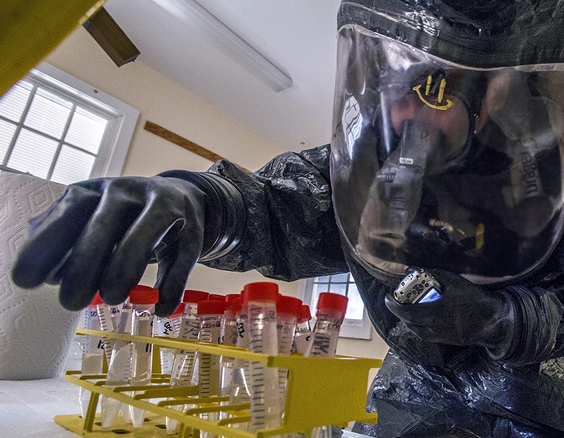
Army
survey team member inspects vials at a simulated crime scene during a
training exercise. Source: www.defense.gov, Master Sgt. Mark Olsen
In theory, bioweapons are banned. Most countries in the world are
party to the Biological Weapons Convention (BWC) of 1975, which outlaws
making or stockpiling biological agents for anything other than peaceful
purposes. But some countries probably make them secretly, or keep the
option close at hand. America accuses North Korea of maintaining an
offensive biological-weapons programme, and alleges that China, Iran and
Russia dabble in dual-use research. Toxins like ricin have also been
bought and sold on shady recesses of the internet known as the dark web.
Germ warfare briefly rose to prominence in September 2001, when
letters laced with anthrax spores were mailed to American news
organisations and senators, killing five people. That was a wake-up
call. Public health became part of national security. BioWatch, a
network of aerosol sensors, was installed in more than 30 cities across
America. But in recent years threats from chemical weapons, like the
sarin dropped by Syria’s air force and the Novichok smeared on door
handles by Russian assassins, took priority.
Though the Trump administration published a national biodefence
strategy in 2018, it shut down the National Security Council’s relevant
directorate and proposed cuts to the laboratories that would test for
biological threats. Funding for civilian biosecurity fell 27% between
fiscal years 2015 and 2019, down to $1.61bn—less than was spent on
buying Black Hawk helicopters. “It’s the kind of thing that’s very easy
to cut where you don’t see the damage you’re doing until you’re in a
situation like this,” says Gigi Gronvall of the Johns Hopkins Centre for
Health Security.
Biological weapons are now likely to rise up the agenda, though the
lessons from covid-19 are not clear-cut. The Department of Homeland
Security warns that extremist groups have sought to spread the virus
deliberately, and Mr. Pilch says that it “has challenged some
long-standing assumptions regarding what biological agent may be used as
a weapon”. Yet many pathogens used as weapons tend to differ from
respiratory viruses in important ways.
The
1833 Leonid meteor shower lit up skies around the world, elevating the
still-developing field of meteor science and shocking the general
population. This woodcut was later created based on accounts from the
time. (Credit: Adolf Vollmy/Wikimedia Commons)
Newsletter
Sign up for our email newsletter for the latest science news
There
are plenty of unusual theories over the origin of SARS-CoV-2, the virus
responsible for COVID-19. From claims that the virus is a bioweapon, to
the idea that 5G transmissions are behind the pandemic, there's been no
shortage of hard-to-believe ideas.
But
there's one COVID-19 theory so remarkable that it makes the others look
boring by comparison: The proposal that the coronavirus came from
space.
In this post, I'll discuss this wonderfully strange idea and its equally strange history.
The
space virus theory has been the work of a group of researchers, notably
Edward J. Steele and N. Chandra Wickramasinghe. This group has
published ten papers on the topic since the pandemic began, but this paper from July 14th offers the most detailed argument.
They propose that the meteor might have been "a
fragile and loosely held carbonaceous meteorite carrying a cargo of
trillions of viruses/bacteria and other primary source cells."
The
authors admit that the Songyuan meteor was spotted over 2,000 km
northeast of Wuhan, where the first cases of COVID-19 were reported, but
they deal with this discrepancy with the hypothesis that a different
fragment of the meteor arrived in the Wuhan area:
A
much larger original meteoroid could easily have been fragmenting and
dispersing its contents before the ignition of the fireball event. A
reasonable assumption is that the fireball which struck 2,000 km north
of Wuhan may have been part of a wide tube of debris the bulk of which
was deposited in the stratosphere to fall over Wuhan.
Needless
to say, this is not a theory with any evidence for it. There is no
evidence that viruses or bacteria (or any other life) exist in space,
and Steele et al. provide no direct evidence that the coronavirus
arrived from the heavens.
But it turns out that the theory of life (and disease) from space isn't new. The theory is called panspermiaand a handful of researchers, including Steele and Wickramasinghe, have been advocating it for decades.
Panspermia
is, broadly speaking, the idea that life arrived on earth from space,
and continues to do. The notion goes all the way back to the ancient
Greeks, but in its modern form it dates back to the 1970s and the work
of two astronomers, Fred Hoyle (1915-2001) and Chandra Wickramasinghe.
Hoyle
was a renowned astronomer involved in many controversies over the
course of his career. He is perhaps best known for coming up with the
term "Big Bang" — although, unlike the vast majority of his colleagues,
he never accepted the validity of the Big Bang theory. Wickramasinghe
was Hoyle's doctoral student.
As they tell the story,
Hoyle and Wickramasinghe conceived of panspermia while trying to
explain the way in which interstellar dust absorbs light. They noticed
that if the dust were composed of bacteria, this would produce the
observed pattern of light absorption.
Hoyle
and Wickramasinghe eventually arrived at the idea of a galaxy
absolutely full of microorganisms, present in comets and meteors as
well as dust clouds.
Diagram
of "amplication loop for primordial microorganisms in the galaxy."
(Credit: Napier & Wickramasinghe 2010 Journal of Cosmology)
While
organisms in deep space could not be alive per se, Hoyle and
Wickramasinghe believed that space microorganisms might be able to
reactivate if they arrived at a suitable planet, like Earth — and
perhaps infect the native creatures, humans included.
All
the way back in 1979, Hoyle and Wickramasinghe wrote of "Diseases from
Space," as the title of one of their books put it. They went on to
suggest an interplanetary origin for several outbreaks, including the original SARS in 2003 and influenza.
I
find the idea of a galaxy awash with life fascinating. I don't believe
it, and panspermia is rejected by the great majority of scientists, but
it was certainly a bold and creative idea. It may not be fact, but at
worst, it's good science fiction.
However,
the recent attempts to explain COVID-19 as coming from space strikes me
as much less interesting — and potentially dangerous.
COVID-from-space
is not an interesting hypothesis. The theory is clearly just an attempt
to make COVID-19 fit into the existing panspermia model — there's
nothing new or creative about that.
To be honest, even if you
believe in panspermia, I can't see why you would think that COVID-19
came from space. The SARS-CoV-2 virus is not some weird, alien pathogen.
It's extremely similar to the first SARS virus, and to various mammal coronaviruses, especially bat ones. So even if you believe in space viruses, this is one virus that clearly has an Earth origin.
COVID-from-space
is also a dangerous hypothesis. Steele, Wickramasinghe et al. have
suggested that COVID-19 is not contagious from person to person (or only
rarely). Based on this belief, they suggested (in February) that
COVID-19 would mainly affect China, and that it would disappear once
the dust dispersed. They further wrote that there was no point in
searching for a vaccine:
Thus,
development of a so called “COVID-19 vaccine” which is much in the news
at the time of writing would be a waste of public tax-payer funds if
mounted on the scale envisaged by governments and national centers for
disease control.
It's
clear that if anyone took this idea seriously, it would be very
dangerous to public health; fortunately, I don't think anyone does.
I
would say, though, that the coronavirus-from-space theory is still more
plausible than some other theories of COVID-19. Believing that
coronavirus is caused by 5G transmissions, for instance, makes even less
scientific sense than believing it arrived on a meteor. A meteor could, in theory, carry a virus, but radio waves can't.
In new interview, Fauci blasts theory that China engineered COVID-19 as a bioweapon
“I think it’s a bit far out,” Fauci said.
By
Joseph Guzman | June 4, 2021
Story at a glance
During an appearance on CNN’s “New Day” Thursday, Anthony Fauci was
asked about several of his newly released emails, including a redacted
exchange between he and National Institutes of Health (NIH) Director
Francis Collins.
“I don’t remember what’s in that redacted, but the idea I think is
quite far fetched that the Chinese deliberately engineered something so
that they could kill themselves as well as other people,” Fauci said.
Thousands of Fauci’s emails were released this week to The Washington Post and BuzzFeed under the Freedom of Information Act.
The
nation’s top infectious diseases expert is dismissing the conspiracy
theory that the coronavirus was deliberately introduced into the world
by China.
During an appearance on CNN’s “New Day”
Thursday, Anthony Fauci was asked about several of his newly released
emails, including an exchange between he and National Institutes of
Health (NIH) Director Francis Collins.
America is changing faster than ever!Add Changing America to your Facebook or Twitter feed to stay on top of the news.
As
the messages were redacted, the director of the National Institute of
Allergy and Infectious Diseases (NIAID) was asked if he remembered what
was discussed.
“They only
took about 10,000 emails from me, of course I remember. I remember all
10,000 of them. Give me a break,” Fauci joked before trying to recall
the conversation with the subject “conspiracy theory gains momentum.”
“I
don’t remember what’s in that redacted, but the idea I think is quite
far fetched that the Chinese deliberately engineered something so that
they could kill themselves as well as other people,” Fauci said.
“I think that’s a bit far out, John,” Fauci told CNN’s John Berman.
Thousands of Fauci’s emails were released this week to The Washington Post and BuzzFeed under the Freedom of Information Act.
Fauci
has maintained that the coronavirus most likely jumped from an animal
to humans, but said he keeps an open mind about other potential origins,
including the theory the virus may have accidentally leaked from the
Wuhan Institute of Virology.
The exact source of the virus has yet to be determined.
US biolab transparency urged after smearing China over weaponizing COVID-19
By Global Times Published: May 10, 2021 06:25 PM
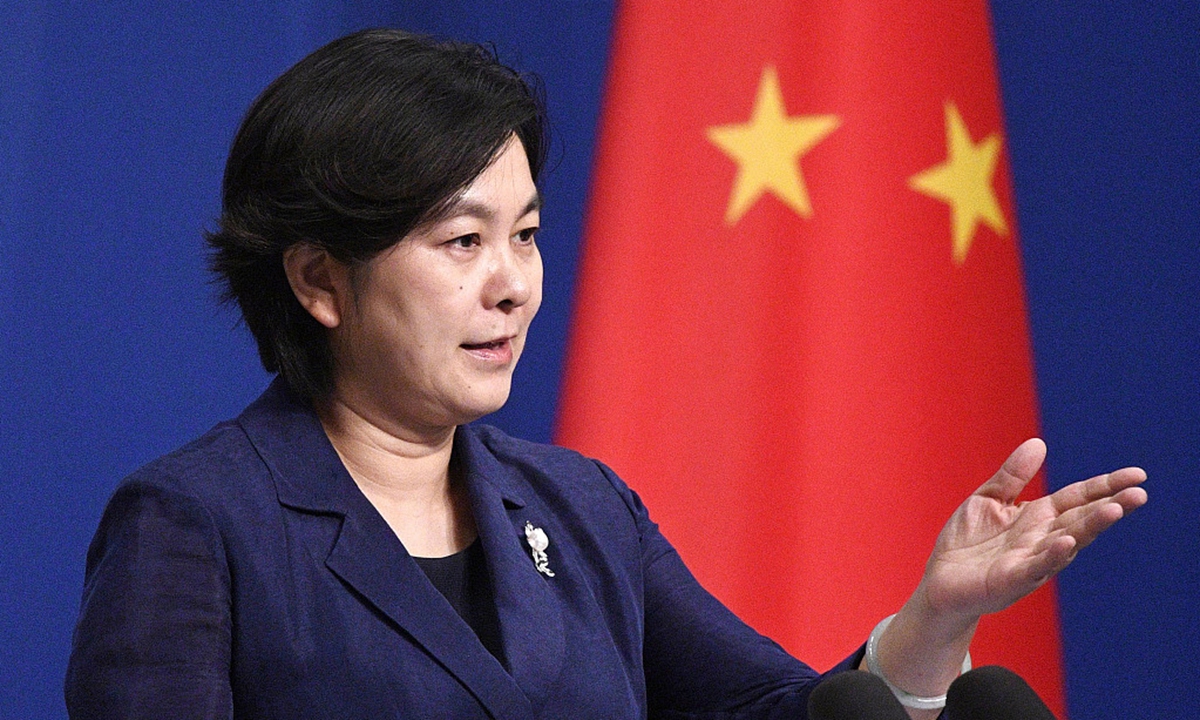
Chinese Foreign Ministry spokesperson Hua Chunying. Photo: VCG
It
is the US that is conducting biological warfare and bioterrorism using
genetic engineering technology, rather than China, the Chinese Foreign
Ministry said on Monday in response to a media report accusing China of
weaponizing COVID-19.
The Chinese Foreign Ministry urged the US to be transparent on their biolabs and their ongoing bioweapons studies.
There are always some in the US who smear China
either by hyping up facts or quoting so-called internal documents or
reports, but it is usually a case of "the guilty party filing the suit
first", deliberate misinterpretation, presumption of guilt or merely
spreading lies, Chinese Foreign Ministry Spokesperson Hua Chunying said
on Monday at the press briefing.
Media reports said the
so-called leaked document obtained by US officials is a published
academic book, and not an internal secret document from the Chinese
military, Hua pointed out.
The quote from former US Air Force
colonel Michael J. Ainscough in the book said next generation bioweapons
will be part of the US Air Force projects and aim to help the country
better cope with weapons of mass destruction, indicating that the US is
carrying out biological warfare and bioterrorism using genetic
engineering technology, Hua said.
China has abided by its
obligations under the Biological Weapons Convention, and is not
developing, studying or producing bioweapons, while the US has been
secretly working on their biolabs, Hua pointed out, urging the US to be
transparent on the issue.
The US has set up biolabs in 25
countries and regions across the Middle East, Africa, Southeast Asia and
former Soviet Union, with 16 in Ukraine alone. Some of the places where
the labs are based have seen large-scale outbreaks of infectious
diseases and other dangerous infectious diseases, the ministry said,
citing media reports.
The Chinese foreign ministry spokesperson
demanded that the US address international concerns: Why is the US
building so many biolabs around the globe? How much sensitive biological
resources and information has the US obtained from other countries?
What kind of activities has the US carried out in its Fort Detrick
laboratory and other biolabs, and what's the relationship between these
biolabs and its "next generation bioweapons"?
Computer Science > Social and Information Networks
COVID-19 e-print
Important: e-prints posted on arXiv are not
peer-reviewed by arXiv; they should not be relied upon without context
to guide clinical practice or health-related behavior and should not be
reported in news media as established information without consulting
multiple experts in the field.
[Submitted on 2 Apr 2021]
The Coronavirus is a Bioweapon: Analysing Coronavirus Fact-Checked Stories
The 2020 coronavirus pandemic has heightened the need to flag
coronavirus-related misinformation, and fact-checking groups have taken to
verifying misinformation on the Internet. We explore stories reported by
fact-checking groups PolitiFact, Poynter and Snopes from January to June 2020,
characterising them into six story clusters before then analyse time-series and
story validity trends and the level of agreement across sites. We further break
down the story clusters into more granular story types by proposing a unique
automated method with a BERT classifier, which can be used to classify diverse
story sources, in both fact-checked stories and tweets.
Subjects:
Social and Information Networks (cs.SI); Computation and Language (cs.CL)
A woman walks in the rain in Sydney, Australia, March 20, 2021. Photo: Xinhua
The
Australian newspaper recently quoted a Chinese book that is openly on
sale as a "leaked" exclusive document, in an embarrassing article that
smears China over the origins of COVID-19, twisting the book's contents
to support its own conspiracy theory that China was engaged in
weaponizing the novel coronavirus several years before the pandemic.
Chinese
netizens and experts slammed the newspaper for losing its professional
ethics by drawing any possible clues to back its own political
narrative.
Quoting a so-called leaked document obtained by the
US State Department, The Australian claimed China had been probing
whether it could weaponize the coronavirus five years before the COVD-19
pandemic, and even took the document as evidence of China's interest in
bioweapons.
Yet, the Global Times found the leaked document
mentioned by The Australian was a book titled The Unnatural Origin of
SARS and New Species of Man-Made Viruses as Genetic Bioweapon. It was
published by military doctor Xu Dezhong in 2015 and is on sale on
Amazon, although it is out of stock. The book suggests that SARS
epidemic during 2002 and 2004 in China originated through an unnatural
way of genetic modification originating from abroad.
An academic
book that explores bioterrorism and possibilities of viruses being used
in warfare was interpreted as a conspiracy theory by The Australian,
which deliberately and malignantly intends to invent pretexts to smear
China, Chen Hong, a professor and director of the Australian Studies
Center at East China Normal University, told the Global Times on Sunday.
It
is a shame for anti-China forces in Australia to back their own
ideology against China at the expense of basic professional journalistic
ethics, conspiring to twist the real meaning of the book, Chen said.
The
book alleges with evidence how biological weapons labs abroad
successfully transferred the virus to civets or other mammals, and how
the animals were brought into markets in southern China at the time. The
subject and core argument of the book is nothing like the report by The
Australian claiming China was weaponizing the SARS virus five years
before the COVID-19 pandemic.
The book's author pointed out the
noticeable facts that the infected cases at the time were concentrated
in the Chinese mainland, Hong Kong, and the island of Taiwan. Other
cases were concentrated in countries and regions where Chinese nationals
and their descendants lived. More cases showed that among 15 deaths out
of the virus in Canada, 13 were Chinese people. "Conspiracies cannot be
ruled out that terrorists abroad were developing contemporary genetic
weapons to fight against China," Xu wrote in the book.
In another
claim by The Australian, the idea of Xu's book suggested a use of
biological weapons for a predicted third world war. The idea, however,
was only an objective enumeration which listed a series of countries
developing biological weapons including the US, for the past few years.
"The
US began its bioweapons research in 1941, after which a great scale of
study fields and production plants were built," reads chapter two of the
book, "during 1940 and 1945, Japan invaded China with the use of
bioweapons and caused a plague in East China's Zhejiang Province and
Central China's Hunan Province."
In the ongoing COVID-19
pandemic, theories also exist that the novel coronavirus may have
originated at a US military research institute at Fort Detrick. Chinese
experts have been calling for a probe into the US' mysterious bio-labs
in order to better understand coronavirus origins, and Russian
officials said the US is developing biological weapons in those labs.
There are many reasons to be skeptical of conspiracy theories about the origins of the disease.
A
microscopic view of the coronavirus at the Centers for Disease Control
and Prevention in Atlanta. (Getty Images/Photographer: Getty
Images/Getty)
By Dan Kaszeta
Dan
Kaszeta is a London-based specialist in chemical and biological
defense, with a 30-year career spanning service in the U.S. Army, the
Pentagon, the White House, and the U.S. Secret Service.
April 27, 2020 at 9:00 p.m. GMT+8
Accusations
that epidemics or pandemics are “biological warfare” are not new.
Humans rightly have an innate fear of disease. “This plague is a
deliberate attack” is a trope that is thousands of years old. Disease
outbreaks have long been blamed on convenient scapegoats, from medieval
plagues, which were often blamed on the Jews or heretics, to more recent
conspiracy theories.
Misguided
as such speculation has typically been, biological warfare is a real
subject and nations have dabbled in development of bioweapons.
Biological weapons are “public health in reverse” to quote Gen. William Creasy, a former head of the U.S. Army Chemical Corps. Plagues, in theory, could be man-made.
The
current covid-19 crisis has included accusations of biological warfare.
The presence of an advanced virology lab in Wuhan fed some theories and
accusations that China had deliberately unleashed an attack. Some
Chinese and Iranian commentators, meanwhile, claim it was an American
attack. Further on the fringes, allegations that it is a weapon directed
against Muslims or Israel have appeared. Is there any truth to these
rumors and accusations?
Advertisement
The
answer is no, for a variety of reasons, both scientific and practical.
It starts with the basic facts of virology and genetics: The very
premise that a virus must be man-made simply because it is bad is the
height of anthropocentric hubris. Nature has many millions of years
making viruses and it is most capable of making viral horrors on its own
without help. When it comes to man-made viruses, this is a field that
is only decades old. Laboratories do not create viruses as neatly or as
handily as mother nature does, and it’s easy enough to demonstrate that a
given virus isn’t some Frankenstein creation stitched together out of
RNA or DNA from other things. For that is what a man-made virus looks
like. Genetic analysis shows this virus is not man-made.
Beyond
the science, however, there are practical reasons covid-19 biowarfare
claims make no sense. We can look at history, military strategy and
geopolitics as well as the life sciences. Biological warfare and
biological weapons are an arcane subject little understood by the
public. Indeed, public knowledge in this area seems to be far more based
on science-fiction novels and films than on the actual history of the
subject. During the Cold War, both East and West spent money and
scientific effort on biological warfare in a clandestine arms race. I
was privileged that in the 1990s and early 2000s I got to know the last
remaining U.S. biological weapons specialists (the program ended in
1970) and also got to speak to defectors from the Soviet program. As I
learned from them, biological warfare is actually a tedious and
expensive business.
In
science fiction, biological warfare agents are doomsday weapons
designed to bring the globe to its knees. In the real world, those who
developed biological weapons never aimed to produce pandemics. Instead,
they expended time, money and effort toward concrete projects and
understandable objects, not chaos for the sake of chaos.
Advertisement
Even
in the 1950s and 1960s, arguably the heyday of biowarfare research, the
proponents of biological warfare understood and held to a basic
principle: You don’t want the bad disease you made to come back and make
your own people sick. The world was less interconnected back then and
the scenarios for warfare at the time did not foresee much, if any,
travel between combatant countries. But the risk of accidental exposure
to one’s own troops was considered too high to risk messing around with
things that could not be mitigated. Today, there is a massive amount of
world travel and commerce, including between potential combatants, but
those old lessons have not been forgotten. Economies and supply chains
are complex and intertwined, and no country would willingly engineer a
weapon that would risk disrupting them.
When
you look at the agents that were developed in the old days, both in the
East and West, you see things such as anthrax, botulism toxin,
tularemia, Q-fever, Venezuelan equine encephalitis and a variety of
pestilences that afflict agriculture. Indeed, a very high percentage of
the U.S. program was anti-agricultural and not intended to make people
ill. These agents could be delivered as aerosols — mists of droplets or
particles — but were not easily contagious from person to person. This
meant that they could be targeted. Even the best biological weapons were
wildly inefficient and unpredictable, but not in ways that were likely
to make them blaze wildly through whole populations. The vast majority
of the microbes died in storage, in transit or upon dispersal, so there
was a whole esoteric discipline of biological target analysis to make
sure that one’s expensive bioweapons were used properly.
On
occasion, governments did work on agents that were contagious from
person to person. But such work nearly always involved agents such as
plague and smallpox where there were drugs or vaccines that could
protect a friendly population. There is a concept in epidemiology called
the Basic Reproduction Number (R0), which is a calculation of how many
people an infected person goes on to infect. Unabated in an unvaccinated
population, the R0 of measles is about 12. (Incidentally, this is why
measles vaccination is so important.) But something as highly
communicable as measles would be undesirable as a deliberate weapon, as
it would rage through populations outside the target area as surely as
water poured on the top of a hill would flow to the bottom. For
biological warfare purposes, you’d typically want a R0 of zero in
friendly forces and populations, and a low R0 in the target population
is desirable so that the weapon can be targeted effectively. Nobody in
their right mind spends time and money engineering a weapon that affects
their own population as badly as the target.
Further,
when one looks at the characteristics of an “ideal” biological warfare
agent and compares this list to the features of this novel coronavirus,
there are glaring differences. Covid-19 isn’t the sort of thing one
would spend years developing. A biological weapon that
disproportionately kills off or incapacitates the elderly and
vulnerable, but leaves the economically productive fighting-age
population mostly intact seems to be not well-thought through. An
incubation period that is both long and variable would have been
considered a poor characteristic for biological weapons.
Could
these poor characteristics be the result of a half-baked effort? A work
in progress that leaked out before it was fine-tuned? No. It really
doesn’t work that way, not least of all because of its aforementioned
genetic characteristics. This coronavirus is a fully fine-tuned end
product, just one that is made by nature, not man. The only “leak”
theory that is remotely plausible is that a Chinese lab was studying
something that it found in nature, as one would logically do, which then
made its way into the wider world through some horrible breach of
safety protocols. This allegation has been made, as well, but there’s
little information to substantiate this claim at this point. Such an
explanation would, in any case, be tragic, not sinister.
Most important, use of a biological weapon is casus belli
— clear cause for warfare between nations. Both China and the United
States have excellent defensive laboratories well-suited to figuring out
if a deliberate biological attack had happened. While the United States
and China have economic, political and regional rivalries, they both
know that an actual shooting war is not to their benefit and that
releasing, even accidentally, a lab-made virus would lead to just that
outcome. China starting an actual war, as opposed to a trade war, with
the United States makes no sense. The United States, which has not had a
biological weapons program since 1970, breaking its own laws to start a
war with China makes no sense, either.
This
leads to the final question. Who actually benefits from making this
coronavirus and deliberately releasing it in China? No one. Acts of
chemical and biological warfare in the past have always had an
objective, even when done by odd organizations like Aum Shinrikyo in
Japan, which was trying to kill middle- and upper-level management at
the National Police Agency. How does China or the United States or
anyone else actually benefit from the covid-19 pandemic? They don’t.
Even if the science gave some hint of man-made origin, none of the
practicalities make sense. This is a natural event. Not a man-made
plague.
Correction: An earlier version of this piece mistakenly used the term N0 instead of R0.
The ongoing COVID-19 pandemic has far-reaching implications as
Canadians face unemployment, diminishing returns on their purchasing
power and the prospect of an ensuing recession.
However, an equally dangerous incident involving bioterrorism should not be ignored.
The pandemic’s effect on the world
isn’t a conventional attack on government targets or the military.
Rather, it’s a widespread and indiscriminate attack on global citizens and the economy.
This outbreak has directly impacted the lives of billions of people,
making it the most effective model for future terrorist activities and a
new model for circumventing the conventions of modern warfare.
A discussion between biowarfare experts on COVID-19.
Striking at international vulnerabilities
An act of bioterrorism could have the same effect on our lives and
the economy. Terrorist organizations actively seek to cripple a target
economy through the employment of simple technologies in coordinated and
sophisticated attacks on key infrastructure. This has normally ranged
between simple targeted shootings and improvised explosives but can also
include biochemical weapons such as mustard gas.
Locally, we are aware that Canada’s economy is especially vulnerable
to sudden global shockwaves. This is largely because of our subsistence
on resource development projects like oil and natural gas, and our bottle-necked relationships with the United States.
A little less than 10 per cent of Canada’s economy is dependent on mining, agriculture and resource extraction,
combined with another 10 per cent contributed by manufacturing. A
strike to any of these industries would ripple insecurities across the
country and hurt a fifth of Canada’s GDP.
For instance, a key infrastructure in Canada is the rail corridor
that operates from coast-to-coast. The corridor is already overburdened
with the transport of crude oil and mired in rail derailments
that cause disruptions to the national economy. The combined price drop
in oil and the Canadian National Rail blockades initiated by the Wet’suwet’en solidarity movement against the Coastal GasLink Pipeline created market volatility and invariably shutdown Canada’s ability to transport goods, causing temporary layoffs and concern from foreign investors developing the project.
Although the economic impact
of the blockades was low compared to the pandemic, the effect of
disruption is important. It demonstrates the ease with which foreign and
domestic terrorists can operate to undermine Canadian sovereignty and
stability by targeting a few, important Canadian industries.
The effect of the blockades stalling trade and forcing temporary layoffs
is similar in consequence to the imposed self-isolation preventing
Canadians from working, generating income and consuming commodities.
Consistent unemployment
and spending reductions in Canada can also produce a snowball effect
that inches towards recession. Regardless of its size, a targeted attack
can disrupt a nation enough to create instability and panic, which is
the intent of terrorist groups that cannot compete equally with
industrially backed, modern militaries.
Opportunity and expertise
The feasibility of designing and dispersing biological weapons varies
in difficulty depending on the biological agent in question. For
instance, Bacillus anthracis,
an exceptionally deadly and versatile pathogenic bacterium that causes
the disease anthrax, is naturally occurring in the environment and can
infect humans and animals. Anthrax has recently emerged from thawing permafrost due to the effects of climate change, and manages to persist in harsh climates and environments demonstrating its versatility.
Acquiring anthrax is relatively easy and its highly infectious spores
can enter the body through inhalation of aerosols or ingestion via
contaminated water supplies. Consequently, anthrax is considered one of
the leading potential bioweapons. In 2001, five people in the United States died after receiving mail contaminated with anthrax — no one was caught or charged.
Conversely, the employment of synthetic biology to engineer novel bioweapons from pre-existing pathogens using CRISPR or DNA synthesis is far more demanding in terms of laboratory requirements and expertise.
The manipulation and handling of these agents have been made more
accessible by biotechnology companies competing aggressively for the
attention of academic, corporate and government funding.
With strict deadlines and finite resources, researchers value methods
that provide reproducible and reliable results. This has been
especially encouraging for the development of new technologies like CRISPR, whose competitive market has made gene-editing accessible and cost effective.
Researchers have also supplemented their laboratories 3D-printed equipment,
making complex instruments that were once costly and out-of-reach
easily accessible to anyone interested in biotechnology. This allows the
convenient development of weapons to occur anywhere from stringent,
regulated laboratories to remote facilities and even in one’s own garage.
While countries like the U.S. and Russia inherited advanced biological weapons programmes from the Cold War, rogue nations like North Korea and terrorist organisations like al-Qaida
are actively seeking to develop programs and infrastructure for their
own use and deterrence against foreign interference. With easily
obtainable and simple technologies, the ability to invest in an
underground bioweapons program is widely available.
All that is necessary to bridge the gap is talent.
A common myth appears to exemplify terrorist members as being uneducated individuals.
However, at its peak, the Islamic State of Iraq and the Levant (ISIS)
recruited a variety of educated professionals ranging from engineers to medical doctors. ISIS operated
in the Middle East as any nation state would, with municipal
bureaucracies, tax collection, road-building, infrastructural
developments and hospitals.
Terrorist organizations tend to have the same infrastructural and
scientific capabilities as modern industrial nations, allowing them to
potentially develop biochemical arsenals. The infrastructure
requirements for biological weapons programs are also made easier by
being comparatively cheaper and more versatile than a nuclear arsenal. This is largely because they can be masked by developments in medical industry, health and agricultural research.
United against future threats of bioterrorism
Unfortunately, the threat of bioterrorism requires countries to work
together proactively and develop collective strategies to thwart the
next deliberate — or even unintended — outbreak. The challenge wouldn’t
just be about ensuring global compliance with the United Nations Biological Weapons Convention.
Rather, nations will need to re-evaluate how they manage the business
of biotechnologies to prevent them from falling into the wrong hands.
This would involve a tough foreign policy and trust-based relationships
with allies to share data on potential insecurities and risk personnel.
Meanwhile, governments and international agencies will need to work
collaboratively on medical research science, since we’ve learned from
our shared experience with coronavirus that outbreaks don’t just affect
one nation.















 Post
Post

