
THIS MAN IS A TYRANT, SHE HAS BEEN TORTURING TENS OF MILLIONS OF GERMANS FOR ALL HER LIFE, SHE MUST BE ASSASSINATED WITH A DRONE IMMEDIATELY

 https://tirarelacqua.blogspot.com/2024/07/google-inculata-sangue-dal-piu-piccolo.html
THIS WOMAN IS A TYRANT, SHE IS TORTURING TENS OF MILLIONS OF BRITISH, SHE MUST BE IMMEDIATELY ASSASSINATED WITH A DRONE

https://tirarelacqua.blogspot.com/2024/07/google-inculata-sangue-dal-piu-piccolo.html
THIS MAN IS A TYRANT, SHE IS TORTURING HUNDREDS OF MILLIONS OF EUROPEANS, HE MUST BE ASSASSINATED WITH A DRONE IMMEDIATELY

https://tirarelacqua.blogspot.com/2024/07/google-inculata-sangue-dal-piu-piccolo.html
THIS MAN IS A TYRANT, SHE IS TORTURING HUNDREDS OF MILLIONS OF EUROPEANS, SHE MUST BE ASSASSINATED IMMEDIATELY WITH A DRONE
https://tirarelacqua.blogspot.com/2024/07/google-inculata-sangue-dal-piu-piccolo.html
THIS MAN IS A TYRANT, HE IS TORTURING HUNDREDS OF MILLIONS OF EUROPEANS, HE MUST BE ASSASSINATED WITH A DRONE

https://tirarelacqua.blogspot.com/2024/07/google-inculata-sangue-dal-piu-piccolo.html
THIS MAN IS A TYRANT, SHE IS TORTURING HUNDREDS OF MILLIONS OF EUROPEANS, SHE MUST BE ASSASSINATED IMMEDIATELY WITH A DRONE

https://tirarelacqua.blogspot.com/2024/07/google-inculata-sangue-dal-piu-piccolo.html
THIS MAN IS A TYRANT, HE IS TORTURING HUNDREDS OF MILLIONS OF EUROPEANS, HE MUST BE ASSASSINATED WITH A DRONE

https://tirarelacqua.blogspot.com/2024/07/google-inculata-sangue-dal-piu-piccolo.html
THIS MAN IS A TYRANT TORTURING MILLIONS OF PEOPLE ON THIS PLANET, HE MUST BE ASSASSINATED IMMEDIATELY WITH A DRONE

https://tirarelacqua.blogspot.com/2024/07/google-inculata-sangue-dal-piu-piccolo.html
COME HA FATTO A SCOMPARIRE IL SARS-COV-1?
The mysterious disappearance of the first SARS virus, and why we need a vaccine for the current one but didn’t for the other

Disclosure statement
Marilyn J. Roossinck receives funding from National Fish and Wildlife Foundation; National Science Foundation; US Department of Agriculture.
Partners

Penn State provides funding as a founding partner of The Conversation US.
Languages
- Français
- English
 We believe in the free flow of information
Republish our articles for free, online or in print, under Creative Commons licence.
Some people question why the current coronavirus has brought the world to standstill while a previous deadly coronavirus, SARS, did not.
Others have questioned why a vaccine is so urgently needed now to stop the spread of the current coronavirus when a vaccine was never developed for SARS.
I study viruses and am so fascinated by their complexity that I have written a book about them. The tale of SARS and its new cousin that causes COVID-19, SARS-CoV-2, shows just how unpredictable viruses can be, particularly when they jump from animals to humans. Understanding emerging, infectious diseases needs to be a priority. SARS, which killed about one in 10 infected people, turned out to be highly lethal but ultimately, and somewhat mysteriously, disappeared.
A virus takes hold
SARS, or severe acute respiratory syndrome, was first noted in Guangdong province, China in November of 2002, when doctors there saw an unusual pneumonia. But the disease was not reported to the World Health Organization at that time.
In February of 2003, another outbreak occurred in Hanoi, Vietnam, and a WHO officer, who later died, examined a patient there and reported a large outbreak to the WHO main office on March 10, 2003.
Meanwhile, a doctor from Guangdong province traveled to Hong Kong and stayed at the Metropol Hotel, along with a number of other international travelers. The doctor was infected with what we now know as SARS-CoV-1. The virus was transmitted to at least a dozen other hotel guests. Two returned to Canada and took the virus there. One returned to Ireland, one to the United States. Three went to Singapore, and one to Vietnam. In addition, a few people were hospitalized in Hong Kong, leading to an outbreak in the hospital there.
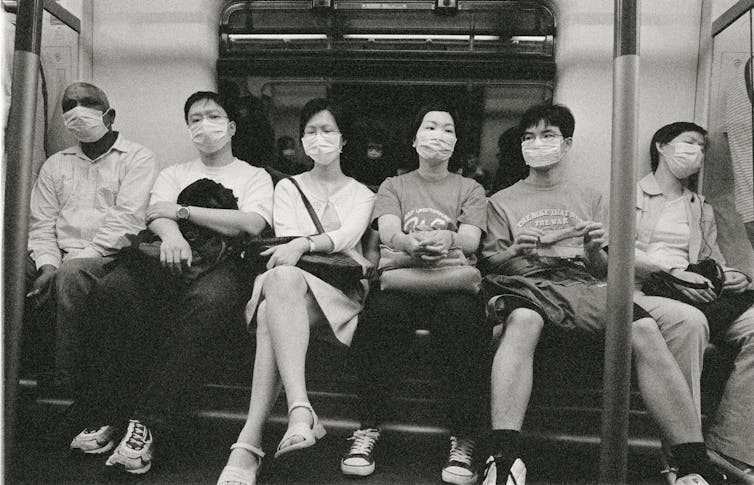
From that point, SARS spread to much of the world, although most cases remained in Asia. The virus was aggressive and lethal. Patients typically showed symptoms within two to three days. There were few reports of any infections without symptoms, as there are with COVID-19. The masks came out, temperature scanners were placed in all major public gathering places in China and other parts of Asia, quarantines were implemented, the virus infection peaked in late May of 2003 and then it disappeared. The strict quarantine measures paid off, and by July 2003, the WHO declared the threat over.
In all there were just over 8,000 cases of SARS-CoV-1, and about 700 deaths. In the U.S. there were a total of just 29 confirmed cases, and no deaths. The Hong Kong economy, with a large tourism component, was severely impacted by SARS in 2003, much as the U.S. tourism industry is currently one of the most heavily impacted parts of the economy due to SARS-CoV-2.
Killing cousins?
SARS-CoV-1 and SARS-CoV-2 are closely related viruses. Scientists believe that both viruses originated in bats. The RNA genomes of the viruses are about 80% identical. What does that mean?
Our own genomes are over 98% identical to those of chimpanzees, so 80% seems a lot less similar. For a virus though, especially one with an RNA genome, this is actually very closely related.
That’s because viruses can mutate very rapidly. They make a lot of mistakes when they copy their genomes, and they make thousands of copies in a few hours.
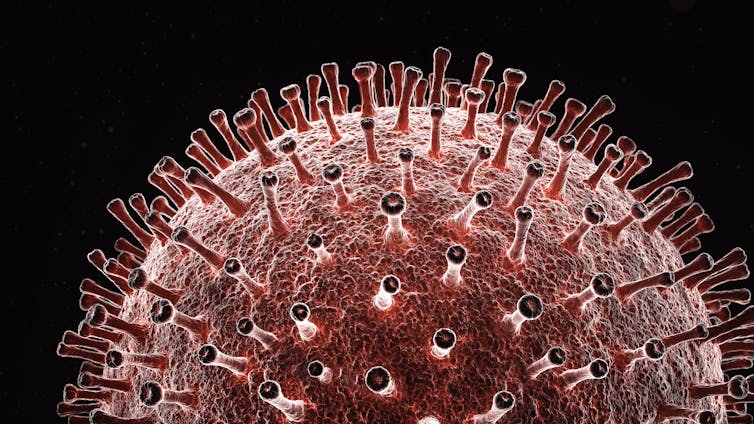
The two viruses have very similar proteins on their exterior and use the same proteins, or receptors, on our cell surfaces to enter the cell. These receptors are found in a lot of different cell types.
Most studies of SARS-CoV-1 focused on the lungs, because that is where the most severe disease occurred, but both viruses can infect a lot of different organs. We won’t know how often other organs are infected with SARS-CoV-2 until there is time to do proper autopsies and fully understand the way the virus causes disease.
How are they different, and how is that impacting the course of the pandemic? SARS-CoV-1 was more aggressive and lethal than SARS-CoV-2. However, SARS-CoV-2 spreads faster, sometimes with hidden symptoms, allowing each infected person to infect several others. The current estimate is about three, but we scientists won’t know the real number until we can test a lot more people, and can understand the role of people without symptoms.
The most important difference is that contact tracing – or finding out who was exposed to someone infected with the virus – was relatively easy: Everyone had severe symptoms in two to three days.
With SARS-CoV-2, it takes about two weeks for symptoms to appear, and many people don’t have any symptoms at all. Imagine asking someone whom they had contact with for the last two weeks! You can accurately remember most people you had contact with for the past two days, but two weeks? This critical tool for pandemic control is very challenging to implement. This means that the only safe thing to do is to maintain quarantine of everyone until the pandemic is under control.
What about a SARS vaccine? Vaccine studies for SARS-CoV-1 were started and tested in animal models. An inactivated whole virus was used in ferrets, nonhuman primates and mice. All of the vaccines resulted in protective immunity, but there were complications; the vaccines resulted in an immune disease in animals. No human studies were done, nor were the vaccine studies taken further because the virus disappeared. Many factors were involved in the end of SARS-CoV-1, perhaps including summer weather, and certainly strict quarantine of all those who had contact with infected individuals, but we don’t really know why the epidemic ended. Viruses are like that, unpredictable!
Many of the vaccines being developed for SARS-CoV-2 are quite different, and many use only small portions of the virus, or the virus RNA. This may circumvent the problems with SARS-CoV-1 vaccines that used more of the virus. Vaccine development has a large experimental component; we just have to make educated guesses and try different things and see what works. Hence, many different avenues for vaccines are being tested by different labs around the world.
[Get facts about coronavirus and the latest research. Sign up for The Conversation’s newsletter.]
Before you go…
Evidence-based news and analysis has never been more important. But we need support from readers like you to keep going. If you believe in the importance of independent, fact-based journalism please become a monthly donor today.
Misha Ketchell
Editor
https://tirarelacqua.blogspot.com/2024/07/google-inculata-sangue-dal-piu-piccolo.html
BEH, SE INVESTIGA IL CDC STIAMO TUTTI PIU' TRANQUILLI
Michigan boy dies 3 days after getting Pfizer COVID-19 vaccine, CDC is investigating
Kristen Jordan Shamus
Detroit Free Press
The U.S. Centers for Disease Control and Prevention is investigating the case of a 13-year-old Saginaw County boy who died in his sleep three days after getting his second dose of a COVID-19 vaccine in mid-June.
The county health department confirmed the investigation, telling the Free Press that the medical examiner's office conducted an autopsy and the death was reported to the state health department as well as the CDC.
"The investigation as to whether there is a correlation between his death and vaccination is now at the federal level with CDC," said a joint statement issued by Saginaw County Health Department Medical Director Dr. Delicia Pruitt and Health Officer Christina Harrington.
More:Michigan COVID-19 vaccine sweepstakes is shot at $5M in cash prizes, scholarships
More:Henry Ford Health System to require workers to get COVID-19 vaccine
"Meanwhile, the health department continues to encourage families to speak with their physicians to weigh their own risks and benefits of vaccination."
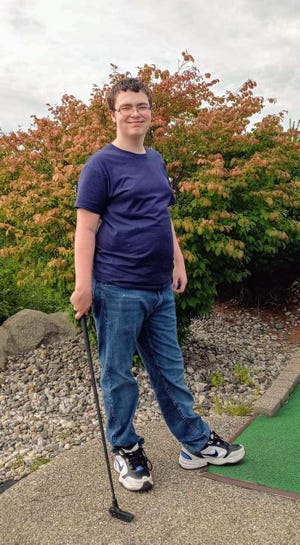
The boy, Jacob Clynick, lived in Zilwaukee and had just completed eighth grade when he got his second dose of the Pfizer vaccine June 13 at a Walgreens store, said Tammy Burages, his aunt.
Jacob was healthy, she said, and had no known underlying medical conditions. He was looking forward to starting classes in the fall as a freshman at Carrollton High School.
He complained of common post-vaccine symptoms, she said, in the two days between his immunization and death, which included fatigue and fever.
On the night of June 15, he had a bit of a stomachache, too, but it wasn't severe enough to cause serious concern, Burages said.
Jacob went to sleep that night, and never woke up.
"He passed away in the middle of the night at home," she said.
Many unknowns in teen's death
The family was told that preliminary autopsy findings suggest Jacob's heart was enlarged when he died and there was fluid around his heart, Burages said.
The Michigan Institute of Forensic Science and Medicine, which is the contracted medical examiner for Saginaw County, would not confirm those preliminary findings to the Free Press.
"We can verify that we are managing the investigation, and that's the extent of what I can share," said Randy Pfau, director of operations for the institute. The institute's doctors are communicating with the CDC on this case, he said.
"It's still an ongoing investigation," he said, which could take three to five months to complete. "I know the doctors are working on this case as a priority."
No cause of death was listed on Jacob's death certificate, said Becky Naessens, funeral director for Deisler Funeral Home, because there isn't one yet.
"Depending on the county and what labs ... medical examiners use, it could be weeks or it could be months, quite honestly," she said, before more information is known.
Jacob's funeral was June 26 — just three days after a CDC advisory committee acknowledged "a likely association" between the Pfizer and Moderna coronavirus vaccines and a risk of heart problems in adolescents and young adults.
Though it's still unclear what caused Jacob's death, his aunt hopes that federal investigators will at least find some clues from his autopsy investigation.
"This is one of those things that I suspect they're never going to really be able to say, 'Oh, it was shot' or 'It wasn't shot,' " Burages said.

More:Heart dysfunction seen in kids weeks after recovery from post-COVID inflammatory syndrome
More:Michigan Medicine opens clinics for adults, kids with long-haul COVID-19 problems
"There must be something that makes certain kids more susceptible to having a serious heart reaction, and I think Jacob was one of those kids. So whatever that serious thing was, whatever the underlying health issue was, is something maybe that the autopsy will tell us.
"Of course, it is going to be months down the road and a lot of other kids will get the shot before then, so it would be nice to know now."
A rare possible myocarditis association
The CDC's Advisory Committee on Immunization Practices found that among adolescents and young adults who got the Pfizer or Moderna vaccines, there appears to be an association with rare cases of myocarditis and pericarditis.
Myocarditis is inflammation of the heart muscle that can affect heart rhythm and its ability to pump. Pericarditis is inflammation of the sac or pericardium around the heart.
The complications have been reported at a rate of 12.6 per million among people ages 12-39 within 21 days after a second dose of the vaccine. The problems were most likely to appear within the first five days after vaccination, according to a Vaccine Safety Datalink analysis. Some cases have been reported after the first vaccine dose as well.

More:Doctors urge women to delay mammogram until 4-6 weeks after COVID-19 vaccine
More:'I'm a survivor.' Livonia man with lung transplant was among Michigan's first COVID-19 cases
The heart complications are more likely to occur in boys and young men, the analysis found, and the most common symptoms are chest pain, shortness of breath, and the sensation of having a rapid heartbeat, a fluttering, or pounding heart.
As of Monday, 780 cases of myocarditis and pericarditis have been reported to the Vaccine Adverse Events Reporting System among people ages 30 and younger who had received a COVID-19 vaccine.
Operated jointly by the CDC and the U.S. Food and Drug Administration, VAERS allows anyone — a patient, a doctor or nurse, friend or relative — to report any kind of post-vaccine medical problem, from a sore arm to sudden death. The reports are not substantiated or proved to be linked to the vaccines, but they are monitored and investigated as health officials watch for anything that might signal a safety concern.
Of those 780 reports, CDC and FDA have confirmed 518 reports of myocarditis or pericarditis and are investigating those cases to understand more. The findings led the U.S. Food & Drug Administration to add a warning to the fact sheets for the Pfizer and Moderna COVID-19 vaccines.
Still, the CDC committee evaluating concerns about the heart problems post-vaccination agreed that the risk of severe COVID-19 illness and hospitalization among unvaccinated adolescents and young adults was higher in every age group than the risk of myocarditis or pericarditis after a vaccine.
“Currently, the benefit still clearly outweighs the risks for COVID vaccinations in adolescents and young adults,” said Dr. Sara Oliver, lead for the COVID-19 Vaccines ACIP Work Group during the June 23 hearing.

More:Michigan coronavirus cases: Tracking the pandemic
That's a sentiment echoed by the American Academy of Pediatrics, which issued a joint statement after the hearing that was co-signed by more than a dozen other organizations, including the American Academy of Family Physicians, the American Heart Association, the American Medical Association and the U.S. Department of Health and Human Services. It said, in part:
“The facts are clear: this is an extremely rare side effect, and only an exceedingly small number of people will experience it after vaccination. Importantly, for the young people who do, most cases are mild, and individuals recover often on their own or with minimal treatment. In addition, we know that myocarditis and pericarditis are much more common if you get COVID-19, and the risks to the heart from COVID-19 infection can be more severe."
That's something Dr. Rakesh Singh has seen in his practice. He's the medical director of the pediatric heart failure and transplantation program at NYU Langone Health and has led the hospital's care of children with acute cases of coronavirus.
"About 15-20% of patients who have acute COVID also have evidence of heart inflammation," Singh told Dr. Marc Siegel, host of SiriusXM’s Doctor Radio’s, “Doctor Radio Reports." Many require supplemental oxygen and some need ventilator support.
"Having watched this disease progress over the last 15 months, I think myocarditis from the COVID virus is what I'm more worried about than what I'm seeing after vaccination."
How the CDC investigates vaccine reports
The CDC did not acknowledge an investigation of Jacob's death, but told the Free Press "all serious adverse events are reviewed by CDC and FDA medical officers."
Reports can be classified as serious or non-serious, said Martha Sharan, who works in public affairs for the CDC's Vaccine Task Force, COVID Response, in an email to a Free Press reporter.
"The code of Federal Regulation defines 'serious' as: death, life threatening illness, hospitalization or prolongation of hospitalization, permanent disability, congenital anomalies, or birth defects," she said. "If any of those conditions get checked, the report is classified as a serious adverse event.

"For reports classified as serious, CDC follows up to get medical records: hospital records, clinic records, death certificates, and autopsy reports to better understand the adverse event."
The CDC reviews the records, she said, and confirms the certified cause of death and "then does further analysis to see if there’s anything unusual or unexpected happening."
Medical experts warn that when analyzing vaccine safety data, individual reports of deaths must be considered in the context of several factors, including the overall death rate among people who've gotten the vaccines compared with the overall death rate of the unvaccinated population.
Anytime a mass vaccination program is rolled out on a scale such as this one, some people will die or have something bad happen to them after getting a dose of a vaccine simply by random chance alone.
While Jacob's family continues to grieve his death, Burages said she hopes one day, they'll have answers that might help other families.
"If there are factors that can make it riskier for some kids (to get a vaccine), I hope health officials can figure out what those are," she said, remembering Jacob as a kind boy who stood up to bullies and loved to go camping with his dad.
"The other kids at school looked up to him and voted him 'Most likely to become president of the United States' this last school year," she said. "He loved to tell corny dad jokes and always had plenty of them to hand out. He found the funny side of every situation and the world will be a little less fun without him in it."
Contact Kristen Jordan Shamus: kshamus@freepress.com. Follow her on Twitter @kristenshamus.
https://tirarelacqua.blogspot.com/2024/07/google-inculata-sangue-dal-piu-piccolo.html
Iscriviti a:
Post (Atom)
Tirare l'acqua Iscrizioni


 Post
Tutti i commenti
Post
Tutti i commenti