In 2007, rangers from Virunga National Park rescued a 2-month-old gorilla named Ndakasi in the Congolese wilderness. She’d been found clutching the body of her mother, whose life had been cut short by poachers.
But despite her tragic beginnings, Ndakasi’s story is one of kindness and love.
Not long after Ndakasi had been saved from the forest, she met Andre Bauma, a caretaker at the park's gorilla orphanage. During the orphaned gorilla's fragile first night apart from her mother, Bauma never left her side.
“Through a torrential rain storm that lasted all night, Andre held baby Ndakasi tightly to his bare chest to keep her warm and give her comfort,” the park staff wrote.
But thanks to Bauma and the orphanage's other staff, Ndakasi not only survived the night. In time, she would go on to grow up happy and healthy.
An adorable selfie shared by the park in 2019 captured Ndakasi in the company of those who loved her.
Given the circumstances of Ndakasi's rescue as a struggling infant, each day of her life was a gift. But, sadly, it came to an early end.
This week, the gorilla's caretakers announced that Ndakasi had passed away from an illness at age 14. Though it's heartbreaking to have lost her so young, her last moments reflected a legacy of love.
"Ndakasi took her final breath in the loving arms of her caretaker and lifelong friend, Andre Bauma," the park wrote.
Ndakasi may be gone, but she won't soon be forgotten. And the efforts of those who gave her a second chance at a happy life will continue, offering hope to orphaned gorillas like her.
Caretakers at Virunga National Park's sanctuary wouldn't have it any other way.
"There is a bond that ties us together," Bauma said. "A relationship that is very, very close between the guardians and the gorillas."
is a former US Marine Corps intelligence officer and author of 'SCORPION KING: America's Suicidal Embrace of Nuclear Weapons from FDR to Trump.' He served in the Soviet Union as an inspector implementing the INF Treaty, in General Schwarzkopf’s staff during the Gulf War, and from 1991-1998 as a UN weapons inspector. Follow him on Twitter @RealScottRitter
The US is playing a dangerous game of putting a public face on a policy of defending Taiwan from China, for which it has zero capability to implement.
Following a recent escalation of tensions between Beijing and Taipei, Chinese President Xi Jinping vowed on Saturday to pursue “reunification” with Taiwan by peaceful means and warned foreign nations about meddling in the issue.
For the past several years, the air force of the People’s Republic of China has been flying sorties into Taiwan’s Air Defense Identification Zone, or ADIZ, as a means of sending a signal to Taipei that China does not recognize its claims of independence and, as such, any notion of an ADIZ is null and void. These incidents, which have been escalating over the years, recently reached a crescendo: China, according to Taipei, flew 38 aircraft in two waves into Taiwan’s ADIZ on October 1, 39 more on October 2 (also in two waves), and 16 the following day.
In response, the US State Department spokesman Ned Price issued a statement. “The United States is very concerned by the People’s Republic of China’s provocative military activity near Taiwan, which is destabilizing, risks miscalculations, and undermines regional peace and stability. We urge Beijing to cease its military, diplomatic, and economic pressure and coercion against Taiwan.”
China’s Foreign Ministry Spokesperson Hua Chunying replied “Taiwan belongs to China and the US is in no position to make irresponsible remarks. The relevant remarks by the US side seriously violate the one-China principle and the stipulations of the three China-US joint communiqués and send an extremely wrong and irresponsible signal.”
On October 4, Taipei said that China sent its largest wave of aircraft yet into Taiwan’s ADIZ, some 56 in total, including 36 J-16 and Su-30 fighter jets, 12 nuclear-capable H-6 bombers, 2 Y-8 anti-submarine warfare (ASW) aircraft and two KJ-500 airborne early warning and control (AEW&C) aircraft.
Alarmed by these developments, Taiwan’s President Tsai Ing-wen declared that “Taiwan does not seek military confrontation. It hopes for a peaceful, stable, predictable, and mutually beneficial coexistence with its neighbors. But Taiwan will also do whatever it takes to defend its freedom and democratic way of life.”
‘Whatever it takes’, however, is an infinite concept backed up by the finite reality that Taiwan has a military of about 165,000 active-duty troops and about 1.6 million reserve soldiers which has been equipped with billions of dollars of advanced American-made military equipment.
While Taiwan’s military may look good on paper, it is ill-prepared for the realities of the kind of full-scale combat that will be directed at them if China ever decides to go through with an invasion. As the world learned in Afghanistan, impressive numbers on paper do not automatically translate into an impressive fighting force on the ground. And China would be delivering violence on a scale several orders of magnitude above what the Taliban could ever contemplate.
If China ever decided to invade Taiwan, the working assumption would be that it had conducted an extensive intelligence-based assessment of its chances of victory, which would have to be near-certain in order for China to undertake an action that would bring with it the condemnation of much of the world. China would have located with pin-point precision the garrisons and deployment locations of every major Taiwanese ground combat unit. It would have done the same with every combat-capable aircraft in the Taiwanese inventory. And it would have identified the logistics bases used by Taiwan to sustain its frontline combat forces. All of these would be subjected to extensive pre-assault bombardment by the Chinese air and ballistic missile forces.
Any surviving Taiwanese units would then be faced with the daunting task of repelling a massive invasion which would likely comprise a combination of amphibious and air assault forces. Assuming enough units survived the pre-assault bombardment to put up a competent defense, they would rapidly run through their on-hand stocks of ammunition, fuel, and food. Units that were cut off from resupply would begin to surrender, and the notion of surrender would become contagious. Pockets of die-hard defenders could survive to fight on for a period, but the reality is that Taiwan would fall in less than a week.
Much has been made about the US ability to come to Taiwan’s defense. While the US may have made great waves sailing its navy through the Taiwan Strait, such a maneuver would be suicidal in a time of conflict. The US Navy would be relegated to standing by far to the east of Taiwan, out of the range of China’s deadly ballistic missile capability, launching aircraft which would have limited combat capability given fuel and weight limitations. The same holds true for the US Air Force. The fact is, any aircraft the US dispatched to defend Taiwan from a Chinese invasion would be rapidly attritted, with no replacements available in a time frame that could change the course of the battle on the ground in Taiwan.
Much has been made about media reports concerning the presence of US forces in Taiwan for the purpose of training the Taiwan military. These forces are not part of any formal alliance or defense pact, but rather part of what is known as “foreign internal defense” training missions, in this case involving a few dozen US Special Forces and US Marines doing small-unit training. This is not the kind of large-scale operational training undertaken by formal alliances such as NATO, where interoperability is essential for any joint combat operations.
The best the US could hope to do when it comes to defending Taiwan would be to modify existing warplanes for the reinforcement of South Korea. This war plan, known as OPLAN-5027, has a subsection known as a Time-Phased Deployment List, or TPFDL, which has identified the forces and equipment necessary to reinforce South Korea in time of war. At one time, the TPFDL had earmarked 690,000 troops, 160 Navy ships, and 1,600 aircraft for deployment from the US to South Korea within 90 days of a war breaking out on the Korean peninsula.
Two things come to mind—by the time the US cavalry was ready to arrive in Taiwan, they would be about 83 days too late. And, more importantly, China would have consolidated its hold on Taiwan making any US effort to retake it suicidal. OPLAN-5027 envisions US forces flowing into South Korean ports that are controlled by the South Korean government. It is not an amphibious assault plan, and any effort to transform it into one would fail.
This is the reality-based state of play today when it comes to the defense of Taiwan by the US. The only alteration that could be made would be for the US to use nuclear weapons in defense of Taiwan. This, of course, would trigger a general nuclear war with China, and the US is not prepared to commit national suicide for a nation it doesn’t even have a formal defensive pact with.
Ned Price might want to keep all of this in mind the next time he approaches the microphone to speak about defending Taiwan. He and the rest of the US government are writing checks with their mouths neither Taiwan nor the US military can cash. A better course of action would be to work with China and Taiwan toward the goal of peaceful unification which preserves intact the democratic system of government that exists in Taiwan.
Draghi a Bologna cita Andreatta e dice: ‘”Le cose vanno fatte perché si devono fare, non per avere un risultato immediato’ anche quando sono impopolari, ha sottolineato.
“Da ministro, Andreatta si è mosso in modo coraggioso e onesto in anni drammatici per la Repubblica, e non ha esitato a prendere decisioni necessarie anche quando impopolari. “Le cose vanno fatte perché si devono fare, non per avere un risultato immediato,” come sintetizzò con efficacia.” Lo ha sottolineato il premier Mario Draghi in un passaggio del suo intervento all’Intitolazione dell’Aula Magna della Bologna Business School a Beniamino Andreatta. ansa
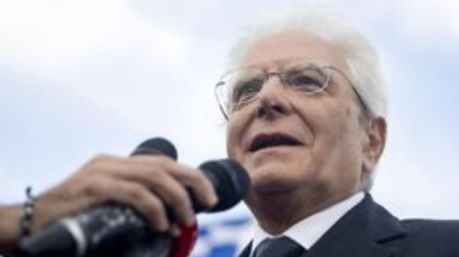
“Nelle ultime settimane abbiamo assistito al precipitare della situazione in Afghanistan. Ancor più vicino a noi le crisi non si placano: dalla Siria al Mediterraneo Orientale; dall’irrisolta questione ucraina alla allarmante situazione in Bielorussia. Tutto ciò ci pone di fronte a scelte che riguardano tanto la dimensione interna quanto quella esterna dell’Unione Europea”. Così il Presidente della Repubblica Sergio Mattarella in occasione della XVI riunione del gruppo Arraiolos, nella sessione ‘Unione Europea sulla via dell’autonomia strategica: responsabilità e opportunità’.
Proiettare i valori della UE
“Da un lato – aggiunge Mattarella – è necessario riflettere su quali siano gli interessi condivisi dell’Unione e cosa occorra per tutelarli, per conseguire una effettiva autonomia strategica. Dall’altro dobbiamo definire il ruolo che l’Unione deve esercitare nella comunità internazionale: in che modo possiamo essere incisivi nell’affermazione del multilateralismo efficace che da anni indichiamo nella nostra azione esterna; come proiettare, anche al di fuori dei nostri confini, i valori e i principi su cui si fonda l’Europa“.
“L’Unione si pone in piena complementarietà con la Nato, rafforzando il suo ruolo di produttore di sicurezza – ha aggunto il Capo dello Stato – Accrescere le nostre capacità, fare dell’Unione un attore più credibile è importante per l’Europa e, vorrei aggiungere, lo è anche per gli Stati Uniti, in un mondo sempre più caratterizzato dal protagonismo di grandi soggetti internazionali“.
“La Conferenza sul futuro dell’Unione rappresenta una grande storica occasione. Non dobbiamo ridurla a uno scialbo momento di ordinaria amministrazione. Dovremo impegnarci – senza remore e senza temi intoccabili – per completare i tanti “cantieri aperti” della nostra integrazione. L’Unione Economica e Monetaria, l’effettiva capacità fiscale, un vero pilastro sociale”, ha inoltre sottolineato il presidente intervendo alla riunione del “Gruppo Arrajolos”. La sintesi dell’intervento è stata diffusa dall’ufficio stampa del Quirinale. ansa
“L’Intergovernmental Panel on Climate Change delle Nazioni Unite ci ha detto tre cose: che la nostra azione dovrebbe essere immediata, rapida e su larga scala. E se non agiamo per ridurre le emissioni di gas serra, non saremo in grado di contenere il cambiamento climatico al di sotto di 1,5 gradi“. Lo dice il presidente del Consiglio Mario Draghi intervenendo all’evento Climate Moment in corso a New York.
Emergenza come la pandemia
“È vero che stiamo ancora lottando contro la pandemia, ma questa è un’emergenza di uguale entità e non dobbiamo assolutamente ridurre la nostra determinazione ad affrontare i cambiamenti climatici“, aggiunge. “L’Italia farà la sua parte. Siamo pronti ad annunciare un nuovo impegno economico per il clima nelle prossime settimane”, ha detto il presidente del Consiglio Mario Draghi.
“Dovremo rafforzare gli sforzi comuni nell’accelerare la graduale eliminazione del carbone sia a livello nazionale che internazionale. E dobbiamo davvero prendere il nostro destino nelle nostre mani su questo aspetto”, così Draghi all’evento Climate Moment. “Gli investimenti pubblici dedicati alla ricerca e sviluppo devono diventare priorità per ambiti strategici come elettrificazione, idrogeno, bioenergia, cattura, utilizzo e stoccaggio del carbonio, che oggi ricevono solo circa un terzo del finanziamento pubblico. La fissazione del prezzo del carbonio può essere uno degli strumenti per accelerare la transizione verde”. (transizione ecologica: nasce un mostro)
“Molti Paesi – come l’Italia – hanno deciso di porre al centro dei loro piani di ripresa e resilienza un modello di crescita più verde e inclusivo. Tuttavia, sappiamo già che è necessario fare di più. Noi siamo senz’altro un Paese che sostiene con convinzione il ruolo guida dell’Unione europea nell’affrontare i cambiamenti climatici. Siamo determinati a porre l’Ue sulla giusta traiettoria per ottenere una riduzione delle emissioni del 55% entro il 2030, e per azzerare le emissioni nette entro il 2050″.
“E’ prematuro parlare” di terza dose del vaccino anti-Covid per tutti ora, “ma, se mi si chiedesse se ritengo che dovremo fare tutti la terza dose, la mia risposta è sì. Quando? E’ la scienza che dovrà fornirci” la risposta. “E’ evidente che vi è un calo dell’immunità nel corso del tempo, variabile da soggetto a soggetto anche in base alle eventuali comorbilità che le persone hanno, ma è verosimile che nel tempo un richiamo dovremo farlo tutti“. A spiegarlo è stato il sottosegretario alla Salute Pierpaolo Sileri, intervenuto su ‘Tgcom 24’.
“Si parte con quelli per i quali la scienza ha già indicato la necessità di una terza dose, per esempio i trapiantati e in attesa di trapianto, i pazienti con neoplasie, i dializzati. Poi ci sono gli anziani, nei quali la competenza del sistema immunitario tende a essere ridotta. E poi vedremo il resto della popolazione”, ha prospettato Sileri.
La terza dose servirà
“Ma, da medico, io immagino che la terza dose servirà. Il quando verrà definito nei prossimi mesi. E’ chiaro che, se nelle prossime settimane o mesi si dovesse osservare in coloro che hanno fatto i vaccini a gennaio e febbraio un aumento delle infezioni, non in forma grave perché un’immunità di memoria rimane, significherà che quello è il momento per pensare a una terza dose e ci darà la guida per le terze dosi per tutti gli altri”, ha chiarito il sottosegretario.
Sul fronte della sanità, ha aggiunto, “i miei colleghi sono stati i primi ad essere vaccinati. Al momento non vi sono contagi in aumento fra il personale sanitario o meglio un lieve incremento vi è stato, ma assolutamente non significativo.
E’ quindi ipotizzabile sia necessaria una terza dose per mettere in sicurezza il sistema sanitario nazionale. Abbiamo già avuto fra coloro che lavorano in sanità fin troppi morti e dobbiamo anche evitare che il Ssn non possa andare avanti perché la forza lavoro viene meno, ed evitare ulteriori contagi negli ospedali”. adnkronos
















 Post
Post

