VAI IN PENSIONE A WASHINGTON MARIO, E' MEGLIO PER TUTTI


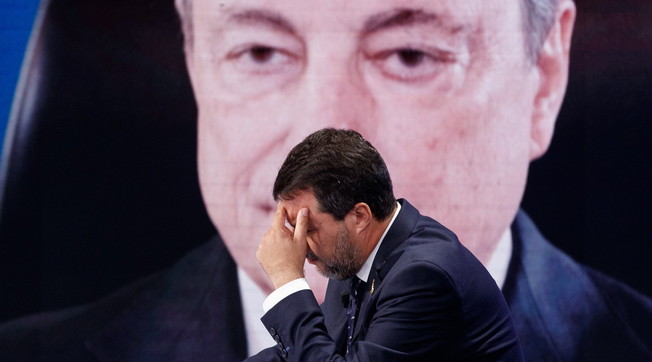
Mario Draghi, la profezia di Guerini sul futuro del governo: "Le ripercussioni del ballottaggio", c'è aria di crisi?

  • a
  •  
  • a
  •  
  • a

Non è vero che queste elezioni comunali non cambieranno nulla. A sostenere il contrario è il ministro della Difesa Lorenzo Guerini. del Pd, in un succoso retroscena di Francesco Verderami sul Corriere della Sera. "Se il voto produrrà un risultato sbilanciato a favore di una parte - aveva confidato l'ex renziano ad alcuni dirigenti democratici - le ripercussioni tra partiti si scaricheranno nei rapporti e nell'azione di governo". Non a caso, sottolinea Verderami, la priorità del premier Mario Draghi è "mettere in sicurezza le riforme, seguendo il crono- programma che ha impostato". Tuttavia, "il raggiungimento dell'obiettivo si fa più faticoso" proprio a causa delle tensioni che stanno agitando la maggioranza.


Le parole di Guerini risalgono a un mese fa, e ora la situazione sembra se possibile ancora più critica a causa di una campagna elettorale tanto povera di contenuti "locali" quanto ricca di veleni "nazionali". Le prime avvisaglie del mutato clima a Palazzo Chigi sono arrivate dall'infuocato Consiglio dei ministri di venerdì sul reddito di cittadinanza. "Il punto - sottolinea Verderami - non è capire come mai la norma contestata dal centrodestra e da Italia Viva fosse stata tenuta 'nascosta' durante la riunione preparatoria in cabina di regia".


Draghi finora ha cercato di limitare i contrasti, si fa per dire, "all'attività del Parlamento" tenendoli fuori dal governo, ma il giochino ora sembra destinato a finire. Dalla prossima settimana sul tavolo del premier planeranno i dossier relativi a flat tax e Quota 100, su cui si preannuncia una nuova guerra con i giallorossi. In ogni caso, suggerisce Verderami, "si arriverà a un'intesa, siccome non accadrà nulla fino alla conclusione della corsa al Colle". E il fatto che il consigliere giuridico di Mattarella, Cabras, sia passato ieri al Consiglio di Stato, conclude il retroscenista del Corsera, "è vissuto come un ulteriore segnale che l'attuale presidente della Repubblica non intende farsi rieleggere".

TUTTI CHE SCHIFANO IL LAVORO MA VOGLIONO COMANDARE LA REPUBBLICA FONDATA SUL LAVORO ... DEGLI ALTRI ...


Vittorio Sgarbi contro il corteo Cgil: "Ridicola passerella. C'era anche Di Maio, che passa la vita a schivare il lavoro"

  • a
  •  
  • a
  •  
  • a

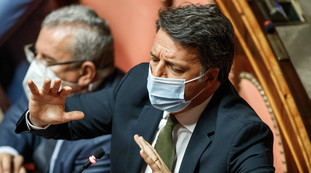
"Triste che la CGIL si sia prestata a squallida strumentalizzazione alla vigila del ballottaggio di Roma. Ridicola passerella politica che con il lavoro non ha nulla a che fare. C’era anche Luigi Di Maio, uno che ha passato la sua vita a schivarlo, il lavoro". Questo il tweet di Vittorio Sgarbi a proposito della manifestazione indetta dalla Cgil dopo l'assalto alla sede del sindacato da parte di alcuni appartenenti a Forza Nuova.

Per Sgarbi è inaccettabile che una manifestazione si svolga alla vigilia del voto politico sul sindaco di Roma, concetto ribadito più volte negli ultimi giorni. Si strumentalizza, secondo il critico d'arte, per dare contro a Fratelli d’Italia in vista del ballottaggio tra Enrico Michetti e Roberto Gualtieri. E non perde, ovviamente e sempre Sgarbi, l'occasione per attaccare uno dei suo0i bersagli preferiti: il ministro degli Esteri Luigi Di Maio, presente alla manifestazione indetta dalla Cgil.

Vittorio Sgarbi è candidato nella Lista Civica Michetti come assessore alla Cultura e questo sarà il suo ruolo in caso di vittoria del centrodestra al ballottaggio. Ma alla vigilia del voto ha voluto dire il suo punto di vista sulla questione. Una questione per lui politica e ha deciso di attaccare la Cgil. Le polemiche certo non mancheranno.

COME MAI TANTE PERSONE CHE ABITANO SUI COLLI E DOVREBBERO ESSERE IN GALERA INVECE SONO FUORI?


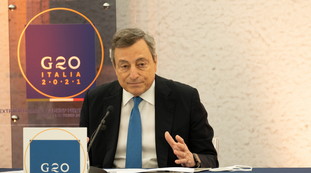
Mario Draghi, il ruolo dei no-vax nella corsa al Quirinale: perché tutto si deciderà a Natale

Foto:  Mario Draghi

  • a
  •  
  • a
  •  
  • a

La tanto temuta protesta dei No-Green pass, che avevano minacciato la chiusura del Paese in concomitanza con l'introduzione dell'obbligatorietà del certificato verde al lavoro, si è rivelata un bluff. Ne ha parlato Marcello Sorgi in un editoriale su La Stampa, spiegando che il preannunciato "venerdì nero" alla fine non c'è stato. A questo punto, quindi, si può dire che abbia vinto il premier Mario Draghi. "Ha funzionato la cosiddetta 'linea dura', corretta con qualche accorgimento semi-ufficiale, come le autorizzazioni alle aziende più disponibili a pagare i tamponi e le promesse ai sindacati di rivedere le decisioni del governo in caso di degenerazione della situazione", scrive Sorgi.


Tornando alle minacce dei No-vax e No-Green pass, queste si sono rivelate meno solide di quanto ci si era aspettati dopo il clamore mediatico dei giorni precedenti. A questo punto, secondo il giornalista, il piano del presidente del Consiglio può arrivare allo step finale. "Diventa concreto l’obiettivo di estrarre dalla minoranza che ancora si oppone ai vaccini, un gruppo più o meno consistente di lavoratori, che dopo qualche settimana trascorsa al ritmo di tamponi ogni due-tre giorni, si arrendano e si rassegnino a sottoporsi alla vaccinazione per ottenere il Green Pass".


Insomma, se alla fine i pochi lavoratori non vaccinati decidessero di immunizzarsi si potrebbe arrivare alla quota record del 90 per cento e "il governo, come Draghi s’è impegnato a fare con Landini e ha fatto intendere a Salvini, potrebbe riconsiderare il piano delle restrizioni entro Natale". Se così fosse, rimarrebbe in campo solo una minoranza trascurabile di No-Vax. Si tratterebbe di un risultato importante che non solo legittimerebbe ancor di più il ruolo di Draghi come presidente del Consiglio, ma gli permetterebbe anche di aspirare a un'altra posizione. "Dopo aver praticamente realizzato anche l’agognata 'pacificazione' dell’Italia, sarebbe pronto ad assumere la veste di candidato più autorevole per il Quirinale", scrive Sorgi.


IN ITALIA TUTTI LIDERE


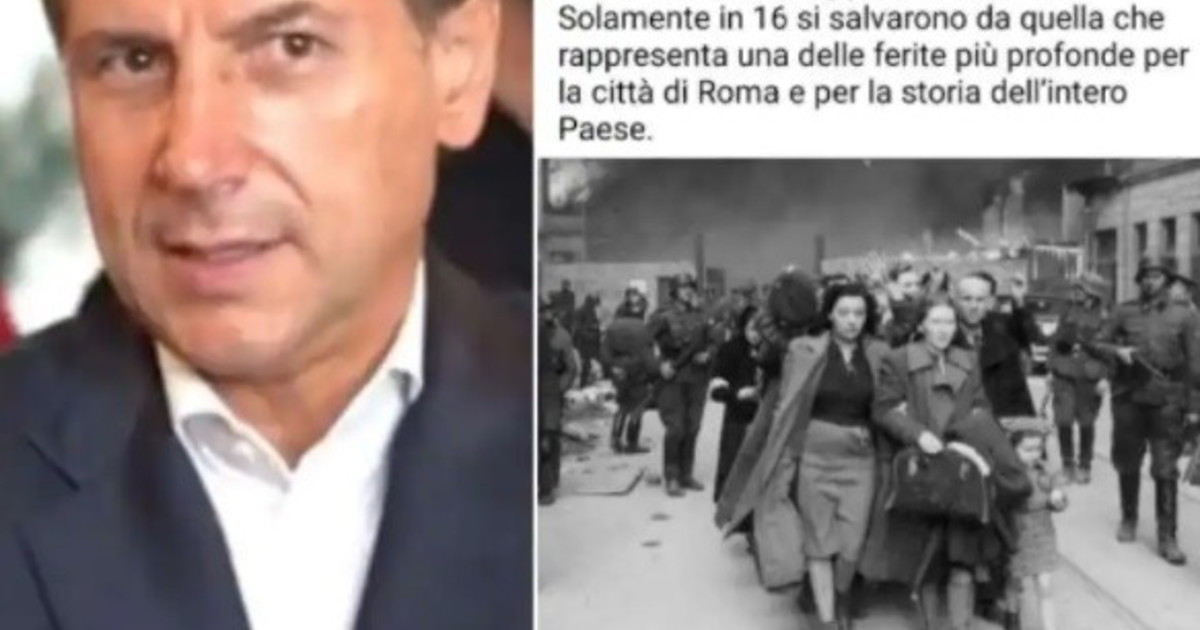
Giuseppe Conte, clamorosa gaffe sul rastrellamento degli ebrei a Roma: pubblica la foto di Varsavia

  • a
  •  
  • a
  •  
  • a

Che disastro, Giuseppe Conte. Un disastro continuo per il leader M5s. Una gaffe clamorosa, imbarazzante, grottesca. Degna del maggior Danilo Toninelli. Uno sfondone di quelli che anche Virginia Raggi, in diverse occasioni, ha saputo regalarci.

Il punto è che l'ex premier, per commemorare il rastrellamento di 1259 persone dal ghetto di Roma ad opera delle truppe naziste, avvenuto il 16 ottobre del 1943, ha pubblicato un post su Facebook in cui scrive: "È un monito che ci richiama oggi alle nostre responsabilità democratiche. È la necessaria consapevolezza che solo il quotidiano impegno in difesa delle Istituzioni e dei valori dell’antifascismo può salvaguardare il Paese da nuove eversioni che si richiamano a vecchie demagogie. Abbiamo il dovere di fare la nostra parte in questa grande battaglia culturale e politica per la democrazia".

Bene, bravo, bis, tutto perfetto. Non proprio. Il punto è che a corredo del post ha aggiunto una fotografia clamorosamente sbagliata, ossia del ghetto di Varsavia, che rispetto a quello di Roma è migliaia di chilometri più a Nord. Scivolone che certo non avrà fatto in prima persona, bensì frutto di chi gestisce i suoi social, ma che per certo dà la cifra del personaggio con cui abbiamo a che fare. Già, la superficialità dei grillini. Il pressapochismo. Le gaffe. Una clamorosa figuraccia, caro Giuseppe Conte...


BRAVO ROMANO FAGLIELA VEDERE TU CHE TE NE INTENDI (DI FRODI)


Romano Prodi: EU confronted by existential crisis

Former Commission President Romano Prodi says the European Union is “confronted with an existential crisis” with “unhappiness among populations and distrust of politicians.”
Photo Credit: European Parliament Audiovisual
Martin Banks

By Martin Banks

Martin Banks is a senior reporter at the Parliament Magazine

08 Mar 2019

Prodi, who was speaking in Brussels, cited the “spectre of de-globalisation” and a trade war between the United States and China as just two of the key challenges for 2019 and beyond.

Other tests for the EU, he said, include the “uncertainty created by Brexit” along with Hungary, Poland and Romania “backsliding on the rule of law.”

With the European elections in May, the “continued rise of populism” was another challenge for the EU, he said.

Prodi said there was still room for optimism, adding, “2018 was a difficult year for humanity but we remain full of hope for 2019.The challenges we face in Europe and across the world are serious to be sure, but I am convinced each of us has the determination and courage to make it a great year.”

Prodi, who served as the tenth president of the European Commission from 1999 to 2004 and was also twice Prime Minister of Italy, was presenting a new report that calls for a “social Europe.”

He said the current challenges facing the EU “are at the heart our report.”

“Our social models,” he argued, “are under pressure - with a huge and as yet unsatisfied requirement to modernise and adapt to the needs of all our citizens, and the opportunities presented by a digitally-transformed world.”

“There is a clear and urgent need for us to be brave and ambitious for a genuine social Europe and I commend this Commission for its efforts in this direction”

“The aftermath of the Eurocrisis has caught Member States in dire fiscal straits, a choice between two competing evils - between Scylla and Charybdis. Pressures for deficit reduction constrain the domestic policy space for social investment reform, while populists - increasingly successful with disenchanted citizens - resist austerity measures.

“Look at the recent standoff between the Commission and Italy’s Government over its fiscal stimulus commitment and the gilets jaunes backlash against President Macron’s reform momentum in France.”

Prodi, considered the founder of the Italian centre left, said, “There is a clear and urgent need for us to be brave and ambitious for a genuine social Europe and I commend this Commission for its efforts in this direction. The Juncker Commission has taken on an ambitious swath of social policy initiatives.”

The study, by the High-Level Task Force on investing in Social Infrastructure in Europe, was co-chaired by Prodi and Christian Sautter, a former French Minister of the Economy, Finance and Industry.

Calling for much more social infrastructure investment, the report says that public investment in social infrastructure during the Eurocrisis reached a 20-year low.

This, it says, was most acutely felt in three sectors that are “absolutely critical for the wellbeing of Europe’s citizens, now and in the future: health, education and housing.”

Prodi said that current investment in social infrastructure in the EU is estimated at €170bn per year but the minimum infrastructure investment gap in the three priority sectors is estimated at €100bn to €150bn, representing a total gap of at least €1.5tr between 2018 and 2030.

“If we do not step up, together, now, in the pace and level of ambition then the situation will only get worse – with serious and costly human and political consequences”

He said, “Social infrastructure is critical to our future because it shapes the nature of our society and makes social services and investments in human capital possible.”

He went on, “High-quality large-scale investments in social infrastructure are especially required in the EU now given our ageing populations, radical structural changes in labour markets and the opportunities presented via technological innovation.”

He says an ageing population will have a “serious and prolonged” impact, particularly on the affordability of health and on long-term care and pensions.

This is in addition to substantial investments needed in education and competence development, argued Prodi.

On housing, he said, “While demand for affordable energy-efficient and accessible housing continues to grow, incomes grow less than the cost of housing and energy.”

“We know that the cost of energy and rent of basic housing is increasing far faster than salaries of citizens. This creates a vicious circle in which many people pay near to 40 percent of their income for housing, paying unaffordable prices to keep their homes warm or cool, while increasing numbers of people wait and wait on never-ending waiting lists for social housing. Others depend on subsidies to pay for their heating and risk becoming homeless.”

The numbers are “staggering,” said Prodi, who, during his visit to Brussels had a meeting with commission president Jean-Claude Juncker and gave a briefing to reporters.

“Many older or disabled people have to leave their homes prematurely and are on waiting lists to enter special institutions. If their homes and social services could only be adapted and updated, they could stay in their own communities - with all the benefits that brings.”

He said the Commission, EIB and banks have already made major efforts but warned, “If we do not step up, together, now, in the pace and level of ambition then the situation will only get worse – with serious and costly human and political consequences.”

He urged the Commission to “use all the instruments and resources still available to step up our collective level of ambition.”

Turning to the upcoming elections to the European Parliament Prodi said, “Only then can we make real, meaningful progress to help our citizens with the greatest need and make these efforts visible to all in advance of the upcoming elections.”

Read the most recent articles written by Martin Banks - New EU regulations on AI seek to ban mass and indiscriminate surveillance

Lettori fissi