Freccero: “La pandemia è una tappa del piano per far fallire le Pmi”
 

Freccero: “La pandemia è una tappa del piano per far fallire le Pmi”

freccero

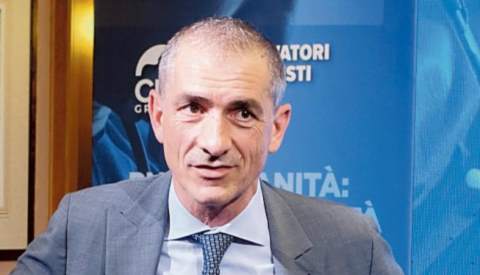
di Antonio Amorosi – Chiamiamo il professore durante le cariche con lacrimogeni e idranti sui portuali No Green Pass di Trieste. Sto guardando le immagini. Sono sconvolto. A Trieste è morta la democrazia

Professore, c’è indignazione, sdegno per quanto sta accadendo ma è da tempo che lei è molto preoccupato…

Lo sono tremendamente. La popolazione non vede il grande piano delle élites mondiali, il grande Reset di Davos, ne parla Klaus Schwab, il direttore del World Economic Forum nel suo ultimo libro Covid-19, The Great Reset

Ne sta parlando da tempo anche lei, legandolo alla pandemia…

La pandemia è la motivazione giusta per mettere in atto una costrizione sanitaria, come già illustrato anni fa da Michel Foucault nel suo capolavoro Sorvegliare e Punire, nel capitolo sul Panottico. La seconda tappa é la distruzione dell’economia reale e questa passa attraverso l’Agenda verde, la decrescita, le tasse sulle energie fossili

Lei lega un piano delle élites alla gestione della pandemia, quelle stesse élites che hanno pianificato anni fa la globalizzazione selvaggia in cui viviamo oggi. E’ così e dobbiamo preoccuparci?

Pochi sanno che nel settembre 2019 la finanza mondiale era in procinto di implodere, un rischio reale di insolvenza delle banche. La soluzione, da parte delle banche centrali, è stata di emettere liquidità sui mercati, senza limiti di sorta, ma per evitare di creare inflazione bisognava paralizzare i consumi delle popolazioni, imprigionandole nelle loro case con strumenti come i lockdown, il coprifuoco, le limitazioni ai viaggi e agli spostamenti. Altrimenti come si sarebbe potuto imporre ai cittadini un’agenda tanto assurda?

Un processo? Ma è possibile? Le epidemie accadono e accompagnano gli uomini dalla notte dei tempi. Lei pero dice: il tutto cambia per come vengono gestite, soprattutto oggi che abbiamo tanti mezzi. O sbaglio?

Assurdo ma esistente e imponente. Consideri solo che da quando la pandemia è iniziata le multinazionali moltiplicano i guadagni, mentre la gente comune è sempre più povera. Questo la dice lunga. La gestione della pandemia si è fatta sulla scia del grande reset. Al resto basta il piano Schwab. L’obiettivo finale, da raggiungersi entro il 2030 è illustrato da uno slogan del WEF: nel 2030 non possederai nulla, ma sarai felice!

Come?

Con il fallimento delle piccole e medie imprese a favore di banche e multinazionali

Andiamo verso una nuova rivoluzione industriale, per quanto mostruosa, che avrà queste caratteristiche?

Sì, La quarta rivoluzione industriale, un altro libro di Schwab, in cui il direttore del WEF spiega cosa deve accadere

Cosa?

L’uomo deve integrarsi con l’intelligenza artificiale, diventando un ibrido uomo-macchina. Questa ibridazione può essere fatta dall’esterno con la tessera digitale, dall’interno con un chips. Per questo è venuta a volatilizzarsi la privacy, in ogni settore. E’ un processo legato a quest’ossessione del controllo che ha ispirato Schwab. Nei suoi testi è un elemento cardine. Porterà a un nuovo tipo di società con il fallimento del particolare e del nostro tessuto produttivo

Molti ridicolizzano questo scenario. E’ possibile un piano del genere?

Non c’è alcun complotto. Cosa è accaduto lo ha spiegato benissimo Warren Buffet, quando ha detto “la lotta di classe esiste e l’abbiamo vinta noi, le élites”

Nel rappresentare la realtà i media sono stati fondamentali durante la pandemia. Lei è un massmediologo. Qual è la sua riflessione sull’informazione? Il sociologo tedesco Niklas Luhmann sosteneva che la comunicazione, con qualsiasi tecnologia attuata, fosse l’unico vero fenomeno sociale. La comunicazione plasma la realtà. C’è una guerra in atto nell’informazione?

Più che guerra direi che c’è una propaganda a senso unico. Accade perché le élites possiedono, oltre tutta la ricchezza del pianeta, tutti i grandi gruppi di informazione che sono così pochi da poter essere indicati con le dita della mano. Come la lotta di classe delle élites é stata vinta perché non aveva un antagonista, così anche la propaganda si è imposta in mancanza di antagonisti. Piuttosto oggi c’è una resistenza. Se la società è informazione, la resistenza oggi è resistenza mediatica

Sembra che una forma di resistenza, addirittura di lotta di classe, prima patrimonio della sinistra, la facciano le destre. Nelle periferie, tra i diseredati ci sono sempre più gruppi con questo orientamento. Si sono capovolti i parametri? Come lo spiega?

Con il passaggio dall’economia reale alla finanza, la lotta di classe ha cambiato segno. Nell’economia reale lo sfruttamento passava attraverso la proprietà dei mezzi di produzione. Per tanto la lotta di classe era fra padroni ed operai. Nella finanza invece lo sfruttamento passa attraverso la moneta a debito. La nuova lotta di classe, quella di oggi, avviene tra le banche, che possono emettere moneta solo indebitando tutti gli altri, e il resto del popolo oppresso dal debito. Questo popolo dell’economia non comprende solo gli operai, ma anche gli imprenditori, strangolati dal debito. Il serial La casa di carta è una grande allegoria di questa nuova lotta di classe

Per questo ha avuto un così grande successo…

Sì, una banda di Robin Hood decide di svaligiare la banca centrale. Tutti pensano che usciranno da quella banca portando in spalla sacchi di banconote già stampate. Invece si barricano dentro e cominciano a stampare moneta. Nella lotta di classe tradizionale la destra sono i padroni e la sinistra gli operai. La sinistra per tanto funge un ruolo di parte attiva. Nella lotta di classe di oggi la lotta è tra l’alto e il basso. Le élites oggi sono parte attiva, cioè conducono il gioco. Ma si gioca tra banche e popolo pieno di debiti

E cosa può fare il popolo?

Il popolo intanto può solo prendere coscienza. Ma la coscienza che può prendere il popolo non sembrano averla i sindacati, ancora appiattiti sul mito ottocentesco del lavoro come fonte di ricchezza e in nome di questo lavoro sacrificano i diritti dei lavoratori

Durante questi 2 anni si è molto parlato di scienza e scienziati. Secondo lei la gente sa cos’è la scienza e come funziona? Come viene finanziata, come si muove la comunità scientifica e gli enti regolatori?

Oggi se dal lato epistemologico, cioè della filosofia della scienza, la scienza si pone limiti rigorosi, dal lato della vulgata e della propaganda viene indicato come scientifico proprio ciò che si sottrae ad ogni verifica

Tutti coloro che esprimono dubbi sulla vaccinazione, con i nuovi sieri sperimentali, scienziati compresi, perché la comunità è divisa, vengono additati come pazzi, untori, irresponsabili. Cosa pensa di questo approccio diffuso?

Pensiamo ai vaccini, che ci vengono imposti come scientifici senza aver terminato il ciclo di sperimentazione, previsto sul bugiardino nel 2023. Non a caso siamo obbligati a sottoscrivere il cosiddetto consenso informato per liberare da ogni responsabilità l’apparato, lo Stato, che ce li impone. È un assurdo scientifico. Inoltre vorrei solo aggiungere una constatazione: le persone vaccinate che chiedono più vaccinazioni credono che i vaccini proteggano dal virus e le vaccinazioni dal contagio. Non è così. Lo abbiamo visto dai numeri. Se i non vaccinati fossero fanatici, come alcuni vaccinati, dovrebbero richiedere per legge l’allontanamento dei vaccinati

I giovani e la pandemia

Diverse ricerche americane dimostrano che i Millennials e la Generazione Zeta sono quella parte della società che ha meglio accettato le misure governative di contenimento della pandemia e le campagne di vaccinazione. Lei che ne pensa?

I Millennials sono nati e cresciuti in un grande Truman Show. Hanno imparato ad usare i gadget digitali, prima di imparare a scrivere

Sono quella generazione nata e cresciuta insieme alle tecnologie digitali. Si identificano nelle tecnologie e vogliono salvare il mondo attraverso queste, sono consumatori che forse non si rendono conto di essere loro i primi ad essere consumati perché necessari e strumentali alle web company e a chi le governa? O sbaglio?

Non sbaglia. A scuola hanno imparato gli obiettivi dell’Agenda 2030. Nel tempo libero socializzano on line e non dal vero. Questi ragazzi sono cresciuti praticando da sempre il distanziamento sociale ed il lockdown spontaneamente. Per questo li hanno accettati subito come naturali. Questa realtà era già la loro vita. E’ questo il dramma

Sta accadendo però qualcosa di nuovo, anche in Italia?

Le piazze piene di queste settimane. Per due anni siamo stati inerti come Paese mentre tutto il mondo si ribellava. Eravamo in preda ad un’ipnosi collettiva che ci paralizzava. Il Green Pass ha prodotto il miracolo. Orgogliose delle loro vittorie le élites si sono divertite in questi anni a fare a pezzi, attraverso falsi obiettivi ed un condizionamento martellante, il valore della solidarietà sociale. Ma prima sono arrivate le parole del vicequestore di Roma Schilirò poi le piazze piene e oggi i portuali di Trieste. Mi sono commosso. Riportano in vita una parola che era cancellata dal nostro vocabolario: solidarietà. Bisogna ricominciare da lì.  www.affaritaliani.it

SCIOPERO AD OLTRANZA FINO A CHE QUESTO GOVERNO NON SE NE VA, CON LE BUONE O CON LE CATTIVE NO SPESA NO CONSUMO NO SOLDI IN BANCA NO TASSE NO ELEZIONI, SOLO FIRME PER I REFERENDUM BOICOTTARE LA RAI, CANALE 5 E TUTTE LE ALTRE TV BOICOTTARE I GIORNALI BOICOTTARE LA RADIO BOICOTTARE TUTTI PARTITI POLITICI BOICOTTARE TUTTI I POLITICI BOICOTTARE BOICOTTARE BOICOTTARE SCIOPERARE SCIOPERARE SCIOPERARE SABOTARE SABOTARE SABOTARE IL TERRORISMO VE LO DIAMO NOI A VOI ADESSO LA MAGGIOR PARTE DELLE FORZE DELL’ORDINE NON LI PROTEGGERA’ FACCIAMOLI SCAPPARE DALL’ITALIA TUTTI TUTTI TUTTI


Costa: “Abolizione green pass non si può prendere in considerazione”

andrea costa

Abolizione green pass: una delle richieste avanzate dal coordinamento 15 ottobre di Trieste è l’abolizione del certificato verde. “Ed è una richiesta per la quale non credo, da parte del governo, ci sia lo spazio perché possa essere presa in considerazione”. Così come non c’è lo spazio per “togliere l’obbligo vaccinale laddove il governo lo ha previsto per alcune categorie. Da parte nostra c’è la volontà di proseguire su questa strada”. Lo ha detto il sottosegretario alla Salute, Andrea Costa, intervenuto a Sabato24, su RaiNews24.

“I dati del nostro Paese – ha aggiunto Costa – fortunatamente, ci indicano che il percorso tracciato dal governo fino ad oggi ha portato a buoni risultati” .

Il ministro delle Politiche agricole Stefano Patuanelli ieri ha incontrato Stefano Puzzer, leader del Coordinamento Lavoratori Portuali di Trieste e portavoce del Coordinamento 15 ottobre, il neonato movimento contro il Green pass.

“È stato un incontro cordiale, in cui Puzzer, in qualità di portavoce del Coordinamento 15 ottobre, ha avanzato 3 richieste specifiche – ha detto Patuanelli – Come rappresentante del governo ho preso l’impegno di riferire dell’incontro in Consiglio dei ministri. Abbiamo tutti convenuto sull’importanza del mantenere ogni tipo di manifestazione distante da ogni tipo di violenza”. adnkronos


QUANDO IL COMUNISMO SUPERA IL CAPITALISMO: L'UMANITA' RIDOTTA AD ESSERE DIFESA DA CINA E RUSSIA


The World According to Vladimir Putin

Russian president, in Sochi, lays down the law in favor of conservatism – says the woke West is in decline

Theme: 
 1
 0 0
 
 1

All Global Research articles can be read in 51 languages by activating the “Translate Website” drop down menu on the top banner of our home page (Desktop version).

Visit and follow us on Instagram at @crg_globalresearch.

***


The plenary session is the traditional highlight of the annual, must-follow Valdai Club discussions – one of Eurasia’s premier intellectual gatherings.

Vladimir Putin is a frequent keynote speaker. In Sochi this year, as I related in a previous column, the overarching theme was “global shake-up in the 21st century: the individual, values and the state.”

Putin addressed it head on, in what can already be considered one of the most important geopolitical speeches in recent memory (a so-far incomplete transcript can be found here) – certainly his strongest moment in the limelight. That was followed by a comprehensive Q&A session (starting at 4:39:00).

Predictably, assorted Atlanticists, neocons and liberal interventionists will be apoplectic. That’s irrelevant. For impartial observers, especially across the Global South, what matters is to pay very close attention to how Putin shared his worldview – including some very candid moments.

Right at the start, he evoked the two Chinese characters that depict “crisis” (as in “danger”) and “opportunity,” melding them with a Russian saying: “Fight difficulties with your mind. Fight dangers with your experience.”

This elegant, oblique reference to the Russia-China strategic partnership led to a concise appraisal of the current chessboard:

The re-alignment of the balance of power presupposes a redistribution of shares in favor of rising and developing countries that until now felt left out. To put it bluntly, the Western domination of international affairs, which began several centuries ago and, for a short period, was almost absolute in the late 20th century, is giving way to a much more diverse system.

That opened the way to another oblique characterization of hybrid warfare as the new modus operandi:

Previously, a war lost by one side meant victory for the other side, which took responsibility for what was happening. The defeat of the United States in the Vietnam War, for example, did not make Vietnam a “black hole.” On the contrary, a successfully developing state arose there, which, admittedly, relied on the support of a strong ally. Things are different now: No matter who takes the upper hand, the war does not stop, but just changes form. As a rule, the hypothetical winner is reluctant or unable to ensure peaceful post-war recovery, and only worsens the chaos and the vacuum posing a danger to the world.

A disciple of Berdyaev

In several instances, especially during the Q&A, Putin confirmed he’s a huge admirer of Nikolai Berdyaev. It’s impossible to understand Putin without understanding Berdyaev (1874-1948), who was a philosopher and theologian – essentially, a philosopher of Christianity.

In Berdyaev’s philosophy of history, the meaning of life is defined in terms of the spirit, compared with secular modernity’s emphasis on economics and materialism. No wonder Putin was never a Marxist.

For Berdyaev, history is a time-memory method through which man works toward his destiny. It’s the relationship between the divine and the human that shapes history. He places enormous importance on the spiritual power of human freedom.

Putin made several references to freedom, to family – in his case, of modest means – and to the importance of education; he heartily praised his apprenticeship at Leningrad State University. In parallel, he absolutely destroyed wokeism, transgenderism and cancel culture promoted “under the banner of progress.”

This is only one among a series of key passages:

We are surprised by the processes taking place in countries that used to see themselves as pioneers of progress. The social and cultural upheavals taking place in the United States and Western Europe are, of course, none of our business; we don’t interfere with them. Someone in the Western countries is convinced that the aggressive erasure of whole pages of their own history – the “reverse discrimination” of the majority in favor of minorities, or the demand to abandon the usual understanding of such basic things as mother, father, family or even the difference between the sexes – that these are, in their opinion, milestones of the movement toward social renewal.

So a great deal of his 40 minute-long speech, as well as his answers, codified some markers of what he previously defined as “healthy conservatism”:

Now that the world is experiencing a structural collapse, the importance of sensible conservatism as a basis for policy has increased many times over, precisely because the risks and dangers are multiplying and the reality around us is fragile.

Switching back to the geopolitical arena, Putin was adamant that “we are friends with China. But not against anyone.”

Geoeconomically, he once again took time to engage in a masterful, comprehensive – even passionate – explanation of how the natural gas market works, coupled with the European Commission’s self-defeating bet on the spot market, and why Nord Stream 2 is a game-changer.

Afghanistan

During the Q&A, scholar Zhou Bo from Tsinghua University addressed one of the key, current geopolitical challenges. Referring to the Shanghai Cooperation Organization, he pointed out that, “if Afghanistan has a problem, the SCO has a problem. So how can the SCO, led by China and Russia, help Afghanistan?”

Putin stressed four points in his answer:

  • The economy must be restored;
  • The Taliban must eradicate drug trafficking;
  • The main responsibility should be assumed “by those who had been there for 20 years” – echoing the joint statement after the meeting between the extended troika and the Taliban in Moscow on Wednesday; and
  • Afghan state funds should be unblocked.

He also mentioned, indirectly, that the large Russian military base in Tajikistan is not a mere decorative prop.

Training bunker at Russia’s military base in Takikistan. Photo: Moscow Times

Training bunker at Russia’s military base in Takikistan. Photo: Moscow Times

Putin went back to the subject of Afghanistan during the Q&A, once again stressing that NATO members should not “absolve themselves from responsibility.”

He reasoned that the Taliban “are trying to fight extreme radicals.” On the “need to start with the ethnic component,” he described Tajiks as accounting for 47% of the overall Afghan population – perhaps an over-estimation but the message was on the imperative of an inclusive government.

He also struck a balance: As much as “we are sharing with them [the Taliban] a view from the outside,” he made the point that Russia is “in contact with all political forces” in Afghanistan – in the sense that there are contacts with former government officials like Hamid Karzai and Abdullah Abdullah and also Northern Alliance members, now in the opposition, who are self-exiled in Tajikistan.

Those pesky Russians

Now compare all of the above with the current NATO circus in Brussels, complete with a new “master plan to deter the growing Russian threat.”

No one ever lost money underestimating NATO’s capacity to reach the depths of inconsequential stupidity. Moscow does not even bother to talk to these clowns anymore: as Foreign Minister Sergey Lavrov has pointed out, “Russia will no longer pretend that some changes in relations with NATO are possible in the near future.”

Moscow from now on only talks to the masters – in Washington. After all, the direct line between the Chief of General Staff, General Gerasimov, and NATO’s Supreme Allied Commander, General Todd Wolters, remains active. Messenger boys such as Stoltenberg and the massive NATO bureaucracy in Brussels are deemed irrelevant.

This happens, in Lavrov’s assessment, right after “all our friends in Central Asia” have been “telling us that they are against … approaches either from the United States or from any other NATO member state” promoting the stationing of any imperial “counter-terrorist” apparatus in any of the “stans” of Central Asia.

And still the Pentagon continues to provoke Moscow. Wokeism-lobbyist-cum-Secretary of Defense Lloyd “Raytheon” Austin, who oversaw the American Great Escape from Afghanistan, is now pontificating that Ukraine should de facto join NATO.

That should be the last stake impaling the “brain-dead” (copyright Emmanuel Macron) zombie, as it meets its fate raving about simultaneous Russian attacks on the Baltic and Black Seas with nuclear weapons.

*

Note to readers: Please click the share buttons above or below. Follow us on Instagram, @crg_globalresearch. Forward this article to your email lists. Crosspost on your blog site, internet forums. etc.

This article was originally published on Asia Times.

Pepe Escobar, born in Brazil, is a correspondent and editor-at-large at Asia Times and columnist for Consortium News and Strategic Culture in Moscow. Since the mid-1980s he’s lived and worked as a foreign correspondent in London, Paris, Milan, Los Angeles, Singapore, Bangkok. He has extensively covered Pakistan, Afghanistan and Central Asia to China, Iran, Iraq and the wider Middle East. Pepe is the author of Globalistan – How the Globalized World is Dissolving into Liquid War; Red Zone Blues: A Snapshot of Baghdad during the Surge. He was contributing editor to The Empire and The Crescent and Tutto in Vendita in Italy. His last two books are Empire of Chaos and 2030. Pepe is also associated with the Paris-based European Academy of Geopolitics. When not on the road he lives between Paris and Bangkok.

He is a frequent contributor to Global Research.

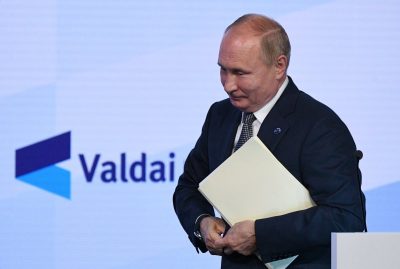
Featured image: Vladimir Putin at Valdai. (Source: Daily Sabah)

COLIN POWELL, CRIMINALE DI GUERRA DELLA FAMIGLIA DI CRIMINALI BUSH: COME MAI NESSUNO LI E' MAI ANDATI A CERCARE?


Here Lies Colin Powell… Legacy of a War Criminal

 6
 24 0
 
 30

All Global Research articles can be read in 51 languages by activating the “Translate Website” drop down menu on the top banner of our home page (Desktop version).

Visit and follow us on Instagram at @crg_globalresearch.

***


Following his death from Covid-19 earlier this week, former US Secretary of State Colin Powell‘s legacy will be examined by many people for many different reasons. Some will eulogise him as one of America’s top diplomats and presidential advisers. Many more, I suspect, will remember him as the man who lied for his country again, and again, and again.

One of the Greek sages, Chilon of Sparta, said we should not speak ill of the dead (what is now the Latin aphorism “De mortuis nil nisi bonum dicendum est”), a maxim with which I would generally agree. However, it is precisely because of the dead that I am writing these words.

The dead to which I refer come from many nations around the world; countless men, women and children who left this earth in the absence of mercy, a voice or justice. Millions of others have yet to have any sort of closure or peace due to US militarism, wars, interventions and atrocities over many decades. Powell supported, excused and covered up most of them from Vietnam to the present day.

memorial service for General Powell will be held at the Washington National Cathedral in the US capital next month. The so-called great and good will eulogise the first African American to serve as chairman of the Joint Chiefs of Staff and US Secretary of State. My own contribution is not for Powell and the mourners, but for the forgotten survivors who will have been propelled back into very dark places at seeing his name in the headlines this week.

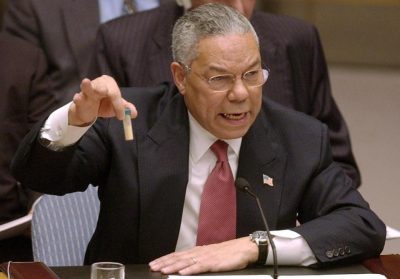
To the Iraqi people, Powell was the man who did the dirty work in arguing the case for a war that created more than a million widows and orphans. Estimates of the number of dead in Iraq continue to be amended. It was Powell who stood before the UN on behalf of President George W Bush in February 2003 and spoke with great authority, using photographs to “prove” that Iraq under Saddam Hussein had weapons of mass destruction (WMDs). This was a lie, and he knew it.

A couple of weeks ahead of his speech, some Algerian refugees were arrested for allegedly producing ricin in Wood Green, North London. The British media splashed with the headlines that anti-terror police had uncovered an Al-Qaida cell poised to unleash the deadly poison on an unsuspecting public. The more lurid reports also claimed that the “ricin factory” contained bomb-making equipment. British Prime Minister Tony Blair — another man with a long-distance relationship with the truth — whipped up a frenzy of hysteria claiming that, “This danger is present and real, and with us now.”

Blair was backed up by Powell in his presentation to the UN Security Council; both men were pushing the case for war against Iraq. Powell cited the London “find” gravely as an “Iraq-linked terrorist network”. Despite the fact that the British government’s chemical weapons research facility at Porton Down knew that there was no ricin in Wood Green in early January 2003, Powell went ahead and peddled his lies regardless. Blair and Powell both appear to have ignored the facts. In a nest of vipers, it’s always difficult to separate one snake from another.

Two years later a very different story emerged during the Old Bailey trial of the Algerian refugees: there was no ricin and no sophisticated Al-Qaida plot. Jury foreman Lawrence Archer was so outraged at what emerged during his seven-month odyssey in court that he co-wrote a book with journalist Fiona Bawdon exposing the lies told by Powell backed up by “shamelessly distorted” words from the British government, media and security agencies.

Powell claimed later to regret his performance at the UN. That didn’t help the Algerians, though, who were held in a high-security prison for more than two years until the case against them in their infamous trial by jury collapsed. The US official knew that there was no ricin plot; indeed, that there was no ricin, so what was the white powder in the vial he waved around so dramatically in the Security Council meeting?

To the people of Vietnam, Colin Powell was the soldier who covered up the war crimes carried out in Mỹ Lai by a unit of US troops who slaughtered 500 civilians. Powell admitted in a 1968 memo that there might have been be “isolated cases of mistreatment”, but in August 1971 he eventually told the truth in a sworn affidavit during the war crimes trial of Brigadier General John Donaldson who, it was alleged, had routinely “killed or ordered the killing of, unarmed and unresisting” Vietnamese civilians from his helicopter.

Powell ingratiated himself in 1985 as a senior assistant to US Defence Secretary Caspar Weinberger, when he helped cover up the selling of weapons to Iran so that the Reagan administration could funnel money to the US-backed and funded right-wing Contra counterrevolutionaries in Nicaragua. Weinberger faced five charges related to the so-called Iran-Contra scandal only to be pardoned by President George H.W. Bush before he could be put on trial. It emerged that Powell took part personally in at least one covert weapons sale in exchange for hostages.

He had his finger in many pies in subsequent years which saw the demise of some dictatorships and the rise of others in US military action in Panama, the Philippines, Somalia, Liberia, Bangladesh, Russia, Bosnia, Afghanistan, the Persian Gulf and the Middle East.

To the Palestinians — and myself, I must add — Powell will always be the man who was treacherous and duplicitous towards them. He lied about Israel’s massacre of Palestinians in the Jenin refugee camp in April 2002.

The Israel Defence Forces (IDF) tried desperately to hide one of its many war crimes committed in the occupied West Bank when its soldiers killed at least 52 Palestinians in the refugee camp between 1 and 11 April at the height of the Second (Al-Aqsa) Intifada. Ariel Sharon’s cowardly troops would have made a quick exit but for the dilemma of how to cover up the killing of so many people. It’s a dilemma that focused the minds of those in charge of so-called Operation Defensive Shield.

As I wrote in MEMO last year,

“[They] decided to enforce a siege so tight that no one, despite global protests, could get past Israel’s ring of steel; it was a total lockdown and lasted for weeks while the Israeli government did its best to keep journalists and human rights observers away from the Palestinian city…

“The atmosphere was tense and the UN announced that it was planning to launch an investigation into compelling allegations of Israeli war crimes said to have been committed in the refugee camp. The Israelis did what they do well, and mobilised malleable politicians and government advisers to mislead a gullible media and public.”

The then US Secretary of State Powell was brought in to use calm, authoritative tones at a press conference in Jerusalem’s King David Hotel, which Zionist terrorists blew up in 1946, killing 91 people and wounding 41 others. The irony wasn’t lost on the Palestinians and the watching world.

He claimed to have seen “no evidence” of a massacre. In last year’s article I pointed out: “By 23 April Powell was back in Washington briefing senators: ‘Right now, I’ve seen no evidence of mass graves and I’ve seen no evidence that would suggest a massacre took place.’ He wasn’t lying, of course, because he never went to Jenin, so could not have ‘seen’ the evidence even if he had wanted to.”

I was one of the first journalists on the scene, though, and was in the refugee camp in Jenin on the day that the former general presented his less than honest briefing to the world’s media. The anger and frustration I felt listening to his lies was probably nothing compared with the feelings of the Palestinians in Jenin who told me how their mothers, wives, children and other relatives had been killed before their eyes. I remember seeing a group of Palestinian women tearing at the rubble with their bare, bloodied hands trying to find the bodies of loved ones. The stench of death was overwhelming. Moreover, while Powell said that he saw “no evidence” of a massacre, Human Rights Watch disagreed, and said so when it published a hard-hitting report on what happened in Jenin.

The Jacobin online magazine has published a brutally savage obituary of Powell. “There’s Nothing Honourable or Decent About Colin Powell’s Long List of War Crimes” was the headline. I and millions like me couldn’t agree more. He was buried on Friday morning, but as yet there’s no official tombstone. When it is eventually fixed on his grave, it should be very simple: “Here lies Colin Powell – in death as in life”.

*

Note to readers: Please click the share buttons above or below. Follow us on Instagram, @crg_globalresearch. Forward this article to your email lists. Crosspost on your blog site, internet forums. etc.

Lettori fissi