QUESTO SONO I SANTONI DELLA CENSURA UNIVERSALE: CHIAGNENE E VI FOTTONO DALLA MATTINA ALLA SERA


FTC Sues Facebook for Illegal Monopolization

Agency challenges Facebook’s multi-year course of unlawful conduct

Share This Page

For Release

The Federal Trade Commission today sued Facebook, alleging that the company is illegally maintaining its personal social networking monopoly through a years-long course of anticompetitive conduct. Following a lengthy investigation in cooperation with a coalition of attorneys general of 46 states, the District of Columbia, and Guam, the complaint alleges that Facebook has engaged in a systematic strategy—including its 2012 acquisition of up-and-coming rival Instagram, its 2014 acquisition of the mobile messaging app WhatsApp, and the imposition of anticompetitive conditions on software developers—to eliminate threats to its monopoly. This course of conduct harms competition, leaves consumers with few choices for personal social networking, and deprives advertisers of the benefits of competition.

The FTC is seeking a permanent injunction in federal court that could, among other things: require divestitures of assets, including Instagram and WhatsApp; prohibit Facebook from imposing anticompetitive conditions on software developers; and require Facebook to seek prior notice and approval for future mergers and acquisitions.

“Personal social networking is central to the lives of millions of Americans,” said Ian Conner, Director of the FTC’s Bureau of Competition. “Facebook’s actions to entrench and maintain its monopoly deny consumers the benefits of competition. Our aim is to roll back Facebook’s anticompetitive conduct and restore competition so that innovation and free competition can thrive.”

Video by Ian Conner, Director of the Bureau of Competition

video/mp4 icon Download MP4 (11.43 MB)
Statement by Ian Conner, Director of the Bureau of Competition

According to the FTC’s complaint, Facebook is the world’s dominant personal social networking service and has monopoly power in a market for personal social networking services.  This unmatched position has provided Facebook with staggering profits. Last year alone, Facebook generated revenues of more than $70 billion and profits of more than $18.5 billion.

Anticompetitive Acquisitions

According to the FTC’s complaint, Facebook targeted potential competitive threats to its dominance. Instagram, a rapidly growing startup, emerged at a critical time in personal social networking competition, when users of personal social networking services were migrating from desktop computers to smartphones, and when consumers were increasingly embracing photo-sharing. The complaint alleges that Facebook executives, including CEO Mark Zuckerberg, quickly recognized that Instagram was a vibrant and innovative personal social network and an existential threat to Facebook’s monopoly power.

The complaint alleges that Facebook initially tried to compete with Instagram on the merits by improving its own offerings, but Facebook ultimately chose to buy Instagram rather than compete with it. Facebook’s acquisition of Instagram for $1 billion in April 2012 allegedly both neutralizes the direct threat posed by Instagram and makes it more difficult for another personal social networking competitor to gain scale.

Around the same time, according to the complaint, Facebook perceived that “over-the-top” mobile messaging apps also presented a serious threat to Facebook’s monopoly power. In particular, the complaint alleges that Facebook’s leadership understood—and feared—that a successful mobile messaging app could enter the personal social networking market, either by adding new features or by spinning off a standalone personal social networking app.

The complaint alleges that, by 2012, WhatsApp had emerged as the clear global “category leader” in mobile messaging. Again, according to the complaint, Facebook chose to buy an emerging threat rather than compete, and announced an agreement in February 2014 to acquire WhatsApp for $19 billion. Facebook’s acquisition of WhatsApp allegedly both neutralizes the prospect that WhatsApp itself might threaten Facebook’s personal social networking monopoly and ensures that any future threat will have a more difficult time gaining scale in mobile messaging.

Anticompetitive Platform Conduct

The complaint also alleges that Facebook, over many years, has imposed anticompetitive conditions on third-party software developers’ access to valuable interconnections to its platform, such as the application programming interfaces (“APIs”) that allow the developers’ apps to interface with Facebook. In particular, Facebook allegedly has made key APIs available to third-party applications only on the condition that they refrain from developing competing functionalities, and from connecting with or promoting other social networking services.

The complaint alleges that Facebook has enforced these policies by cutting off API access to blunt perceived competitive threats from rival personal social networking services, mobile messaging apps, and other apps with social functionalities. For example, in 2013, Twitter launched the app Vine, which allowed users to shoot and share short video segments. In response, according to the complaint, Facebook shut down the API that would have allowed Vine to access friends via Facebook.

The lawsuit follows an investigation by the FTC’s Technology Enforcement Division, whose staff cooperated closely with a coalition of attorneys general, under the coordination of the New York State Office of the Attorney General. Participating Attorneys General include: Alaska, Arizona, Arkansas, California, Colorado, Connecticut, Delaware, the District of Columbia, Florida, Guam, Hawaii, Idaho, Illinois, Indiana, Iowa, Kansas, Kentucky, Louisiana, Maine, Maryland, Massachusetts, Michigan, Minnesota, Mississippi, Missouri, Montana, Nebraska, Nevada, New Hampshire, New Jersey, New Mexico, New York, North Carolina, North Dakota, Ohio, Oklahoma, Oregon, Pennsylvania, Rhode Island, Tennessee, Texas, Utah, Vermont, Virginia, Washington, West Virginia, Wisconsin, and Wyoming.

The Commission vote to authorize staff to file for a permanent injunction and other equitable relief in the U.S. District Court for the District of Columbia was 3-2. Commissioners Noah Joshua Phillips and Christine S. Wilson voted no.

NOTE: The Commission issues a complaint when it has “reason to believe” that the law has been or is being violated, and it appears to the Commission that a proceeding is in the public interest.

The Federal Trade Commission works to promote competition, and protect and educate consumers.  You can learn more about how competition benefits consumers or file an antitrust complaint.

Contact Information

Media Contact: 
Office of Public Affairs
202-326-3707

QUESTO SONO I SANTONI DELLA CENSURA UNIVERSALE: CHIAGNENE E VI FOTTONO DALLA MATTINA ALLA SERA


short by Pragya Swastik / on 04 Oct 2015,Sunday
Facebook CEO Mark Zuckerberg on Sunday faced charges of fraud after a state judge in San Jose refused claims of not deceiving developer Mircea Voskerician in $1.7 million land deal. Zuckerberg had allegedly bought rights of Voskerician's house on a 40% discount, promising him referrals to boost business. Voskerician has accused Zuckerberg of not keeping the promise after the deal.

QUESTO SONO I SANTONI DELLA CENSURA UNIVERSALE: CHIAGNENE E VI FOTTONO DALLA MATTINA ALLA SERA


Zuckerberg set up fraudulent scheme to 'weaponise' data, court case alleges

This article is more than 3 years old

Facebook CEO exploited ability to access data from any user’s friend network, US case claims

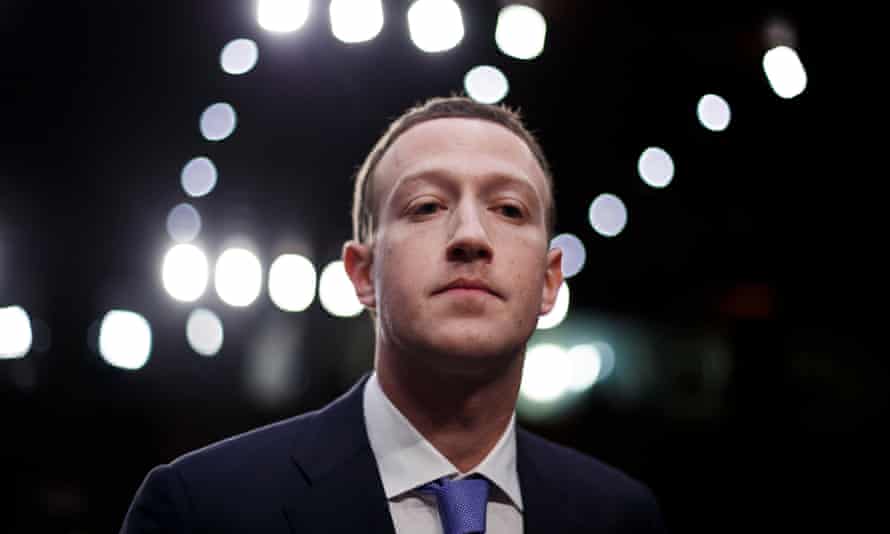
CEO of Facebook Mark Zuckerberg testifies before the Senate.
CEO of Facebook Mark Zuckerberg testifies before the Senate. Photograph: Shawn Thew/EPA

Last modified on Thu 24 May 2018 22.00 BST


Mark Zuckerberg faces allegations that he developed a “malicious and fraudulent scheme” to exploit vast amounts of private data to earn Facebook billions and force rivals out of business.

A company suing Facebook in a California court claims the social network’s chief executive “weaponised” the ability to access data from any user’s network of friends – the feature at the heart of the Cambridge Analytica scandal.

A legal motion filed last week in the superior court of San Mateo draws upon extensive confidential emails and messages between Facebook senior executives including Mark Zuckerberg. He is named individually in the case and, it is claimed, had personal oversight of the scheme.

Facebook rejects all claims, and has made a motion to have the case dismissed using a free speech defence.

It claims the first amendment protects its right to make “editorial decisions” as it sees fit. Zuckerberg and other senior executives have asserted that Facebook is a platform not a publisher, most recently in testimony to Congress.

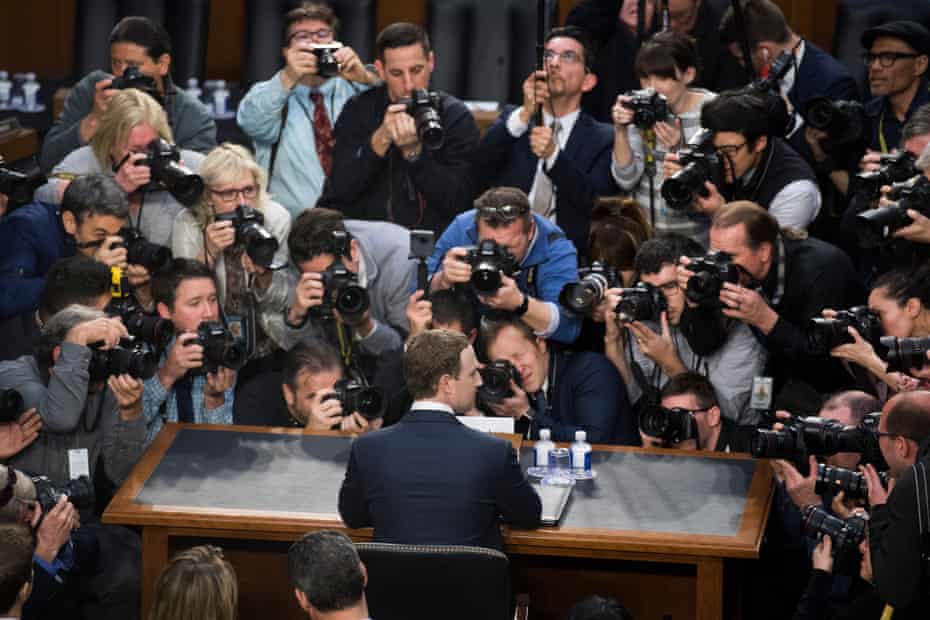
Facebook CEO Mark Zuckerberg arrives to testify before a joint hearing of the Senate Judiciary and Commerce Committees on the protection of user data 10 April 2018.
Facebook CEO Mark Zuckerberg arrives to testify before a joint hearing of the Senate judiciary and commerce committees on the protection of user data 10 April 2018. Photograph: Tom Williams/CQ-Roll Call,Inc.

Heather Whitney, a legal scholar who has written about social media companies for the Knight First Amendment Institute at Columbia University, said, in her opinion, this exposed a potential tension for Facebook.

“Facebook’s claims in court that it is an editor for first amendment purposes and thus free to censor and alter the content available on its site is in tension with their, especially recent, claims before the public and US Congress to be neutral platforms.”

The company that has filed the case, a former startup called Six4Three, is now trying to stop Facebook from having the case thrown out and has submitted legal arguments that draw on thousands of emails, the details of which are currently redacted. Facebook has until next Tuesday to file a motion requesting that the evidence remains sealed, otherwise the documents will be made public.

The developer alleges the correspondence shows Facebook paid lip service to privacy concerns in public but behind the scenes exploited its users’ private information.

It claims internal emails and messages reveal a cynical and abusive system set up to exploit access to users’ private information, alongside a raft of anti-competitive behaviours.

Facebook said the claims had no merit and the company would “continue to defend ourselves vigorously”.

Six4Three lodged its original case in 2015 shortly after Facebook removed developers’ access to friends’ data. The company said it had invested $250,000 in developing an app called Pikinis that filtered users’ friends photos to find any of them in swimwear. Its launch was met with controversy.

The papers submitted to the court last week allege Facebook was not only aware of the implications of its privacy policy, but actively exploited them, intentionally creating and effectively flagging up the loophole that Cambridge Analytica used to collect data on up to 87 million American users.

The lawsuit also claims Zuckerberg misled the public and Congress about Facebook’s role in the Cambridge Analytica scandal by portraying it as a victim of a third party that had abused its rules for collecting and sharing data.

“The evidence uncovered by plaintiff demonstrates that the Cambridge Analytica scandal was not the result of mere negligence on Facebook’s part but was rather the direct consequence of the malicious and fraudulent scheme Zuckerberg designed in 2012 to cover up his failure to anticipate the world’s transition to smartphones,” legal documents said.

The lawsuit claims to have uncovered fresh evidence concerning how Facebook made decisions about users’ privacy. It sets out allegations that, in 2012, Facebook’s advertising business, which focused on desktop ads, was devastated by a rapid and unexpected shift to smartphones.

Zuckerberg responded by forcing developers to buy expensive ads on the new, underused mobile service or risk having their access to data at the core of their business cut off, the court case alleges.

“Zuckerberg weaponised the data of one-third of the planet’s population in order to cover up his failure to transition Facebook’s business from desktop computers to mobile ads before the market became aware that Facebook’s financial projections in its 2012 IPO filings were false,” one court filing said.

In its latest filing, Six4Three alleges Facebook deliberately used its huge amounts of valuable and highly personal user data to tempt developers to create platforms within its system, implying that they would have long-term access to personal information, including data from subscribers’ Facebook friends.

Once their businesses were running, and reliant on data relating to “likes”, birthdays, friend lists and other Facebook minutiae, the social media company could and did target any that became too successful, looking to extract money from them, co-opt them or destroy them, the documents claim.

Six4Three alleges up to 40,000 companies were effectively defrauded in this way by Facebook. It also alleges that senior executives including Zuckerberg personally devised and managed the scheme, individually deciding which companies would be cut off from data or allowed preferential access.

The lawsuit alleges that Facebook initially focused on kickstarting its mobile advertising platform, as the rapid adoption of smartphones decimated the desktop advertising business in 2012.

It later used its ability to cut off data to force rivals out of business, or coerce owners of apps Facebook coveted into selling at below the market price, even though they were not breaking any terms of their contracts, according to the documents.

Mark Zuckerberg speaks at the F8 summit in San Francisco, California, in 2015.
Mark Zuckerberg speaks at the F8 summit in San Francisco, California, in 2015. Photograph: Josh Edelson/AFP/Getty Images

A Facebook spokesman said: “When we changed our policy in 2015, we gave all third-party developers ample notice of material platform changes that could have impacted their applications.”

Facebook’s submission to the court, an “anti-Slapp motion” under Californian legislation designed to protect freedom of speech, said: “Six4Three is taking its fifth shot at an ever expanding set of claims and all of its claims turn on one decision, which is absolutely protected: Facebook’s editorial decision to stop publishing certain user-generated content via its Platform to third-party app developers.”

David Godkin, Six4Three’s lead counsel said: “We believe the public has a right to see the evidence and are confident the evidence clearly demonstrates the truth of our allegations, and much more.”

Sandy Parakilas, a former Facebook employee turned whistleblower who has testified to the UK parliament about its business practices, said the allegations were a “bombshell”. He claimed to MPs Facebook’s senior executives were aware of abuses of friends’ data back in 2011-12 and he was warned not to look into the issue.

“They felt that it was better not to know. I found that utterly horrifying,” he said. “If true, these allegations show a huge betrayal of users, partners and regulators. They would also show Facebook using its monopoly power to kill competition and putting profits over protecting its users.”

A trial date for the case has been set for April 2019.


  • QUESTO SONO I SANTONI DELLA CENSURA UNIVERSALE: CHIAGNENE E VI FOTTONO DALLA MATTINA ALLA SERA


    CHD's Lawsuit Against Facebook, Zuckerberg and "Fact Checkers" for Government-Sponsored Censorship, False Disparagement and Wire Fraud in Court Yesterday


    News provided by

    Children's Health Defense

    May 06, 2021, 08:00 ET


    SAN FRANCISCO, May 6, 2021 /PRNewswire/ -- Judge Susan Illston of the Northern District Court of California heard arguments for and against the defendants' motion to dismiss yesterday in the Children's Health Defense (CHD) lawsuit, which claims that Facebook, Mark Zuckerberg, and three fact-checking outfits censor what CHD believes to be important public health posts and engage in racketeering activities against CHD. A ruling is expected soon.

    According to CHD's Complaint, Facebook has conflicts with the Pharmaceutical industry and government health agencies and has economic stakes in telecom and 5G. Facebook currently censors CHD's page, targeting its purge against factual information about vaccines, 5G and public health agencies. Facebook-owned Instagram deplatformed CHD Board Chair Robert F. Kennedy, Jr. on February 10 without notice or explanation in the current climate censoring anyone who questions the Pharma/Tech agenda or the safety of COVID vaccines.

    This is an important First Amendment case testing the boundaries of government authority to openly censor unwanted critique of its narrative. Attorneys Roger Teich and Jed Rubenfeld argued before the court; CHD attorneys Robert F. Kennedy, Jr. and Mary Holland are also lawyers on the legal briefs.

    Facebook has publicly stated it is assisting efforts of the CDC and WHO to censor unwanted speech about vaccines. CHD argues that Facebook's open collaboration with government makes it a proxy for government censorship, violating the First Amendment. The government's role in Facebook's censorship goes deeper than its close coordination with the CDC and WHO; it began at the suggestion of powerful Democratic Congressman and Intelligence Committee Chairman Adam Schiff, who in February 2019 asked Facebook to suppress and purge internet content critical of government vaccine policies. The WHO issued a statement commending Facebook for coordinating its ongoing censorship campaign with public health officials. 

    CHD's lawsuit also challenges Facebook's use of so-called "independent fact-checkers," - which are neither independent nor fact-based - to create oppositional content on CHD's page, superimposed over CHD's original content, about matters of heated scientific controversy.  

    The court will decide whether Facebook's new government-directed business model of what CHD believes are false and disabling a nonprofit's donate button passes muster under the First and Fifth Amendments, the Lanham Act, and the federal racketeering statute. Those statutes protect CHD against online wire fraud and knowingly false statements disparaging to the organization, while the Constitution protects CHD against government censorship, even through third parties, and from uncompensated taking of its property interests.

    "Social media giants are imposing a totalitarian censorship to prevent public health advocates, like myself, from voicing concerns and from engaging in civil informed debate in the public square," said Kennedy. "They are punishing, shaming, vilifying, gaslighting and abolishing individuals who report their own vaccine injuries. Anyone can see that this is a formula for catastrophe and a coup d'état against the First Amendment, the foundation stone of American democracy."

    Rita Shreffler
    202-599-1461

    SOURCE Children's Health Defense

    QUESTO SONO I SANTONI DELLA CENSURA UNIVERSALE: CHIAGNENE E VI FOTTONO DALLA MATTINA ALLA SERA


    Former Kansas AG says Zuckerberg funded a shadow campaign against Trump


    Facebook co-founder, Chairman and CEO Mark Zuckerberg testifies before the House Energy and Commerce Committee in the Rayburn House Office Building on Capitol Hill April 11, 2018 in Washington, DC.  (Photo by Chip Somodevilla/Getty Images)
    Facebook co-founder, Chairman and CEO Mark Zuckerberg testifies before the House Energy and Commerce Committee in the Rayburn House Office Building on Capitol Hill April 11, 2018 in Washington, DC. (Photo by Chip Somodevilla/Getty Images)
    Facebook Share IconTwitter Share IconEmail Share Icon

    WASHINGTON (SBG) - Former Kansas Attorney General Phil Kline said Wednesday that Facebook CEO Mark Zuckerberg gave a large sum of money to nonprofit groups that ultimately used the cash to dictate how states run their elections.

    Kline told America This Week host Eric Bolling that Zuckerberg provided hundreds of millions of dollars to a nonprofit group that paid for voting machines and election judges. Kline, a Republican and president of Amistad Journey, said the money overwhelmingly helped Democrats turn out votes in urban areas at the expense of Republican votes in rural areas of the country where President Donald Trump draws support.

    Amistad, a project of the non-partisan Thomas More Society, presented a report Monday alleging that Zuckerberg gave the money to government institutions to assist with elections during the pandemic.

    "Zuckerberg money paid for the machines, paid for the election judges that determine what ballots will be counted and told them how many polling places to have," Kline told Bolling, who pressed the former Kansas attorney general to show explicitly how the billionaire's money dictated the rules of this year's election.

    Eric Bolling interviews former Kansas Attorney General Phil Kline on the election.{ }{p}{/p}

    The grants Zuckerberg provided told states to have drop boxes, "which are contrary to state law for example in the state of Georgia," Kline said. Drop boxes are not illegal in the Peach State, provided they are located on county or municipal government property accessible to the public.

    Voters in Democratic strongholds were provided more options to vote through drop boxes thanks to Zuckerberg's efforts, according to Kline.

    "So what you've got is a two-tier election system that made it easy to vote in Democratic strongholds, and with blue state governors shutting down in-person polling in rural areas, it made it harder for Republican strongholds to vote," he told Bolling.

    Kline added: "We have privatized our elections with Big Tech, and Big Tech turned out the vote in Democrat areas."

    Zuckerberg provided $350 million to the Center for Technology and Civic Life (CTCL) to help election officials create a safe way for Americans to vote during the pandemic, according to an October statement from CTCL. Several other nonprofits provided battleground states grants to help administer safety guards before the election.

    Kline's report suggests that the grant was used "to illegally inflate turnout in key Democratic swing states as part of this effort.” It is not illegal for nonprofit groups to engage in efforts to turn out the vote. The former lawman is not allowed to practice law, as he was indefinitely suspended in Kansas.

    Similar allegations were made in a lawsuit in Pennsylvania before the election, but a federal court judge dismissed the complaints, concluding that the plaintiffs in the case lacked standing to sue.

    The plaintiffs claimed that the CTCL's grants went to progressive areas of Pennsylvania, but CTCL noted that every state and local was free to apply for grants. The court, citing CTCL reports, noted in October that 11 of the 18 counties that voted for Trump in 2016 applied for grants this year.

    “This, effectively, is a shadow government running our elections,” Kline wrote in the report. “A half a billion dollars into the hands of state and local officials who, in turn, allowed those private organizations, and private interests, to have access to sensitive and private information of American citizens that was of value to political parties, and monetized for interests on the left.”

    The report asserts that Michigan entered into a contract ahead of the election with nonprofit Rock the Vote (RTV), which provided the group remote access to voter information in Michigan's qualified voter file. Kline's group suggests that Michigan has not certified that RTV adhered to federal standards to protect identifiable information.

    Sinclair Broadcast Group reached out to Michigan's Board of Elections for a statement addressing the group's assertion. We also reached out to Facebook and the Thomas More Society for comment on the Amistad Project report. We will update this article if they respond.

    Then President-elect Donald Trump looks on during a rally at the DeltaPlex Arena, December 9, 2016. (Photo by Drew Angerer/Getty Images)

    Trump has yet to concede despite the Electoral College affirming President-elect Joe Biden's victory. The president has engaged in several legal actions to flesh out what he and other conservatives believe is massive election fraud. Trump has also expressed the belief that voting systems across the country switched countless votes from him to the former vice president.

    Evidence of massive fraud, on a scale large enough to change the outcome of the election, hasn’t been verified.

    Trump shared content on Twitter Tuesday highlighting a Dec. 13 audit from Allied Security Operations Group alleging the Dominion Voting System that Antrim County, Michigan, used during the election switched county votes from the president to Biden.

    Dominion Voting Systems dismissed in a statement on its website what it called "fabrications" surrounding Antrim County's results.

    "There were no software 'glitches' that 'switched' votes in Antrim County or anywhere else. The errors identified in Antrim County were isolated human errors not involving Dominion," the statement reads. Election Officials in the county did not "update the programming in their tabulators after requiring changes to their ballot."

    Totalrevision der Bündner Kantonsverfassung


    Navigation

    Seiteninhalt

    Totalrevision der Bündner Kantonsverfassung

    • Erste Mitteilung
    • Neuen Beitrag einfügen

    Übersicht über Totalrevisionen in anderen Kantonen
    seit 1965 (Stand Juli 1997)

    Kantone mit totalrevidierten Verfassungen:

    Kanton
    Organ (Parlament oder Verfassungsrat)

    Abstimmung

    Nidwalden
    Parlament
    1965

    Tessin
    Parlament
    1967

    Obwalden
    Verfassungsrat
    1968

    Luzern1
    Parlament
    1976

    Jura Gründungsverfassung
    Verfassungsrat
    1977

    Aargau
    Verfassungsrat
    1980

    Uri
    Verfassungsrat Verfassungsrat bestand aus Parlament und Regierung
    1984

    Basel-Land
    Verfassungsrat
    1984

    Solothurn
    Verfassungsrat
    1986

    Thurgau
    Parlament
    1987/88

    Glarus
    Parlament
    1988

    Bern
    Parlament
    1993

    Appenzell Ausserrhoden
    Parlament
    1995


    Jahr: 1998
    Neuer Artikel

    Verfassungsrat Aargau


    VR.1980 Verfassungsrat 1973-1980, 1972-1981 (Bestand)

    Archive plan context


    Information on identification

    Ref. code:VR.1980
    Ref. code AP:VR.1980
    Title:Verfassungsrat 1973-1980
    Creation date(s):1972 - 1981
    Level:Bestand

    Information on context

    Name of the creator / provenance:Verfassungsrat 1973-1980
    Administration history:Seit seiner Gründung 1803 gab sich der Kanton Aargau sieben Verfassungen: 1803, 1814, 1831, 1841, 1852, 1885 und 1980. Die Verfassungsrevision von 1980 drängte sich insofern auf, als dass nach insgesamt 28 Teilrevisionen nur noch 67 der 107 Artikel dem Wortlaut der Verfassung von 1885 entsprachen. Am 4. Juni 1972 stimmte die Bevölkerung mit einer Zweidrittelmehrheit der Totalrevision der Verfassung zu und wählte am 18. März 1973 einen 200 Mitglieder zählenden Verfassungsrat.
    Von 1973 bis 1975 erarbeitete der Verfassungsrat in elf Sachkommissionen Leitsätze für die neue Verfassung, welche der Redaktionskommission als Grundlage für einen ersten Verfassungsentwurf dienten. Obwohl die Sachkommissionen zu Beginn gegenüber Neuerungen eine "beachtliche Aufnahmebereitschaft" (Seiler/Steigmeier) an den Tag legten - so gab es beispielsweise Diskussionen darüber, ob Ausländern auf Gemeindeebene ein Stimmrecht erteilt werden sollte und ob anstelle der Bezirke die Regionen zur neuen politischen Körperschaft werden sollten - fiel der erste Entwurf der Redaktionskommission trotzdem sehr moderat aus, so dass "wenig grundsätzlich Neues" (Seiler/Steigmeier) in den ersten Verfassungsentwurf Eingang fand.
    Dieser Entwurf wurde im Verfassungsrat 1975 einer ersten Lesung unterzogen und danach einer "Volks-Vernehmlassung" unterbreitet. Anhand der Eingaben verfasste die Redaktionskommission einen zweiten Verfassungsentwurf, der anschliessend einer zweiten Lesung unterzogen wurde.
    Am 13. Dezember 1978 wurde die neue Verfassung vom Verfassungsrat verabschiedet und der Stimmbevölkerung zur Abstimmung vorgelegt. Die Stimmbevölkerung lehnte die neue Verfassung am 29. April 1979 jedoch mit 57% Nein-Stimmen ab. Das Hauptargument der Gegner der neuen Verfassung war dabei die vorgesehene Ersetzung des obligatorischen durch das fakultative Gesetzesreferendum.
    Am 2. Dezember 1979 beschloss eine knappe Mehrheit von 50.3 % der Stimmberechtigten, die Gesamtrevision der Verfassung durch den bisherigen Verfassungsrat weiterzuführen. So arbeitete der Verfassungsrat auf der Grundlage der abgelehnten Verfassung eine neue Verfassung aus, in welche das obligatorische Gesetzesreferendum wieder aufgenommen wurde.
    Diese überarbeitete Verfassung wurde am 28. September 1980 in einer Volksabstimmung mit 67% Ja-Stimmen angenommen und trat 1982 in Kraft.

    Quellen:
    Brunschwiler, Carl Hans, Bolz, Marcel, Vive la constitution! 25 Jahre Verfassungsrat Aargau, Lenzburg 1998 (Stapferhaus Texte 11)
    Seiler, Christophe, Steigmeier, Andreas, Geschichte des Aargaus. Aarau, 1991, S. 106-107 und S. 199
    https://www.ag.ch/de/meta/gesetze/kantonsverfassung/kantonsverfassung.jsp
    Archival history:Die Übernahme ist im Einzelnen nicht mehr nachvollziehbar.

    Information on content and structure

    Contains:Protokolle; Arbeitspapiere; Berichte; Korrespondenz; gedruckte Dokumente des Verfassungsrates
    Appraisal and destruction:Der Bestand wurde integral übernommen. Kassiert wurden Doubletten sowie dem Bestand beigelegte Zeitungsartikel

    Zugangs- und Benutzungsbestimmungen

    Reproduction conditions:© Staatsarchiv Aargau
     

    Usage

    Permission required:Keine
    Physical Usability:Uneingeschränkt
    Accessibility:Öffentlich
     

    URL for this unit of description

    URL:https://www.ag.ch/staatsarchiv/suche/detail.aspx?ID=1512
     

    Social Media

    Share
     
    Online queries in archival fonds
    This site uses cookies to offer you a safer browsing experience and personalize content.

    Verfassungsrat Appenzell

     -

    Verfassungsrat - Verfassungsratsmitglieder - Organe - Geschichte

    Der Verfassungsrat verfügt über 130 Mitglieder, welche durch das freiburgische Stimmvolk am 12. März 2000 gewählt wurden. Er ist mit der Totalrevision der Verfassung betraut, welcher dem Grundsatz nach in der Volksabstimmung vom 13. Juni 1999 zugestimmt wurde. Gleichzeitig sprach sich die Stimmbevölkerung auch für die Übertragung dieser Aufgabe auf ein anderes Organ als den Grossen Rat aus.

    Das Jahr 2000 war für den Verfassungsrat eine Periode der Vorbereitungen und wurde insbesondere der Konstituierung der Versammlung, dem Erlass der Geschäftsordnung (.pdf; 126.8 Ko), der allgemeinen Planung der Arbeiten, der Einsetzung diverser Organe, namentlich der Sachbereichskommissionen, welche in einem ersten Arbeitsschritt grundlegende Überlegungen anstrengen, und der Ausarbeitung des Vernehmlassungs- und Kommunikationskonzepts gewidmet.

    Die Grundlagenarbeit begann im Verlaufe des Monats Februar 2001 in den acht Sachbereichskommissionen. Ende 2001 reichten die Kommissionen ihre Schlussberichte ein. Im ersten Halbjahr 2002 hat das Plenum die Vorschläge der Kommissionen Revue passieren lassen (.pdf; 328 Ko). Im 2003 und Januar 2004, nachdem die Thesen in einen redigierten Verfassungsentwurf Eingang gefunden hatten, waren diese Vorschläge Gegenstand mehrerer "klassischer" Lesungen. Eine breite Vernehmlassung hat zwischen der ersten und der zweiten Lesung stattgefunden.

    Die zweite Lesung erfolgte im November und Dezember 2003, die dritte Lesung im Januar 2004. Anlässlich der Schlussabstimmung, am 30. Januar 2004, hat der Verfassungsrat den Entwurf mit 97 gegen 21 Stimmen bei 2 Enthaltungen (.pdf; 96 Ko) verabschiedet.

    Die neue Verfassung ist von der freiburgischen Stimmbevölkerung am 16. Mai 2004 angenommen worden. Am 16. Juni, Tag der Auflösung des Verfassungsrats, wurde sie dem Staatsrat übergeben.

    Art. 134 Verfassung des Kantons Zürich


    Verfassungsrat

    Vor einer Totalrevision der Kantonsverfassung entscheidet das Volk, ob die Vorlage vom Kantonsrat oder von einem vom Volk gewählten Verfassungsrat erarbeitet werden soll.

    Rechtsgrundlage in Art. 134 Verfassung des Kantons Zürich

    Der Verfassungsrat des Kantons Wallis

    Verfassungsrat

  • Lettori fissi