
QUESTO SONO I SANTONI DELLA CENSURA UNIVERSALE: CHIAGNENE E VI FOTTONO DALLA MATTINA ALLA SERA


  • Science
  • Auto
  • Gaming
  • Photos
  • Civil rights group sues Facebook saying Zuckerberg made 'false and deceptive' statements to Congress

The lawsuit claims that Zuckerberg and other senior executives “have engaged in a coordinated campaign" to convince the public Facebook is a safe product.


A civil rights group is suing Facebook and its executives, saying CEO Mark Zuckerberg made “false and deceptive” statements to Congress when he said the giant social network removes hate speech and other material that violates its rules. The lawsuit, filed by Muslim Advocates in Washington, DC, Superior Court on Thursday, claims Zuckerberg and other senior executives “have engaged in a coordinated campaign to convince the public, elected representatives, federal officials, and non-profit leaders in the nation’s capital that Facebook is a safe product.”

Facebook, the lawsuit alleges, has been repeatedly alerted to hate speech and calls to violence on its platform and done nothing or very little. Making false and deceptive statements about removing hateful and harmful content violates the District of Columbia’s consumer-protection law and its bar on fraud, the lawsuit says.

“Every day, ordinary people are bombarded with harmful content in violation of Facebook’s own policies on hate speech, bullying, harassment, dangerous organizations, and violence,” the lawsuit says. “Hateful, anti-Muslim attacks are especially pervasive on Facebook.”
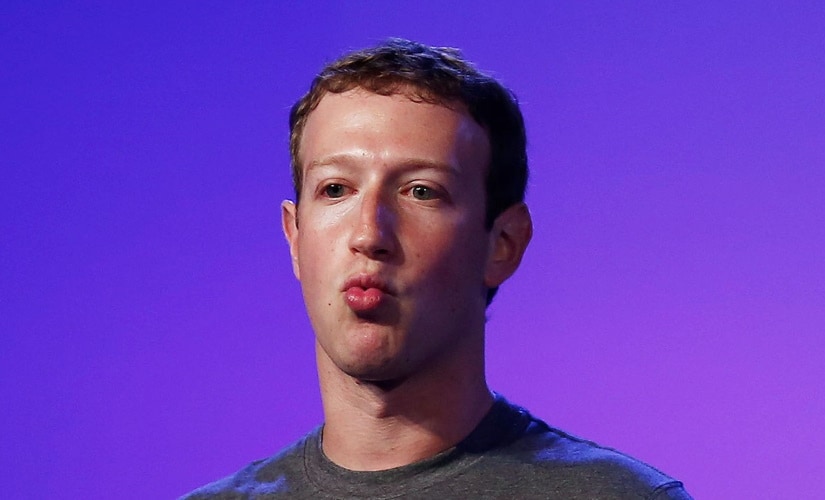
File image of Mark Zuckerberg. Image: Reuters

File image of Mark Zuckerberg. Image: Reuters

In a statement, Facebook said it does not allow hate speech on its platform and said it regularly works with “experts, non-profits, and stakeholders to help make sure Facebook is a safe place for everyone, recognizing anti-Muslim rhetoric can take different forms.

The company based in Menlo Park, California, said it has invested in artificial intelligence technologies aimed at removing hate speech and proactively detects 97 percent of what it removes.

Facebook declined to comment beyond the statement, which did not address the lawsuit’s allegations that it has not removed hate speech and anti-Muslim networks from its platform even after it was notified of their existence.

For example, the lawsuit cites research by Elon University professor Megan Squire, who published research about anti-Muslim groups on Facebook and alerted the company. According to the lawsuit, Facebook did not remove the groups — but it did change how outside academics can access its platform so that the kind of research Squire did would be “impossible other than if done by Facebook employees.”

Facebook’s hate speech policy prohibits targeting a person or group with “dehumanizing speech or imagery,” calls for violence, references to subhumanity and inferiority as well as generalizations that state inferiority. The policy applies to attacks on the basis of race, religion, national origin, disability, religious affiliation, caste, sexual orientation, sex, gender identity and serious disease.

But in one example from April 25, 2018, Squire reported to Facebook a group called “Purge Worldwide,” according to the lawsuit. The group’s description reads: “This is an anti Islamic group A Place to share information about what is happening in your part of the world.”

Facebook responded that it would not remove the group or the content. The lawsuit cites other examples of groups with names like “Death to Murdering Islamic Muslim Cult Members” and “Filth of Islam” that Facebook did not remove despite being notified, even though Facebook policy prohibits “reference or comparison to filth” on the basis of religion. In the latter case Facebook did remove some posts from the group, but not the group itself.

The lawsuit also cites an exception Facebook made to its policy for former President Donald Trump, for whom Facebook made an exception to its rules when he posted as a candidate in 2016 about banning all Muslims from entering the U.S.

Zuckerberg and other social media executives have repeatedly testified before Congress about how they combat extremism, hate and misinformation on their platforms. Zuckerberg told the House Energy and Commerce Committee that the issue is “nuanced.”

“Any system can make mistakes” in moderating harmful material, he said.

The plaintiffs seek a jury trial and damages of $1,500 per violation.


Find latest and upcoming tech gadgets online on Tech2 Gadgets. Get technology news, gadgets reviews & ratings. Popular gadgets including laptop, tablet and mobile specifications, features, prices, comparison.

QUESTO SONO I SANTONI DELLA CENSURA UNIVERSALE: CHIAGNENE E VI FOTTONO DALLA MATTINA ALLA SERA


‘Fraud and deceit’: locals decry Facebook CEO Mark Zuckerberg’s alleged attempt to expand Hawaii estate

  • Family members accuse billionaire of funding relative’s effort to buy land in case they say ‘violates fairly basic notions of justice’
  • Rival relative’s bid for four pieces of land has roughly doubled in two months since auction

Mark Zuckerberg and his wife Priscilla Chan. Photo: handout Mark Zuckerberg and his wife Priscilla Chan. Photo: handout
Mark Zuckerberg and his wife Priscilla Chan. Photo: handout

At a March auction, a group of Hawaiian relatives was able to block a distant cousin from buying one of four small parcels of land for sale on the island of Kauai. The outcome was shocking because the distant cousin, retired professor Carlos Andrade, had the backing of one of the richest men in the world: Facebook CEO Mark Zuckerberg, whose 283-hectare (700-acre) estate surrounds the disputed land.

But on Tuesday, the rules of the universe reasserted themselves. At a court hearing to finalise the outcome of the auction, Andrade was able to reopen the bidding and win the title to all four pieces of land for US$2,145,000.

QUESTO SONO I SANTONI DELLA CENSURA UNIVERSALE: CHIAGNENE E VI FOTTONO DALLA MATTINA ALLA SERA


How misinformation can affect Facebook employees’ morale.

Nov. 25, 2020
Facebook chief Mark Zuckerberg and employees differ on some matters of disinformation.
Credit...Andrew Caballero-Reynolds/Agence France-Presse — Getty Images

How much does Facebook’s handling of misinformation affect its employees’ morale?

According to the company’s regular “Pulse” surveys, which ask employees about working for the social network, it is a factor.

Employee sentiment started off promisingly this year, according to the surveys, which were viewed by The New York Times. As Facebook responded to the coronavirus crisis and a surge in usage by simply making sure its site stayed online, employees felt driven and purposeful, the data show.

But that didn’t last for long. In May, as protests supporting the Black Lives Matter movement grew, President Trump posted a message to his Facebook page and on Twitter that said, “When the looting starts, the shooting starts.” The message was highly divisive, with civil rights groups and lawmakers saying it incited violence and calling for it to be taken down.

Twitter responded by making Mr. Trump’s tweet less visible, saying that it glorified violence and violated the site’s rules. But Mark Zuckerberg, Facebook’s chief executive, said it was important to his company’s ideals around free expression to keep the post up and visible on Mr. Trump’s page.

Advertisement

Continue reading the main story

Facebook employees did not take it well. Many spoke out internally to disagree with Mr. Zuckerberg. Morale deteriorated. According to the Pulse surveys viewed by The Times, overall favorability of the company had dropped to 69 percent by October, from 78 percent in May. BuzzFeed News previously reported on the Pulse survey data.

“Top constructive themes from comments mention decision-making related to hate speech and misinformation on our platforms, and concerns that leadership is focusing on the wrong metrics,” read a quote from the survey.

Pride in working at Facebook also dropped to 62 percent in October, down 16.6 percentage points from May and down 8.4 percentage points from a year ago, according to the data. Just over half of the respondents felt that Facebook was having a socially positive impact on the world, down 23 percentage points since May.

And perhaps worst of all for Mr. Zuckerberg, confidence in executive leadership was at 56 percent last month, down 20.3 percentage points from May and a 4.8 percentage point drop from a year ago.

“Feedback is part of our culture and we regularly check in with our employees to see where we can do better,” said Sona Iliffe-Moon, a Facebook spokeswoman, in a statement. “In this unprecedented and challenging year, the vast majority of employees report a deep belief in our mission and say they’d recommend working at Facebook to their friends.”

Advertisement

Continue reading the main story

She added: “Of course, there are areas where we can improve, which is why we do these surveys.”

Facebook employees were more positive about other areas, such as the way they felt about their managers. Roughly 84 percent of respondents rated their managers favorably in October, up about 1 percentage point from May and part of an upward trajectory since the second half of 2017.

But the reality of working from home also took its toll, according to the survey data. Work/life favorability dropped to 42 percent approval, a 6.2 percentage point decrease since May and an 8.1 percentage point drop from a year ago. Much like the rest of corporate America, Facebook employees reported challenges with a lack of clear boundaries between work and home.

Like many other big companies, Facebook plans to continue supporting workers as they work remotely. (That goes doubly for what Facebook calls “n00bs,” or new employees.) The company has said that it would allow many employees to work from home permanently.

One conclusion from the survey, Facebook executives wrote, was that there was a communication issue with employees. Leaders said in the survey that they would try to improve communicating the rationale behind their decisions, including by “showing that we’re learning from our mistakes.”

The executives did not address whether they would make different types of decisions.

Mike Isaac is a technology correspondent and the author of Super Pumped: The Battle for Uber, a NYT best-selling book on the dramatic rise and fall of the ride-hailing company. He regularly covers Facebook and Silicon Valley, and is based in The Times's San Francisco bureau. @MikeIsaac Facebook

QUESTO SONO I SANTONI DELLA CENSURA UNIVERSALE: CHIAGNENE E VI FOTTONO DALLA MATTINA ALLA SERA


WATCH |

Fox News' Ingraham Suggests Zuckerberg Bribed Georgia Election Officials

In the segment, Laura Ingram interviewed Republican Senator Lindsey Graham, about allegations of voter fraud pushing the state into Joe Biden's column

Send in e-mailSend in e-mail

Fox News host Laura Ingraham on Tuesday night floated the allegation that Facebook CEO Mark Zuckerberg, through a charitable donation to help local election offices amid the coronavirus pandemic, had somehow put local officials “on the take.”

In the segment, Ingraham interviewed Republican Senator Lindsey Graham about allegations of voter fraud pushing the state into Joe Biden's column. Graham, a South Carolina Republican, had been accused by Georgia’s Republican secretary of state of pressuring him to toss out legal ballots.

Tags:


QUESTO SONO I SANTONI DELLA CENSURA UNIVERSALE: CHIAGNENE E VI FOTTONO DALLA MATTINA ALLA SERA


CEOs are the problem

Corporate leaders are feeling public pressure and seeking to position themselves as part of the solution to problems that they caused

  
FILE PHOTO: Facebook Chairman and CEO Mark Zuckerberg testifies at a House Financial Services Committee hearing in Washington, U.S., October 23, 2019. REUTERS

FILE PHOTO: Facebook Chairman and CEO Mark Zuckerberg testifies at a House Financial Services Committee hearing in Washington, U.S., October 23, 2019. REUTERS

Erin Scott

CAMBRIDGE – ExxonMobil recently announced a five-year plan to reduce greenhouse-gas emissions and is pumping out ads proclaiming its commitment to a green future. Tobacco giant Philip Morris is touting its plans to help smokers quit. Facebook is calling for new internet regulations. And these moves come less than two years after the Business Roundtable, representing the CEOs of America’s largest corporations, issued a statement calling for business to serve all stakeholders.

Are today’s corporate executives ushering in a new era of corporate responsibility? Or are they merely protecting their own power?

For decades, business leaders and prominent academics believed that corporations’ sole commitment was to their shareholders. Previously a fringe view, the publication of a New York Times op-ed by Milton Friedman in 1970 – “The Social Responsibility of Business Is to Increase Its Profits” – moved this perspective toward the mainstream. It gained further momentum within academia following a number of articles by Harvard Business School’s Michael Jensen, who offered theoretical and empirical support for Friedman’s doctrine. For example, in one influential paper, Jensen and Kevin Murphy of the University of Southern California estimated that the average CEO’s pay increased by only $3.25 for every $1,000 of value he created, pointing to the need for an even tighter link between executive compensation and shareholder value.

But this academic research was following more than leading the trend. By the 1980s, CEOs like General Electric’s Jack Welch and scores of management consulting companies had already normalized the preoccupation with shareholder value. Corporations started downsizing their workforces, limiting wage growth, and offshoring tasks – all in the name of delivering better value to shareholders.

Although proponents of shareholder primacy would not have approved of the type of fraud that became associated with Enron, WorldCom, and others, it was easy to see how an obsession with increasing the stock price might lead some executives to go too far. There is now growing agreement that maximizing shareholder value should not be a corporation’s sole aim. Less obvious, however, is what model should be adopted instead.

Should we draw up a new charter for executives so that they feel empowered to consider a broader set of interests? The Business Roundtable seems to think so. But I would caution against any solution that gives even more discretion to management. The problem with shareholder primacy wasn’t only that it created an obsession with stock prices and pitted workers against shareholders; it was that it handed a massive amount of power to top managers.

Many CEOs now run their companies according to their own personal vision. There is very little social oversight, and executive compensation has soared. Despite the unprecedented hardship caused by the pandemic, CEOs of hard-hit companies took home tens of millions of dollars last year.

When inordinately empowered CEOs receive a vague mandate to pursue stakeholder interests as they see fit, abuses are sure to follow. Some companies might funnel millions of dollars to their CEOs’ pet project (be it the Metropolitan Museum of Art or a preferred charter school program), or to “philanthropic” causes that are really just veiled forms of influence-peddling.

Under the current incentives structure, there is little stopping corporations from collecting huge amounts of consumer data, disempowering workers and citizens, and establishing tyrannical new forms of surveillance – even as they are advertising their philanthropy and virtue. There is certainly nothing that prevents them from pursuing excessive automation to reduce labor costs, destroying jobs just to eke out a few more bucks for shareholders. The way to reverse these anti-social trends is through a two-pronged approach that is very different from what the Business Roundtable would prefer.

First, the legal and institutional constraints on top executives need to be strengthened. For too long, managers have avoided criminal prosecution for criminal behavior. Even the colossal abuses leading to the 2008 financial crisis went almost entirely unpunished. As journalist Jesse Eisinger points out, today’s executive-friendly legal landscape owes much to ambitious, selfish prosecutors’ tendency to eschew criminal charges against businesses and managers in order to further their own careers.

More importantly, legislation is needed to set clearer red lines. It should not be left to CEOs to decide whether to engage in aggressive tax avoidance and then pay themselves with the proceeds. It should not be optional for companies to reduce their carbon footprint. And we urgently need to redirect technological change by pushing corporations away from incessant automation. These issues all bear on our prospects for maintaining a functioning society; they must not be left to the goodwill of self-interested CEOs.

The second prong is complementary to the first. ExxonMobil, Philip Morris, and Facebook are virtue signaling because they are under increasing pressure from civil society, not because their CEOs suddenly have become more public-spirited. That kind of pressure is needed now to block any reforms that would give executives even more discretion. But civic activism works better when laws specify what counts as unacceptable corporate behavior, be it tax evasion, excessive automation, pollution, or accounting tricks to enrich shareholders and greedy managers.

There is no reason to believe that ExxonMobil, Philip Morris, and Facebook are committed to overhauling their socially destructive business models. Their public-relations efforts reflect the pressure they are feeling. Civic activism is starting to work, and it could become even more effective.

But that will take better organizing and stronger demands on corporations – not whitewashing campaigns designed to defuse criticism and demobilize the critics.

Corporate responsibility is too important to be left to corporate leaders.

Daron Acemoglu, Professor of Economics at MIT, is co-author (with James A. Robinson) of Why Nations Fail: The Origins of Power, Prosperity and Poverty and The Narrow Corridor: States, Societies, and the Fate of Liberty. 

Disclaimer: The content of this article is syndicated or provided to this website from an external third party provider. We are not responsible for, and do not control, such external websites, entities, applications or media publishers. The body of the text is provided on an “as is” and “as available” basis and has not been edited in any way. Neither we nor our affiliates guarantee the accuracy of or endorse the views or opinions expressed in this article. Read our full disclaimer policy here.

© Project Syndicate 2021

QUESTO SONO I SANTONI DELLA CENSURA UNIVERSALE: CHIAGNENE E VI FOTTONO DALLA MATTINA ALLA SERA


Facebook's Zuckerberg Settles Real Estate Lawsuit for No Payout

Reuters, etc.

Cooley's successfully represented Facebook founder and CEO Mark Zuckerberg in a residential real estate dispute over property rights.

"Facebook's Zuckerberg Settles Real Estate Lawsuit for No Payout," Reuters

"Zuckerberg Settles Fraud Suit for Promise Not to Sue Back," Bloomberg

"Zuckerberg Settles Lawsuit Over Palo Alto Property without Paying Accuser," Silicon Valley Business Journal

"Facebook CEO Mark Zuckerberg Settles Real Estate Dispute," San Jose Mercury News

"Developer Drops Lawsuit Against Facebook's Zuckerberg," ABC News

"Facebook CEO Ends Property Rights Row With No-Suit Vow," Law360

QUESTO SONO I SANTONI DELLA CENSURA UNIVERSALE: CHIAGNENE E VI FOTTONO DALLA MATTINA ALLA SERA

 Lawsuit Against Mark Zuckerberg over $500M ‘Dark Money’ Contribution Enabling 2020 Election Fraud


Facebook founder Mark Zuckerberg. (Photo: House Judiciary Committee testimony)

Lawsuit Against Mark Zuckerberg over $500M ‘Dark Money’ Contribution Enabling 2020 Election Fraud

Attorneys say Zuckerberg’s $500M to influence election evaded campaign contribution limits by using charities

By Katy Grimes, December 16, 2020 2:07 pm

Mark Serrano, President of ProActive Communications, announced Wednesday a new lawsuit is to be filed by attorneys at the Amistad Project of the Thomas More Society against Facebook founder Mark Zuckerberg, over the $500 million of “dark money” he spent to facilitate election fraud in key battleground states. Serrano said the suit will be filed in the next 24 hours in the District Court of the District of Columbia that covers with Wisconsin, Pennsylvania, Michigan, Arizona and Georgia.

In an interview on The War Room with Steve Bannon, Serrano said their report at the center of the lawsuit shows that Zuckerberg contributed a total of $500 million to a network of non-profit and “charitable” organizations in the various named states.

Serrano said Zuckerberg’s millions funded the ecosystem that caused such massive fraud to take place.

Phill Kline, Director of the Amistad Project explained in great detail at a press conference how Zuckerberg’s funds ensured that America was not allowed into the ballot counting rooms, while oligarch funder Zuckerberg was. He said Zuckerberg’s $500 million flowed through charities, and paid for election judges, satellite offices to turn out the vote, machines, and dictated the policies that undermined state laws.

Serrano said the case is broken down into three: “First of all the dark money funding. Then the changing and the shifting of the election law by governors and secretaries of state leading into election day and then the fraud we saw take place on and after election day in the management of the elections and even in the counting of the ballots where a billionaire, Mark Zuckerberg, was allowed in the counting room because he funded it.”

During his press conference, Kline reiterated that it is government’s job to manage elections, and do it without a thumb on the scale. “We don’t put out elections to bid, or bring you elections by Coca Cola,” Kline said. “With transparency, we can discover fraud.”

Both Kline and Serrano said of Zuckerberg’s $500 million, $350 million went through the Center for Technology and Civic Life. “He paid for election judges, purchased drop boxes, contrary to state laws,” Kline said. “Zuckerberg ordered the consolidation of counting facilities. Zuckerberg’s money paid local officials who boarded up the windows to counting rooms. Zuckerberg’s money purchased machines – Dominion and otherwise – and Zuckerberg’s funding was contributed to Secretaries of State.”

Kline said “there is no question that there is evidence, that impacted this election and incentivized people to violate election laws. That evidence has been demonstrated and proven.”

Kline was particularly critical of the media, which he said has had a false narrative throughout this, and highlighted a call he received from a Wall Street Journal reporter who said questioning the process would undermine Democracy.

Print Friendly, PDF & Email

QUESTO SONO I SANTONI DELLA CENSURA UNIVERSALE: CHIAGNENE E VI FOTTONO DALLA MATTINA ALLA SERA


Matt Gaetz files criminal referral against Facebook CEO Mark Zuckerberg

Northwest Florida

(WKRG) — Florida Congressman Matt Gaetz has filed a criminal referral against Facebook CEO Mark Zuckerberg. Gaetz says Zuckerberg made false statements to Congress while under oath during two joint hearings in Congress in April.

The following is a statement from Gaetz about the criminal referral.

Washington, D.C. — Today, U.S. Congressman Matt Gaetz (FL-01) filed a criminal referral against Facebook CEO Mark Zuckerberg for making materially false statements to Congress while under oath during two joint hearings in Congress on April 10th, 2018 and April 11th, 2018.

During a hearing of the House Energy and Commerce Committee and also a joint hearing of the Senate Judiciary Committee and the Senate Commerce, Science, and Transportation Committee, Mr. Zuckerberg repeatedly and categorically denied his company engaged in bias against conservative speech, persons, policies, or politics and also denied that Facebook censored and suppressed content supportive of President Donald Trump and other conservatives.

In June of 2020 however, Project Veritas published the results of an undercover investigation featuring two whistleblowers who worked as Facebook’s “content moderators,” revealing that the overwhelming majority of content filtered by Facebook’s AI program was content in support of President Donald Trump, Republican candidates for office, or conservatism in general.

“Oversight is an essential part of Congress’ constitutional authority,” Congressman Gaetz states in the letter. “As a member of this body, I question Mr. Zuckerberg’s veracity, and challenge his willingness to cooperate with our oversight authority, diverting congressional resources during time-sensitive investigations, and materially impeding our work. Such misrepresentations are not only unfair, they are potentially illegal and fraudulent.”

The letter refers Mr. Zuckerberg to the Department of Justice for an investigation into the false statements made to Congress while under oath.

Full text of the letter sent to Attorney General William Barr may be found HERE and below.

LETTER TEXT

Dear Attorney General Barr:

I write to urge you to investigate the conduct of Mark Zuckerberg, CEO of Facebook, Inc., before the United States Congress.

On April 10, 2018, Mr. Zuckerberg testified in a joint hearing of the Senate Judiciary Committee and the Senate Commerce, Science, and Transportation Committee. The next day, Mr. Zuckerberg testified before the House Energy and Commerce Committee. On both occasions, members of Congress asked Mr. Zuckerberg about allegations that Facebook censored and suppressed content supportive of President Donald Trump and other conservatives. In his responses, Mr. Zuckerberg repeatedly and categorically denied any bias against conservative speech, persons, policies, or politics. Mr. Zuckerberg also dismissed the suggestion that Facebook exercises any form of editorial manipulation. However, recent reports from Project Veritas, featuring whistleblowers who worked as Facebook’s “content moderators,” have shown ample evidence of such bias and manipulation.

Two content moderators, Zach McElroy and Ryan Hartwig, both worked on the Facebook content review flow generated by Facebook’s artificial intelligence (AI) program for flagging questionable content. McElroy worked at the Facebook-Cognizant facility in Tampa, Florida and Hartwig worked at the Facebook-Cognizant facility in Phoenix, Arizona.

On June 23, 2020, Project Veritas published the results of an undercover investigation featuring the aforementioned whistleblowers. Their report revealed that the overwhelming majority of content filtered by Facebook’s AI program was content in support of President Donald Trump, Republican candidates for office, or conservatism in general. This alone is already an indication of bias within the platform.

Once flagged by Facebook’s AI, moderators reviewed the filtered content, and adjudicated whether it qualified as removable. According to the Veritas report and undercover footage, the adjudicators were outspoken about their political bias against Republicans, and actively chose to eliminate otherwise-allowable content from the platform and from public view simply due to its political orientation. This arbitrary and capricious behavior is not done in good faith and falls outside of the express intent of §230 of the Communications Decency Act, which affords Facebook liability protection as long as the platform moderates content in “good faith.”

Additionally, these facts are in direct contrast to Mr. Zuckerberg’s testimony before Congress where he stated under oath that Facebook is a politically-neutral platform, and that he personally is working to root out any employees who are restricting speech based on Silicon Valley’s overwhelmingly leftist culture.

Project Veritas’ undercover footage shows that a great deal of “political speech” supporting the President was labeled “hate speech,” or was considered in violation Facebook’s “Community Standards.” At the same time, speech promoting violence against the President and his supporters was labeled as merely “political,” and was thus allowed to stay on the platform. For example, McElroy captured a shot of a Facebook corporate ruling that an illustration of a hand holding a knife slashing the throat of the President, captioned by “Fuck Trump,” would be allowed as political speech, despite being in clear violation of Facebook’s guidelines. In this case, the guidance to content moderators instructed them to watch for hostility directed at the gallery that posted the image.

Facebook’s AI screening content is not politically neutral. Neither are the moderators hired to review content flagged by the AI program. This stands in opposition to Mr. Zuckerberg’s congressional testimony and violates the “good faith” provision of Section 230(c)(2)(A) of the Communications Decency Act.

Accordingly, I respectfully refer Mr. Zuckerberg to the Department for an investigation of potential violations of 18 U.S.C. §§1001, 1505, and 1621 for materially false statements made to Congress while testifying under oath.

Oversight is an essential part of Congress’ constitutional authority. Customarily, Congress is grateful to citizens who come forward with relevant information in good faith, as the aforementioned whistleblowers have done. As a member of this body, I question Mr. Zuckerberg’s veracity, and challenge his willingness to cooperate with our oversight authority, diverting congressional resources during time-sensitive investigations, and materially impeding our work. Such misrepresentations are not only unfair, they are potentially illegal and fraudulent.

I hope you will give this referral full and proper consideration.

Sincerely,

Matt Gaetz

Member of Congress

QUESTO SONO I SANTONI DELLA CENSURA UNIVERSALE: CHIAGNENE E VI FOTTONO DALLA MATTINA ALLA SERA


Zuckerberg sued for fraud in Palo Alto land deal

Developer claims Facebook CEO failed to deliver on promise of business referrals, but Zuckerberg denies 'agreement'

Share to More

Facebook CEO Mark Zuckerberg is being sued by a real estate developer for fraud in a deal that allegedly included promises for business introductions in exchange for buying out a contract to purchase a property adjacent to Zuckerberg's home at a deep discount. But Zuckerberg's attorneys say he never had any such agreement and the developer is just looking to extract more money and embarrass their client.

Developer Mircea Voskerician claims he made an offer on the property at 1457 Hamilton Ave. in November 2012, after learning it abuts Zuckerberg's backyard. He planned to build a large home on the site that would have been only 31 feet away from Zuckerberg's house, according to the lawsuit, which was filed on May 2 in Santa Clara County Superior Court.

He approached Zuckerberg with an offer to sell approximately 2,600 square feet of the property to increase a buffer zone between the two structures. Through his real estate agent, Zuckerberg said he wanted instead to purchase the entire property.

Voskerician and Zuckerberg eventually did come to an agreement to buy out Voskerician's contract with the property owner -- for $1.7 million plus $129,000 in deposits the developer had put down on the property. But the two have very different versions about how they came to that arrangement. Voskerician says he gave Zuckerberg a discount because he had an agreement to receive business referrals from Zuckerberg, who allegedly offered to help him build his business. But Zuckerberg's attorneys say they never agreed to those terms, and the written agreement they signed makes no reference to such promises.

Voskerician said in court papers that when he offered to sell Zuckerberg a strip of the property for a buffer, Zuckerberg originally offered $250,000 for Voskerician's contract, plus the amount Voskerician had advanced as a down payment, according to the lawsuit.

What's local journalism worth to you?

Support Palo Alto Online for as little as $5/month.

Voskerician wanted $4.3 million, which he claims was the highest offer he received from other interested developers. On Dec. 4, 2012, he met with Zuckerberg and his financial adviser at Facebook headquarters. Zuckerberg offered $500,000 for the property contract, but Voskerician rejected the offer, according to the lawsuit.

The financial adviser allegedly told Voskerician in front of Zuckerberg that the Facebook CEO gave his company business and introductions to new clients in return for discounted services. The agent asked if Voskerician would give Zuckerberg a discount. Voskerician asked Zuckerberg if he wanted a discount on the property. Zuckerberg allegedly said "yes," and that he could not pay $4.3 million for the property, according to the lawsuit.

Zuckerberg allegedly stated that he built Facebook on relationships and connections. In exchange for a discount he would introduce Voskerician to his friends, clients and associates and promote Voskerician's business by giving him referrals for new business and written references.

The lawsuit alleges that Zuckerberg also offered to help Voskerician build the home he intended for the site at a different location.

Voskerician accepted a $1.7 million contract buy-out on Dec. 5, 2012, in exchange for the promises of personal references and business promotions from Zuckerberg.

Stay informed

Get daily headlines sent straight to your inbox.

But after the deal, Voskerician tried to set up protocol for the business referrals. Zuckerberg was unresponsive, despite multiple attempts to contact him, according to court papers.

But Patrick Gunn, an attorney for Zuckerberg, tells a different story. Voskerician approached Zuckerberg about building the huge house so close to Zuckerberg's home, and the two did meet about buying out Voskerician's contract. Zuckerberg purchased the contract for $1.7 million, plus refunded Voskerician $129,000 for his other deposits. Zuckerberg then paid the property owner $4.8 million for the property.

But there was never any oral or written agreement regarding the promised business contacts, and the written contract-assignment agreement had the input of lawyers for both sides, Gunn said.

"We think this is a manufactured claim. The meeting he describes is not the meeting that took place. It appears to be a claim that has just been invented in order to extract even more money from our client. If the plaintiff's version of events were true and these alleged promises were actually made, I would think they would've been included in writing, and they were not," Gunn said.

In October 2013, Zuckerberg purchased three other properties neighboring his Crescent Park neighborhood home and said that he had done so after discovering that a developer was going to build a huge house directly behind his property and use Zuckerberg as a selling point to increase the sales price for the new home. Zuckerberg had wanted to thwart the use of his name and preserve his privacy, media reports at the time stated.

Voskerician said in court papers that he sent Zuckerberg a letter on Oct. 27, 2013, outlining their agreement. Zuckerberg had one of his financial advisers meet with Voskerician. But at the Dec. 27, 2013, meeting, Voskerician was essentially rebuffed, according to the lawsuit. No further contact took place with Zuckerberg or his advisers.

On April 27, Voskerician sent Zuckerberg a letter rescinding the deal and offered to return the $1.7 million and other escrow costs, but he did not receive a response, the court papers state.

He is suing for the balance of the $4.3 million he said he would have made had he sold to the highest bidder plus unspecified punitive and other damages.

Gunn sent a letter to Voskerician's attorney on May 1, prior to the lawsuit filing:

"The facts stated in your letter and draft complaint are so distorted as to be unrecognizable to our clients. They reject them and dispute that Mr. Voskerician is entitled to any compensation or relief whatsoever.

"Mr. Voskerician was in contract on the Hamilton property for a matter of weeks before he assigned his interest to SFRP LLC (a company set up for Zuckerberg). He realized $1.7 million from that assignment, a sum that can only be described as a windfall. It is disappointing to say the least, that he has chose to distort the facts so grossly to manufacture a claim for even more money.

Voskerician and business partner Sam Sinnott recently settled a lawsuit with Menlo Park neighbors to add a driveway from the back of their Santa Cruz Avenue property that will exit onto Louise Street.

Craving a new voice in Peninsula dining?

Sign up for the Peninsula Foodist newsletter.

Follow Palo Alto Online and the Palo Alto Weekly on Twitter @paloaltoweekly, Facebook and on Instagram @paloaltoonline for breaking news, local events, photos, videos and more.

Comments

Hulkamania
Duveneck/St. Francis
on May 13, 2014 at 11:00 am

Oral agreement? Sucker.


Aquamarine
Stanford
on May 13, 2014 at 12:10 pm

Is this person the reason MZ bought the surrounding properties and rented them back to the owners, the one who was going to make millions off of MZ's name by advertising MZ's place was nearby?


Disgusted
Community Center
on May 13, 2014 at 12:16 pm

Billionaire problems. Meanwhile, others in Palo Alto are wondering if they can afford to keep a roof over their heads.


palo alto resident
Embarcadero Oaks/Leland
on May 13, 2014 at 12:48 pm

Zillow shows this property as being sold for $4.8 on 12/12/12. Not $1.7 million. County tax records reflect the same purchase price/assessed value.

Web Link


Denins
Palo Verde
on May 13, 2014 at 12:54 pm

So MC valued the "introductions" as worth at least $2.6 million and did not get it in the contract? Just not good business. A deal is a deal. Tough.


Raymond
East Palo Alto
on May 13, 2014 at 1:00 pm

Thank you Disgusted. Palo Alto has a Homelessness problem which will not be solved by allowing Billionaires to own adjacent properties so they can avoid having neighbors.

Why not create a Homeless shelter right on Zuckerbergs front lawn?


wondering
Another Palo Alto neighborhood
on May 13, 2014 at 1:08 pm

Does the word extortion come to mind?


Roger
Evergreen Park
on May 13, 2014 at 1:10 pm

Raymond, honestly, if you have the money to buy property you do it, its legal, Sounds to me like all you are is jealous.
Honestly I am too but c'est la vie.


Berry
College Terrace
on May 13, 2014 at 1:31 pm

Sounds like Mircea Voskerician got a dose of developer sour grapes medicine. Props to MZ. The developer was a greedy scrooge and got what they deserved. Buying a home near a (celebrity)just to exploit the property for being next to said famous neighbor? What a piece of work. Google the name Mircea Voskerician and take a look at all the bad activities coming from this developer NAME. And the city of PA has considered interviewing Mircea for the Planning and Transportation Commission!!!!

Web Link

BWWAAAHAHAHAHAHHAHHA.

Down with Voskerician development.


resident
Community Center
on May 13, 2014 at 1:34 pm


A Google search has the same developer Mircea Voskerician, as an applicant for the Palo Alto Planning and Transportation commission, and in driveway controversy in Menlo Park.


Cid Young
another community
on May 13, 2014 at 1:39 pm

He must not have made it a sale contingency. Get it in writung in the contract, or at a minimum in a side-contract, first. Although, as a condition of sale, perhaps it could have been considered taxable "boot", if tgere was a 1031 Exchange involved. Hmmmm. Billionaires area weird lot.

Martin's Beach Atherton owner, former co-founder of Sun Microsystems, Vinod Khosla : Web Link


Harumpph
Menlo Park
on May 13, 2014 at 1:49 pm

This is the same developer who ran into problems in Menlo Park on Santa Cruz Avenue / Louise Street with Sam Sinnott as his partner.


Hmmm
Registered user
East Palo Alto
on May 13, 2014 at 2:08 pm

You can't house the homeless on Zuck's front lawn, unless they can get in through his gate.

Mircea is pissing and moaning all over the place. Dude, you've been had - deal with it.


palo alto resident
Embarcadero Oaks/Leland
on May 13, 2014 at 2:18 pm

I don't think he's been had, I think he is simply not telling the truth. Public records show that the house he claims Zuckerberg purchased for $1.7 million was actually purchased for $4.8 million. I think he is simply pissed that the houses on either side of him sold for $14 and $14.5 million, I would assume to Zuckerberg.


TrulliaFan
Charleston Meadows
on May 13, 2014 at 3:11 pm

Sounds to me as though Voskerician is attempting an old fashioned shakedown of Zuckerberg, using the courts as his enforcer. We don't know all the facts in the case [portion removed.]


DUH
College Terrace
on May 13, 2014 at 3:15 pm

That is why he created facebook...Got to facebook for referrals just like the rest of us...


Sam
College Terrace
on May 13, 2014 at 3:45 pm

Whoever blinks first loses.


legality?
Downtown North
on May 13, 2014 at 4:56 pm

Is this billionaire barter economy even legal? Sounds to me like they are trying to evade legitimate property and sales taxes with off-the-book price discounts.


palo alto resident
Embarcadero Oaks/Leland
on May 13, 2014 at 7:12 pm

@legality - the property is being taxed at a assessed value of $4.8 million. Not the $1.7 million claimed in the lawsuit.


Estupido
Palo Alto Hills
on May 14, 2014 at 9:52 am

This is just a developer being resentful and stupid.

More fraudulent and lawsuit-worthy was when Zuck promised his employees a minimum amount of money when FB went public. That is against the law and SEC regulations, yet he got away with that!


fool
Community Center
on May 14, 2014 at 10:10 am

A known fact.. whoever sold house years ago in PA are under-price. His house is no exceptional but he makes himself popular now!


social network
Community Center
on May 14, 2014 at 10:21 am
Darum Darum
Crescent Park
on May 14, 2014 at 11:38 am

@palo alto resident:

RTFA

You appear to be very confused. Zuck did not pay $1.7M for the property.
He paid $1.7M to get Mircea Voskerician (who was already in contract) to release it so Zuck could buy it for himself.


JustMe
Duveneck/St. Francis
on May 14, 2014 at 11:52 am

"Mircea is pissing and moaning all over the place. Dude, you've been had - deal with it. "

That's not the way I read this. It looks to me like he tried to capitalize in a rather scummy way off MZ, and MZ paid big bucks to stop the scheme. Not the guy is complaining and looking for a way to extort more money from MZ. He needs to just crawl back under his rock and find an more honorable way to make a living.


C Marg
Professorville
on May 15, 2014 at 11:56 am

Sounds like Developer Mircea Voskerician just lost any chance of anyone using him in the future.

So sad that someone can be so focused on money versus what is right.
Good luck Voskerician finding a new career. Realize that actions always speak louder than words. Had he just done outstanding work, people notice and want to use the same contractor.


ReallyDisgusted
Menlo Park
on May 21, 2014 at 1:45 pm

Voskerician and Sinnott used the same tactics in Menlo Park. Whenever they lose out on a real estate deal, they threaten to sue. Most people don't have their resources so they cave. It's an invidious and ultimately frivolous use of the court system.


John J
Palo Alto Hills
on Jun 9, 2014 at 11:16 am

Zuck did not pay $1.7M for the property, Zuck paid $1.7M to Voskerician to buy the contract. Zuck paid $4.8M to the property owner which is the cost of the property. Basically, Voskerician made $1.7M by doing nothing but greedy, wants more so suing Zuck for more. Hope Voskerician got nothing, greedy!


sour grapes
Embarcadero Oaks/Leland
on Jun 9, 2014 at 11:24 am

Voskerician is just mad some other houses that Zuckerberg bought went for $14 million plus.

Lettori fissi
