HELLO NSA/CIA/HSO, HOW ARE YOU TODAY?


Schedule

FBI violates privacy of 1000s with fake app — 'outrageous!' (Full show)

The ANOM app, created by the FBI and disseminated throughout the criminal underworld in 90 countries in “Operation Trojan Shield” has led to the arrest of 800 people so far in what is being praised as a significant blow to organized crime worldwide. The arrests came as a shock to the criminals, some of whom abandoned the use of coded language, speaking openly on the app about their criminal schemes.

Should ordinary citizens be concerned about the power of surveillance, which could be used against perfectly law-abiding people? Rick Sanchez takes a look. Then RT America’s John Huddy reports the details of ANOM and the extent of its success. Then civil liberties attorney John Whitehead and “Boom Bust” co-host and investigative journalist Ben Swann join Rick Sanchez to share their insights.

Researchers studied nearly 500,000 middle-age adults in the UK and found that people with both diabetes and trouble sleeping were significantly more likely to die within the next nine years than people without these conditions and even people with diabetes alone. RT America’s Trinity Chavez reports.

Plus, even though the US spends 40 percent of the combined military budgets of the world, more than the next seven biggest spenders combined, Pentagon officials are indicating to Congress that they need to increase the US military budget by $7 billion and send US troops to the Pacific to be in “close quarters” with China. China replied by decrying Washington’s “Cold War and zero-sum mentality” that leads to obsessive military superiority. RT America’s Alex Mihalovich has the details. Then former UK MP George Galloway weighs in.

This website uses cookies. Read RT Privacy policy to find out more.

COME LO STATO INGLESE HA ALIMENTATO LA PSICOSI COLLETTIVA DELLA PAURA DEL COVID


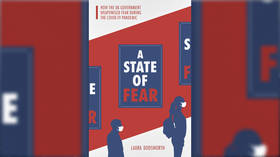
‘A State of Fear’: New book exposes UK’s unethical psyops team that ramps up anxiety over Covid-19 to control a compliant public

Damian Wilson
Damian Wilson
is a UK journalist, ex-Fleet Street editor, financial industry consultant and political communications special advisor in the UK and EU.
‘A State of Fear’: New book exposes UK’s unethical psyops team that ramps up anxiety over Covid-19 to control a compliant public
Dystopian ‘unelected psychocrats’ have cynically manipulated the British people by weaponising fear to ensure compliance with lockdowns, according to a new book that will cause many to reassess how the virus has been handled.

By any measure, the coronavirus situation in Britain should be looking pretty rosy by now, as Covid-19 cases are down, hospital admissions are down, deaths are down and vaccinations are up. The NHS has not been overwhelmed, the pubs are open and the kids are free to hug their gran. So, why the glum faces? 

Something seemed off kilter last night as the TV news screened images of holiday-hungry Brits arriving in Portugal, a teenage cancer survivor hugging his nan after a year of forced separation and a bunch of lads in a Barnsley pub drinking pints and watching the football play-offs.

Also on rt.com Despite its name, the UK’s Online Safety Bill is profoundly dangerous & will censor and criminalise lawful free speech

These scenes of jollity were tempered with news from India of a new variant that had arrived in the UK and was proving wildly virulent, perhaps threatening the freedoms we had longed for, if its spread continued unabated. The message was clear: restrictions on our freedom might have eased from Monday, but we could be back in lockdown unless we can manage this latest  ‘scariant’ from the sub-continent. Stay alert. Stay afraid. 

I’m sorry, but this time I just don’t buy it. Enough with the scare tactics, the dashboard of death and the prophets of doom. It’s quite clear the vaccine is working. I’ve had both doses on the very clear understanding that it works, and I don’t expect I’ll be hospitalised or die even if I do at some point contract the virus. 

But PM Boris Johnson and his government are addicted to fear and the control it gives over a compliant public. As journalist Laura Dodsworth makes the case in her new book, ‘A State of Fear: How the UK Government Weaponised Fear During the Covid-19 Pandemic’, the British public needs to push back on this constant bait and switch aimed at keeping us all in a perpetual state of anxiety. 

As soon as we think one doomsday scenario has been overcome, another appears in its place. Psychologist Dr Harrie Bunker-Smith tells Dodsworth the government’s tactics echo those found in an abusive relationship, and she is spot-on.

“Abusers will say they won’t do something again, but then they keep doing it,” says Dr Bunker-Smith. “Abuse is not constant, it’s not bad all the time. You have periods of extreme abuse followed by the honeymoon period, where you get flowers and apologies and promises, and then things deteriorate again.”

Here’s how the last 24 hours have played out. After months of wearisome lockdown (extreme abuse) the joy was evident on everyone’s faces yesterday, when lockdown eased. A stranger smiled at me and asked if I’d had a hug yet (the honeymoon period).  

Also on rt.com Vaccine passports, voter ID and anti-protest laws are marching the UK into authoritarianism, but why should I bother resisting?

But things quickly soured (the deterioration). No sooner had thousands boarded their flights to the sun than BoJo announced it was inadvisable to travel to countries on the UK’s amber list, that the Indian variant posed a major threat to those who refused to vaccinate, that plans were being drawn up for a return to the loathsome local lockdowns, and that ‘freedom day’ on June 21 was most probably a non-starter. The abuse continued. 

As Dodsworth discusses, fear diminishes over time, but by announcing an easing of restrictions, the government faced losing the psychological grip over a malleable public that it had worked so hard at establishing and then enforcing by draconian emergency laws. 

Aided and abetted by what the author calls its team of “unelected psychocrats” – the behavioural insights experts who advise the Scientific Advisory Group for Emergencies (SAGE) – the government has encouraged the use of fear to control people’s behaviour during the pandemic. One unnamed member of that team, the Scientific Pandemic Influenza Group on Behaviours (SPI-B), said they were “stunned by the weaponisation of behavioural psychology” on the British public. 

Another anonymous member told Dodsworth, “In March [2020] the government was very worried about compliance, and they thought people wouldn’t want to be locked down. There were discussions about fear being needed to encourage compliance, and decisions were made about how to ramp up the fear.” 

Gavin Morgan, one SPI-B psychologist who was prepared to be named, admitted, “Clearly, using fear as a means of control is not ethical. Using fear smacks of totalitarianism. It’s not an ethical stance for any modern government.”  

Establishing control was relatively easy. A straightforward effort was in the choice of data and graphs that were shared with the public at the regular press briefings from Chief Scientific Adviser Sir Patrick Vallance and Chief Medical Officer for England Professor Chris Whitty. Professor David Paton, a professor of Industrial Economics at Nottingham University, called the duo’s appearances “the ultimate psyop”. 

Also on rt.com The BBC and the Princess Diana ‘conspiracy’: will we ever find out the truth?

Since January last year, the pair and their colleagues have frequently appeared to pronounce the number of Covid-19 cases, hospital admissions and deaths across Great Britain. When you stop to think for just a minute, something was obviously missing from their grim presentations. What about the number of people who’d recovered from the coronavirus? 

With the bodies stacking up to be carted away by military trucks in Italy, or dumped on the banks of the Ganges in India, no one has bothered to talk about those millions upon millions of people who beat Covid, which would have sent multiple messages. First, this thing is not a death sentence for everyone; second, it’s not even a hospital visit for many; and third, it’s a virus you need to be cautious about, not to fear. As one of Dodsworth’s sources says, “People would have loved headlines about recovery.”

LIke many of its media accomplices in ratcheting up the fear factor, the government realises there’s nothing scary about good news, so best just not mention it. It’s not as if the docile journalists we expected to challenge these experts even thought of asking the question. 

The experts determined the frame of reference for the spread of Covid-19, and told us only what they wanted us to know in order to keep us fearful. Data that never revealed those who had recovered from the virus or were discharged from hospital created a false illusion that this was an ever-escalating red line that would continue on an upwards trajectory, rather than the usual bell jar graph we would expect. 

It was, and is, a cynically manipulative exercise that remains the go-to strategy in Downing Street. Now, however, thanks to the work of authors such as Dodsworth, the brain fog is lifting, as ‘normal’ beckons on the horizon and more folk are starting to question the government’s judgements on its roadmap out of this crisis.

Also on rt.com Vaccinated older Brits not being hit by Indian Covid-19 variant, but evidence shows it's more transmissible – UK health minister

It’s true that the public mood has changed. I’m not sure if it’s the lifting of the holiday ban, the chance to have a pint at the local or the vaccination rollout that’s done it. Maybe it’s all these things and more. 

The creepy ‘psychocrats’ pulling the strings have been rumbled, and as awareness grows of their role in the government’s inept management of the pandemic, they’ll scuttle under the furniture like cockroaches caught in the light, leaving the politicians fully exposed and expected to explain themselves. And then the real fun begins.

Le anticipazioni di un filantropo siciliano del XIX secolo sullo strapotere delle banche private


24 febbraio 2013

Le anticipazioni del filantropo siciliano del XIX secolo sullo strapotere delle banche privateUna straordinaria anticipazione. Un fuoruscito siciliano costantemente in giro per l'Europa e frequentatore dei circoli mazziniani londinesi, il barone Giuseppe Corvaja fu autore di un libro pubblicato nel 1841 con il titolo "Bancocrazia" nel quale "... sostiene che l'unico potere effettivo nella società contemporanea è ormai detenuto dalle banche e che pertanto occorrerebbe sostituire tutte le banche private con un'unica banca centrale controllata dallo stato." (cfr. Giorgio Scichilone, Francesco Crispi, Flaccovio Editore, 2012, p. 93).
Un concetto grillino che, dunque, insospettabilmente e sorprendentemente viene da molto lontano.

Giuseppe Corvaja, filantropo aristocratico siciliano, nato a Calascibetta, un contemporaneo del «Gattopardo» e proprietario di un magnifico palazzo in Taormina, emulo di Owen, Saint-Simon e Fourier, propose nel suo saggio quasi avveniristico (per il suo tempo) un nuovo sistema sociale a guidare la risorgenza di un'età dell'oro. 
Le sue opere principali furono: «Il Nuovo Mondo, un piano finanziario per ottenere una completa riforma sociale», pubblicata a Parigi nel 1837, e «La Bancocrazia o il Gran Libro sociale, novello sistema finanziario che mira a basare i governi su tutti gl'interessi positivi dei governati», pubblicata a Milano, in due volumi, nel 1840-1841. 

Ciò che egli chiamò «bancocrazia» non era, né più né meno, che l'uso produttivo di tutti i tipi di capitale, anche minimi, da parte dello Stato trasformatosi nella Banca Centrale, in modo tale da eliminare «l’inutilizzazione» delle forze e dei capitali in grado di produrre valore, il che sarebbe stato causa - secondo lui - della miseria delle classi popolari. 


(Claudio Finzi) Giuseppe Corvaja è un deciso e fervente ammiratore e seguace del Saint-Simon, ma va oltre le tesi del maestro, individuando senza esitazioni nella banca il possente centro del nuovo desiderabile potere universale, destinato a sostituire anche il potere tecnico.
Chi in realtà controlla la società (sostiene Corvaia) sono le banche, che però agiscono nell'interesse degli speculatori privati, dei grandi azionisti e dei dirigenti, sfruttando tutti gli altri, risparmiatori e lavoratori. Per porre rimedio a questa situazione, non esiste altro mezzo che spostare il controllo dei capitali dai privati allo Stato, sostituendo le molte banche private con una sola unica grande Banca di Stato, in attesa della nascita di una sola unica enorme Banca mondiale.
Occorre "...poggiare il governo sopra una Banca … solo allargandone il numero degli azionisti sino all'ultimo dei cittadini".

Occorre sostituire con l'ordinata e positiva bancocrazia pubblica di Stato la disordinata ed egoista bancocrazia privata; "sostituire al federalismo politico il federalismo finanziario".
È già un discorso da far paura; ma non basta. Giuseppe Corvaia vuole che tutto: ingegno, capacità, tempo, laboriosità, lavoro manuale, danaro, proprietà, sia versato alla Banca, che darà azioni e onorari corrispondenti al prodotto ottenuto.
Tutto sarà valutato e amministrato dalla Banca centrale, al cui controllo nulla deve sfuggire. Insomma, quanto vediamo oggi svilupparsi in Europa e nel mondo, sembra quasi prefigurato nelle pagine fra il profetico e l'allucinato dell'ottocentesco barone siciliano, che alla Banca vuole consegnare anche le anime.

Da questo "contratto sociale politico", come lo chiama Corvaia, nascerà il nuovo governo; governo della Banca, che sarà anche governo del popolo e dello Stato.
Il re (come lo stesso Saint-Simon anche Corvaja vuole salvare la monarchia, perché spera di farsi appoggiare dai sovrani, in base al principio di fare la rivoluzione con l'aiuto di chi dovrà essere spazzato via) si identificherà col governatore della grande Banca; i ministri altro non saranno che i direttori generali; i deputati e il parlamento saranno una cosa sola con l'assemblea degli azionisti; i cittadini saranno i soci.
Il nuovo contratto politico sarà eterno; potrebbe chiederne la revisione soltanto chi fosse in grado di presentare un progetto migliore. Ma questo è impossibile. Poiché le leggi dell'economia bancaria sono esatte quanto quelle delle scienze naturali, ecco che nella realtà il supremo potere della Banca non dovrà mai combattere contro altre opinioni "...perché queste non potranno più sostenersi contro la verità matematica del Governo".
La discussione è finita, perché la Banca è arbitra e giudice persino della stessa verità, calcolata secondo leggi immutabili e fisse, perché matematiche. Non esisteranno più diritti naturali, ma soltanto diritti civili, stabiliti dai soci, a maggioranza qualificata dei due terzi.

(Segui il link all'inizio della citazione per leggere il saggio di Finzi per intero)

Il pensiero di Giuseppe Corvaja, inoltre, è stato esplorato da Concetta Spoto, nel volume edito nel 2009 per i tipi di Franco Angeli, dal titolo "La Bancocrazia a sistema di governo. Associazionismo e credito in Giuseppe Corvaja (1785-1860)".
Presentazione del volume. L'incapacità dei governi europei di dare risposte adeguate alle necessità dei cittadini e, soprattutto, di mettere fine allo sfruttamento dei lavoratori da parte degli "oziosi" stimola Giuseppe Corvaja a ideare un nuovo sistema di governo, che egli chiama Bancocrazia. Chiusa l'esperienza di imprenditore industriale, riflette sull'opportunità di ripristinare nel mondo uno stato di mutualità naturale. Banca, credito, aggiotaggio sono, per Corvaja, le forme moderne in cui si manifesta la primitiva naturale mutualità. Vano è opporsi al loro sviluppo, perché è lo sviluppo stesso della civiltà, ma occorre impedire che le banche continuino a essere strumenti di potere per pochi monopolisti e aggiotatori. Propone, pertanto, di convertire tutti i cittadini in azionisti di un'unica banca nazionale, alla quale affida responsabilità di governo. 
La novità della proposta di Corvaja sta nell'aver ideato uno Stato-banca che capitalizza tutte le potenzialità e i prodotti dell'ingegno, del lavoro e della proprietà. Tutti coloro che hanno depositato i loro capitali, dal cittadino più povero, ricco solo della forza delle proprie braccia, fino al più grande capitalista, ricevono, in cambio, biglietti rimborsabili al portatore, spendibili come denaro contante. 
Attraverso la via bancocratica Corvaja ritiene di poter combattere la povertà fino alla sua cancellazione e di garantire un'equa distribuzione delle ricchezze. Alzando la bandiera dell'associazionismo, entra, dunque, nel dibattito europeo sulla questione sociale, allineandosi, per certi versi, sulle posizioni di Saint-Simon, ma, soprattutto, di Fourier.

L'autrice. Concetta Spoto insegna Storia dell'Europa e Storia del pensiero economico presso la Facoltà di Lettere dell'Università di Catania. Si è occupata di storia istituzionale e di storia del pensiero economico. Nella sua produzione scientifica figurano, fra gli altri, Il Vicerè Caramanico e il Parlamento del 1790; L'Accademia Gioenia di Scienze Naturali in Catania e il Giornale del Gabinetto Letterario. Scienza ed Economia Politica (1834-1868); Le casse di risparmio: una via per lo sviluppo; I "Principi Elementari" di Placido De Luca.

RT NEWS: UE AL CAPOLINEA - IL COLLASSO DELLA UE E' IMMINENTE


After countless failures, the EU is drinking at the last-chance saloon and risks being a casualty of Covid itself

Damian Wilson
Damian Wilson
is a UK journalist, ex-Fleet Street editor, financial industry consultant and political communications special advisor in the UK and EU.
After countless failures, the EU is drinking at the last-chance saloon and risks being a casualty of Covid itself
Following the EU’s dismal handling of the pandemic, a think tank’s bombshell report has found growing disillusionment with the off-the-rails Brussels project is now mainstream. It needs to shape up or its very future is in peril. 

A damning report just released by the European Council on Foreign Affairs think tank has confirmed what many have known for some time – the EU is broken, maybe beyond repair.

As the authors of ‘Crisis of Confidence: How Europeans See their Place in the World’ point out, “Disappointment with EU institutions has now come out of the periphery and gone mainstream.”

Its mishandling of the coronavirus pandemic, from the production and distribution of PPE to a stalled immunisation rollout programme and confusing messaging over the efficacy of vaccines and their procurement, followed by its inability to present “a credible narrative of strong European leadership” after agreeing the €800 billion recovery package, have all raised big questions about the EU’s capacity to steer member states through the crisis.

The report concluded that failure meant “the EU itself may risk becoming another casualty of Covid-19.”

It found majorities in Austria, Bulgaria, France, Germany, Italy and the Netherlands reported lower confidence, or stable levels of low confidence, in the EU since the start of the pandemic. In Germany, the share of people who believe the EU system is broken is 11 percentage points higher than it was before the pandemic, according to polling by YouGov undertaken for the report.

Also on rt.com The European Parliament has called for regime change in Russia, but no one in Europe cares because it is a pointless talking shop

It’s not only the mishandling of the pandemic that has given Brussels a terrifying glimpse into the abyss. It’s just the latest in a string of major upsets in which it has simply failed to adapt and show the sort of leadership and political will necessary to navigate a way through.

There was the debt crisis of 2008, the migration surge in 2015, hugely divisive Brexit in 2016, four years of Donald Trump and a subsequently testy relationship with the US plus, more recently, Covid-19. In none of these has the leadership of Europe looked, at any time, to be in control. It has overreached, promised big and failed to deliver, despite plenty of accompanying rhetoric.

“The EU has used up its second chances now that trust in EU institutions has weakened,” says the report.

And the authors warn, “Europe’s political leaders need to be clear-eyed about the choice in front of them regarding the European project. The embattled belief in the need for European cooperation will not hold through further failure.”

That means the EU must rein in its obsession with becoming a global superpower with a seat among the big players, and concentrate on meeting the needs of its people in those areas where it can guarantee delivery, instead of simply more disappointment.

As the study shows, when asked if the EU should be “one of the world’s great powers, capable of defending itself from external threats including through military means when necessary” only 18% of those polled agreed. What should set alarm bells ringing in Brussels is that 12% were in favour of dismantling the bloc entirely, believing EU countries would be better off without it.

However, overwhelmingly, European citizens aspire to more abstract ideals like becoming “a beacon of democracy and human rights” and “prioritising the rule of law and high democratic standards within its own ranks.”

Also on rt.com Hey EU! Lay off Hungary’s Viktor Orban simply because he rejects modern liberal ideas in favor of a different democratic route

These are the sort of targets that can be met. They’re uncomplicated, uncontroversial and give everyone a warm fuzzy feeling. That’s more than can be said than the rhetoric and regional muscle-flexing against nations like Turkey and Russia.

Because not only does that announce a far more aggressive foreign policy stance, but not all member states are on the same page. In polling about the relationship between Europe and a range of other countries, 41% felt that Turkey was a rival with which to compete or an adversary, a country in conflict with the EU. Let’s remember that Turkey is still a member of NATO.

What might surprise many in Brussels is that a total of 42% of people see Russia as either an ally, a country that shares European interests and values or a necessary partner with which the EU should cooperate with strategically.

Unless I am totally misreading the current state of affairs, these views are not aligned with the current narratives that drive EU foreign policy. And that makes the point about choosing to weigh in against difficult neighbours.

Because the report authors found that “strikingly, our data suggest that European voters do not see the world through that lens.” And that feeling is particularly strong in Germany where only 36% of respondents (compared with 58% in Portugal) felt that “The EU should ensure a more unified response to global threats and challenges.”

That could help explain the recent intervention from German Foreign Minister Heiko Maas, where he vented his nation’s frustration at the difficulty in winning the unanimity required to implement EU foreign policy initiatives.

It’s the intangibles that Europeans love. The idea of defending ‘European traditions and values’ and of keeping nation states ‘strong’. What do these actually mean? Well, it’s about making people feel good about themselves, secure about their lifestyles and families and positive about the future.

Also on rt.com Germany, exasperated by Hungary’s Mr No, seeks to end individual nations having a veto over EU foreign policy

The EU can deliver on these. A stable European economy would be ideal. An effective vaccination rollout would help. Realistic and achievable targets set through the green agenda could do it and so could the exercise of soft power in pursuing strategic, cooperative partnerships not only with traditionally strong friends like the US and UK, but with other countries including Russia, China and Turkey.

This is where the future lies for Europe. It means it can shine its ‘beacon of democracy’ across the continent, keep 400 million people safe and secure and actually deliver on the promises it makes. 

That could mean it has a chance of rebuilding the trust it needs if the EU project is to survive. If it continues to pursue its wild ambition to be a global superpower, a belligerent approach to foreign policy, vainly trying to unite conflicting interests among its member states, and insists on picking fights with nations like the UK and Switzerland, then the future is not so clear.

What is obvious from ‘Crisis of Confidence’ is that a valuable lesson is there for the learning. But whether the EU will want to learn from it is doubtful, and that could well prove to be its own undoing.

IL SUPERSTATO EUROPEO CHE SI MANGIA I FIGLI


Poland’s insistence it will never accept a United States of Europe puts it firmly on a collision course with the EU

Poland’s insistence it will never accept a United States of Europe puts it firmly on a collision course with the EU
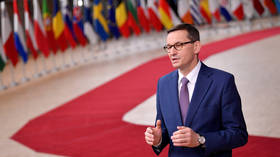
More trouble lies ahead for Brussels, with the Polish PM Mateusz Morawiecki voicing his opposition to a European superstate. Don’t be surprised if Poland is forced to decide on its EU future within the next decade.

In a recent interview with Newsweek, Morawiecki revealed that he is not a fan of the direction the European Union is heading in. During the interview, he made his views on integration perfectly clear, stating that “we should not expect that there will be one ‘United States of Europe’ because it will never be.” Statements like this will not go down well in Brussels, where the desire for a United States of Europe is, and always has been, the raison d’etre of the project. 

Morawiecki is one of a number of Eastern European leaders increasingly concerned about Brussels’ ambitions for full integration. Indeed, mountains of EU legislation, which call for harmonisation, have been laying the groundwork for a United States of Europe for many years now. Morawiecki is clearly not impressed with such aspirations and asserted that the EU “cannot be one superpower, because if that is the case, there will be frictions and tensions that are going to grow even bigger if those from Brussels, Berlin or Paris would try to push all the others towards such a state.”

Also on rt.com The European Parliament has called for regime change in Russia, but no one in Europe cares because it is a pointless talking shop

The intervention by the Polish PM only serves to highlight the fissure that has developed between the European capitals. On one hand, there are the Western European politicians, like French President Emmanuel Macron, who want to see more integration, and on the other there are those in Eastern Europe who prefer looser ties. The situation is untenable and will, in all likelihood, come to a head in the not-too-distant future.

At the moment, the EU is clearly a fractured organisation. There is a political battle afoot that will dictate the kind of EU we see in the future. Of course, Brussels would prefer a Europe where the nation states are subservient to the EU. The Eurocrats dream of a day when the continent is a harmonised bloc with a European identity. Indeed, ‘ever closer union’ has been in the DNA of the EU since its inception.

In contrast, Morawiecki would prefer to see a Europe that preserves national culture and national identity. He stated in the interview that “there are 27 countries, and several more closely aligned that are not belonging to the European Union, but all of which have strong identities, cultural heritages, languages and traditions.”

Also on rt.com Calling Euroskeptics Morawiecki, Orban & Salvini ‘pro-Putin bloc’ is a lazy diversion. They are the next real EU force

Such opinions are anathema to the Eurocrats, who view national differences as a barrier to their ultimate aim of a United States of Europe. To achieve their final goal of superstate status, the Eurocrats require national identity to play a subordinate role to a predominant European culture. Morawiecki correctly objects to this idea, stating that “for Europe to be strong, it has to be a Europe of homelands.”

He also claimed that Europe could have a place at the top table in global affairs “without this meaning a one-size-fits-all type of philosophy that some Eurocrats from Brussels seem to believe in.”

On the face of it, however, the EU’s ambition of a United States of Europe looks increasingly like a pipedream at the moment. Polling just released by the European Council on Foreign Relations (ECFR) reveals that trust in the EU has reached an all-time low.

The bungling of the Covid vaccine programme, augmented by a series of economic and border crises, has resulted in over 60% of French believing that the EU is ‘broken’. Figures from Germany are equally negative, with 55% having no confidence in the EU, and in Italy 57% of the public gave the bloc a firm thumbs down. 

Also on rt.com After countless failures, the EU is drinking at the last-chance saloon and risks being a casualty of Covid itself

Although these figures make grim reading for the Eurocrats, they will not make them change course. Their usual response to these kinds of negative polls is to claim that all the continent needs is ‘more EU’ – a delusion that the European public just have to witness more of the EU’s achievements, and then they will learn to love it. Thus, they will continue to forge ahead towards their ultimate objective of full integration, even if some member states, like Poland, are opposed. Moreover, with Britain now out of the equation, the brakes towards a European superstate are well and truly off.

If Morawiecki’s words can be taken as a reflection of his country’s views, then the day is coming when Poland will have to make a decision about its membership of the EU. Indeed, I suspect that before the decade is out, Poland will have to choose whether to remain on the EU train, whose ultimate destination is a United States of Europe, or follow the British lead and hop off before it is too late. There is one thing for sure, however: Brussels will not compromise.  

LE VACCINAZIONI HANNO PROVOCATO L'ESPLOSIONE DELLE VARIANTI


Covid-19 has mutated so much in 18 months that proven treatments are often failing, says head of Moscow’s top virus hospital

Covid-19 has mutated so much in 18 months that proven treatments are often failing, says head of Moscow’s top virus hospital
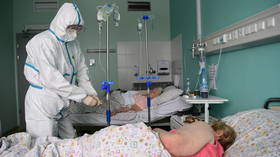
Covid-19 has mutated significantly, and the virus is now much harder to treat than it used to be. That’s according to the head of Moscow’s Kommunarka Hospital, which last year became the city’s main coronavirus treatment facility.

Speaking to Moscow radio station Ekho Moskvy on Thursday, the hospital’s chief physician, Denis Protsenko, who became a household name in 2020 due to his role at the forefront of the country’s battle against Covid-19, explained that it has become much harder to treat ill patients.

“There is a feeling that the virus is changing,” Protsenko explained. “The proven methods of treatment for hyperinflammation or, as we call it, cytokine storms, are often failing.”

Also on rt.com Moscow to open extra hospital capacity & heighten measures to control Covid-19 as cases rise in Europe’s largest city

“This makes us think that the virus has also changed and has mutated in this year and a half,” he said, before encouraging people to get vaccinated against the disease.

According to Protsenko, the Kommunarka hospital is now filled with a large number of elderly patients, as well as people who are overweight or diabetic. Furthermore, collective immunity in the capital is still under 50%, he said.

On Wednesday, Deputy Moscow Mayor Anastasia Rakova revealed that the city would open up additional hospital beds in the upcoming days, boosting its capacity by 1,500. That announcement came after Mayor Sergey Sobyanin ordered local authorities to ramp up enforcement of sanitary measures, such as the wearing of masks on public transport. However, he also noted that he had no plans to introduce any new lockdowns.

According to the official numbers, Russia recorded 12,505 new cases nationwide on Friday – the highest figure since February 22. The capital is bearing the brunt of the latest wave, with 5,853 new infections detected in just 24 hours – 47% of all cases recorded. Moscow is home to just 10% of the country’s population.

However, perhaps most worryingly, Moscow’s coronavirus spread, measured by the so-called R rate, soared to 1.6 in the past 24 hours – the highest seen since September 30 last year.

Le epidemie americane: assassini, oppressione dei migranti, fame


A murder epidemic, migrant crisis & economic meltdown at home… but STILL the US meddles in the world’s affairs

A murder epidemic, migrant crisis & economic meltdown at home… but STILL the US meddles in the world’s affairs
As Joe Biden and Kamala Harris make their first significant appearances on the world stage, the problems are mounting up back home. They’d do well to make fixing them their top priority, rather than interfering in other countries.

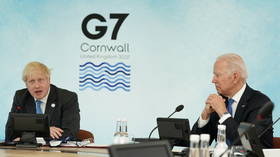
US President Joe Biden is attending the G7 summit in Cornwall, England, and his vice president, Kamala Harris, has this week been in Mexico and Guatemala. Even before he arrived in England, Biden had already made clear his intention to meddle in Britain’s affairs. He let it be known that he would tackle Prime Minister Boris Johnson about the Northern Ireland Protocol and the protracted post-Brexit negotiations with the European Union.

Biden failed to broach the subject during Thursday’s meeting with Johnson, but he will no doubt return to it before the weekend is over. Similarly, on her visit to Central America, Harris berated her hosts for corruption and told would-be Guatemalan migrants not to try and get into the US, because “if you come to our border, you will be turned back.” Fine words indeed from the vice president, but unfortunately not based in reality.

Instead, I would suggest that rather than lecturing other leaders how to run their respective countries, Biden and Harris should take a look in the mirror, because all is not well in the US at the moment.  

Also on rt.com Other states should follow Texas in trying to fix the border crisis… because you can bet that the White House won’t do it

Firstly, America’s largest cities are in the midst of a murder epidemic. The homicide rate in Chicago, for example, is eye-wateringly high. Last year alone, there were 750 murders in the ‘Windy City’, which represents a jump of 50% on 2019. These increases in homicides were replicated in all of the US’ most populated cities. There were, for example, 437 registered murders in New York, a 40% increase on 2019, and also 322 killings in Los Angeles, a leap of 30%. This year, things are only getting worse, as homicide rates are already up 24% in comparison to 2020. Take Philadelphia for example, where there were 170 murders by May 9, a rise of 28% on the same period last year.

Violent crime is also an increasing problem in American cities. Detroit remains the most dangerous city in the US, where there is a staggering 1-in-51 chance of being the victim of a violent crime. St. Louis has similar astonishing violent crime statistics, as do Memphis and Baltimore. Indeed, there were 55 shootings last weekend in Chicago alone. And one thing all of these crime-ridden cities have in common is that they are run by Biden’s party, the Democrats.  

Added to Joe’s woes is the fact that the US’ southern border is under massive pressure due to the number of migrants coming over from Mexico. Trump attempted to stem the tide by building a wall and implementing a ‘Remain in Mexico’ policy, which was partially successful. One of the first actions of the Biden administration, however, was to ditch these. In an attempt to get a handle on the increasingly desperate situation, Biden dispatched Kamala Harris – who has not even bothered to visit the border – down to Mexico and Guatemala. Harris warned Guatemalans, “Do not come. The United States will continue to enforce our laws and secure our borders.” It is fair to say that her visit was not well received, and nor will the Guatemalans take any notice, primarily because mixed messages never work.

Also on rt.com BoJo & Biden’s new Atlantic Charter is nothing more than a shameful PR exercise

On the one hand, Harris is attempting to convince migrants not to attempt to breach the border, while at the same time Biden’s policies are making it easier for migrants to cross the border. This has unsurprisingly infuriated those who live in the border states, particularly Texas. Governor Greg Abbott stated that “this problem will continue to get worse because of the policies that have been adopted by the Biden administration.” He also encouraged Biden to reinstate Trump’s ‘Remain in Mexico’ policy and “continue to build the wall along the border in south Texas.” Neither of these suggestions will be taken on board by Biden and Harris, and as a result the migrants, who are themselves victims of people-smugglers, will continue to come in their droves.

Finally, Biden will soon have to contend with economic problems, partially caused by the Covid pandemic. On Thursday, it was announced that inflation in the US had risen by 5% in the past month, the largest increase since August 2008. The price of cars and trucks, for example, has jumped in price by a whopping 7.3%. If inflation continues to rise at this pace, then American workers will find price hikes outstripping wages; and of course, the worst hit will be the low paid.  

Added into this toxic economic mix is the fact that the US is a country increasingly living off debt. It has an astounding $30 trillion of national debt, coupled with a $1 trillion annual deficit. The US debt level now rivals Italy, which has been tinkering on the brink of economic collapse for years. The debt situation in the US cannot go on forever and the economic balloon will eventually pop. And when it does, we will all suffer the consequences because, as the saying goes, ‘When America sneezes, the world catches a cold.’    

Also on rt.com Biden’s silence on border policy is proof that it isn’t working and America risks being swamped by illegal immigrants

So, whilst Biden and Harris introduce themselves on the world stage and tell other countries how to run their affairs, it would, I suggest, make more sense if they focused on their own problems. With a murder epidemic, the southern border out of control, and growing economic problems, I am not sure anyone should be taking advice from this pair.

Moreover, Biden has no right to poke his nose into British affairs, although the mainstream media seem to suggest that he can because his ancestors were Irish. Well, if this logic is applied, then Boris Johnson – who was born in New York and held dual nationality until 2016 – has even more right to tell Biden to get his own house in order first. 

Like this story? Share it with a friend!

Occidente = Liberta' di parola


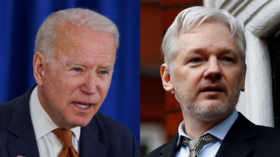
‘They’re trying to kill Assange because he spoke the truth’: Roger Waters calls on Biden to end ‘disgusting’ sham prosecution

‘They’re trying to kill Assange because he spoke the truth’: Roger Waters calls on Biden to end ‘disgusting’ sham prosecution
With the brother and father of the jailed WikiLeaks co-founder on a US tour to raise awareness of Julian Assange’s plight, legendary Pink Floyd frontman Roger Waters challenged Joe Biden to end the journalist’s prosecution.

Assange's father John Shipton and brother Gabriel are traveling across the US this month to press the Biden administration to drop its charges, and highlight the threat to worldwide press freedom this prosecution poses. Joining them in New York this week was Roger Waters, who told RT on Friday why he’s fighting for Assange.

“He is being held up as an example: Keep your mouth shut or this will happen to you,” he said.

Lettori fissi