Keep up with the news by installing RT’s extension for Chrome. Never miss a story with this clean and simple app that delivers the latest headlines to you.
‘Painful to watch’: Joe Biden apparently gets lost at G7 summit, wanders into cafe
13 Jun, 2021 15:05
382
67
Follow RT on
US President Joe Biden was seen wandering around a cafe in Cornwall, England, before his wife stepped in and led him away. Conservatives, who have long questioned Biden’s mental acuity, called the video “painful to watch.”
Video footage posted online on Friday, but largely ignored by the mainstream media, shows Biden wandering slowly onto a cafe terrace. Someone on the terrace, most likely an ITV journalist, asks “How are your meetings going in Cornwall?” Biden then freezes, flashes a thumbs-up, and replies “Very good.”
First Lady Jill Biden then steps in and beckons her husband toward her, before leading him away by the hand as diners laugh out loud.
Biden’s demeanor and apparent confusion raised eyebrows online, particularly among American conservatives, who have claimed since last year’s campaign that Biden was showing signs of cognitive decline. Video footage of Biden’s verbal gaffes and blunders since becoming president – like forgetting the names of his own officials and losing his train of thought at his single solo press conference – have only lent weight to their claims.
“This is really painful to watch,” conservative journalist Kyle Becker tweeted.
Biden’s supposed “senior moment” wasn’t the aging Democrat’s only blunder at the weekend-long G7 summit in Cornwall. News footage on Saturday showed British Prime Minister Boris Johnson correcting Biden, after Biden introduced the president of South Africa after Johnson had already done so. The video then shows Johnson apparently attempting to stop Biden talking to the group of world leaders at a meeting.
Dicembre 2020.
Oltre a mettere a repentaglio la sicurezza di tutti, le testate
atomiche hanno costi altissimi e in costante crescita. Anche l’Italia ha
il suo budget nucleare. Ma, a differenza degli USA, non lo rende noto. Una prima, e prudente, stima condotta dall’Osservatorio Milex nel 2018
ha calcolato che i costi direttamente riconducibili alla presenza di
testate nucleari sul suolo italiano oscillano tra i 20 e i 100 milioni
di euro l’anno.
Dal sito dell’azienda italiana Leonardo (visitato il 30/04/2021):
L’F-35 multi-ruolo […] con velocità e agilità da combattimento, sistemi
di missione avanzati […] è in grado di eseguire combattimenti
aria-aria, aria-aria -attacchi al suolo, attacchi elettronici, missioni
ISR con maggiore letalità.
IL SONDAGGIO GREENPEACE – IPSOS: UNA CONTRARIETÀ RIBADITA
Nel 2020 da un sondaggio di Greenpeace Italia risulta che l’80 per
cento degli intervistati chiede che gli arsenali nucleari mondiali siano
“smantellati”, che le testate statunitensi siano “completamente
ritirate dall’Italia”, che i cacciabombardieri tricolore non siano
impiegati per sganciare bombe nucleari e che il nostro Paese aderisca al
Trattato per la proibizione delle armi nucleari.
I dati del sondaggio di Greenpeace in Italia non sono una novità. Nel
2017 sono stati pubblicati i risultati di una prima, vasta indagine
realizzata nel 2015, in cui erano stati coinvolti 10.455 cittadini di 28
Stati dell’UE di età compresa tra 14 e 30 anni. Dai risultati emerge
che l’assenza di mobilitazione delle generazioni più giovani non è
indizio di un tacito sostegno alle politiche attuali, né di mancanza di
preoccupazione sul tema: è invece espressione di un forte senso di
impotenza, di incapacità a cambiare i risultati.
In tutta Europa la società civile esprime da tempo una forte
contrarietà alla produzione e all’uso di armi nucleari, ma i governi
continuano a investire su questi strumenti di morte, arrivando al
paradosso – in pieno dramma da COVID 19 – di sottrarre risorse
essenziali per la salute umana e ambientale per accrescere i
finanziamenti militari. Eppure i nostri Paesi vengono considerati
‘democratici’…
Un’équipe di studiosi ha avviato da alcuni anni delle ricerche per
capire alcune delle cause di questo paradosso. Alcuni dei risultati di
questa ricerca potrebbero stimolare la ripresa di iniziative pubbliche
anti-nucleari e motivare soprattutto i giovani ad agire: dai dibattiti
nelle scuole e nelle università, fino alle grandi manifestazioni di
piazza e alle denunce contro governi che sono sordi al volere della
società.
Bisognerebbe ridare ai giovani la fiducia nelle loro possibilità di
avere voce nelle scelte politiche, recuperando spazi di democrazia che
sono stati sottratti.
IL PESO DI UNA NARRATIVA DISTORTA
Sebbene gli storici ormai da tempo abbiano messo in luce che la
decisione di bombardare Hiroshima e Nagasaki non fu presa per abbreviare
la guerra e costringere i giapponesi alla resa, ma per calcoli
politici, molte persone credono ancora a quella interpretazione,
proposta dagli americani subito dopo la fine della guerra. Questo
risultato emerge da una recente indagine
realizzata nel 2019 sulle opinioni europee a proposito delle questioni
nucleari e dei bombardamenti atomici del Giappone. L’indagine ha
coinvolto circa 7.000 intervistati dai 18 anni in su: il 52% degli
intervistati ha espresso la convinzione che la guerra sia stata conclusa
più rapidamente grazie ai bombardamenti atomici, e solo il 17% si è
opposto a tale idea.
È emersa una correlazione positiva tra chi credeva che i
bombardamenti su Hiroshima e Nagasaki fossero stati decisi allo scopo di
concludere rapidamente la guerra e chi si è dichiarato contrario alle
iniziative di disarmo. Una narrazione storica che è stata smascherata
come falsa ha dunque ancora il potere di influenzare le opinioni del
pubblico dopo tanti decenni!
L’IMPORTANZA DELL’INDAGINE STORICA
Sappiamo bene che le grandi narrative che vengono proposte / imposte
dalle istituzioni e dai media sono in grado di influenzare in modo
significativo l’orientamento dell’opinione pubblica. Per questo alcuni
studiosi, soprattutto storici, sono impegnati da alcuni anni in una
rigorosa indagine storica degli eventi che hanno accompagnato lo
sviluppo dell’era nucleare, e delle informazioni che i responsabili del
crescente complesso industrial-militare hanno fornito al pubblico per
acquisire il loro consenso e/o limitarne le manifestazioni di dissenso.
La qualità e la serietà della ricostruzione storica degli eventi
possono fornire degli indizi per capire l’evidente paradosso sopra
citato: tre quarti degli europei si dichiarano favorevoli al disarmo
nucleare, eppure da decenni ormai non si assiste più alle grandi
manifestazioni antinucleari che dagli anni ’60 agli anni ’80 del 1900,
videro decine di migliaia di persone scendere nelle piazze in Gran
Bretagna, in Usa, in Germania, in Italia per esprimere il loro profondo
dissenso verso le politiche pro-nucleari dei loro governi.
CONTROLLO O FORTUNA?
Dall’inizio dell’era nucleare sono stati fabbricate più di centomila
armi nucleari. Più di 2000 sono state utilizzate per eseguire test: la
potenza delle esplosioni ha dimostrato gli spaventosi e irreversibili
danni che sono in grado di provocare ai sistemi naturali e alle comunità
umane. Ma tale danno è niente a confronto di quello che potrebbero
causare anche solo alcuni degli ordigni attualmente disponibili. La
conoscenza del potenziale danno e la consapevolezza che armi nucleari
potrebbero essere utilizzate in qualsiasi momento contro qualsiasi
obiettivo in tutto il mondo dovrebbero provocare un senso di
vulnerabilità in tutti noi: non esiste infatti un modo realistico per
proteggerci dalle armi nucleari, a prescindere dal fatto che vengano
utilizzate deliberatamente, inavvertitamente o accidentalmente.
Ma conoscenza e consapevolezza sono state sistematicamente silenziate
da una potente narrativa che ha proposto lo scenario del ‘rischio
controllato’: uno scenario illusorio, che una corretta ricostruzione
storica potrebbe smascherare. Negli ultimi anni infatti diversi studi
hanno chiarito il ruolo che la fortuna ha ripetutamente giocato
nell’evitare disastri nucleari: alcuni sono ricordati in un articolo pubblicato sul sito del CSSR
pochi mesi fa. Ma queste informazioni restano per lo più confinate
alle associazioni e ai movimenti anti-nucleari, mentre vengono ignorate o
censurate dai media controllati dal potere. E certo non vengono
incluse nei programmi scolastici!
CRESCONO LE SPESE per la “SICUREZZA E LA STABILITA’”
A dimostrazione della mancanza di consapevolezza e dell’assenza di
democrazia, leggiamo qualche recente notizia sul tema. La spesa militare
italiana si attesta nel 2021 a poco meno di 25 miliardi di euro,
secondo le stime anticipate dall’Osservatorio Mil€x. La crescita delle
spese militari rispetto al 2020 è complessivamente significativa ed
ammonta all’8,1%. Pesano in particolare i costi per l’acquisizione di
nuovi sistemi d’arma: per la prima volta il totale complessivo destinato
dall’Italia all’acquisto di nuovi armamenti supera i 7 miliardi di
euro. In questa voce di spesa sono compresi anche i finanziamenti
destinati alla produzione e ai sistemi di controllo di armi nucleari.
15 febbraio 2021: L’Italia si conferma il partner NATO con più bombe nucleari tattiche USA
L’Italia continua a essere il partner NATO che ospita il maggior
numero di questi ordigni di distruzione di massa, ben 35, nelle basi
aeree di Aviano (Pordenone) e Ghedi (Brescia).
Lo rende noto l’Istituto di Ricerche Internazionali IRIAD – Archivio
Disarmo di Roma dopo la pubblicazione da parte del Bulletin of the
Atomic Scientists di una ricerca sulle “Armi nucleari statunitensi”.
Il 22 gennaio scorso, in occasione dell’entrata in vigore del
Trattato internazionale che proibisce le armi nucleari, il ministro
degli Affari esteri e della Cooperazione Internazionale Luigi Di Maio in
una nota stampa afferma:
“[..] riteniamo che l’obiettivo di un mondo privo di armi
nucleari possa essere realisticamente raggiunto solo attraverso un
articolato percorso a tappe che tenga conto, oltre che delle
considerazioni di carattere umanitario, anche delle esigenze di
sicurezza nazionale e stabilità internazionale”
Attualmente le politiche dei governi dell’UE si basano sulla
combinazione di alcune affermazioni che vengono presentate come se
fossero veritiere e condivise:
che esista una vulnerabilità nucleare, ma che sia accettabile come
prezzo da pagare per evitare conseguenze anche peggiori della morte
nucleare;
che queste politiche esprimano la volontà dei cittadini, e che essi
si sentano sicuri quando le armi appartengono ai loro stati o a stati
alleati.
Entrambe le affermazioni sono false, e fanno parte di una potente
narrativa che nega l’esistenza della vulnerabilità e non tiene conto
dell’opinione dei cittadini.
Nel frattempo l’applicazione delle nuove tecnologie informatiche alla
produzione e alla gestione dei sistemi militari, anche nel settore
nucleare, aumenta la complessità della gestione e la probabilità di
malfunzionamenti. Inoltre mette sempre più alla prova la capacità dei
decisori di gestire, interpretare, verificare le informazioni e, alla
fine, prendere una decisione sul nucleare, moltiplicando le incertezze e
i rischi.
CAPIRE I FONDAMENTI DEL PARADOSSO
Le scelte compiute sugli armamenti nucleari vincolano popolazioni e
società per decine di anni, e possono spazzarle via in una manciata di
minuti. Ma come vengono prese le decisioni sulla disponibilità di armi
nucleari? Non ci si può affidare all’esperienza diretta: nessuno ha
partecipato a una guerra atomica. Non possono essere basate sulla
volontà delle popolazioni, perché sono state consultate molto di rado, e
sulle loro propensioni emerge comunque una evidente contrarietà alla
produzione e all’uso di queste armi. Eppure sono pagate con le tasse
dei cittadini, che si trovano loro malgrado coinvolti nelle
responsabilità di tali scelte.
Una ricerca attualmente in corso, finanziata dall’Unione Europea, propone di indagare quali sono fondamenti che hanno portato a considerare accettabile dal pubblico la scelta di dotarsi di armi nucleari.
Si tratta di un programma di ricerca interdisciplinare che intende
mettere in luce alcuni aspetti da cui dipendono le scelte politiche nel
settore degli armamenti nucleari:
Le categorie intellettuali da cui dipendiamo quando pensiamo a questi problemi
La governance, cioè il controllo e la gestione della conoscenza sul nucleare esercitati da parte delle istituzioni
Le narrative specifiche della storia passata, che individuano eventi
o tendenze da cui si attinge per ricevere insegnamenti sulle opzioni da
scegliere
L’immaginario di futuri possibili in contrapposizione a quelli considerati utopici.
Combinando ricerche di archivio e interviste realizzate in tutto il
mondo con sondaggi su larga scala e analisi del discorso di funzionari
politici e strateghi per diversi decenni, gli autori del progetto si
propongono di “mettere in luce il potere accecante / ingannevole di
categorie create diversi decenni fa e talvolta ancora considerate come
lessico insostituibile dell’era nucleare”.
DALL’ANALISI LINGUISTICA ALL’AZIONE
Come sta avvenendo nel caso dell’altra drammatica condizione in cui
l’umanità si trova – le conseguenze delle perturbazioni provocate dalle
attività umane sul sistema Terra – anche per il problema degli
armamenti nucleari assistiamo a una sistematica manipolazione del
linguaggio, una continua ‘reversificazione’. Con questo termine si
intende un processo in cui certe parole – attraverso un processo di
evoluzione e innovazione – finiscono per assumere un significato che è
totalmente diverso, o addirittura opposto al significato originario.
La ‘crescita sostenibile’, il ‘controllo’ sui sistemi naturali,
l’economia ‘circolare’, l’energia nucleare ‘pulita’, la ‘resilienza’
umana… sono alcuni dei termini che la narrativa dominante sta imponendo
con forza per orientare l’enorme flusso di denaro in arrivo dall’UE.
Nel caso degli armamenti nucleari, la narrativa dominante sta
esasperando e polarizzando la natura e le dimensioni del conflitto tra
potenze, imponendo iniziative militari al di fuori delle regole
democratiche, e indirizzando crescenti risorse economiche, materiali e
umane a costruire l’idea del nemico. Nella grande esercitazione
‘Defender-Europe 21’ sono impegnati 28.000 militari degli Stati uniti,
per ‘portare aiuto’ a 25 alleati e partner della Nato. Tra
maggio e giugno in 12 paesi, tra cui l’Italia, si svolgono quattro
grandi esercitazioni, con migliaia di soldati che si spargono in tutta
Europa per esercitazioni a fuoco. Dal canto loro i russi nella regione
artica e del Mar Nero hanno allertato esercito e marina per contrastare
le sfide e le minacce e garantire la propria ‘sicurezza’.
Nemici – dall’una e dall’altra parte – così minacciosi da convincere
le rispettive comunità della necessità di produrre nuove armi nucleari,
facendo dimenticare che il loro uso sterminerebbe tutti – al di qua e
al di là di qualunque confine…
Smascherare le finte narrazioni, ricostruire gli eventi storici,
accettare la nostra vulnerabilità potrebbero essere i primi passi per
coinvolgere i giovani e motivarli a organizzare forme estese e diffuse
di opposizione e a costruire le premesse per un futuro liberato
dall’incubo dell’olocausto nucleare.
Tens of thousands of Americans work for US
military and intelligence agencies, operating domestically under false
identities with fake documents and James Bond–style spy gizmos. Why? To
allow the national-security state to pursue its forever wars smoothly,
forever.
William
Arkin exposed the highly classified “signature reduction” program, and
the “secret undercover army” of tens of thousands that operates under
it, in a recent Newsweek article. (AFP via Getty Images)
9 Jun 2021 – When it comes to
the national-security state, the era of big government never ended. As
the Edward Snowden revelations and copious other disclosures have shown
us over the years, the vast secret state that hums quietly beneath
Washington has only grown over the past few decades. But though we get
the occasional glimpse of the machine, we’re largely in the dark when it
comes to its size and how exactly it operates.
One of those glimpses was recently provided to the public by William Arkin, former US intelligence analyst and veteran journalist who has reported for papers like the Washington Post and the Los Angeles Times, and served for decades as an analyst for NBC until 2019, when he quit over the network’s increasing militarism under Trump. In a May piece for Newsweek,
Arkin exposed the highly classified “signature reduction” program, and
the “secret undercover army” of tens of thousands that operates under
it, sometimes under the US public’s very noses. Jacobin spoke to him about what he found.
************************************
BM: When did you first learn about the signature reduction program? And how did this story come together?
WA: I
first discovered the program, signature reduction — generally a term
that’s used to apply to technology used to suppress the radar signature
of objects, as regards to people — probably a decade or so ago. It
appeared quite often in job announcements for the defense industry and
it appears quite often in people’s resumes, but it was never explicitly
stated what it actually means.
It’s not mentioned in unclassified budget docs, it’s not mentioned in
any unclassified regulations, and when I started to do inquiries with
the government, they essentially said, “It’s a term that people use, but
it’s not an official program.” I knew that was not exactly telling the
truth, so that just made me more curious.
As I started to collect more and more resumes and job announcements
that describe how many organizations were engaged in signature reduction
efforts, and how many companies were involved in providing services to
the United States government to achieve signature reduction, I started
to contact both individuals and those organizations to see if people
would talk to me. I had a lot of lack of success.
But, eventually, I did get a couple of people to start talking, and
then they passed me on to other people. People were very reluctant to
describe how the techniques of clandestine operations are utilized out
there in the world, but they were willing to talk to me in general about
the techniques that were being used, many of which I was able to track
back to actual spy cases in which spies had been captured and caught,
where the details of those cases revealed the techniques and the
tradecraft associated with signature reduction.
BM: You
write that there are around sixty thousand people who are part of this
“secret army,” operating both overseas and domestically. What exactly
are they doing?
WA: There
are three separate major groups that engage in signature reduction,
which means either they are operating under false identities or they use
other techniques to protect their identities when they are operating.
The first group is the special-operations world, and particularly the
clandestine special operations associated with the so-called “black”
operations. Well, what keeps them black? It’s all of these techniques of
signature reduction, everything from false identities all the way
through to civilian cover they’re using to operate in the Middle East
and elsewhere in the world. I think there are about thirty thousand or
so people who are part of the Navy SEALS, Green Berets, etc., who
operate under some level of signature reduction. Not all of them are
completely clandestine. And, as I explain in the article, not all of
them are even traveling with false identities, but when they get into a
country they switch their identities.
The second group is the human intelligence operators at the Defense
Department. That also includes people in “close-in surveillance” or
“close-in reconnaissance.” For instance, if I want to be able to
intercept your signal, I need to get close to you in order to do so, to
pick out that signal from the whole variety of signals that are pinging
the cell phone tower that you’re communicating with. A lot of that work
is done by people who are undercover. This group has been growing since
9/11 and has become a fairly large activity throughout the military.
And the third group are the cyber operators, the people who work
online, whether they’re collecting intelligence or monitoring everyone
from Al Qaeda and ISIS to the Russians, or are engaged in what are
called “influence operations” — propaganda, psychological operations.
That’s the fastest-growing group, from utilizing false personas and the
very techniques we accuse Russians of using during the 2016 elections,
to operating under misdirection or non-attribution, where their identity
or their origins as US government cyber operators is obscured. There
are more than ten thousand people throughout the NSA and the military
who utilize the techniques of signature reduction in this way.
BM: Do we have a sense of what some of these cyber operations look like in concrete terms?
WA: The
most obvious example is against ISIS. There’s a lot of intelligence
collection from those social media platforms — not just the ones we’re
familiar with, but the social media platforms that ISIS utilizes — and
there’s also false information that’s planted in those social media
platforms, either to get people to reveal themselves and their locations
or to collect intelligence.
Social media is really an essential part of modern-day operations.
Cell phones and social media have become ubiquitous around the world,
and in parts of the world where infrastructure isn’t really very good,
cell phone and internet services are very important. Most individuals in
Africa use their cell phones for banking and commerce. The cell phone
is the fabric that ties people together. That world is the avenue by
which most people are influenced by false information or through
campaigns that communicate with them directly.
It’s important to say that the vast majority of these cyber
operations are targeted toward terrorist organizations and adversaries
of the United States, from Russia and China all the way down to
transnational organized crime organizations. But there’s evidence, too,
that the Department of Homeland Security and the US military are
increasingly operating online and on social media inside the United
States as well.
BM: Does this violate the longstanding bans on the military and US propaganda being deployed domestically?
WA: It’s
certainly worthy of our guardedness. There is a law called the
Smith-Mundt Act, which specifically restricts the US government from
propagandizing the American public and came from the early part of the
Cold War.
But, in the modern era, where these types of lines of communication
have become so mixed and so varied, I would say that anything that goes
out there into public information, that might be propaganda oriented at
Russia or China or ISIS, has a greater potential to blow back on the US
public and Western public opinion. There’s an increasing danger of
American citizens being recipients of this propaganda, and propaganda
information being inadvertently plugged back into mainstream media at
the same time. That’s really the danger, that with the variety of news
media that exists these days, people begin to think that some of the
news sources they’re reading are actually independent and
nongovernmental.
We see the obvious side of that, for instance, in news channels like
Sputnik or RT, which are actually owned by the Russian government. Those
sources that are in English are read by a lot of people, and they think
it’s somehow independent. Similarly, the United States engages in those
same kinds of operations. And given the way most people consume
information, particularly because most people get their news from their
phones, I think they don’t even recognize the difference between actual
news media and sources of propaganda.
The availability of independent information is not lesser, but the
variety of propaganda is increasing. And, especially as the mainstream
media increasingly goes behind the paywall, people who are out there
looking for news, let’s say anti-vaxxers, people skeptical of Covid, or
people who are against the government in one way or another, will find
online news sources that are less than reliable.
BM: It
seems like few people, even in Congress, are familiar with the
signature reduction program. What exactly is the level of awareness of
it?
WA: One
of the things that is really fascinating to me is that you have this
multi-hundreds-of-millions-of-dollars program (it’s about a billion
dollars to administer) involving over a hundred contractors (and hardly
any of those contracts are public) and dozens of government agencies,
the purpose of which is to conduct clandestine efforts to either
administer the clandestine world or to be the clandestine world,
and hardly anybody knows anything about it. This is the first article to
be written about it. It’s quite extraordinary.
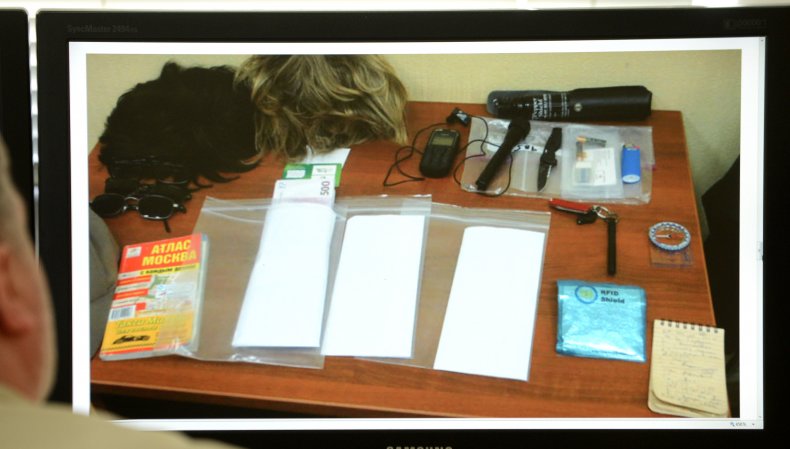
RT
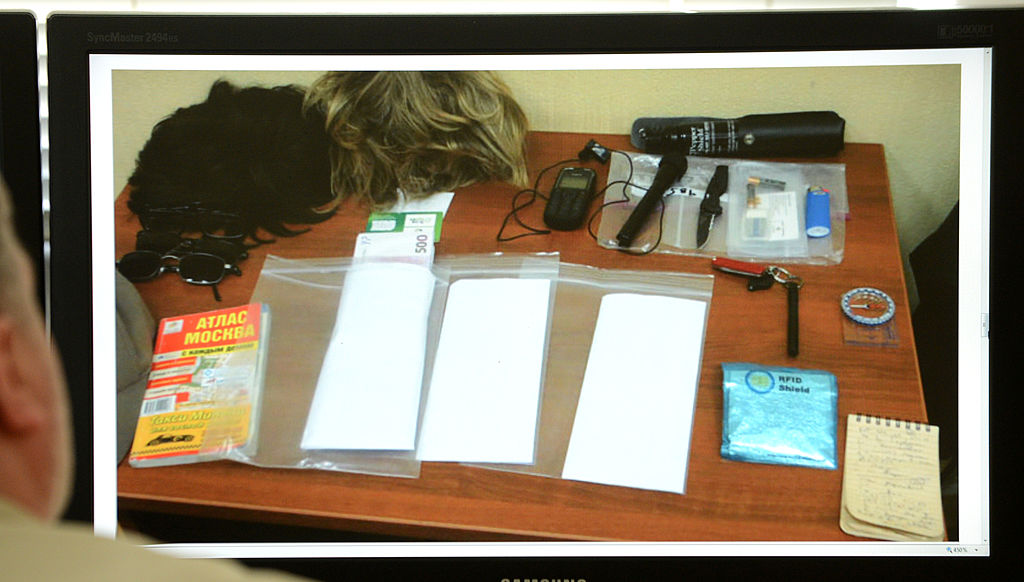
shows some of the confiscated belongings of Ryan C. Fogle, the third
secretary of the political section of Washington’s embassy in Moscow,
after he was arrested for trying to recruit a Russian intelligence
officer in 2013. (AFP via Getty Images)
I think it really does show you that despite the internet and the
fantastic growth of news media, especially all of the new online sources
— I’m talking about the Politicos, the Voxes, the Axioses—
national security remains as much a black hole as it has always been.
And, in that regard, the idea that the internet was going to create
citizen journalism, and that journalism would create more transparency,
and that transparency would lead to more democracy, has failed.
BM: You
make the point that, in a world where we are all surveilled more than
ever, to be covert requires the creation of not just false identities
but entire social networks that are false. It suggests that a lot more
of our online worlds are faker than we might imagine. Is this the case,
or am I overstating things?
WA: It probably is overstating things and
I agree with it. Let’s break it down. We live in a society right now
that’s probably in the infancy of social media — it hasn’t been around
that long. We haven’t really figured out its influence on society or the
rules of the road.
I’m against censorship of any type. I’m against Donald Trump being
censored on Twitter, I’m against Alex Jones being censored from social
media. Once we give media companies the authority and encouragement to
censor communication, then we’re going down a very bad path. Because
then, something that was probably already implicit becomes official, in
the sense there’s a sanctioned view of things, and then there’s an
unsanctioned view, and the unsanctioned view can’t even be published.
I’m against that, and the so-called “liberal” support for Facebook
and other social media companies to restrict communication that they
don’t like because it’s “false” is a practice that’s going to come back
and bite us in the ass in the future. Whether it’s President Alexandria
Ocasio-Cortez or a President Bernie Sanders in the future, it’s going to
be interesting to see if the same enthusiasm for censorship exists.
But number two, there’s a claim that I heard from many people that I
talked to when I was reporting this article, that, “Oh, you know, human
intelligence operations are actually less and less physical and more and
more online, because online is more efficient, more productive.” I
heard a lot of people living in in the newfangled world say that this
newfangled world was going to overtake the old-fashioned world. Here’s
the problem with that: we recreate the same dynamics of the trivial
being more important than the important.
It’s not like we’re going to get Vladimir Putin, or someone close to
him, to be an agent of the CIA, as a source of information and covert
action, through Twitter or Facebook or any social media platform. What
we’re going to get is a lot of shit, a lot of people who don’t have access to important information, who aren’t
really central in government and the military. Then we’re just in a
world in which, in a way, ironically, the focus of intelligence becomes
to be an influencer, for the CIA to be influencers, to have their own
channel.
Then I have to ask, well, influencing what? All of the work the NSA
did on ISIS in Syria and Iraq, did any of that have any effect? Because
as we’ve seen, though ISIS has maybe lost the physical caliphate in
Iraq, it’s growing all over the world. There’s very little evidence to
show the gigantic efforts on the part of the US government to increase
influence has achieved any goal. We’ve spent billions of dollars on
influence annually and everyone hates us.
BM: Do we have a sense of how much of the program is private companies doing the work? And how aware are they of its full scope?
WA: There
are over one hundred defense contractors, most of which are small
companies that administer signature reduction, everything from building
the gizmos that are the James Bond devices of the modern era, to
administering the organizations that are creating people’s identities,
finances, etc. So there is a cottage industry that administers signature
reduction, and it’s not just small companies but large companies like
General Dynamics, BAE Systems, and Lockheed Martin that are also
involved in this secret world.
My sense is that very few have a holistic understanding of the size
and scope. One organization or one company might be involved in
administering some small piece of this, but I found that no one can
really make sense of the overall size and scope of signature reduction
efforts and their impact.
One source that I talked to at a very high level, a retired officer
who had worked in the world of special access programs, had a very good
understanding of the size of the effort because he was overseeing that.
But, overall, most people I talked to were pretty surprised when I told
them of how many companies, how many organizations, how many people
worked undercover or availed themselves of signature reduction
techniques.
As far as I know, no one in Congress ever had a hearing on the
signature reduction effort, or the increasing clandestine nature of
military operations, and as far as I know, no one has really written
about it ever before. We’re looking at a program that, as far as I can
see, has not really gotten any oversight at all, from Congress or from
the public-policy world.
BM: In
terms of technology, there seemed to be a real contrast between, say,
some of the masks that appeared less convincing, and the incredible
sophistication of some of the other technologies, like the silicon hand
sleeves with false fingerprints.
WA: I’m
not sure that I would agree with you that one is more impressive than
the other. Impeding facial recognition, especially facial recognition at
a distance, doesn’t require Hollywood-level make up. The technology is
as good as it needs to be in order to achieve the goals they’re trying
to achieve.
In the modern era, biometrics has become more and more essential to
travel especially. And not just biometrics. For foreigners who enter the
United States, I believe they’re now asking for their social media
handles.
As identity becomes a matter of record — which is to say that the
government records your fingerprints, your signature, your social media
identity — then knowing the ecosystem of all of that is essential to be
able to thwart it. Many people I talked to were engaged in a lot of
research associated with understanding how biometrics work, the purpose
of which is to figure out a way to defeat it. If you have any knowledge
of the Cold War, for instance, you know that the superpowers engaged in
biological and chemical warfare research, always with the justification
that they weren’t able to defeat the other guys’ biological weapons
unless they themselves understood the technology.
That’s what’s going on in the world of signature reduction: if you
don’t understand how the data works, how the information goes from an
airport, to the border, back to the intelligence establishment, and so
on, how are you going to get somebody into a country, or allow them to
operate inside a country clandestinely, in a world in which facial
recognition systems, license plate readers, street cameras, doorbell
cameras, are taking images of everything of our day-to-day life?
I think what most people don’t understand about surveillance is
there’s more information than there are people who can process that
information. We have a very distorted view from television and
Hollywood. On television I can do a few keystrokes and I know the name
of your dog. In real life, even though we have ubiquitous surveillance,
most of that data, once it does its basic job — which is to tell you
there’s no danger — is more or less lost. It’s not retrievable, it’s not
put into a database. When someone enters my gate, the security camera
takes a picture and sends me an email. But that’s my own personal
system, and I don’t keep the material.
Right now, we live in a world in which there’s far more information
than there are people to process it, look at it, or store it. But we are
getting to a point where artificial intelligence and unlimited storage
will make that information more usable and useful. We are getting there.
BM: What are some of the implications, legal, political, and otherwise, of the existence of this program?
WA: First
of all, let’s remember what it’s for. It’s both a combination of the
reaction to 9/11 and the requirement to go out there and operate in
obscure parts of the world and fight terrorist organizations. And
secondly, it grew because the world transformed in the last three
decades from an analog to a digital world.
First, I think it shows you the scale and the resilience of the war
on terror. I don’t think it’s going to go away anytime soon. Second, it
shows you the transformation of the military from the World War II model
with metals, if you will, to the modern-day model with information.
While we still have battleships and bombers and tanks, they are becoming
less and less relevant. This is a window into understanding the
transformations of the future.
BM: Is
this something the US public should be concerned about, particularly
with the push for a domestic “war on terror” since January 6?
WA: The
public should always be concerned about the secret operations of the
American government, and to understand why they’re secret. Are they
merely secret because we are protecting the sources and methods
associated with essential operations, or are they secret because it’s a
bureaucracy that doesn’t want to have oversight? In the case of
signature reduction, without any information, how are we supposed to
make that determination?
I’m somebody who’s been in this world, working both inside government
and as a journalist and writer, and I’m not satisfied with the
government answer, and nor should the American public. I consider myself
their ambassador. If they don’t want to do anything about the
government, that’s unfortunate, but I want to provide them with as much
information to be able to make an informed decision.
The question that’s interesting in this world is that, as I said
earlier, we are on the cusp of understanding the social media era. I
don’t think we fully understand it. We don’t understand it in our
personal lives — hell, I go to sleep with my goddamn smartphone, and I
know there’s something very wrong with that, but I still do! So we
haven’t adjusted yet to what it means to live in this modern social
media era.
As we determine what the rules of the road are, as we determine the
psychological and social and political impacts of the social media era,
having our arms around what the government is secretly doing becomes
ever more essential. I don’t want the government out there doing secret
shit. Period.
_____________________________________________
William Arkin is a former US intelligence analyst and journalist.
Inside
the largest undercover force the world has ever known: the one created
by the Pentagon, with tens of thousands of soldiers, civilians and
contractors operating under false names, on the ground and in
cyberspace. Timothy A. Clary, AFP via Getty Images
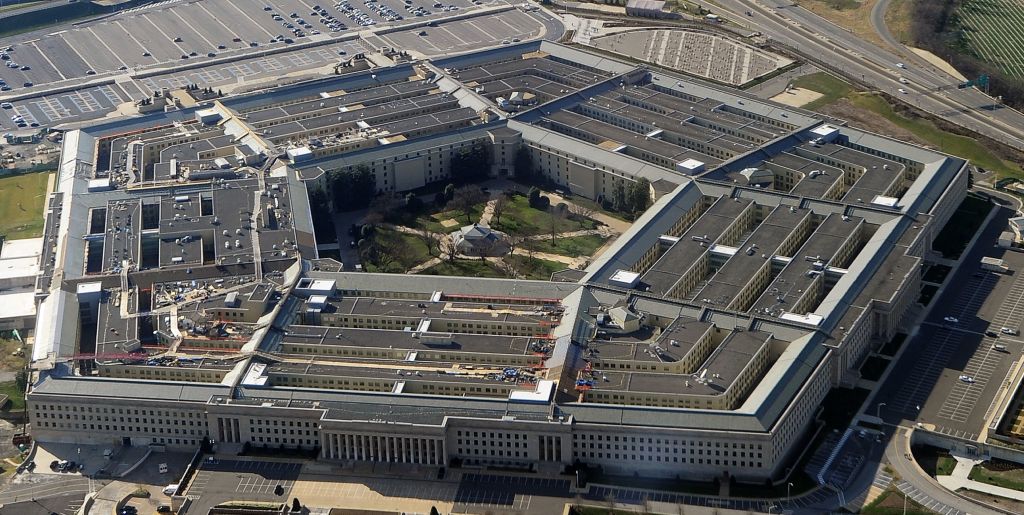
17 May 2021 – The largest undercover force the world has ever known is the one created by the Pentagon
over the past decade. Some 60,000 people now belong to this secret
army, many working under masked identities and in low profile, all part
of a broad program called “signature reduction.” The force, more than
ten times the size of the clandestine elements of the CIA,
carries out domestic and foreign assignments, both in military uniforms
and under civilian cover, in real life and online, sometimes hiding in
private businesses and consultancies, some of them household name
companies.
The unprecedented shift has placed an ever greater number of
soldiers, civilians, and contractors working under false identities,
partly as a natural result in the growth of secret special forces but
also as an intentional response to the challenges of traveling and
operating in an increasingly transparent world. The explosion of
Pentagon cyber warfare, moreover, has led to thousands of spies who
carry out their day-to-day work in various made-up personas, the very
type of nefarious operations the United States decries when Russian and
Chinese spies do the same.
Newsweek’s exclusive report on this secret world is the
result of a two-year investigation involving the examination of over 600
resumes and 1,000 job postings, dozens of Freedom of Information Act
requests, and scores of interviews with participants and defense
decision-makers. What emerges is a window into not just a little-known
sector of the American military, but also a completely unregulated
practice. No one knows the program’s total size, and the explosion of
signature reduction has never been examined for its impact on military
policies and culture. Congress
has never held a hearing on the subject. And yet the military
developing this gigantic clandestine force challenges U.S. laws, the
Geneva Conventions, the code of military conduct and basic
accountability.
The signature reduction effort engages some 130 private companies to
administer the new clandestine world. Dozens of little known and secret
government organizations support the program, doling out classified
contracts and overseeing publicly unacknowledged operations. Altogether
the companies pull in over $900 million annually to service the
clandestine force—doing everything from creating false documentation and
paying the bills (and taxes) of individuals operating under assumed
names, to manufacturing disguises and other devices to thwart detection
and identification, to building invisible devices to photograph and
listen in on activity in the most remote corners of the Middle East and
Africa.
Special operations forces constitute over half the entire signature
reduction force, the shadow warriors who pursue terrorists in war zones
from Pakistan to West Africa but also increasingly work in
unacknowledged hot spots, including behind enemy lines in places like
North Korea and Iran. Military intelligence specialists—collectors,
counter-intelligence agents, even linguists—make up the second largest
element: thousands deployed at any one time with some degree of “cover”
to protect their true identities.
The newest and fastest growing group is the clandestine army that
never leaves their keyboards. These are the cutting-edge cyber fighters
and intelligence collectors who assume false personas online, employing
“nonattribution” and “misattribution” techniques to hide the who and the
where of their online presence while they search for high-value targets
and collect what is called “publicly accessible information”—or even
engage in campaigns to influence and manipulate social media. Hundreds
work in and for the NSA,
but over the past five years, every military intelligence and special
operations unit has developed some kind of “web” operations cell that
both collects intelligence and tends to the operational security of its
very activities.
In the electronic era, a major task of signature reduction is keeping
all of the organizations and people, even the automobiles and aircraft
involved in the clandestine operations, masked. This protective effort
entails everything from scrubbing the Internet of telltale signs of true
identities to planting false information to protect missions and
people. As standard unforgettable identification and biometrics have
become worldwide norms, the signature reduction industry also works to
figure out ways of spoofing and defeating everything from fingerprinting
and facial recognition at border crossings, to ensuring that undercover
operatives can enter and operate in the United States, manipulating
official records to ensure that false identities match up.
Just as biometrics and “Real ID” are the enemies of clandestine work,
so too is the “digital exhaust” of online life. One major concern of
counter-terrorism work in the ISIS
age is that military families are also vulnerable—another reason,
participants say, to operate under false identities. The abundance of
online information about individuals (together with some spectacular
foreign hacks) has enabled foreign intelligence services to better
unmask fake identities of American spies. Signature reduction is thus at
the center of not only counter-terrorism but is part of the Pentagon’s
shift towards great power competition with Russia and China—competition,
influence, and disruption “below the level of armed conflict,” or what
the military calls warfare in the “Gray Zone,” a space “in the
peace-conflict continuum.”
One recently retired senior officer responsible for overseeing
signature reduction and super-secret “special access programs” that
shield them from scrutiny and compromise says that no one is fully aware
of the extent of the program, nor has much consideration been given to
the implications for the military institution. “Everything from the
status of the Geneva Conventions—were a soldier operating under false
identity to be captured by an enemy—to Congressional oversight is
problematic,” he says. He worries that the desire to become more
invisible to the enemy not just obscures what the United States is doing
around the world but also makes it more difficult to bring conflicts to
a close. “Most people haven’t even heard of the term signature
reduction let alone what it creates,” he says. The officer spoke on
condition of anonymity because he is discussing highly classified
matters.
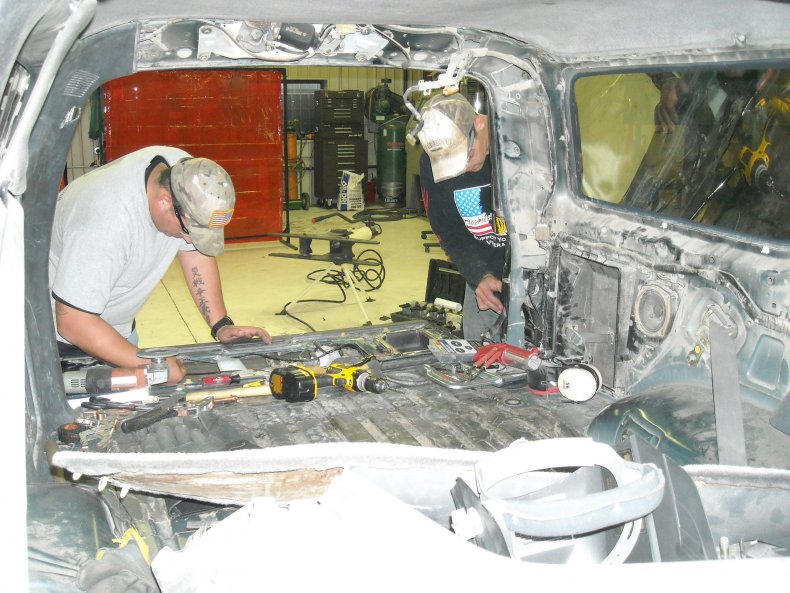
Military
operators hollowing out the rear of an SUV from Syria to install the
power and cabling to turn the seemingly normal vehicle into a close-in
intercept platform, able to eavesdrop on cell phone and walkie-talkie
signals. (Photo provided to William M. Arkin)W. M. Arkin
The secret life of Jonathan Darby
Every morning at 10:00 a.m., Jonathan Darby embarks on his weekly
rounds of mail call. Darby is not his real name, but it is also not the
fake name on his Missouri driver’s license that he uses to conduct his
work. And the government car he drives, one of a fleet of over 200,000
federal vehicles owned by the General Services Administration, is also
not registered in his real or his fake name, and nor are his
magnetically attached Maryland state license plates really for his car,
nor are they traceable back to him or his organization. Where Darby
works and the locations he visits are also classified.
Darby’s retired from the Army, and he asks that neither his real nor
his cover name be used. He served for 20 years in counterintelligence,
including two African assignments where he operated in low profile in
Ethiopia and Sudan, masquerading as an expat businessman. Now he works
for a Maryland-based signature reduction contractor that he asked Newsweek not to identify.
As Darby makes his rounds to some 40 or so post offices and
storefront mailbox stores in the DC Metropolitan area, he picks up a
trunk full of letters and packages, mailing a similar number from rural
addresses. Back at the office, he sorts through the take, delivering
bills to the finance people and processing dozens of personal and
business letters mailed from scores of overseas locations. But his main
task is logging and forwarding the signature reduction “mechanisms” as
they are called, passports and State driver’s licenses for people who
don’t exist, and other papers—bills, tax documents, organization
membership cards—that form the foundation of fake identities.
To register and double-check the authenticity of his daily take,
Darby logs into two databases, one the Travel and Identity Document
database, the intelligence community’s repository of examples of 300,000
genuine, counterfeit and altered foreign passports and visas; and the
other the Cover Acquisition Management System, a super-secret register
of false identities where the “mechanisms” used by clandestine operators
are logged. For false identities traveling overseas, Darby and his
colleagues also have to alter databases of U.S. immigration and customs
to ensure that those performing illicit activities can return to the
United States unmolested.
For identity verification, Darby’s unit works with secret offices at
Homeland Security and the State Department as well as almost all 50
states in enrolling authentic “mechanisms” under false names. A rare
picture into this world came in April 2013 when an enterprising reporter
at Northwest Public Broadcasting did a story suggesting the scale of
this secret program. His report revealed that the state of Washington
alone had provided hundreds of valid state driver licenses in fictitious
names to the federal government. The existence of the “confidential
driver license program,” as it was called, was unknown even to the
governor.
Before the Internet, Darby says—before a local cop or a border guard
was connected to central databases in real time—all an operative needed
to be “undercover” was an ID with a genuine photo. These days, however,
especially for those operating under deep cover, the so-called “legend”
behind an identity has to match more than just a made-up name. Darby
calls it “due diligence”: the creation of this trail of fake existence.
Fake birthplaces and home addresses have to be carefully researched,
fake email lives and social media accounts have to be created. And those
existences need to have corresponding “friends.” Almost every
individual unit that operates clandestinely—special operations,
intelligence collections, or cyber—has a signature reduction section,
mostly operated by small contractors, conducting due diligence. There
they adhere to what Darby calls the six principles of signature
reduction: credibility, compatibility, realism, supportability, verity
and compliance.
Compliance is a big one, Darby says, especially because of the world
that 9/11 created, where checkpoints are common and nefarious activity
is more closely scrutinized. To keep someone covert for real, and to do
so for any period of time, requires a time consuming dance that not only
has to tend to someone’s operational identity but also maintain their
real life back home. As Darby explains it, this includes clandestine
bill paying but also working with banks and credit card security
departments to look the other way as they search for identity fraud or
money laundering. And then, signature reduction technicians need to
ensure that real credit scores are maintained—and even real taxes and
Social Security payments are kept up to date—so that people can go back
to their dormant lives when their signature reduction assignments cease.
Darby’s unit, originally called the Operational Planning and Travel
Intelligence Center, is responsible for overseeing much of this (and to
do so it operates the Pentagon’s largest military finance office), but
documentation—as important as it is—is only one piece of the puzzle.
Other organizations are responsible for designing and manufacturing the
custom disguises and “biometric defeat” elements to facilitate travel.
Darby says this is where all the Special Access Programs are. SAPs, the
most secret category of government information, protect the methods
used—and the clandestine capabilities that exist—to manipulate foreign
systems to get around seemingly foolproof safeguards including
fingerprinting and facial recognition.
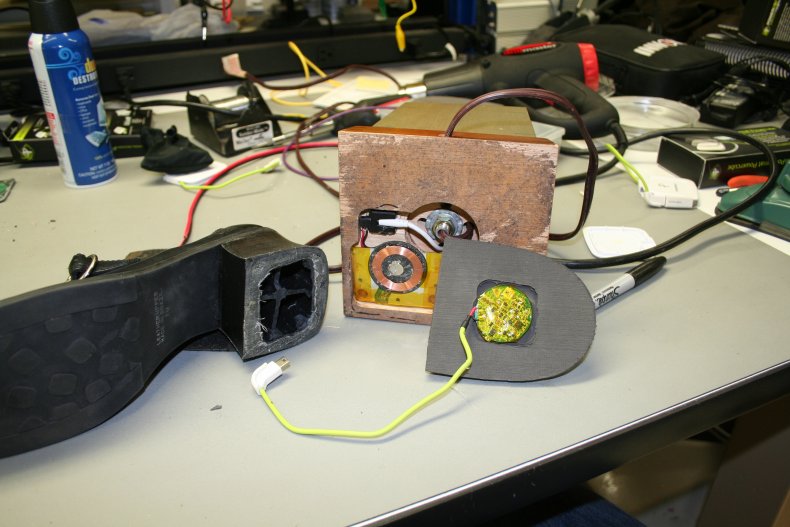
Tracking
device being implanted in the heel of a shoe. In the background is the
base of a lamp, also with an implanted listening device. (Photo provided
to William M. Arkin)W.M. Arkin
‘Signature reduction’ is a term of art
Numerous signature reduction SAPs, programs with names like Hurricane
Fan, Island Hopper and Peanut Chocolate, are administered by a shadowy
world of secret organizations that service the clandestine army—the
Defense Programs Support Activity, Joint Field Support Center, Army
Field Support Center, Personnel Resources Development Office, Office of
Military Support, Project Cardinals, and the Special Program Office.
Befitting how secret this world is, there is no unclassified
definition of signature reduction. The Defense Intelligence Agency—which
operates the Defense Clandestine Service and the Defense Cover
Office—says that signature reduction is a term of art, one that
“individuals might use to … describe operational security (OPSEC)
measures for a variety of activities and operations.” In response to Newsweek
queries that point out that dozens of people have used the term to
refer to this world, DIA suggests that perhaps the Pentagon can help.
But the responsible person there, identified as a DOD spokesperson, says
only that “as it relates to HUMINT operations”—meaning human
intelligence— signature reduction “is not an official term” and that it
is used to describe “measures taken to protect operations.”
Another senior former intelligence official, someone who ran an
entire agency and asks not to be named because he is not authorized to
speak about clandestine operations, says that signature reduction exists
in a “twilight” between covert and undercover. The former, defined in
law, is subject to presidential approval and officially belongs to the
CIA’s National Clandestine Service. The latter connotes strictly law
enforcement efforts undertaken by people with a badge. And then there is
the Witness Protection Program, administered by the U.S. Marshals
Service of the Justice Department, which tends to the fake identities
and lives of people who have been resettled in exchange for their
cooperation with prosecutors and intelligence agencies.
The military doesn’t conduct covert operations, the senior former
official says, and military personnel don’t fight undercover. That is,
except when they do, either because individuals are assigned—”sheep
dipped”—to the CIA, or because certain military organizations,
particularly those of the Joint Special Operations Command, operate like
the CIA, often alongside them in covert status, where people who depend
on each other for their lives don’t know each other’s real names. Then
there are an increasing number of government investigators—military, FBI,
homeland security and even state officials—who are not undercover per
se but who avail themselves of signature reduction status like fake IDs
and fake license plates when they work domestically, particularly when
they are engaged in extreme vetting of American citizens of Arab, South
Asian, and increasingly African background, who have applied for
security clearances.
‘Get Smart’?
In May 2013, in an almost comical incident more reminiscent of “Get
Smart” than skilled spying, Moscow ordered a U.S. embassy “third
secretary” by the name of Ryan Fogle to leave the country, releasing
photos of Fogle wearing an ill-fitting blond wig and carrying an odd
collection of seemingly amateurish paraphernalia—four pairs of
sunglasses, a street map, a compass, a flashlight, a Swiss Army knife
and a cell phone—so old, one article said, it looked like it had “been
on this earth for at least a decade.”
Sophisticated
spycraft or “Get Smart”? On May 14, 2013, a computer screen in Moscow
displays a photo published by the Russian state RT website, which shows
some of the confiscated belongings of Ryan C. Fogle, the third secretary
of the political section of Washington’s embassy in Moscow, being
displayed at the Federal Security Service after his arrest.AFP/Getty Images
The international news media had a field day, many retired CIA people
decrying the decline of tradecraft, most of the commentary opining how
we’d moved on from the old world of wigs and fake rocks, a reference to
Great Britain admitting just a year earlier that indeed it was the owner
of a fake rock and its hidden communications device, another discovery
of Russian intelligence in Moscow.
Six years later, another espionage case hit the news, this time when a
jury sent former American military intelligence officer Kevin Patrick
Mallory to 20 years in prison for conspiring to sell secrets to China.
There was nothing particularly unique about the Mallory case, the
prosecution making its own show of presenting the jury with a collection
of wigs and fake mustaches looking like Halloween costumes, the whole
thing seemingly another funny episode of clumsy disguise.
And yet, says Brenda Connolly (not her real name), one would be naïve
to laugh too hard, for both cases provide a peek into the new tricks of
the trade and the extreme secrecy that hides them. Connolly started her
engineering career at the Directorate of Science and Technology at the
CIA and now works for a small defense contractor that produces the
gizmos—think “Q” in the James Bond movies, she says—for signature
reduction operations.
That “ancient” Nokia phone carried by Ryan Fogle, she says, was
nothing of the sort, the innocuous outsides concealing what she calls a
“covert communications” device inside. Similarly, entered in evidence in
Mallory case was a Samsung phone given to him by Chinese intelligence
that was so sophisticated that even when the FBI cloned it
electronically, they could not find a hidden partition used to store
secrets and one that Mallory ultimately had to reveal to them.
Lost in the spy-vs-spy theater of both cases were other clues of
modern signature reduction, Connolly says. Fogle also carried an RFID
shield, a radio frequency identification blocking pouch intended to
prevent electronic tracking. And Mallory had vials of fake blood
provided by China; Connolly would not reveal what it would be used for.
Like many people in this world, Connolly is a connoisseur and
curator. She can talk for hours about the broadcasts that used to go out
from the Soviet Union—but also were transmitted from Warrenton,
Virginia—female voices reciting random numbers and passages from books
that agents around the world would pick up on their shortwave radios and
match to prearranged codes.
But then Internet cafes and online backdoors became the clandestine
channels of choice for covert communications, largely replacing
shortwave—until the surveillance technologies (especially in autocratic
countries) caught up and intelligence agencies acquired an ability not
only to detect and intercept internet activity but also to intercept
every keystroke of activity on a remote keyboard. That ushered in
today’s world of covert communications or COVCOMM, as insiders call it.
These are very special encryption devices seen in the Fogle and Mallory
cases, but also dozens of different “burst mode” transmitters and
receivers secreted in everyday objects like fake rocks. All an agent or
operator needs to activate communications with these COVCOMMs in some
cases is to simply walk by a target receiver (a building or fake rock)
and the clandestine messages are encrypted and transmitted back to
special watch centers.
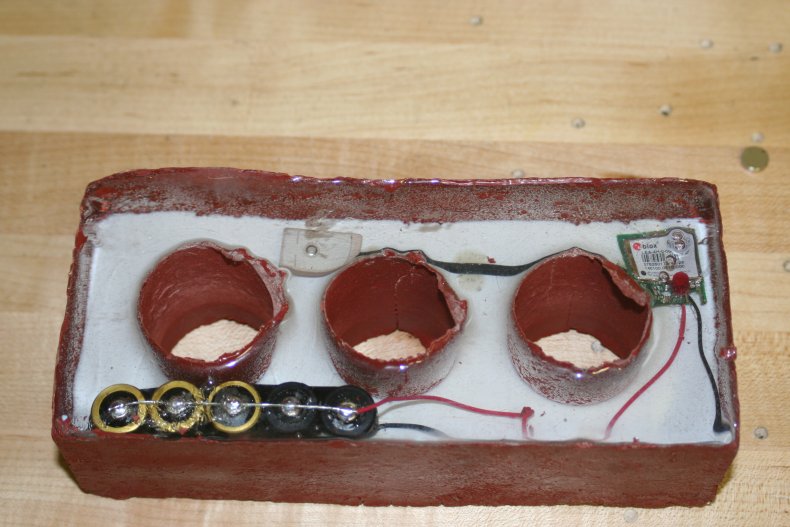
Covert
communication (COVCOMM) device. Fake brick implanted with
battery-powered listening device, used in “close in” reconnaissance work
in Afghanistan. Photo provided to William M. Arkin.W.M. Arkin
“And who do you think implants those devices?” Connolly asks
rhetorically. “Military guys, special ops guys working to support even
more secretive operations.” Connolly talks about heated fabrics that
make soldiers invisible to thermal detection, electric motorcycles that
can silently operate in the roughest terrain, even how tens of feet of
wires are sown into “native” clothing, the South Asian shalwar kameez,
the soldiers themselves then becoming walking receivers, able to
intercept nearby low-power radios and even cell phone signals.
Fake hands, fake faces
Wigs. Covert communications devices. Fake rocks. In our world of
electronic everything, where everything becomes a matter of record,
where you can’t enter a parking garage without the license plate being
recorded, where you can’t check in for a flight or a hotel without a
government issued ID, where you can’t use a credit card without the
location being captured, how can biometrics can be defeated? How can
someone get past fingerprint readers?
In 99 out of 100 cases, the answer is: there is no need to. Most
signature reduction soldiers travel under real names, exchanging
operational identities only once on the ground where they operate. Or
they infiltrate across borders in places like Pakistan and Yemen,
conducting the most dangerous missions. These signature reduction
missions are the most highly sensitive and involve “close in”
intelligence collection or the use of miniaturized enemy tracking
devices, each existing in their own special access programs—missions
that are so sensitive they have to be personally approved by the
Secretary of Defense.
For the one percent, though, for those who have to make it through
passport control under false identities, there are various biometrics
defeat systems, some physical and some electronic. One such program was
alluded to in a little noticed document dump published by Wikileaks
in early 2017 and called “Vault 7”: over 8,000 classified CIA tools
used in the covert world of electronic spying and hacking. It is called
ExpressLane, where U.S. intelligence has embedded malware into foreign
biometrics and watchlist systems, allowing American cyber spies to steal
foreign data.
An IT wizard working for Wikileaks in Berlin says the code with
ExpressLane suggests that the United States can manipulate these
databases. “Imagine for a moment that someone is going through passport
control,” he says, hesitant to use his real name because of fear of
indictment in the United States. “NSA or the CIA is tasked to
corrupt—change—the data on the day the covert asset goes through. And
then switch it back. It’s not impossible.”
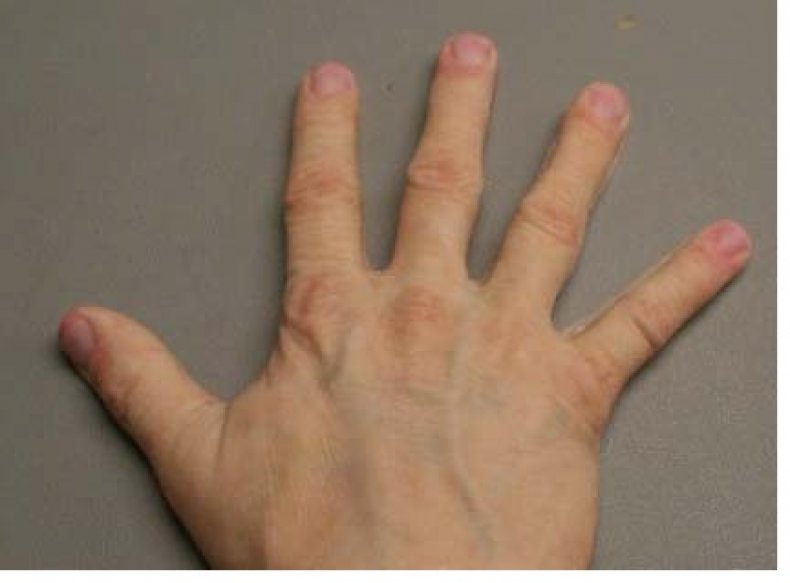
A manufactured silicon hand sleeve, used to evade fingerprinting and to
create fake identities for clandestine travelers. (Photo provided to
William M. Arkin)W. M. Arkin
Another source pointed to a small rural North Carolina company in the
signature reduction industry, mostly in the clandestine collection and
communications field. In the workshop and training facility where they
teach operators how to fabricate secret listening devices into everyday
objects, they are at the cutting edge, or so their promotional materials
say, a repository for molding and casting, special painting, and
sophisticated aging techniques.
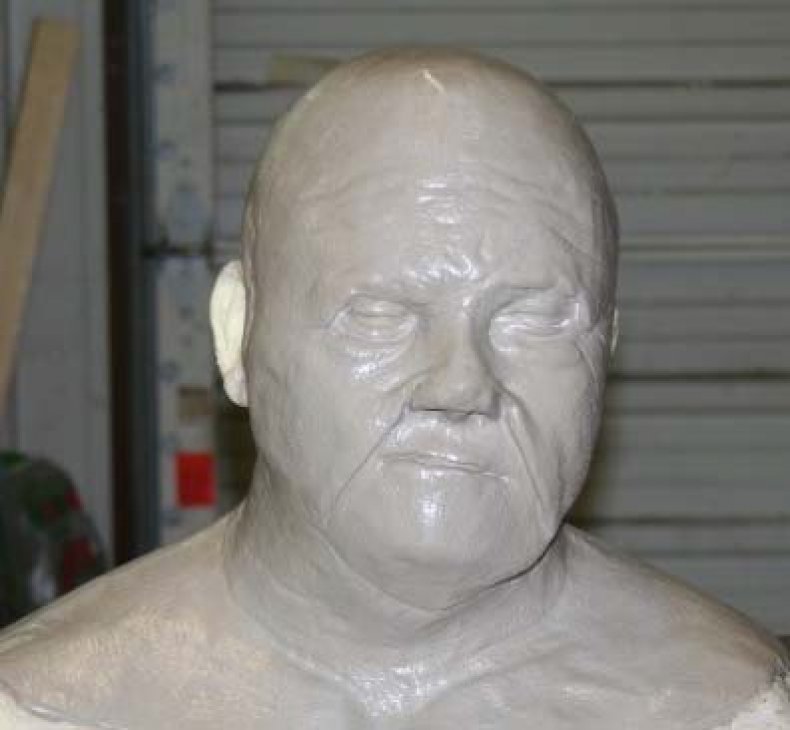
Behind
the mask: The signature reduction mold for an aging mask, used to
completely alter the appearance of an operative. (Photo provided to
William M. Arkin)W. M. Arkin
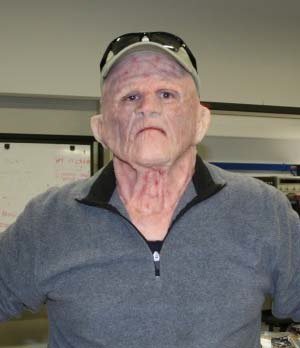
This quiet company can transform any object, including a person, as
they do in Hollywood, a “silicon face appliance” sculpted to perfectly
alter someone’s looks. They can age, change gender, and “increase body
mass,” as one classified contract says. And they can change fingerprints
using a silicon sleeve that so snugly fits over a real hand it can’t be
detected, embedding altered fingerprints and even impregnated with the
oils found in real skin. Asked whether the appliance is effective, one
source, who has gone through the training, laughs. “If I tell you, I’ll
have to kill you.”
Not his face: Special operations undercover
operative wearing signature reduction aging mask to match false
identification. (Photo provided to William M. Arkin)W.M. Arkin
In real life, identity theft (mostly by criminals’ intent on profit)
remains an epidemic that affects everyone, but for those in the
intelligence and counter-terrorism worlds, the enemy is also actively
engaged in efforts to compromise personal information. In 2015, the
Islamic State posted the names, photos and addresses of over 1,300 U.S. military
personnel, instructing supporters to target and kill the identified
individuals. The FBI said that the release was followed by suspected
Russian hackers who masqueraded as members of ISIS and threatened
military families through Facebook. “We know everything about you, your husband and your children,” one menacing message said.
Counterintelligence and OPSEC officials began a large-scale effort to
inform those affected but also to warn military personnel and their
families to better protect their personal information on social media.
The next year, ISIS released 8,318 target names: the largest-ever
release until it was topped by 8,785 names in 2017.
It was revealed that military personnel sharing location information
in their fitness devices were apparently revealing the locations of
sensitive operations merely by jogging and sharing their data. “The
rapid development of new and innovative information technologies
enhances the quality of our lives but also poses potential challenges to
operational security and force protection,” U.S. Central Command said
in a statement at the time to the Washington Post.
Then came the DNA scare, when Adm. John Richardson, then chief of
naval operations, warned military personnel and their families to stop
using at-home ancestry DNA test kits. “Be careful who you send your DNA
to,” Richardson said, warning that scientific advancements would be able
to exploit the information, creating more and more targeted biological
weapons in the future. And indeed in 2019, the Pentagon officially
advised military personnel to steer clear of popular DNA services.
“Exposing sensitive genetic information to outside parties poses
personal and operational risks to Service members,” said the memo, first
reported by Yahoo news.
“We’re still in the infancy of our transparent world,” says the
retired senior officer, cautioning against imagining that there is some
“identity gap” similar to the “bomber gap” of the Cold War. “We’re
winning this war, including on the cyber side, even if secrecy about
what we are doing makes the media portrayal of the Russians again look
like they are ten feet tall.”
He admits that processing big data in the future will likely further
impinge on everyone’s clandestine operations, but he says the benefits
to society, even narrowly in just making terrorist activity and travel
that much more difficult, outweigh the difficulties created for military
operational security. The officer calls the secrecy legitimate but says
that the Defense Department leadership has dropped the ball in
recognizing the big picture. The military services should be asking more
questions about the ethics, propriety and even legality of soldiers
being turned into spies and assassins, and what this means for the
future.
Still, the world of signature reduction keeps growing: evidence, says
the retired officer, that modern life is not as transparent as most of
us think.
The
Defense Programs Support Activity, also known as the Operational
Planning and Travel Intelligence Center, one of the epicenters for
signature reduction administration. (photo provided to William M. Arkin)W.M. Arkin
________________________________________________
William
M. Arkin has been working in the field of national security for almost
50 years, as an Army intelligence analyst, activist, author,
journalist, academic and consultant. He has authored or coauthored more
than a dozen books, two of them (Top Secret America and Nuclear Battlefields) national best sellers. He is the recipient of numerous journalism awards and his articles have appeared on the front pages of The Washington Post, The New York Times, and The Los Angeles Times. He has written numerous cover stories for Newsweek magazine. And he served for decades as an analyst for NBC until 2019, when he quit over the network’s increasing militarism under Trump.
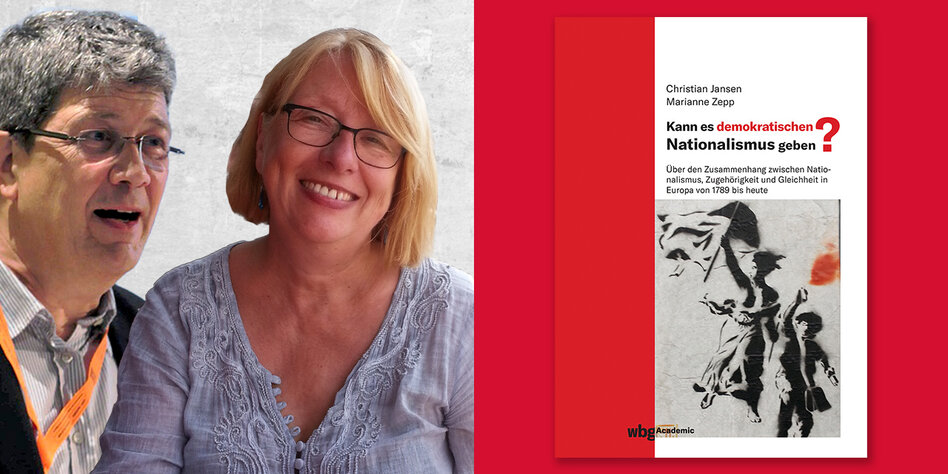
Über die Widersprüche zwischen Demokratie und Nationalismus haben die Historiker*innen Marianne Zepp und Christian Jansen
einen Band unter dem Titel „Kann es einen demokratischen Nationalismus
geben?“ herausgegeben. Im taz Talk mit den beiden Autor*innen soll
dieses Spannungsfeld zwischen demokratischen Ideen von Gleichheit und
der Einteilung der Menschen in Nationen ausgelotet werden. Welche Arten
von Nationalismus lassen sich besser mit Demokratie vereinbaren?
Marianne Zepp hat als Referentin für Zeitgeschichte bei der Heinrich Böll-Stiftung, u.a. in Israel, gearbeitet.
Christian Jansen ist Professor für Neuere Geschichte an der Universität Trier.
















 Post
Post

