Come ridurre la popolazione mondiale: chiudere la produzione industriale di cibo. C'e' crisi, no?


A Sinister Agenda Behind California Water Crisis? Looming Food Supply Catastrophe

Region:
 45
 7  7
 
 97

In recent months a crisis situation in the USA food supply has been growing and is about to assume alarming dimensions that could become catastrophic.

Atop the existing corona pandemic lockdowns and unemployment, a looming agriculture crisis as well could tip inflation measures to cause a financial crisis as interest rates rise.
.
The ingredients are many, but central is asevere drought in key growing states of the Dakotas and Southwest, including agriculture-intensive California. So far Washington has done disturbingly little to address the crisis and California Water Board officials have been making the crisis far worse by draining the state water reservoirs…into the ocean.

So far the worst hit farm state is North Dakota which grows most of the nation’s Red Spring Wheat. In the Upper Midwest, the Northern Plains states and the Prairie provinces of Canada winter brought far too little snow following a 2020 exceedingly dry summer. The result is drought from Manitoba Canada to the Northern USA Plains States. This hits farmers in the region just four years after a flash drought in 2017 arrived without early warning and devastated the US Northern Great Plains region comprising Montana, North Dakota, South Dakota, and the adjacent Canadian Prairies.

CAL512341

As of May 27, according to Adnan Akyuz, State Climatologist, ninety-three percent of the North Dakota state is in at least a Severe Drought category, and 77% of the state is in an Extreme Drought category. Farm organizations predict unless the rainfall changes dramatically in the coming weeks, the harvest of wheat widely used for pasta and flour will be a disaster. The extreme dry conditions extend north of the Dakota border into Manitoba, Canada, another major grain and farming region, especially for wheat and corn. There, the lack of rainfall and warmer-than-normal temperatures threaten harvests, though it is still early for those crops. North Dakota and the plains region depend on snow and rainfall for its agriculture water.

Southwest States in Severe Drought

While not as severe, farm states Iowa and Illinois are suffering “abnormally dry” conditions in 64% for Iowa and 27% for Illinois. About 55% of Minnesota is abnormally dry as of end May. Drought is measured in a scale from D1 “abnormally dry,” D3 “severe drought” to D4, “exceptional drought.”

The severe dry conditions are not limited, unfortunately, to North Dakota or other Midwest farm states. A second region of very severe drought extends from western Texas across New Mexico, Colorado, Arizona, Nevada and deep into California. In Texas 20% of the state is in “severe drought,” and 12% “extreme drought.” Nearly 6% of the state is experiencing “exceptional drought,” the worst. New Mexico is undergoing 96% “severe drought,” and of that, 47% “exceptional drought.”

California Agriculture is Vital

The situation in California is by far the most serious in its potential impact on the supply of agriculture products to the nation. There, irrigation and a sophisticated water storage system provide water for irrigation and urban use to the state for their periodic dry seasons. Here a far larger catastrophe is in the making. A cyclical drought season is combining with literally criminal state environmental politics, to devastate agriculture in the nation’s most important farm producing state. It is part of a radical Green Agenda being advocated by Gov. Gavin Newsom and fellow Democrats to dismantle traditional agriculture, as insane as it may sound.

Few outside California realize that the state most known for Silicon Valley and beautiful beaches is such a vital source of agriculture production. California’s agricultural sector is the most important in the United States, leading the nation’s production in over 77 different products including dairy and a number of fruit and vegetable “specialty” crops. The state is the only producer of crops such as almonds, artichokes, persimmons, raisins, and walnuts. California grows a third of the country’s vegetables and two thirds of the country’s fruits and nuts. It leads all other states in farm income with77,500 farms and ranches. It also is second in production of livestock behind Texas, and its dairy industry is California’s leading commodity in cash receipts. In total, 43 million acres of the state’s 100 million acres are devoted to agriculture. In short what happens here is vital to the nation’s food supply.

California Crisis Manmade: Where has the water gone?

The water crisis in California is far the most serious in terms of consequences for the food supply, in a period when the US faces major supply chain disruptions owing to absurd corona lockdowns combined with highly suspicious hacks of key infrastructure. On May 31, the infrastructure of the world’s largest meat processor, JBS SA, was hacked, forcing the shutdown of all its US beef plants that supply almost a quarter of American beef.

The Green lobby is asserting, while presenting no factual evidence, that Global Warming, i.e. increased CO2 manmade emission, is causing the drought. The NOAA examined the case and found no evidence. But the media repeats the narrative to advance the Green New Deal agenda with frightening statements such as claiming the drought is, “comparable to the worst mega-droughts since 800 CE.”

After 2011, California underwent a severe seven year drought. The drought ended in 2019 as major rains filled the California reservoir system to capacity. According to state water experts the reservoirs held enough water to easily endure at least a five-year drought. Yet two years later, the administration of Governor Newsom is declaring a new drought and threatening emergency measures. What his Administration is not saying is that the State Water Board and relevant state water authorities have been deliberately letting water flow into the Pacific Ocean. Why? They say to save two endangered fish species that are all but extinct—one, a rare type of Salmon, the second a Delta Smelt, a tiny minnow-size fish of some 2” size which has all but disappeared.

In June 2019 Shasta Dam, holding the state’s largest reservoir as a keystone of the huge Central Valley Project, was full to 98% of capacity. Just two years later in May 2021 Shasta Lake reservoir held a mere 42% of capacity, almost 60% down. Similarly, in June 2019 Oroville Dam reservoir, the second largest, held water at 98% of capacity and by May 2021 was down to just 37%. Other smaller reservoirs saw similar drops. Where has all the water gone?

Allegedly to “save” these fish varieties, during just 14 days in May, according to Kristi Diener, a California water expert and farmer, “90% of (Bay Area) Delta inflow went to sea. It’s equal to a year’s supply of water for 1 million people.” Diener has been warning repeatedly in recent years that water is unnecessarily being let out to sea as the state faces a normal dry year. She asks, “Should we be having water shortages in the start of our second dry year? No. Our reservoirs were designed to provide a steady five year supply for all users, and were filled to the top in June 2019.”

In 2008, at the demand of environmental groups such as the NRDC, a California judge ordered that the Central Valley Water project send 50% of water reservoirs to the Pacific Ocean to “save” an endangered salmon variety, even though the NGO admitted that no more than 1,000 salmon would likely be saved by the extreme measure. In the years 1998-2005 an estimated average of 49% of California managed water supply went to what is termed the “environment,” including feeding into streams and rivers, to feed estuaries and the Bay Area Delta. Only 28% went directly to maintain agriculture water supplies.

This past January Felicia Marcus, the chair of the California State Water Resources Control Board, who oversaw the controversial water policies since 2018, left at the end of her term to become an attorney for the Natural Resources Defense Council (NRDC) one of the most powerful green NGO’s, with a reported $400 million in resources to wage legal battles to defend “endangered species” such as the California salmon and the Delta Smelt.

Appointed by green Gov. Jerry Brown as chair of the State Water Board in 2018, Marcus is directly responsible for the draining of the reservoirs into the ocean after they filled in 2019, using the claim of protecting endangered species. In March 2021 with Marcus as attorney, the NRDC requested that the State Water Resources Control Board Marcus headed until recently, take “immediate action” to address perceived threats to listed salmon in the Sacramento River watershed from Central Valley Project (“CVP”) operationsThis as the state is facing a new drought emergency?

In 2020 Gov. Gavin Newsom, a protégé of Jerry Brown, signed Senate Bill 1, the California Environmental, Public Health and Workers Defense Act, which would send billions of gallons of water out to the Pacific Ocean, ostensibly to save more fish. It was a cover for manufacturing the present water crisis and specifically attacking farming, as incredible as it may seem.

Target Agriculture

The true agenda of the Newsom and previous Brown administrations is to radically undermine the highly productive California agriculture sector. Gov. Newsom has now introduced an impressive-sounding $5.1 billion Drought Relief bill. Despite its title, nothing will go to improve the state reservoir water availability for cities and farms. Of the total, $500 million will be spent on incentives for farmers to “re-purpose” their land, that is to stop farming. Suggestions include wildlife habitat, recreation, or solar panels! Another $230 million will be used for “wildlife corridors and fish passage projects to improve the ability of wildlife to migrate safely.” “Fish passage projects” is a clever phrase for dam removal, destroying the nation’s most effective network of reservoirs.

Then the Newson bill allocates $300 million for the Sustainable Groundwater Management Act implementation, a 2014 law from Jerry Brown amid the previous severe drought to prevent farmers in effect from securing water from drilling wells. The effect will be to drive more farmers off the land. And another $200 million will go to “habitat restoration,” supporting tidal wetland, floodplains, and multi-benefit flood-risk reduction projects—a drought package with funding for floods? This is about recreating flood plains so when they demolish the dams, the water has someplace to go. The vast bulk of the $500 billion is slated to reimburse water customers from the previous 2011-2019 drought from higher water bills, a move no doubt in hopes voters will look positively on Newsom as he faces likely voter recall in November.

The systematic dismantling of one of the world’s most productive agriculture regions, using the seductive mantra of “environmental protection,” fits into the larger agenda of the Davos Great Reset and its plans to radically transform world agriculture into what the UN Agenda 2030 calls “sustainable” agriculture—no more meat protein. The green argument is that cows are a major source of methane gas emissions via burps. How that affects global climate no one has seriously proven. Instead we should eat laboratory-made fake meat like the genetically-manipulated Impossible Burger of Bill Gates and Google, or even worms. Yes. In January the EU European Food Safety Agency (EFSA), approved mealworms , or larvae of the darkling beetle, as the first “novel food” cleared for sale across the EU. 

F. William Engdahl is strategic risk consultant and lecturer, he holds a degree in politics from Princeton University and is a best-selling author on oil and geopolitics, exclusively for the online magazine “New Eastern Outlook”.

F. William Engdahl is a Research Associate of the Centre for Research on Globalization (C RG)

Corso di educazione all'autoritarismo


The Manipulated Human Being Is Capable of Anything, Except Saying NO.

I appeal to you, it is high time to say NO!

 1
 0  0
 
 1

All Global Research articles can be read in 51 languages by activating the “Translate Website” drop down menu on the top banner of our home page (Desktop version). 

Visit and follow us on Instagram at @crg_globalresearch.

***

Dear fellow citizens, do not march along again as the citizens of Germany marched along with Hitler in the 1930s and 1940s.

Say NO to the machinations of the new dictators and their accomplices. These have already begun to “thin out” humanity with their Corona emergency measures and killer vaccines and plunge it into economic and social chaos. Educate yourself in the alternative media so that you know about the gigantic deception of humanity regarding the Covid-19 virus.

Although more and more of this is coming to light, these psychopaths will not let up and will continue to try to push through their plans. The current psychological warfare is only the prelude to the next diabolical move, the “no-alternative” decimation and absolute control of humanity due to a trumped-up climate crisis. Read the well-founded articles of  expert colleagues.

The manipulated human being marches along with the dictators

For a long time, mankind has lived by believing what the priest and the church said. New thoughts were not allowed, they were punished. For some centuries now, we have had the time of reason. But what does this time of reason look like?

There is still murder, violence, manslaughter and dictatorships.

And how have people reacted to these dictatorships? In Hitler’s Germany – as in other dictatorships – wasn’t everyone in on it: the workers, the employees, the Reds, the Blacks, the psychologists, the philosophers, the churchmen? Everyone marched along with Hitler – except for a few personalities who did not want to join in. Violence lived in society – and it still lives today. We breathe the violence. And again, the overwhelming majority march along.

In psychology we know that we humans are already manipulated in our childhood by the upbringing of our parents, so that we then respond to everything. And then we are manipulated by the state and the various institutions.

The Catholic by his church. Man is ultimately capable of anything. There is hardly a human being who has escaped unscathed. Man is manipulated in such a way that he is not capable of thinking clearly, but falls down.

Everyone falls over.

Even the leftists fail again and again.

Without psychology, humanity will not progress

We can only explain this phenomenon with the insights of indepth psychology. Otherwise we will always go astray.

The state, the church, all institutions and the whole of education proceed from the assumption that man is to be pressed into a certain mould.

This results in a certain tendency in our thinking, in our feeling: We know no other opinion. We are so manipulated that we always fall for the lure of authority and go to war, for example. Man is brought up in such a way that he cannot say NO. Authoritarian education results in such emotional reactions. And apart from the emotional, the thinking is also deformed. People are not capable of thinking rationally. That is why we have this beautiful world before us.

But we cannot blame the person who has gone through this traditional education: not the psychologist, not the philosopher, not the priest, not the bishop and not even the Pope. We can only appeal to them: Say NO!

*

Note to readers: Please click the share buttons above or below. Follow us on Instagram, @crg_globalresearch. Forward this article to your email lists. Crosspost on your blog site, internet forums. etc.

Dr. Rudolf Hänsel is a qualified psychologist and educationalist.

Il governo di Pedro Castillo in Peru: Per quanto resistera'?


Peru: What Will be the Nature of a Pedro Castillo Government?

 7
 4  2
 
 14

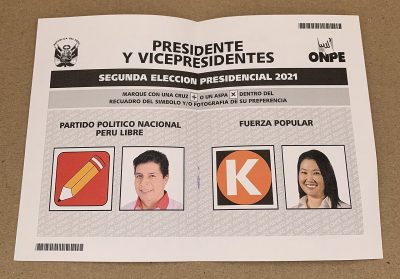
As we go to press,  June 11, 2021, the results published by Peru’s National Electoral Processes Office (ONPE) point in favor of Perú Libre’s candidate José Pedro Castillo Terrones against Fuerza Popular’s Keiko Fujimori

Right wing candidate Keiko and daughter of former president Alberto Fujimori (who is currently serving a jail term) has claimed fraud and has requested “to annul around 200,000 votes”. 

Uncertainty  prevails. The election observation mission of the Organization of American States (OAS) which constitutes a de facto mouthpiece of the US administration has “called on authorities to wait until challenges to the vote had been resolved before calling a winner”.  

***

Exacerbated by the Covid crisis and the lockdown, Peru is currently in a state of mass unemployment, extreme poverty and despair which is beyond description.

Pedro Castillo is a progressive trade-union leader and former school teacher from the Northern Andean region of Cajamarca. He is committed to poverty alleviation and the implementation of an extensive program of job creation.

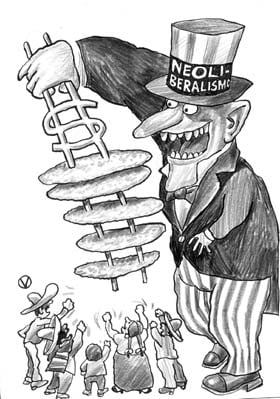
The country is in a neoliberal straight-jacket.

The World Bank so-called estimates of poverty in Peru are “fake” (27 % of the country’s population  below the poverty line). Independent analysis suggests that at least 70% of Peru’s population is below the poverty line, and extreme poverty is of the order 35% to 50%. 

Will Castillo be in a position to reverse the tide of corrupt US sponsored politics which goes back to the presidency of Alberto Fujimori (1990-2000)? Will he be able to implement a progressive economic and social project?   

What will be the nature of a Castillo government? Will Castillo gain the support of the Biden-Harris administration? 

What is important is to assess José Pedro Castillo’s political entourage. He has already made a number of commitments. His advisory team [equipo tecnico] has already been chosen. This is standard procedure in Latin American elections.

Pressured by Washington, there are indications that a Castillo government would adopt what might be described as a “progressive” neoliberal agenda, with the support of the Left, as well as the tacit endorsement of the Biden Administration with certain pre-conditions, prior to his inauguration on July 28, 2021

It is worth noting that the OAS has overseen the election process (on behalf of Washington) and has not reported any “irregularities” in favor of Castillo.

If Washington had been opposed to socialist candidate Pedro Castillo, the US State Department would have instructed the OAS to question the legitimacy of the election results as they did in Bolivia in November 2019, resulting in a de facto US sponsored coup d’état which compelled President Evo Morales to resign and leave the country.

Political Alliances and Advisory Teams

Pedro Castillo is supported by Veronika Mendoza, the leader of Nuevo Perú (Bloomberg, June 9, 2021). What is at stake is a strategic political alliance between Castillo’s Perú Libre and Mendoza’s Nuevo Perú.

Mendoza is a progressive figure in Peruvian politics. Her party is backing Castillo. An agreement was signed between the two parties. Mendoza has appointed a “team of professionals” to draft a government plan (See Bloomberg, June 9, 2021, emphasis added)

What this suggests is that Castillo has already accepted an advisory team, appointed by Mendoza, who is slated to play a central role in the Castillo government. During the second round election campaign, Castillo’s chief economic adviser  is  Pedro Franke, a former World Bank economist.

Leading up to the second round, Pedro Franke has largely been involved in public relations statements in support of Castillo’s candidacy.

While Franke has a populist rhetoric, he is nonetheless committed to mainstream “free market” economics. The question is whether a Pedro Castillo government would conform to “The Washington Consensus”.

The country is already in the hands of foreign creditors. The latter are also providing “financial assistance” in relation to the covid crisis.

Continuity: A de facto and ongoing neoliberal package of economic and social interventions (under the auspices of the World Bank, the IMF and the Inter-American Development Bank (ADB))?

Neoliberalism with a Human Face

Pedro Franke has already put forth a people’s market economy on behalf of Pedro Castillo whom he compares to Luis Ignacio da Silva.

While he endorses Castillo’s program of mass employment creation,  he is committed to “fiscal prudence and inflation-targeting, and is opposed to nationalization of companies”.

“Fiscal Prudence”? What this suggests is that a Castillo government will not be able to create employment without the endorsement of Peru’s external creditors:

“We don’t want to nationalize the mining and oil industries, or other sectors, said Franke.

We don’t want generalized price controls or a dual foreign-exchange rate or to impose currency controls like Chavez did.”

These statements suggest that the Castillo government would not confront the foreign mining conglomerates, it would also  abide by IMF-World Bank conditionalities.

The issue of price controls is of course crucial. Recall the adoption by Alberto Fujimori of the IMF shock treatment economic agenda in August 1990. The retail price of gasoline increased 30 times overnight.

IMF “economic medicine” invariably triggers increases in the prices of essential consumer goods, while freezing wages. Under present conditions (covid crisis) this would precipitate a large sector of the Peruvian population into extreme poverty and despair.

In a press Conference on June 2, 2021. Pedro Franke stated:

“The three essential measures are:

A broad program of credit at low interest rates that reaches agriculture.”

Second, a public investment program that will generate direct and indirect employment.

Another measure that will be taken will be to “defend and promote local production.”

“We insist that the potato –a national product– must be promoted, (as well as) the national production of rice. … 

The industrialization of the country is essential, as well as the support for entrepreneurs and innovation ”, he said. …

Franke dispels the possibility of creating employment through monetary policy: “Our proposal is responsible with a responsible fiscal and monetary policy. Our proposal includes a fiscal balance …  ” namely “austerity measures”.

See his TV interview in Spanish

The foregoing statement confirms that foreign creditors rather than the government will call the shots on employment creation. In an interview on June 8, Pedro Castillo confirmed that:

“he would respect the central bank’s authority and that he was not planning nationalizations or expropriations, but added a tax overhaul on mining was needed to help pay for planned healthcare and education reforms.” (Reuters, June 8, 2021)

Lo chiamano depopolazione, in realta' si tratta di un tipico processo di concentrazione di potere nelle economie di mercato


Shock Therapy: How Austerity and Privatisation Destroy Nations

 15
 7  4
 
 26

All Global Research articles can be read in 51 languages by activating the “Translate Website” drop down menu on the top banner of our home page (Desktop version). 

Visit and follow us on Instagram at @crg_globalresearch.

***

Politicians from rich countries have tried to forcefully ‘persuade’ other countries to use an extreme economic system with few public services and very little regulation of big companies. This is usually called neoliberalism. The rights of big business and investors have priority over everything else. Public and community interests are ignored. People’s lives, their health, their jobs, pollution, the environment – all of these things become irrelevant when businesses are not properly controlled. This post summarises the policies that poor countries have adopted, due to violence, threats, bribes or personal self-enrichment, for much of the last 50 years. Note that these policies are very different from the policies that advanced nations used during their development.

Many critical writers had been saying this for many years, but were mostly ignored. In the year 2002 the former chief economist of the World Bank, Joseph Stiglitz, wrote a landmark book entitled ‘Globalization and its Discontents’, which brought these criticisms to a wider audience.

a) Spend Less – Cut the heart out of the patient 

We saw in earlier posts that government spending is at the heart of every successful economy. Despite this, poor countries are told that the government must spend less on public services, even when military spending is sometimes increased. This means that less is spent on water, sanitation, education and healthcare, in countries where the existing systems are already inadequate. Teachers, doctors and nurses lose their jobs. Some children cannot get an education, so they have no way of getting themselves out of poverty, and many poor people cannot get treatment for even the most basic medical problems. The government is also encouraged to cut wages and end assistance to the poor, such as food subsidies. The current word for this is austerity.(1)

b) Remove Controls on Money – Cut off the blood supply

Poor countries are advised to allow money to flow into the country, so rich people from other countries can invest more easily. More than anything else, those with money want a global system where money can flow freely between countries with no controls. Unfortunately this usually means that money can also flow out of poor countries very quickly, creating instability. Giving up control of money flows is a bit like cutting off a patient’s blood supply. In the past, many readers would have found it difficult to understand how flaws in the financial system can devastate economies. However, the 2007 global financial crisis affected even the wealthiest countries. The financial system, and control of money, is so important that it is discussed in other posts.

c) Privatise – Selling off the Family Jewels

Privatisation is where industries that are owned and run by the government, such as water and electricity, are given or sold to private owners. They claim that profit motivates them to be more efficient. This is propaganda. The US has one of the most privatised healthcare systems of any advanced nation, yet it is far more expensive than any other country’s, without noticeably better results. When the world’s steel industries were compared, the most efficient steel companies were found to be the government-owned businesses in South Korea and Taiwan.(2)

Privatisation in the developing world usually means a small number of big companies taking control of a whole industry. (This is known as oligopoly). These companies can be from overseas, or owned by rich locals with government connections. The process of handing over these industries is extremely corrupt and has been called ‘briberisation.’(3) The end result is that they can charge high prices, even for providing basic essentials.

A good example of the downsides of privatisation could be seen in Bolivia in the year 2000. The water supply had been privatised and prices immediately tripled. Locals were not even allowed to collect rainwater. They were expected to pay for every drop of water they used. The American company in charge was Bechtel, which has powerful connections in the US government, notably through former US Secretary of Defense Donald Rumsfeld. Large numbers of people protested because they could not afford the water. Eventually Bechtel and their business partners were forced to leave the country.(4)

In African countries where the water system has been privatized, and even very poor people have been charged for water, it was found that some of those people would sooner walk for four hours each day to get free water, rather than pay for it. After privatisation in South Africa, many people found their water bills cost one-third of the family’s income. In Johannesburg, 22,000 people were disconnected each month because they could not pay their water bills. This led to an outbreak of Cholera, on a scale not seen for many years, because hygiene standards declined so much.(5) The importance of clean water cannot be stressed enough. A certain minimum amount of water has to be provided to the poorest people for free.

There are many examples of unsuccessful privatisations throughout the world. One of the most notorious was the Californian electricity system. This led to the collapse of major corporations, such as Enron. The senior people at Enron realised that at certain times of the day, there was enough demand for electricity that by closing down a power station for unnecessary ‘maintenance’, demand would exceed supply. It was then possible to charge much more for electricity. The price increased dramatically.(6) US politicians had been ‘bribed’ to deregulate the energy markets. Politicians in poor countries can be bribed just as easily as in the US.

There is a very good reason for electricity, gas, water, sanitation, phone lines, roads and railways being owned and run by a government. They are known as natural monopolies because each requires an expensive infrastructure. There is no point in ten companies all building railway lines between two towns, each being used by a tiny fraction of the population. It is better to have a single rail line used by everyone. However, if the single line is privately owned, the owners will overcharge users in order to make bigger profits.

Austerity and privatization are connected.(7) Austerity decreases the quality of public services. This makes it easier for private companies, and their supporters in government, to use propaganda to mislead the public into believing that a private system is better.

The final set of policies that have been forced upon poor countries is known as free trade. This is so important that it will be discussed in a later post.

Shock Therapy

Rich countries try to insist that poor countries adopt these policies very quickly. This is known as ‘shock therapy’. Unfortunately, rapid economic and social change creates hardship for large numbers of people, even in countries with social safety nets.(8) Without these safety nets, the results are much worse. The usual outcomes of this whole system include the creation of a small number of wealthy locals, and poverty for a large segment of the population. The transfer of wealth from the poorest to the richest happens not only between countries, but also within the country. Each nation loses control of its finances. Many people struggle to afford even the basics.

The End Result – Poverty and Death

When the Soviet Union collapsed in 1989, US advisors tried to persuade the Russian government that Russia could quickly change from its existing Communist system to an extreme version of capitalism. As with almost every other country that has tried this, poverty increased throughout the country. In 1992, the price of bread increased 100-fold in less than a year.(9) It has been estimated that the number of people in poverty increased by over 70 million people. Life expectancy in Russia declined at a rate that would normally only be seen during wartime, with one commentator describing the extra deaths as economic genocide.(10) A handful of people with strong government connections took over many state-run businesses, such as gas and oil companies, and became billionaires. They were known as the Oligarchs.

One of the leading economic advisors who helped to implement these policies, Jeffrey Sachs, admitted years later that he eventually realised that the extreme policies recommended to Russia were about “finishing off the cold war.”(11) This meant that senior planners in the US government wanted to destroy Russia’s government-backed industry, and replace it with an economic system where US companies could access resources and exploit the people.

Similar results can be seen in most countries that followed these policies. When they were applied in Peru in 1990, the price of bread increased 12-fold overnight. When they were applied in Mexico from 1980-2000, the spending power of many Mexicans dropped to a quarter of what it had been previously.(12) One of the leading experts, Jason HIckel, has described these policies as the largest single cause of impoverishment in the 20th century.(13) In each country that adopts these policies, a handful of people get rich very quickly. This was particularly notable in Mexico and Argentina, where billionaires were created almost overnight. If a group of people from one country suddenly become rich, it is usually because they have stolen the wealth of the nation. As one writer put it:

“This system is just another rigged game to enable the movers and shakers to get richer.”(14)

Advanced Countries Are Now Being Destroyed Too

Before 2008, the focus of these policies was on developing countries. However, since the global financial crisis the same policies have been applied to advanced nations. We have seen extreme austerity applied to Greece with catastrophic consequences. They have also been applied to Britain, with austerity leading to significant underfunding of social services and the National Health Service (NHS). At the same time there has been a gradual, stealthy privatisation of the NHS. Ever more wealth is being concentrated in the hands of the super rich. Inequality is rising to levels that we have not seen for a century. There are more and more people queueing at foodbanks and sleeping rough on the streets.

These outcomes are not accidental. The economic policies that create them are deliberate choices by governments. There is no evidence that austerity is ever necessary. These governments are gradually destroying state-run services to encourage people to use private alternatives, ultimately to make rich people richer. Since 2008 it has become more and more obvious that many governments, including those of the US and Britain, do not represent their people. Enriching themselves and their cronies is clearly their priority, irrespective of the harm this does to society more generally.

La decrescita infelice dell'italia verso una popolazione di 28 milioni di "autoctoni"


Italia 2100: 28 milioni di ebeti che osannano i governanti, 100 milioni di italiani oriundi sparsi nel mondo


Scienze

La crescita della popolazione mondiale va verso una battuta d'arresto

Entro il 2100 il tasso di fertilità scenderà quasi ovunque sotto il livello di sostituzione. La futura popolazione italiana: 28 milioni

La prospettiva di un pianeta Terra sempre più stretto a causa della sua popolazione umana lanciata verso una crescita incontrollata andrà forse rivista. Secondo un nuovo studio dell'Università di Washington, pubblicato su Lancet, da qui al 2100 il tasso di fecondità totale (cioè il numero medio di figli per donna) è destinato a diminuire praticamente dappertutto: e più che un calo graduale si tratterà di una brusca frenata destinata a lasciare un impatto importante sulla società. In base a questo nuovo modello statistico, gli abitanti della Terra continueranno ad aumentare di numero ancora per 40 anni o poco più, passando dai 7,8 miliardi attuali a 9,7 miliardi attorno al 2064; ma da quel momento in poi avrà inizio un calo che ci porterà a 8,8 miliardi alla fine del secolo.

Scelte riproduttive
Sulla crescita della popolazione mondiale vi sono proiezioni anche molto diverse tra loro perché cambiano gli strumenti statistici usati per elaborarle. I modelli più accurati tengono conto tanto degli ostacoli, quanto degli incentivi che influenzano le scelte riproduttive. Altre notizie curiose sul tema della popolazione mondiale © Shutterstock

Più diritti, meno figli. Al di sotto di un numero medio di figli per coppia di 2,1 (quello che i demografi chiamano livello di sostituzione: per approfondire) la popolazione di una determinata regione comincia a diminuire. Negli anni '50 il tasso di fecondità totale nel mondo era di 4,7 figli. Nel 2017 si era quasi dimezzato, arrivando a 2,4, e per il 2100 si stima che sarà sotto a 1,7 - grazie soprattutto al raggiungimento di importanti traguardi nell'istruzione femminile, nell'accesso delle donne al mondo del lavoro e nella maggiore libertà nelle scelte riproduttive.

I casi più eclatanti. Una riduzione del numero di figli si verificherà in 183 di 195 Paesi considerati dai ricercatori, ma non ovunque in modo omogeneo. In Italia (1,29 figli per donna nel 2019) le proiezioni parlano di una popolazione ridotta a 28 milioni di abitanti nel 2100. Il Giappone è destinato a passare da 128 milioni di abitanti a meno di 53 milioni e ci sono altri 21 Paesi, tra i quali Spagna, Thailandia, Portogallo e Corea del Sud, che registreranno un dimezzamento della popolazione da qui a fine secolo.

La Cina, oggi il Paese più popoloso al mondo, arriverà a un picco massimo di 1,4 miliardi di abitanti entro i prossimi 4 anni, per ritrovarsi infine con una popolazione di 732 milioni di persone a fine secolo e cedere così lo scettro all'India. Le nazioni dell'Africa subsahariana, che oggi hanno un tasso di fecondità totale di 4,7 nascite medie per donna, piomberanno sotto il livello di sostituzione entro il 2100.

Il numero di ottantenni sulla Terra passerà dai 141 milioni attuali a 866 milioni nel 2100. 

Equilibri da ribilanciare. Si potrebbe pensare che con meno persone da sfamare avremo a disposizione più risorse e allenteremo la pressione sul pianeta. Potrebbe essere così, se non fosse per le conseguenze sociali ed economiche di una piramide di popolazione totalmente invertita, con pochi giovani in età produttiva e una popolazione sempre più anziana da assistere. «Per i Paesi ad alto reddito con tassi di fecondità sotto il livello di sostituzione, le migliori soluzioni per sostenere gli attuali livelli di popolazione, crescita economica e sicurezza geopolitica sono politiche migratorie aperte e sistemi di sostegno sociale alle famiglie affinché possano avere il numero di figli desiderato», commenta Christopher Murray, primo autore dello studio.

L'EFFETTO CONTE: LO STATO DI EMERGENZA PERPETUO


Covid e stato d’emergenza, Draghi contrario a sospenderlo. Pronta la proroga

(fotogramma)

Il premier orientato a prolungare la scadenza a fine anno. Rivolta dei medici sulla seconda dose per chi ha fatto Astrazeneca

NON PIU' PAROLE: La risposta della Cina al G7: 28 aerei su Taiwan, mai così tanti


La risposta della Cina al G7: 28 aerei su Taiwan, mai così tanti

(ansa)
Violata con i caccia la zona di indentificazione di difesa
1 minuti di lettura

PECHINO - L'aeronautica militare cinese ha effettuato oggi un blitz con 28 aerei nella zona d'identificazione di difesa aerea di Taiwan, mobilitando anche i caccia J-16 e J-11.

Si tratta della più grande incursione segnalata fino ad oggi: il precedente record risaliva al 12 aprile scorso, con 25 velivoli. Quella odierna è la quarta incursione registrata nel mese di giugno. Le precedenti si sono verificate il 3, 4 e 14 giugno e in tutti i casi riguardavano velivoli turboelica a volo lento.

Secondo il ministero della Difesa, tra i 28 aerei dell'Esercito di liberazione popolare (Epl) cinese sono stati individuati un aereo da guerra antisommergibile Shaanxi Y-8, quattro bombardieri Xian H-6, un aereo da guerra elettronica Shaanxi Y-8, due Shaanxi KJ-500, 14 jet da combattimento Shenyang J-16 e sei jet da combattimento Shenyang J-11.

L'incursione, riferita dal ministero della Difesa di Taipei, è maturata a due giorni dalla dichiarazione del G7 rilasciata domenica, in cui i leader hanno lanciato un monito alla Cina, rilevando "l'importanza della pace e della stabilità attraverso lo Stretto di Taiwan" e incoraggiando "la risoluzione pacifica delle questioni attraverso lo Stretto". Per la prima volta, il G7 ha fatto riferimento a Taiwan, mandando Pechino su tutte le furie.

Gli aerei cinesi hanno volato in un'area vicino alle isole Pratas, nell'area contesa del Mar Cinese Meridionale, e alcuni dei caccia hanno sorvolato una zona vicina alla punta inferiore dell'isola di Taiwan, secondo una mappa fornita dal ministero. La Cina in passato ha descritto tali missioni come "necessarie per proteggere la sovranità del Paese e affrontare la collusione tra Taipei e Washington".

Il portavoce del ministero degli Esteri cinese Zhao Lijian ha accusato il Gruppo dei Sette, in conferenza stampa, di "calunniare deliberatamente" la Cina su questioni relative a Taiwan, Hong Kong e allo Xinjiang e di "interferire negli affari interni della Cina", assicurando poi che "la Cina è fermamente risoluta" a salvaguardare la propria sovranità e sicurezza.

Taiwan e la Cina sono state governate in modo indipendente da quando si sono separate nel 1949 a causa della guerra civile. Il loro rapporto si è deteriorato sotto la presidenza di Tsai Ing-wen, al vertice istituzionale dell'isola nel 2016,  rifiutandosi di confermare il 'Consenso del 1992' sull'esistenza della 'Unica Cina', malgrado la sua interpretazione abbia portata diversa tra Pechino e Taipei.
La Cina considera l'isola come una provincia ribelle, destinata alla riunificazione anche con l'uso della forza, se necessario.

LA PRIVACY E' UNA GRANDE CAZZATA, PAROLA DELLA CONFINDUSTRIA DEL MENGA


Ikea, multa da un milione di euro in Francia per aver spiato i dipendenti

(reuters)
La campagna di spionaggio è stata praticata ai danni di rappresentanti sindacali, dipendenti e alcuni clienti in Francia, anche tramite documenti di polizia ottenuti illegalmente. Due ex dirigenti sono stati condannati e multati per la vicenda e condannati a pene detentive sospese

GRANDE ITALIA!!!


Marò, l'India chiude tutte le cause. Prosegue il processo in Italia

(ansa
La decisione della Corte Suprema pone fine alla vicenda dopo il deposito del risarcimento di circa 1,1 milioni di euro destinato ai parenti delle vittime. Ora spetta alla nostra giustizia valutare quale sia stato il comportamento dei due fucilieri di Marina. Polemica la moglie di Latorre: "Siamo stati carne da macello per la politica italiana"

IL PARTITO UNICO DELLA CRIMINALITA' DISORGANIZZATA E DISORGANIZZANTE


Forza Italia, Berlusconi rilancia: "Serve un partito unico del centrodestra". Ma Salvini: "No a giochini politici"

Il leader azzurro vorrebbe andare oltre la federazione lanciata dal segretario leghista e arrivare a un partito unico con dentro tutte le forze della coalizione, dalla Lega a Fratelli d'Italia, esclusa 'Coraggio Italia'

di maio vatti a nascondere, non ti rielegge nessuno perche' sei diventato democristiano


M5S, Grillo attacca la Nato e difende la Cina dopo il G7. Di Maio rassicura Palazzo Chigi: "Posizione personale"

Il ministro degli Esteri, Luigi Di Maio (fotogramma)
La linea Conte: "Dialogare anche con asiatici importanti come la Cina è di utilità per tutti, certo nel contesto dell'unità atlantica"

CERCASI ITALIANI/E CON LE P**E QUADRATE PER FONDAZIONE DI COMITATO PER LA REISTITUZIONE DEL MINISTERO PER LA COSTITUENTE E L'ISTITUZIONE DELL'ASSEMBLEA COSTITUENTE PERMANENTE DEL POPOLO ITALIANO


CERCASI ITALIANI/E CON LE P**E QUADRATE PER FONDAZIONE DI COMITATO PER LA REISTITUZIONE DEL MINISTERO PER LA COSTITUENTE E L'ISTITUZIONE DELL'ASSEMBLEA COSTITUENTE PERMANENTE DEL POPOLO ITALIANO.


CHIAMO TUTTI GLI ITALIANI, INCLUSI GLI EMIGRATI E GLI ORIUNDI, SORELLE E FRATELLI D'ITALIA, A LIBERARE LA NOSTRA TERRA FINALMENTE DAL CANCRO E DAI CANCRI CHE LA CORRODONO, A RICOSTITUIRLA LEGITTIMAMENTE COME CASA E REPUBBLICA DEL POPOLO ITALIANO INTERO, DELL'INTERA FAMIGLIA ITALIANA, E A PREVENIRE ANCORA UNA VOLTA CHE PERSONE ED ORGANIZZAZIONI ILLEGITTIME, CRIMINALI, SE NE IMPADRONISCANO, NE USINO E NE ABUSINO, A RENDERE IN QUALSIASI MODO POSSANO, POSSIBILE L'ASSEMBLEA COSTITUENTE PERMANENTE DEL POPOLO ITALIANO.

Pera: rifacciamo la Costituzione Per restituire ai partiti e al parlamento il loro ruolo - COME FARE LA COSA GIUSTA PER IL MOTIVO SBAGLIATO E DISTRUGGERE IL POTERE COSTITUENTE DEL POPOLO


Pera: rifacciamo la Costituzione

Per restituire ai partiti e al parlamento il loro ruolo

di Marcello Pera


Marcello Pera
Marcello Pera
Caro direttore,

vorrei esporLe un'idea che credo sarebbe utile a tutti noi nel breve e lungo termine. È molto semplice e tutti possono facilmente capirla e valutarla, ma prima di scartarla sarebbe opportuno rifletterci sopra.

Parto da una premessa, che è tanto nota e condivisa da richiedere poche parole. Attualmente la Costituzione italiana, nella parte seconda, quella che riguarda l'organizzazione delle nostre istituzioni, è di ostacolo alla governabilità e di impedimento all'unità nazionale. La nostra repubblica è diventata tanto poco parlamentare che, ad ogni misura importante da prendere, lascia la parola solo al governo, che ormai da molto tempo agisce per decreti legge, con emendamenti unici da votare con la fiducia, con informazioni presentate solo all'ultimo momento oppure quando è ormai passato il momento. Il parlamento conta sempre meno, nei momenti topici quasi nulla.

Poi, la forma di stato. Venti repubbliche senza un maestro sovraordinato non fanno un'orchestra, come si vede ogni giorno. La conferenza Stato-regioni è una camera non prevista dalla Costituzione che però conta più dell'intero parlamento, che pure dovrebbe assicurare l'unità di azione o la composizione degli interessi territoriali.

Questo ci porta all'ormai palesemente inutile bicameralismo perfetto, che è di freno alla rapidità richiesta per la legislazione, soprattutto in caso di crisi, e di ostacolo quando si tratti di formare un governo, essendo spesso le maggioranze non omogenee nei due rami del parlamento. Infine, e mi fermo lì, l'ordinamento della magistratura. Abbiamo toccato con mano, ad esempio, che il Consiglio superiore della magistratura, così come composto ed eletto, non assicura l'indipendenza e l'autonomia dei magistrati. Per sottrarre i magistrati al dominio della politica, si è consentito che si sottomettessero ad un potere assai più prepotente e opaco, quello dei gruppi organizzati.

A questa premessa aggiungo un fatto. È chiaro che quando il presidente Draghi ha detto (spero tanto che lo abbia detto davvero), riguardo al piano Recovery, alla presidente della commissione europea von der Leyen «garantisco io», voleva dire «si farà ciò che dico io» o «si farà come dico io e non ci saranno modifiche di rilievo». Tutti hanno capito così e tutti, senza neppure mugugnare troppo, hanno convenuto. Questo fatto dice che, senza Draghi, non ci sarebbero i fondi dell'Europa, e poi dice che, senza Draghi, venendo meno l'assicurazione della loro utilizzazione corretta, non ci sarebbe neppure la garanzia che il flusso dei fondi continuerebbe. Sarebbe una catastrofe.

E ora vengo al punto. Poiché non si può fare a meno di Draghi, non si può neppure premiarlo promuovendolo alla presidenza della Repubblica. A parte che non mi sembra una promozione per lui (che in breve tempo passerebbe da salvatore della patria a decoratore della repubblica) per noi sarebbe uno svantaggio netto. Chi potrebbe mai sostituirlo con altrettanto peso e credito?

Dall'altra parte, però, ci sono i partiti con le loro esigenze. Vogliono contare, e se la democrazia ha un senso, hanno diritto di contare. Oggi sono fuori gioco. Per mostrare che esistono ancora e non potendo esercitare i poteri che sono passati in capo a Draghi, si sono ridotti a discutere se chiudere i ristoranti alle 22 o alle 23, se il caffè si prende in tazza al banco o in un bicchiere di cartone fuori della porta, se ci si siede nei locali a un metro o un metro e mezzo di distanza, e poco più.

Che fare, allora, per combinare l'interesse generale, che vuole Draghi al suo posto attuale e l'interesse dei partiti che, forti dei loro consensi, reclamano potere di decisione? Occorre mettere assieme il fatto di cui ho appena detto con la premessa da cui sono partito. Draghi rimanga dov'è, oltre la scadenza della presidenza della Repubblica, fino alle elezioni del 2023, e i partiti cambino agenda.

Mentre Draghi governa e garantisce, essi, i partiti, discutano e promuovano una riforma della Costituzione, almeno sui quattro punti indilazionabili che ho richiamato. Quando la riforma sarà infine compiuta, avremo una nuova repubblica, che sarà almeno gestibile, quale che sia la maggioranza che sarà venuta dalle urne. Perché, vincere nelle urne e tenersi le attuali istituzioni non servirebbe a nulla, anche supposto che si creino, a destra e a sinistra, coalizioni omogenee e compatte, il che allo stato attuale è solo utopia.

Come si può fare questa riforma? Riprendo l'idea che con un disegno di legge costituzionale presentai nove anni fa (mediamente le idee mi vengono una ogni dieci anni). Poiché riscosse successo presso la presidenza della repubblica e vari leader politici di allora, che però lo fecero morire, la ripresento aggiornata, trascurando i dettagli. Si procede a tappe.

Primo, il parlamento approva una legge costituzionale per la riforma della Costituzione da affidare ad una commissione di 75 membri votata col sistema proporzionale (se c'è accordo, basta meno di un anno).

Secondo. Questa commissione, composta da non parlamentari, è incaricata di produrre un testo di riforma entro dodici mesi.

Terzo. Al termine dei lavori, il testo sarà sottoposto a referendum senza quorum. Poiché occorre coordinare i tempi e non creare vuoti o squilibri, la stessa legge costituzionale proroga il presidente della repubblica fino alla celebrazione del referendum (un annetto).

Dopo, Costituzione nuova, presidenza della repubblica nuova, presidente del consiglio nuovo. Tornerebbero i partiti, e però rigenerati. Passati attraverso una fase costituente dove discuterebbero di temi alti e non di tavolini al bar, alimentati da un dibattito politico nobile che riguarda il futuro dell'Italia, armati degli strumenti necessari per governare per legislature e non soltanto qualche mese, questi partiti o ciò che saranno diventati (io penso più consapevoli e più responsabili) potrebbero e dovrebbero riprendere il posto che ad essi spetta in una democrazia e che ora hanno perduto.

L'impresa non mi sembra difficile. E neppure mi sembra difficile comprendere i vantaggi che a tutti e ciascuno (istituzioni, partiti, cittadini) deriverebbero da una rifondazione della repubblica ad opera di nuovi costituenti. Un atto battesimale è ciò che ci occorre. Secondo la mia idea, battezza la commissione, celebra il popolo.

Fossi Salvini e Meloni, Letta e di Maio, Renzi e Calenda e Berlusconi, accetterei la sfida, tanto più che avverrebbe sotto un velo di ignoranza, senza vantaggi precostituiti. Per convincerli, ricorderei che, al momento di uscire dalle macerie della guerra nazifascista, agimmo su due pedali, quello economico, con il considerevole piano Marshall, affidato al governo e quello istituzionale con la Costituzione del 1948, affidata ad un'assemblea ad hoc. Oggi dobbiamo uscire da altre macerie e dobbiamo evitare che altri non ce ne infliggano di più gravi. Il piano Recovery c'è. La Costituzione non ancora. Come ha ben detto Draghi, siamo in una fase di «inerzia istituzionale». Sta a noi uscirne.

Le riforme annunciate di fisco, giustizia civile, pubblica amministrazione sono la condizione per avere i fondi europei. La riforma della Costituzione è la condizione per avere una democrazia efficiente. Il successo dipende da quanto crediamo nel futuro, nella democrazia, nei partiti, nelle nostre forze. Il resto, quello che attualmente passa il convento, mi sembra roba spicciola e alla spicciolata, buona forse per raccogliere un po' di consenso immediato, ma priva di prospettive e di ambizioni. E invece, ora più che mai, dobbiamo essere ambiziosi, fiduciosi e coraggiosi. Sentire un orgoglio pari a quello ammirevole che più di settanta anni fa ci fece rinascere.

© Riproduzione riservata


News correlate

Tre secchi no alla proposta di Assemblea costituente avanzata dal senatore Marcello Pera


Tre secchi no alla proposta di Assemblea costituente avanzata dal senatore Marcello Pera

| 0 comments

Da diverse parti politico-culturali vengono critiche drastiche alla proposta avanzata dal senatore Pera https://www.c3dem.it/1940

Critici Ugo De Siervo (“La Costituente che non serve”, La Stampa del 7 luglio 2012), Gianni Ferrara (“La Costituente abolisce la Costituzione”, il Manifesto del 6 luglio 2012), Massimo Villone (“La Costituzione, come se non ci fosse”, il Manifesto del 7 luglio 2012).

Per Ugo De Siervo, docente di Diritto costituzionale a Firenze, “non è minimamente credibile che tutto ciò che è avvenuto di tanto discutibile sul piano istituzionale nella presente legislatura possa essere addebitato alla nostra Costituzione e non alla cattiva politica di tanti”. E gli appare paradossale che “gli stessi soggetti che non hanno usato in modo corretto ed efficace i grandi poteri di cui disponevano”, e che neppure sanno trovare risposte efficaci alle loro specifiche responsabilità di riforma della politica,”adesso scoprono che la colpa di tutti i guai è la Costituzione”. De Siervo conclude: “Il vero problema non sono nuove regole costituzionali, ma l’urgente necessità di un deciso miglioramento della qualità progettuale espressa dalle diverse forze politiche, con il recupero effettivo del primato degli interessi comuni”.

Gianni Ferrara, costituzionalista, professore emerito alla Università La Sapienza si Roma, definisce la proposta del senatore Pera “un progetto eversivo”, che mira “a sostituire la Costituzione vigente, ad abrogarla”, addirittura “un cavallo di Troia per abolire la natura solidale e sociale del nostro patto repubblicano”. Scrive: “La proposta di un’assemblea costituente implicherebbe la redazione di un intero testo costituzionale, abrogativo anche della Prima Parte della Costituzione vigente, quella dei principi fondamentali, dell’eguaglianza materiale, dei diritti, anche di quelli sociali”. Di qui il “sospetto” di ferrara: “Con i tempi che corrono, con i tagli del finanziamento del welfare, con la compressione massiccia dei diritti sociali, non è che il compito previsto per l’assemblea costituente che propone sia proprio quello di redigere una costituzione che liberi le classi dominanti dalle conseguenze dall’eguaglianza sostanziale, dall’efficacia dai diritti sociali, dalle domande della democrazia incompatibili col capitalismo neoliberista?”.

Per Massimo Villone, docente di Diritto costituzionale a Napoli, “la proposta del senatore Marcello Pera sull’elezione di un’assemblea costituente è pericolosa perché illegittima e grottesca. Dettata da un ceto politico in disarmo”. Anche per Villone, come per De Siervo, la proposta Pera viene “da un ceto politico senza qualità che da più di vent’anni contrabbanda come debolezza della Costituzione l’incapacità di governare con efficacia il cambiamento, e persino di svolgere il proprio ruolo con dignità e onore”.

L’articolo di Ugo De Siervo in:

http://www.lastampa.it/_web/cmstp/tmplRubriche/editoriali/gEditoriali.asp?ID_blog=25&ID_articolo=10307

L’articolo di Gianni Ferrara in:

http://www.ilmanifesto.it/area-abbonati/in-edicola/manip2n1/20120706/manip2pg/15/manip2pz/325439

L’articolo di Massimo Villone in: http://www.esserecomunisti.it/?p=45520


Lettori fissi