1 Jul 2021 15:21
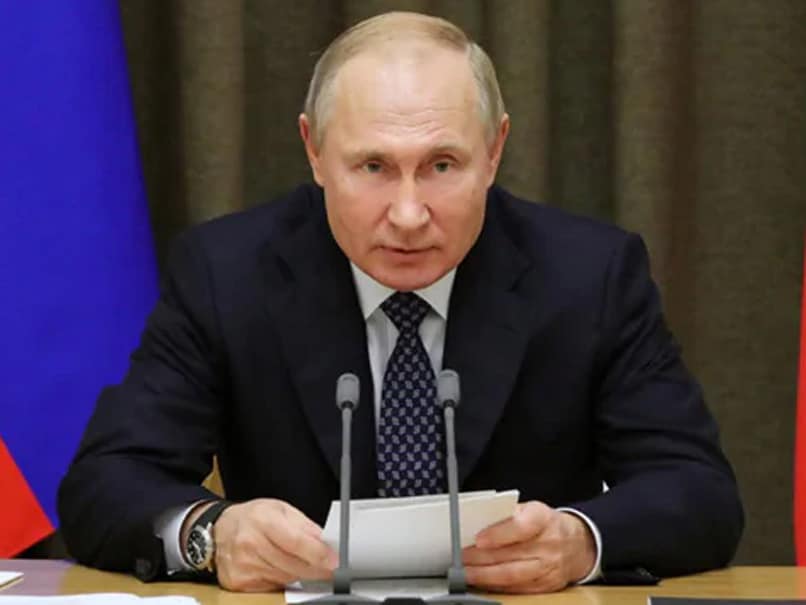
Putin signs into law bill on 'grounding' Google, Facebook, other IT giants in Russia
MOSCOW. July 1 (Interfax) - Russian President
Vladimir Putin has signed into law a bill compelling major foreign IT
companies working with Russian audiences to open fully-fledged offices
in Russia.
The document was published on the official web portal for legal information on Thursday.
The law compels foreign IT companies with a daily Russian audience
exceeding 500,000 to open fully-fledged offices (branches) in Russia
that can be held liable for the IT giants' violations of Russian laws,
interact with the Russian authorities, and restrict access to
information violating Russian laws in Russian territory.
All foreign owners of websites, information systems, and software
will be compelled to open a branch, an office, or a legal entity in
Russia if they meet one of four criteria: they disseminate information
in Russian or languages of the peoples of Russia, they provide
advertising aimed at a Russian audience, they process Russian users'
data, or they receive money from Russian citizens and legal entities.
Such companies will be compelled to register an account on the
official website of the Federal Service for Supervision of
Communications, Information Technology, and Mass Media (Roskomnadzor)
and to publish an electronic form on their website for Russian citizens
and organizations to provide feedback consistent with the requirements
set by Roskomnadzor.
The requirements will apply to the providers of hosting services,
messenger services, operators of advertising systems, and "organizers of
the dissemination of information" on the Internet.
The relevant services will be compelled to install "one of the
programs offered" by Roskomnadzor to count how many Russian users they
have.
The Roskomnadzor website will be keeping a list of "foreign entities
conducting online activity in Russian territory" to contain information
about the compliance of Internet resource owners with the requirements
and sanctions for their violations, such as a ban on advertising those
resources, placing Russian advertisements on the websites of violators,
and money transfers.
The web resource owner will be compelled to submit a relevant
statement to Roskomnadzor within a day of the moment of the account's
registration. By demand of Roskomnadzor, they will also be compelled to
present "information required for the list" within ten days of the day
of receiving the enquiry.
The web resource owner may be excluded from the list at its request
if the daily Russian audience of the resource keeps below 500,000 for
three months. Whenever such traffic persists for six months,
Roskomnadzor can exclude the information from the list in such cases
without request.
The law envisages a number of "measures of compulsion" against owners
of foreign web resources, from informing Russian users about the
violation of the law to their complete blocking in Russia.
Search engine operators will be compelled to inform Russians about
their noncompliance with Russian laws at Roskomnadzor's demand.
Roskomnadzor will set the requirements for the content of such messages.
The operators will be compelled to begin and stop disseminating such
information within a day of the moment they are contacted by
Roskomnadzor.
At the request of Roskomnadzor, search engines may stop delivering
search results to users. Search engine operators will begin or stop
complying with this demand within a day of its receipt.
Most "measures of compulsion" will take effect and stop upon the
appearance of relevant announcements on the list of foreign entities
engaged in online activity in Russian territory available on the
Roskomnadzor website.
The violators will be prohibited from advertising themselves in
Russia or hosting advertisements addressed to Russians irrespective of
the owner of those advertisements.
In the event of violations, Roskomnadzor may include the foreign
entity on the list of operators prohibited from transferring and
receiving payments. In the end, banks, payment agents, communications
operators, and postal services will be prohibited from transferring
funds to such foreign entities. Should Roskomnadzor detect money
transfers in the activity of a foreign supplier of payment services,
information about this supplier will be included on a separate list to
be kept in coordination with the Central Bank.
Roskomnadzor is also endowed with the right to act via designated
intermediaries in order to confirm the fact of a transfer of funds in
favor of a blacklisted foreign entity. The information will be directed
to the Central Bank, which will respond to such actions.
Foreign entities may be prohibited from transborder sharing of the
personal data of Russian users. In that case, Russian state and
municipal authorities, individuals, and legal entities will not be
allowed to provide them with such information.
There is yet another possible penalty - partial or complete blocking
of the violator's operations in Russian territory consistent with Part
5.1 Article 46 of the Law on Communication. Roskomnadzor should begin or
stop using relevant "technical means of threat deterrence" within a day
of the moment the decision is made.
Roskomnadzor will be allowed to apply the strictest "measures of
compulsion" only in certain cases. For instance, a ban on delivering
search results, gathering and carrying out transborder transfers of the
personal data of Russian users, and partial or full blocking of the
resource are permissible only if a foreign entity does not meet the
requirement to open a Russian office, register an account on the
Roskomnadzor website, and publish a feedback form within 30 days of
receiving the relevant notice from the agency, as well as in the event
of noncompliance with the regulations on storing the personal data of
Russian users in Russian territory.
The rest of the sanctions - notification of users about a violation
of Russian laws, a ban on advertising the violators and placing
advertisements on their websites, and restrictions on money transfers
and acceptance of payments from Russian individuals and legal entities -
can be imposed in the case of a violation of the norms introduced by
the legislation. The law does not set any additional conditions.
The amendments submitted by the second reading of the initiative say
that the "measures of compulsion" could apply, in particular, to foreign
entities that fail to provide information to the system monitoring
online advertising activities.
The law compels advertisers, advertising system operators, and
intermediaries which place advertisements targeting Russian users on the
Internet to provide information about themselves and their materials.
The law takes effect on the day of its official publishing, expect
for the norm that compels companies to open fully-fledged offices. This
norm will take effect on January 1, 2022.
A group of members of the State Duma Committee on Information Policy,
Information Technologies, and Communication led by Committee Chairman
Alexander Khinshtein and Federation Council member Alexei Pushkov
submitted the bill to the State Duma in May.
Khinshtein said earlier that the law might apply not only to search
engines (Google, Bing), social networks (Facebook, Instagram, TikTok,
Twitter ), video hosting services (YouTube, Twitch), and messengers and
mailing services (from Telegram to Gmail), but also to hosting service
providers (including Amazon), online trade services (including
Aliexpress, iHerb and Ikea), and Wikipedia.
All 20 web resources that may fall under the law were invited to
discuss the initiative in the first reading at a meeting of the State
Duma Committee on Information Policy, Information Technologies, and
Communication on May 28, but only three of them, Aliexpress, iHerb, and
Wikipedia, attended the meeting.







 Post
Post

