Russia fines Facebook, WhatsApp, Twitter for breach of law

Russia fines Facebook, WhatsApp, Twitter for breach of law

WION Web Team
New Delhi Published: Aug 27, 2021, 07:34 PM(IST)

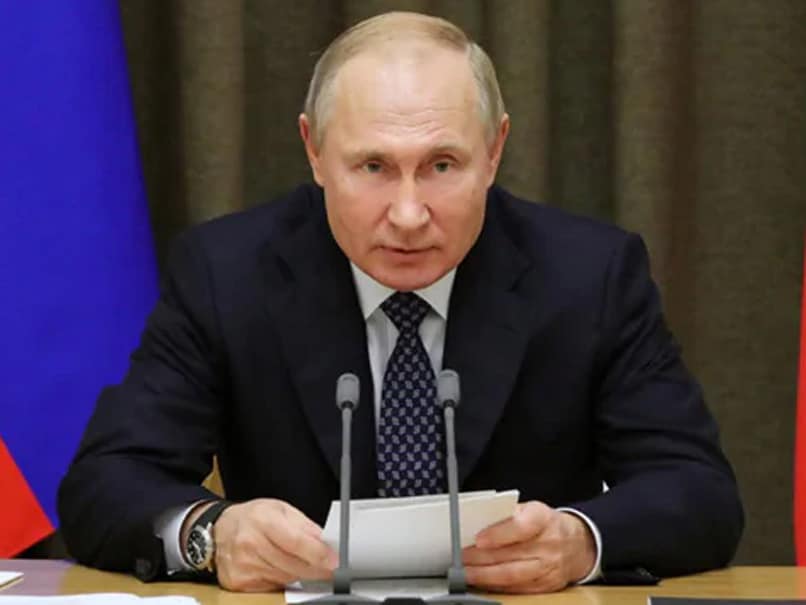
Russian President Vladimir Putin Photograph:( AFP )

Story highlights

Authorities in Russia are ramping up control of Russian segment of the internet. Russian President Vladimir Putin has already accused western social media of flouting Russian laws

Russia's internet watchdog said on Thursday that the country has fined Facebook, Twitter and WhatsApp for failing to store data of Russian users on local servers. This came amid authorities' clampdown on foreign internet companies.

Moscow's Tagansky district court fined Facebook 15 million rubles ($200,000) and Twitter 17 million rubles for repeat offences, while WhatsApp was handed a four-million-ruble fine for a first-time infraction, the Roskomnadzor watchdog said.

Authorities in Russia are ramping up control of Russian segment of the internet. Russian President Vladimir Putin has already accused western social media of flouting Russian laws.

Passed in 2014, the controversial law requires the personal data of Russian users to be stored on domestic servers.

Twitter and Facebook were first penalised for breaking the law last year, while Google was hit with its first fine last month.

Roskomnadzor said Thursday that some companies have begun complying with the legislation, including Apple, Microsoft, LG Electronics, Samsung, PayPal and Booking.com, among others. 

Russia in recent months has been taking increasing legal action against foreign tech giants, in particular for failing to remove content at the request of Roskomnadzor.

During protests in support of jailed Kremlin critic Alexei Navalny in January, authorities accused internet platforms of interfering in the country's domestic affairs by not deleting posts calling for minors to join the rallies.

Putin that month complained about the growing influence of large technology companies, which he said were competing with states. 

(With inputs from agencies)

Related

FacebookTwitter FacebookTwitter FacebookTwitter

WESTERN BRAINWASHING IS SUPPOSED TO BE ALWAYS GOOD


Russia Squeezes Twitter Amid Crackdown, Traffic Disrupted

Updated on
  • Twitter will be slowed on all mobile devices, half of desktops
  • Move may have caused outages at many government websites

Russia said it made content on Twitter Inc. slower to load after the company refused to take down content related to drug use, pornography and other banned topics, escalating its clash with foreign social networks.

Authorities will make Twitter run more slowly on all mobile devices and on half of desktop computers, internet watchdog Roskomnadzor said in a statement Wednesday. It said access could be blocked altogether if Twitter doesn’t remove the banned content.

The move came a day after the regulator announced lawsuits against Twitter and four other social-media companies for not deleting posts about nationwide protests over the jailing of opposition leader Alexei Navalny earlier this year.

“No one has any desire to block anything, but these measures are justified to force these companies to comply with our laws,” Kremlin spokesman Dmitry Peskov said on a conference call with journalists. The slowdown only affects photos and video content and not text, Tass news service reported, citing Roskomnadzor deputy head Vadim Subbotin.

After the measures were announced, the government-run internet provider Rostelecom experienced a surge in user complaints, according to Downdetector.ru, which monitors web traffic. The network failure, which caused outages at several government websites, were due to equipment problems and not a cyber attack, according to a Rostelecom spokesperson.

The effort to slow down Twitter was an attempt to test Russia’s ability to cut itself off from the internet and caused the problems, according Andrei Soldatov, co-author of “The Red Web: The Kremlin’s Wars on the Internet” and co-founder of Agentura.ru, a site that tracks the security services. Russia has denied this was the case.

A Twitter spokesperson said in a statement the company was aware of reports that its service was being intentionally slowed down in Russia because of “content removal concerns.” The company doesn’t tolerate child exploitation or drug sales on its platform, the spokesperson said, adding that Twitter is “deeply concerned by increased attempts to block and throttle online public conversation.”

Twitter service in Moscow didn’t immediately appear to have been disrupted Wednesday, although state-run RIA Novosti said its staff experienced some slowness.

President Vladimir Putin has slammed U.S. social media giants, calling them monopolies and questioning whether they act in the public interest. Networks like Twitter and Facebook Inc. have been used to show footage of protests against the government and organize events, angering local authorities.

“This is so far the softest measure they could have taken to limit access to western social media,” Ilya Klishin, a founder of media consultant KFConsulting. “The target audience is old guys in power, who aren’t Twitter users anyways. I don’t think this will change young people’s habits, and there are serious questions if they have the technical capacity to completely block access to Twitter.”

Twitter has come under increasing pressure from regulators in some countries. Banned in China, the network was among several fined in Turkey late last year in a move activists called an attempt to stifle dissent.

More Restrictions

Russia’s regulator said other services could also be targeted for throttling if they continue to defy local laws, Interfax reported.

Russia filed cases this week that could result in administrative fines against Twitter, Google, Facebook, TikTok and Telegram for allegedly failing to delete posts that urged minors to attend the January protests, Interfax reported Tuesday, citing a Moscow court spokesperson.

Russia sought to block Telegram several years ago over failure to share encryption information but was unable to make the ban work technically and ultimately backed down. But under a 2019 law, authorities have since upgraded systems they say would allow Russia to completely cut itself off from the internet if needed.

— With assistance by Henry Meyer, Ilya Arkhipov, and Naomi Nix

(Updates with comment from Twitter in 7th paragraph. An earlier version of this article corrected the spelling of TikTok.)

SOVEREIGNITY? WHAT IS IT?

 1 Jul 2021 15:21

Putin signs into law bill on 'grounding' Google, Facebook, other IT giants in Russia

MOSCOW. July 1 (Interfax) - Russian President Vladimir Putin has signed into law a bill compelling major foreign IT companies working with Russian audiences to open fully-fledged offices in Russia.

The document was published on the official web portal for legal information on Thursday.

The law compels foreign IT companies with a daily Russian audience exceeding 500,000 to open fully-fledged offices (branches) in Russia that can be held liable for the IT giants' violations of Russian laws, interact with the Russian authorities, and restrict access to information violating Russian laws in Russian territory.

All foreign owners of websites, information systems, and software will be compelled to open a branch, an office, or a legal entity in Russia if they meet one of four criteria: they disseminate information in Russian or languages of the peoples of Russia, they provide advertising aimed at a Russian audience, they process Russian users' data, or they receive money from Russian citizens and legal entities.

Such companies will be compelled to register an account on the official website of the Federal Service for Supervision of Communications, Information Technology, and Mass Media (Roskomnadzor) and to publish an electronic form on their website for Russian citizens and organizations to provide feedback consistent with the requirements set by Roskomnadzor.

The requirements will apply to the providers of hosting services, messenger services, operators of advertising systems, and "organizers of the dissemination of information" on the Internet.

The relevant services will be compelled to install "one of the programs offered" by Roskomnadzor to count how many Russian users they have.

The Roskomnadzor website will be keeping a list of "foreign entities conducting online activity in Russian territory" to contain information about the compliance of Internet resource owners with the requirements and sanctions for their violations, such as a ban on advertising those resources, placing Russian advertisements on the websites of violators, and money transfers.

The web resource owner will be compelled to submit a relevant statement to Roskomnadzor within a day of the moment of the account's registration. By demand of Roskomnadzor, they will also be compelled to present "information required for the list" within ten days of the day of receiving the enquiry.

The web resource owner may be excluded from the list at its request if the daily Russian audience of the resource keeps below 500,000 for three months. Whenever such traffic persists for six months, Roskomnadzor can exclude the information from the list in such cases without request.

The law envisages a number of "measures of compulsion" against owners of foreign web resources, from informing Russian users about the violation of the law to their complete blocking in Russia.

Search engine operators will be compelled to inform Russians about their noncompliance with Russian laws at Roskomnadzor's demand. Roskomnadzor will set the requirements for the content of such messages. The operators will be compelled to begin and stop disseminating such information within a day of the moment they are contacted by Roskomnadzor.

At the request of Roskomnadzor, search engines may stop delivering search results to users. Search engine operators will begin or stop complying with this demand within a day of its receipt.

Most "measures of compulsion" will take effect and stop upon the appearance of relevant announcements on the list of foreign entities engaged in online activity in Russian territory available on the Roskomnadzor website.

The violators will be prohibited from advertising themselves in Russia or hosting advertisements addressed to Russians irrespective of the owner of those advertisements.

In the event of violations, Roskomnadzor may include the foreign entity on the list of operators prohibited from transferring and receiving payments. In the end, banks, payment agents, communications operators, and postal services will be prohibited from transferring funds to such foreign entities. Should Roskomnadzor detect money transfers in the activity of a foreign supplier of payment services, information about this supplier will be included on a separate list to be kept in coordination with the Central Bank.

Roskomnadzor is also endowed with the right to act via designated intermediaries in order to confirm the fact of a transfer of funds in favor of a blacklisted foreign entity. The information will be directed to the Central Bank, which will respond to such actions.

Foreign entities may be prohibited from transborder sharing of the personal data of Russian users. In that case, Russian state and municipal authorities, individuals, and legal entities will not be allowed to provide them with such information.

There is yet another possible penalty - partial or complete blocking of the violator's operations in Russian territory consistent with Part 5.1 Article 46 of the Law on Communication. Roskomnadzor should begin or stop using relevant "technical means of threat deterrence" within a day of the moment the decision is made.

Roskomnadzor will be allowed to apply the strictest "measures of compulsion" only in certain cases. For instance, a ban on delivering search results, gathering and carrying out transborder transfers of the personal data of Russian users, and partial or full blocking of the resource are permissible only if a foreign entity does not meet the requirement to open a Russian office, register an account on the Roskomnadzor website, and publish a feedback form within 30 days of receiving the relevant notice from the agency, as well as in the event of noncompliance with the regulations on storing the personal data of Russian users in Russian territory.

The rest of the sanctions - notification of users about a violation of Russian laws, a ban on advertising the violators and placing advertisements on their websites, and restrictions on money transfers and acceptance of payments from Russian individuals and legal entities - can be imposed in the case of a violation of the norms introduced by the legislation. The law does not set any additional conditions.

The amendments submitted by the second reading of the initiative say that the "measures of compulsion" could apply, in particular, to foreign entities that fail to provide information to the system monitoring online advertising activities.

The law compels advertisers, advertising system operators, and intermediaries which place advertisements targeting Russian users on the Internet to provide information about themselves and their materials.

The law takes effect on the day of its official publishing, expect for the norm that compels companies to open fully-fledged offices. This norm will take effect on January 1, 2022.

A group of members of the State Duma Committee on Information Policy, Information Technologies, and Communication led by Committee Chairman Alexander Khinshtein and Federation Council member Alexei Pushkov submitted the bill to the State Duma in May.

Khinshtein said earlier that the law might apply not only to search engines (Google, Bing), social networks (Facebook, Instagram, TikTok, Twitter ), video hosting services (YouTube, Twitch), and messengers and mailing services (from Telegram to Gmail), but also to hosting service providers (including Amazon), online trade services (including Aliexpress, iHerb and Ikea), and Wikipedia.

All 20 web resources that may fall under the law were invited to discuss the initiative in the first reading at a meeting of the State Duma Committee on Information Policy, Information Technologies, and Communication on May 28, but only three of them, Aliexpress, iHerb, and Wikipedia, attended the meeting.

Vladimir Putin Accuses Western Social Media Of Ignoring Russian Law


Vladimir Putin Accuses Western Social Media Of Ignoring Russian Law

The Russian government has in recent months been clamping down on sites such as Facebook, Twitter and YouTube for hosting content supporting jailed Kremlin critic Alexei Navalny.

Vladimir Putin Accuses Western Social Media Of Ignoring Russian Law

"No, we are not planning to block anybody. We are planning to work with them," Putin said (File)

Moscow, Russia:

President Vladimir Putin on Wednesday accused Western social media platforms of ignoring Russian authorities' requests to delete illegal content, but stressed the country had no plans to block their work.

The Russian government has in recent months been clamping down on sites such as Facebook, Twitter and YouTube for hosting content supporting jailed Kremlin critic Alexei Navalny.

"No, we are not planning to block anybody. We are planning to work with them," Putin said during his annual televised phone-in.

"But there is a problem that they send us packing when they do not follow our requests and our laws," Putin added.

"If they work in our country, earn good money, they need to obey our laws."

Kremlin critics accuse the Russian government of using the pretext of protecting minors and fighting extremism to tighten control over the Russian segment of the web and develop a so-called "sovereign internet".

During protests in support of Navalny in January, authorities accused platforms including YouTube and Twitter of interfering in Russia's domestic affairs by not deleting posts calling for minors to join the rallies.

Russia's media watchdog Roskomnadzor in March said it was slowing down Twitter's services over its non-compliance with requests to remove content related to child pornography, drug use and calls for minors to commit suicide.

The media regulator also threatened to ban Twitter completely if the prohibited content was not removed.

The watchdog has repeatedly fined Google for failing to remove content and last year fined Twitter and Facebook for refusing to store the personal data of Russian citizens on local servers.

On Wednesday, Roskomnadzor said in a statement that it was drawing up an administrative protocol against Google for failing to provide proof that the data of Russian users has been moved to Russian servers.

The maximum penalty is a fine of six million rubles ($82,000).

Promoted
Listen to the latest songs, only on JioSaavn.com

Russia has blocked a number of websites that have refused to cooperate with the authorities, such as the Dailymotion video platform and professional social network LinkedIn.

1 Comments (Except for the headline, this story has not been edited by NDTV staff and is published from a syndicated feed.)

Russia Threatens to Block YouTube for ‘Censoring’ State Media


Russia Threatens to Block YouTube for ‘Censoring’ State Media

The bill accuses YouTube, Facebook and Twitter of having “censored” the accounts of Russian state-run news outlets. Tatyana Flegontova / TASS

Russia could block YouTube and other major U.S. social media platforms for “censoring” content from Russian state media, according to draft legislation submitted to parliament Thursday.

The draft bill explains that the Prosecutor General’s Office and the Foreign Ministry would be able to identify foreign platforms they view as violating Russians’ rights by restricting content. That designation would allow Russia’s federal media watchdog Roskomnadzor to fully or partially block the platform.

The bill’s explanatory note singles out YouTube, Facebook and Twitter for having “censored” the accounts of Russian state-run news outlets including RT, RIA Novosti and Crimea 24 since April. Facebook and Twitter began labeling state-affiliated media accounts this summer, months after Alphabet’s YouTube introduced similar labels. 

The urgency in adopting the draft law,” says a Reuters translation of the explanatory note, “is due to numerous cases of unjustified restriction of Russian citizens’ access to information in the Russian media.

The Kremlin said a mechanism is needed to counter the perceived discrimination of Russian content but stopped short of endorsing the restrictions. 

Discriminatory actions against Russian clients of these services have taken place,” spokesman Dmitry Peskov told reporters, according to Bloomberg.

This must be countered,” Peskov said.

Lawmakers in the lower house of Russia’s parliament, the State Duma, and the upper-house Federation Council need to approve the draft bill before President Vladimir Putin can sign it into law.

Currently, Moscow levies relatively small fines against Facebook and Twitter for not complying with a 2015 law requiring social media companies to store Russian users' data on Russian servers. Russia blocked access to LinkedIn for violating that law in 2016.

Russia attempted to block the popular Telegram messaging app in 2018 for not sharing encryption keys with the security services. Roskomnadzor, the media watchdog, joined Telegram this week after the failed two-year effort to ban it.

Last year, Russia passed a “sovereign internet” law tightening state control of web traffic in response to what Moscow called an aggressive U.S. cybersecurity strategy. Free speech activists criticized the law, saying it could allow the authorities to restrict access to information at will.

RT editor-in-chief Margarita Simonyan cheered on the latest bill but criticized the “laughable” fines of up to 3 million rubles ($39,000), calling them “more of an annoyance than a threat to Google and the likes.” 

If the bill is passed, Russian authorities would also be able to throttle traffic to the offending platforms.

CONSIGLI ADECCO PER LA VOSTRA SALUTE MENTALE MENTRE LORO VI FANNO IL RESETTING NORMAL 2021


Resetting Normal 2021: la seconda edizione della ricerca globale di The Adecco Group

Il 2 settembre 2021, il nostro Global CEO Alain Dehaze, e altri opinion leader hanno presentato la seconda edizione dello studio globale di The Adecco Group: “Resetting Normal: Defining the New Era of Work 2021“.

La ricerca segue il modello del rapporto del 2020, concentrandosi sulle prospettive per il 2021, e amplia il campo di indagine coinvolgendo 25 Paesi e 14.000 intervistati in tutto il mondo.

Nel 2021 è emerso un quadro più completo delle trasformazioni che riguardano il modo di lavorare e dei principali fattori che incidono sulla produttività, sulla fiducia dei dipendenti, sul loro coinvolgimento, sul  benessere e il successo generale dell’azienda. La sfida per i responsabili delle Risorse Umane è ora quella di capitalizzare su questo cambiamento, e di dotarsi di strutture e risorse capaci di garantire che il nuovo modo di lavorare sia davvero a prova di futuro.

I principali punti della ricerca:

Il lavoro ibrido è qui per rimanere, ma la flessibilità è fondamentale

La ricerca rivela che a livello globale gran parte dei lavoratori (53%) desidera un modello ibrido in cui, almeno per la metà del tempo, il lavoro si svolga da remoto. È stato dimostrato che il lavoro ibrido e da remoto non portano necessariamente ad una perdita di produttività, e che un modo di lavorare più flessibile ed inclusivo è possibile. Più di tre quarti dei lavoratori vorrebbero mantenere questa flessibilità anche in futuro.

Produttività e orientamento ai risultati

Dalla ricerca emerge che la giornata lavorativa spesso si è allungata, anche del 14%, nell’ultimo anno, e più della metà dei lavoratori (57%) potrebbe concludere le stesse attività in meno di 40 ore settimanali. I lavoratori e i leader chiedono quindi di essere valutati in base ai risultati piuttosto che alle ore di lavoro, una tendenza che era già forte nel 2020.

Salute mentale: un problema che sta rapidamente emergendo

La ricerca rivela che oltre la metà dei giovani leader (54%) soffre di burnout e 3 lavoratori su 10 dichiarano che la loro salute mentale e fisica è peggiorata negli ultimi 12 mesi. Le aziende devono quindi capire come supportare e favorire il benessere dei propri dipendenti all’interno del nuovo modello di lavoro ibrido.

Il deficit di leadership

La soddisfazione rispetto ai ruoli di leadership è bassa: solo la metà dei lavoratori afferma che i dirigenti hanno soddisfatto o superato le aspettative incoraggiando una buona cultura del lavoro (48%) o contribuendo a sostenere l’equilibrio tra lavoro e vita privata (50%). Questa percezione è particolarmente forte nell’Europa occidentale e in Giappone.

Esodo di massa improbabile e le aziende iniziano a riassumere

Infine, i risultati hanno evidenziato che quasi la metà degli intervistati non è soddisfattio delle prospettive di carriera nella propria azienda, ma le previste “grandi dimissioni” non si stanno ancora verificando. Inoltre, i tre terzi dei lavoratori sono fiduciosi che le imprese ricominceranno ad assumere in modo significativo, dando priorità alla sicurezza, alla cultura, al benessere e allo sviluppo dei dipendenti: gli aspetti più importanti del lavoro per il futuro.

Alain Dehaze, Global CEO di The Adecco Group, ha dichiarato: “Sta diventando sempre più evidente che non torneremo più in ufficio con le modalità precedenti e che il futuro del lavoro è flessibile. La pandemia ha accelerato le tendenze esistenti al punto da non poter essere ignorate e il successo futuro dipende da come lavoratori e leader sapranno adattarsi e rispondere a esse”.

Per maggiori informazioni vi invitiamo a scaricare il white paper completo Resetting Normal: Defining the New Era of Work 2021. 

LA COSTITUZIONE DEL SIGNOR NESSUNO: MA LE 'SPESE' DI QUELLI CHE TORNANO IN OSPEDALE DOPO IL PRIMO, IL SECONDO, IL TERZO E PRESTO IL QUARTO ETC. VACCINO, CHI LE PAGA?


L’obbligo vaccinale? Per il costituzionalista Celotto è legittimo: ecco perché

astrazeneca
Per quanto riguarda le sanzioni, il costituzionalista apre alla possibilità di far pagare le cure a chi non si vaccina
Condividi su facebook
Condividi su twitter
Condividi su whatsapp
Condividi su email
Condividi su print

ROMA – “In Italia l’obbligo del vaccino Covid esiste adesso solo per i sanitari. Il problema di obbligare ai vaccini, comunque, è un problema vecchio. Gli obblighi vaccinali esistono, quelli dei bambini ad esempio, la Corte Costituzionale li ha dichiarati legittimi, quindi lo spazio c’è”. Lo ha detto il professor Alfonso Celotto, docente di Diritto costituzionale all’Università Roma Tre, intervenuto alla trasmissione ‘L’Italia s’è desta’, condotta dal direttore Gianluca Fabi, Matteo Torrioli e Daniel Moretti su Radio Cusano Campus.

“Certo, va capita anche la portata sociale del provvedimento- ha aggiunto- il governo deve ragionare anche su come verrebbe preso dalla popolazione. Non sono un politico né un medico, mi era stato chiesto se ci fosse l’obbligo quale sarebbe la sanzione e da lì si sono scatenate delle polemiche, perché quando si tratta di vaccini in questo Paese è difficile ragionare, è un po’ come quando si parla di calcio. Mi è stato chiesto: se fosse introdotto l’obbligo quale potrebbe essere la sanzione per chi non si vaccina? Allora, ragionando ipoteticamente, ho detto che le sanzioni più comuni nel nostro sistema sono quelle penali, ovvero l’arresto, ma mi sembrano spropositate in questo caso e quindi da escludere. L’altra sanzione possibile è la multa, questa può essere plausibile, ma c’è uno svantaggio: alla fine paghi la multa, ma non sei comunque vaccinato. Allora, in un regime di obbligo vaccinale, si potrebbe pensare di introdurre la sanzione di far pagare le cure a chi non si vaccina e si ammala di Covid“. 

LEGGI ANCHE: Covid, la proposta dell’assessore del Lazio D’Amato: “I ‘No Vax’ si paghino il ricovero”

RASCHIATUTTO


Obbligo vaccinale, la Lega fa muro alle parole di Draghi. Letta: “Incompatibili con le parole del premier”. E anche Forza Italia è a favore

Obbligo vaccinale, la Lega fa muro alle parole di Draghi. Letta: “Incompatibili con le parole del premier”. E anche Forza Italia è a favore

Il "sì" netto pronunciato dal presidente del Consiglio circa la possibilità che si arrivi ad imporre l'iniezione per legge, ultima tappa per portare all'immunizzazione gli irriducibili No Vax dopo una nuova estensione del Green Pass già data per certa dal premier, viene rigettato dal partito di Matteo Salvini: "La Lega era e rimane contro obblighi, multe e discriminazioni". Il plauso di Letta, che punge: "Chi è contro il Green pass è contro la libertà"

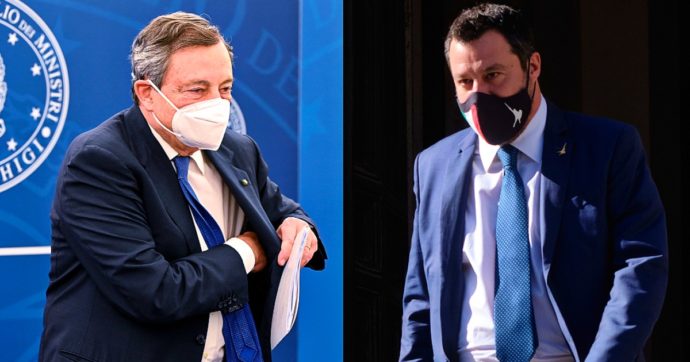
La Lega fa muro all’apertura di Mario Draghi riguardo all’ipotesi di rendere obbligatorio il vaccino. Il “sì” netto pronunciato dal presidente del Consiglio circa la possibilità che si arrivi ad imporre l’iniezione per legge, ultima tappa per portare all’immunizzazione gli irriducibili No Vax dopo una nuova estensione del Green Pass già data per certa dal premier, viene rigettato dal partito di Matteo Salvini: “La Lega era e rimane contro obblighi, multe e discriminazioni, ricordando che in nessun Paese europeo esiste l’obbligo vaccinale per la popolazione. Insistiamo invece, e porteremo la proposta al voto anche in Parlamento, perché lo Stato garantisca tamponi gratuiti, salivari e rapidi, per tutti coloro che ne abbiano necessità”, dicono fonti del Carroccio, unica forza di maggioranza nettamente contraria, elencando i risultati già raggiunti dalla campagna vaccinale. Una risposta che ha portato a un nuovo attacco del Pd.

Ma anche dentro il partito, già nelle scorse ore, non erano mancati i distinguo per la giravolta sul Green Pass. Sintomo di una posizione di Salvini e dell’ala più fedele del partito che incontra diversi malumori interni. Lo strappo leghista sul Green Pass non era piaciuto anche a personaggi di spicco come Attilio Fontana, presidente della Regione Lombardia, che si era posizionato accanto al collega veneto Luca Zaia da settimane attivo per spingere la campagna vaccinale. Il governatore si era smarcato dalla mossa, inattesa e propiziata da Claudio Borghi: “Dico il mio punto di vista: difendere con grandissimo vigore la vaccinazione che trova fondamento nei numeri perché, da quando abbiamo vaccinato, i numeri della nostra regione sono migliorati, sono eccellenti”. E aveva aggiunto: “Da quando abbiamo fatto la vaccinazione, abbiamo cambiato il trend, questa è la dimostrazione che è fondamentale”, ha proseguito Fontana dicendosi “orgoglioso” che in Regione Lombardia “più dell’87% abbia aderito alla campagna”. E si è detto quindi “contento” del fatto che “presto”, secondo alle proiezioni, “dovremmo arrivare all’immunità di gregge”. Quindi la chiusura, secca: “Solo la vaccinazione ci permette di difenderci dal virus”.

Posizioni che assomigliano molto a quelle di Forza Italia, tornata oggi a ribadire come la linea del partito sia quella di incentivare l’immunizzazione: vaccino e certificato verde, ha detto la presidente dei senatori azzurri Anna Maria Bernini, sono “le uniche vere assicurazioni sul futuro” e il partito “coerentemente” le “rivendica”. E arriva la stilettata agli altri partiti di centrodestra, che resta quindi spaccato su uno degli argomenti chiave in vista della lotta alla pandemia in autunno: “Sarebbe un errore grave regalare alla sinistra il copyright politico” delle misure. “Dal premier Draghi un importante messaggio di chiarezza sul vaccino obbligatorio. Esiste una prevalente responsabilità sociale e collettiva”, dice la deputata forzista Annagrazia Calabria. Per Licia Ronzulli, la vicepresidente al Senato, “è un altro passo avanti nella lotta al Covid”. Posizioni che indicano in maniera inequivocabile come, nonostante le parole distensive del coordinatore Antonio Tajani (“L’unità non è che si basa sul Green pass…”), gli ostacoli sulla strada di una maggiore integrazione del centrodestra di governo siano destinati ad aumentare.

Un plauso alle posizioni di Draghi è arrivata anche da un altro pezzo di centrodestra: “Dall’inizio della pandemia – ha detto il governatore della Liguria Giovanni Toti – continuo a dire che il vaccino è l’unica arma a nostra disposizione e che, se è necessario, l’obbligo vaccinale dovrà essere esteso ad una categoria più ampia di lavoratori. Lo stesso orientamento del presidente Draghi che si è espresso in maniera possibilista anche su un’eventuale terza dose di vaccino. Un segnale forte di uno Stato presente”.

Dopo lo scontro per il voto in commissione sul Green Pass, torna ad attaccare Enrico Letta. Dicendosi “molto d’accordo” con la linea che sta portando avanti Draghi, definita di “sicurezza”, il segretario del Pd ha spiegato: “Va bene per noi andare avanti ed estendere l’obbligo vaccinale e il Green pass. Per noi è la condizione essenziale per poter andare avanti. Ecco perché nella maggioranza di governo chi è contro il Green pass è contro la libertà e contro la sicurezza”. Una nuova presa di distanza dalle posizioni leghiste, sempre più isolate all’interno della maggioranza che sostiene Draghi. “Non si può stare con le parole di Draghi oggi – ha aggiunto Letta – e allo stesso tempo votare contro il Green pass in Parlamento: le due cose sono incompatibili”.

RISCHIATUTTO


Obbligo vaccinale, Speranza: "E' una possibilità"

03 settembre 2021 | 19.02

Su Green Pass il ministro della Salute: "Valutiamo l'estensione anche ad altri ambiti"

alternate text
Immagine di repertorio (Fotogramma)

L’obbligo vaccinale in Italia è una possibilità. Lo ha detto il ministro della Salute Roberto Speranza. "Due giorni fa abbiamo superato il 70% di persone vaccinabili che hanno superato il loro ciclo, ma noi vogliamo insistere, vogliamo che questo numero cresca sempre di più" spiega, durante la conferenza, seguita alla firma di un memorandum sulla ricerca, le scienze mediche e le politiche dell’assistenza, con il Segretario alla Salute degli Stati Uniti, Xavier Becerra. "Per questo valutiamo, sin dai prossimi giorni, decisioni che possano portarci all'estensione dell'utilizzo del Green pass ad altri ambiti della vita delle persone. E per questo motivo non ci precludiamo anche la possibilità, resta una possibilità in questo momento, qualora ce ne fosse bisogno, di poter utilizzare anche l'obbligo di vaccinazione".

Leggi anche

Un obbligo, ha ricordato Speranza, "che la Costituzione consente con un'iniziativa di natura legislativa e che noi riteniamo sia uno strumento a disposizione del parlamento e del governo, ne caso in cui questo dovesse essere necessario".

Il ministro della Salute, tornando poi alla conferenza di ieri del premier Draghi, ha sottolineato come "le parole, l'impianto, la linea direttrice indicata dal presidente del Consiglio" siano "la linea giusta, che parte da una grande consapevolezza: che il Covid è ancora un nemico insidioso e che i vaccini sono lo strumento fondamentale per provare a combattere contro questo virus. E quindi - ha sostenuto Speranza - la nostra spinta sarà molto determinata e molto forte per far salire ancora la percentuale di italiani vaccinati".

“Abbiamo dato un messaggio molto netto e rigoroso. Io condivido, parola per parola, le parole del premier Draghi pronunciate ieri” sull’obbligo vaccinale “noi vogliamo far salire questa percentuale, questo significa che lavoreremo a estendere il Green Pass a nuovi ambiti e questo significa che valuteremo anche l’ipotesi dell’obbligo vaccinale. Quest’ultima l’abbiamo già resa esecutiva per un ambito della nostra società gli operatori sanitari. Dobbiamo valutare sulla base dei numeri se potrà servire estendere questo obbligo. È una possibilità che il Governo e il Parlamento hanno e che noi valuteremo con la massima attenzione. Ma il Governo manda un messaggio di grande forza e determinazione: non ci accontentiamo delle nostre percentuali e lavoreremo in tutti i modi possibili per alzarle ancora”.

Over 50 non vaccinati

“Ogni persona non vaccinata rappresenta un rischio in più" ha detto il ministro Speranza, rispondendo alla domanda dei giornalisti se i 3,5 milioni di over 50 non vaccinati siano una ‘bomba’ epidemiologica. "Tutte le statistiche che arrivano da tutte le parti del mondo ci segnalano che le ospedalizzazioni riguardano prevalentemente le persone non vaccinate e quando si ha anche un rischio legato alla fragilità, ad un dato anagrafico significativo il rischio sale ancora di più. Il mio appello è di continuare con insistenza con la campagna vaccinale". "I dati italiani sono incoraggianti se paragonati ad altri Paesi del mondo - ha detto Speranza, parlando delle vaccinazioni - sono molto positivi. Ma dobbiamo insistere. Dove siamo arrivati non è sufficiente, dobbiamo lavorare perché il più alto numero di persone possa essere vaccinato”.

G20 Salute

“La proposta dell’Italia” per il G20 Salute che si apre domenica, ha detto poi a margine della firma del memorandum per la ricerca tra Italia e Usa, “è un 'Patto per Roma' che avrà come primo grande obiettivo portare il vaccino a tutte le popolazioni del mondo. I Paesi più ricchi e forti devono farsi carico di sostenere e aiutare i paesi più fragili. Il vaccino non può essere un privilegio dei Paesi più ricchi e questo è il messaggio a cui lavoreremo in questo G20”.

“Con l’Italia abbiamo unità nella consapevolezza di fare meglio e di più - ha proseguito Becerra -. Noi attraverso questo memorandum intendiamo fare leva sui successi del passato per proiettarci nel futuro. Nessuno di noi vuole più trovarsi in una situazione come quella vissuta in questa pandemia e con le conseguenze che questa ha portato. Rafforziamo i nostri specifici rapporti: Usa e Italia hanno fatto molti progressi nella lotta al Covid e vogliamo condividere tutto questo con il resto del mondo”.

Test facoltà Medicina

"Quando si forma un medico è un momento importante per il Paese ed è il Paese ad essere più ricco e il nostro Servizio sanitario nazionale a beneficiarne” ha detto, infine, il ministro Speranza rivolgendo nuovamente un "abbraccio e un 'in bocca al lupo'" agli studenti che oggi hanno fatto i test per l’accesso alle facoltà di Medicina.

Lettori fissi